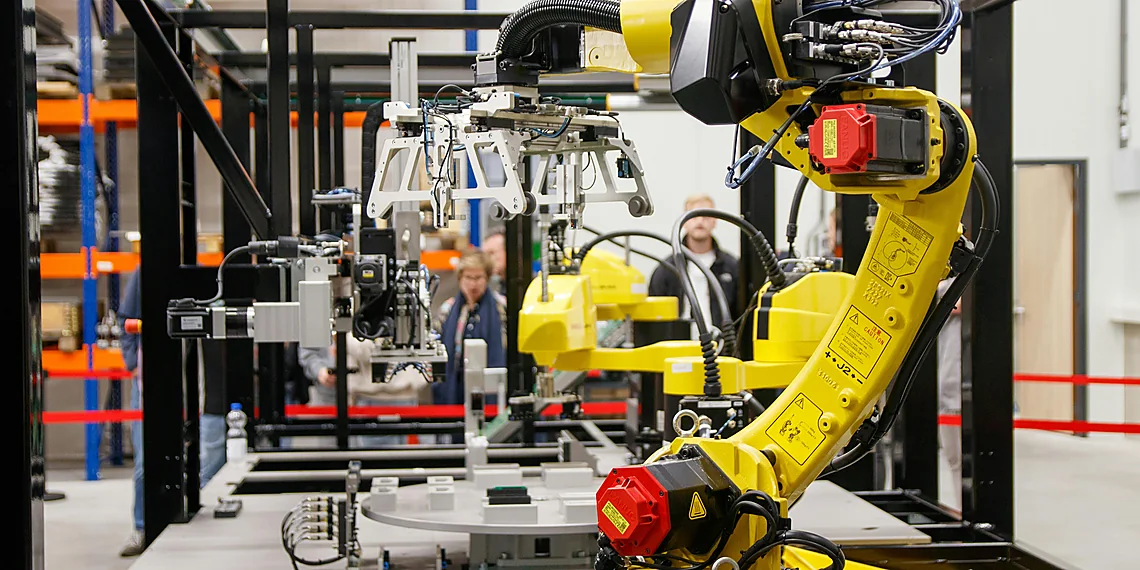
Imagine a world where delicate produce isn’t bruised during automated harvesting, or fragile electronics are assembled with unparalleled precision – that future is rapidly approaching thanks to a fascinating new approach in robotics.
The story behind Vine Robotics began not in a sterile lab, but inspired by the intricate movements of grape vines themselves; researchers observed how tendrils gently yet firmly grasp and support growing fruit, adapting to subtle changes in weight and position.
This biomimicry has led to the development of an innovative robotic gripper capable of handling objects with remarkable sensitivity and adaptability, offering a significant leap forward from traditional industrial tooling.
Vine Robotics’ technology promises to revolutionize industries ranging from agriculture and food processing to electronics manufacturing and even healthcare, enabling automation in tasks previously deemed too complex or risky for robots.
Nature’s Blueprint: The Vine Inspiration
The seemingly simple act of a vine clinging to a wall or wrapping around a tree holds profound lessons for engineers seeking to build more adaptable and gentle robotic systems. Vine Robotics’ new robotic gripper isn’t just another mechanical arm; it’s a direct embodiment of nature’s ingenious solutions to the challenges of climbing, securing, and navigating complex environments. Observing how vines achieve remarkable stability and strength through flexible tendrils – often without rigid structures – sparked the core innovation behind this design.
Vines face a constant problem: they need to adhere to surfaces with varying textures and shapes while also maintaining flexibility for growth and movement. They accomplish this using a combination of adhesion, friction, and intricate wrapping patterns. Vine Robotics’ engineers meticulously studied these mechanisms, noting how vines distribute force evenly across their surface area and adjust their grip based on the surrounding environment. This understanding directly informed the design of the robotic gripper, resulting in a mechanism that can conform to irregular shapes and apply precisely controlled pressure – crucial for handling fragile or delicate objects.
The key translation from nature to technology lies in mimicking the vine’s flexible, layered structure using advanced materials and actuators. Instead of relying on traditional rigid jaws, the robotic gripper utilizes interconnected, overlapping segments capable of independent movement. This allows it to wrap around items much like a vine, creating a secure yet gentle hold. The design prioritizes adaptability; unlike many industrial grippers that require precise alignment, Vine Robotics’ solution can accommodate variations in object size and orientation, opening up possibilities for handling a wider range of materials and shapes.
Ultimately, the ‘nature-inspired’ approach has resulted in a gripper poised to revolutionize various industries. From assisting elderly individuals with everyday tasks requiring delicate manipulation to automating warehouse sorting processes or even unloading heavy cargo without risk of damage, the potential applications are vast. This innovative robotic gripper is more than just a technological advancement; it’s a testament to the power of biomimicry and its ability to unlock new possibilities in robotics.
From Tendrils to Technology

Vines, in their remarkable ability to climb and secure themselves to various surfaces, have long captivated engineers seeking inspiration for adaptable gripping mechanisms. Their success lies not in rigid strength, but rather a combination of flexibility and surprisingly robust adhesion. Consider how tendrils wrap around branches – they conform precisely to the shape of the object, adjusting their grip as the branch sways or moves. This adaptability is crucial for survival; vines need to maintain contact even amidst wind and growth, securing access to sunlight while enduring dynamic environmental forces.
The core principle that Vine Robotics engineers leveraged from these natural systems is the concept of ‘compliant grasping.’ Traditional robotic grippers often rely on powerful motors and rigid jaws, making them unsuitable for handling delicate or irregularly shaped objects. Vines, however, achieve a secure hold through a distributed network of smaller, flexible elements – essentially, many tiny grips working in concert. This translates to a robotic gripper composed of interwoven, flexible strands that can conform to almost any surface and apply gentle but firm pressure without the risk of damage.
Specifically, the vine-inspired robotic gripper mimics the tendril’s ability to change its shape and adhesion strength based on feedback from the environment. Just as a vine adjusts its grip depending on the stability of the support it’s clinging to, the robotic gripper utilizes sensors and potentially AI algorithms to dynamically adjust the tension in its strands. This allows for a nuanced response – a firm grasp when needed, but a gentle release when an object is successfully secured or manipulated.
How It Works: The Mechanics of Gentle Strength
Vine Robotics’ revolutionary robotic gripper isn’t about brute force; it’s about gentle strength derived from nature’s ingenuity. The core concept lies in mimicking the way vines coil around objects, providing a secure hold without crushing or damaging them. This translates into a unique articulated design featuring multiple flexible ‘fingers,’ each individually controlled and capable of subtle adjustments. Unlike traditional grippers that rely on rigid jaws, these fingers conform to the shape of the object being grasped, creating numerous points of contact.
The magic happens in how those points of contact work together. Each finger acts as a miniature anchor, distributing force evenly across the surface of the held item. Imagine wrapping your hand around an egg – you don’t squeeze with one point; instead, pressure is applied across your entire palm and fingers. The Vine Robotics gripper operates on a similar principle. This distributed pressure significantly reduces stress concentrations, preventing damage to fragile or irregularly shaped objects. While specific material details aren’t publicly available yet, the design likely incorporates flexible polymers or composites designed for both durability and compliance.
The articulation itself is key. Each finger isn’t simply bending; it’s rotating and adjusting its position in real-time. This allows the gripper to adapt to objects of varying sizes, shapes, and even weights. Think about picking up a delicate glass versus a heavy metal part – the gripper adjusts its pressure and grip points accordingly. This adaptability is what makes it so versatile, opening doors for applications ranging from assisting elderly individuals with everyday tasks to automating complex warehouse sorting processes.
Ultimately, the mechanics of the Vine Robotics gripper are about more than just clever engineering; they’re about creating a system that’s inherently safer and gentler. The distributed force and adaptable articulation mean objects can be handled with greater precision and less risk of damage – a crucial factor in industries dealing with fragile goods or requiring delicate manipulation.
The Articulated Design

The core of Vine Robotics’ innovative gripper lies in its articulated design, mimicking the flexible tendrils found in nature. Unlike traditional robotic grippers that rely on a single point of contact and often exert excessive force, this system employs multiple segments connected by joints. These segments extend and retract to conform to the shape of an object, wrapping around it gently but firmly.
Each segment is equipped with small actuators – typically electric motors or pneumatic cylinders – which precisely control its movement. As these actuators work in concert, the gripper’s ‘fingers’ adjust their position and angle, creating numerous points of contact across the object’s surface. This distributed force significantly reduces pressure on any single area, minimizing the risk of damage to fragile items.
While specific material details are often proprietary, Vine Robotics likely utilizes a combination of lightweight but strong materials in its construction. These could include polymers for flexibility and impact resistance, alongside aluminum or carbon fiber composites for structural rigidity in the segments and joints. The actuators themselves are generally miniaturized components designed for precision control and minimal power consumption.
Beyond the Lab: Real-World Applications
The vine-inspired robotic gripper isn’t just a fascinating engineering marvel; it represents a tangible shift towards more adaptable and versatile automation across numerous industries. Moving beyond the confines of research labs, its potential applications are remarkably diverse, promising to reshape how we approach tasks ranging from delicate object handling to heavy lifting. The core strength lies in its ability to gently yet securely grasp objects of varying shapes and sizes – a capability that unlocks solutions previously unavailable with traditional robotic grippers.
Consider the logistics sector, where warehouse sorting is often a bottleneck. Imagine a system utilizing these vine-like grippers capable of identifying and delicately handling fragile goods like glassware or electronics, significantly reducing breakage and improving throughput compared to current methods involving human sorters or rigid automated systems. Similarly, in elder care settings, individuals struggling with arthritis or limited mobility can benefit immensely; the gripper could assist with tasks such as handling medication bottles, opening jars, or retrieving items from shelves, promoting independence and enhancing their quality of life without risk of injury.
The impact isn’t limited to these specific examples. The technology’s adaptability extends to sectors like agriculture, where it could be used for harvesting delicate fruits and vegetables with minimal damage, and even in construction, assisting with the precise placement of components or the safe handling of heavy materials. While cargo unloading often requires powerful clamping mechanisms, this gripper offers a gentler alternative for certain types of goods, reducing the risk of damage and potentially increasing efficiency by enabling faster cycle times.
Ultimately, the vine robotic gripper exemplifies how biomimicry – learning from nature’s designs – can lead to groundbreaking technological advancements. Its ability to adapt and delicately manipulate objects opens up a world of possibilities, promising not only increased industrial efficiency but also tangible improvements in everyday life for individuals across various demographics. The ongoing development and refinement of this technology will undoubtedly be an exciting area to watch as it transitions from prototype to widespread adoption.
From Warehouses to Elder Care
The Vine Robotics gripper’s unique design lends itself surprisingly well to a range of real-world scenarios beyond laboratory testing. In warehouse environments, for instance, the gentle yet secure grip is ideal for sorting packages containing delicate items like glassware or electronics. Traditional robotic arms often struggle with these fragile goods due to rigid clamping mechanisms that risk damage; Vine Robotics’ gripper could significantly reduce breakage rates and improve overall throughput by allowing for faster, more careful handling of a wider variety of products. Imagine a warehouse processing thousands of orders daily – even a small reduction in product damage translates into substantial cost savings.
Beyond industrial applications, the technology holds immense promise for assistive care, particularly benefiting elderly individuals or those with mobility limitations. The gripper could be integrated into robotic systems designed to assist with daily tasks like handling fragile items around the house—think safely retrieving medication bottles, assisting with meal preparation involving delicate ingredients, or even helping to manage personal grooming tools. This offers a pathway towards greater independence and improved quality of life for individuals who may struggle with fine motor skills or have physical limitations.
Finally, the gripper’s strength and adaptability make it suitable for demanding tasks like cargo unloading in logistics hubs and ports. Current methods often rely on manual labor which can be slow and pose safety risks. A Vine Robotics-powered system could automate this process, swiftly and securely lifting and moving containers or pallets without the need for heavy machinery or human intervention. This would not only increase efficiency but also reduce the potential for workplace injuries, contributing to a safer and more productive operational environment.
The Future of Gripping: What’s Next?
Vine Robotics’ innovative gripper design offers a tantalizing glimpse into the future of robotic manipulation, but its true potential likely extends far beyond what we’ve seen so far. The current iteration excels at gently handling delicate objects – think ripe fruit or fragile electronics – but ongoing development promises to dramatically expand its capabilities and applicability. We can anticipate seeing these vine-inspired grippers become increasingly specialized for specific industries, moving from initial prototypes to integral components in complex automated systems.
A key area of advancement will be the integration of Artificial Intelligence and Machine Learning (AI/ML). Imagine a robotic gripper that doesn’t just grip; it *understands* what it’s holding. AI could enable automatic object identification, allowing the gripper to adjust its force and approach based on shape, material, and fragility – all without human intervention. Furthermore, machine learning algorithms could allow these grippers to learn entirely new manipulation tasks simply by observing demonstrations or through trial-and-error, significantly reducing programming time and expanding their versatility.
However, integrating AI/ML into robotic gripping presents significant challenges. Training robust models requires massive datasets of object properties and grasping scenarios, which can be costly and time-consuming to acquire. Ensuring the reliability and safety of AI-controlled grippers – particularly in dynamic environments or when handling sensitive materials – will also necessitate rigorous testing and validation procedures. The ‘black box’ nature of some AI algorithms could make it difficult to diagnose failures or ensure predictable behavior, demanding explainable AI (XAI) approaches.
Looking ahead, we’ll likely see vine-inspired robotic grippers handle an increasingly diverse range of objects – from awkwardly shaped produce to irregularly sized industrial components. Beyond the applications already mentioned (assisting the elderly, warehouse sorting, and cargo unloading), expect to see them deployed in surgical robotics for precise tissue manipulation, in agriculture for harvesting delicate crops, and even in space exploration where gentle handling of sensitive equipment is paramount. The future isn’t just about stronger grippers; it’s about smarter, more adaptable ones.
AI-Powered Dexterity
The Vine Robotics gripper’s inherent adaptability points towards a compelling future driven by artificial intelligence and machine learning. Imagine a system where the gripper isn’t just programmed for specific object shapes, but *learns* to identify them through visual input – differentiating between fragile glassware and sturdy boxes without human intervention. This would involve training AI models on vast datasets of objects, allowing the gripper to categorize items based on appearance, material properties (estimated from vision), and potentially even weight.
Beyond identification, machine learning can significantly enhance grip strength adjustment. Current robotic grippers often rely on pre-programmed force levels which risk damage to delicate items or failure to secure heavier loads. An AI-powered system could dynamically adjust the gripping force in real-time based on feedback from pressure sensors within the gripper itself – ensuring a gentle yet firm hold for everything from eggs to awkwardly shaped packages. Furthermore, reinforcement learning techniques could enable the gripper to learn entirely new manipulation tasks, such as stacking objects or performing simple assembly operations, through trial and error.
Integrating AI into robotic grippers isn’t without challenges. Training robust models requires massive datasets and significant computational resources. Ensuring safety is also paramount; an AI-powered gripper making incorrect decisions could damage valuable goods or even pose a risk to human workers. Finally, the ‘black box’ nature of some AI algorithms can make it difficult to understand *why* a gripper made a particular decision, hindering troubleshooting and potentially raising concerns about reliability in critical applications.
Vine Robotics’ approach, drawing inspiration directly from nature’s elegant solutions, truly showcases a paradigm shift in how we design and interact with machines. We’ve seen firsthand how mimicking the flexible, adaptable structure of vines can lead to incredibly gentle yet powerful gripping capabilities, offering advantages over traditional methods across numerous industries. The development of a sophisticated robotic gripper based on this principle demonstrates that complex functionality doesn’t always require rigid structures or intricate mechanisms; sometimes, nature holds the blueprint for simpler, more effective designs. This isn’t just about improving efficiency in logistics or manufacturing—it represents a fundamental rethinking of how we approach problem-solving through technological innovation. The potential for applications extends far beyond what we’ve explored here, from delicate surgical procedures to handling fragile artwork and even enabling safer exploration in hazardous environments. As Vine Robotics continues its journey, it’s clear that biomimicry isn’t just a trend but a powerful methodology for creating smarter, more sustainable, and ultimately more human-centered technology. Consider the vastness of the natural world – what other ingenious solutions are waiting to be discovered and integrated into our technological future? Let’s move beyond surface-level inspiration and actively explore how biomimicry can reshape industries and redefine innovation across all fields.
We urge you to look around; observe the intricate designs of plants, animals, and ecosystems. The natural world is an unparalleled repository of knowledge and solutions, often far surpassing anything we could achieve through conventional engineering alone. Thinking beyond the immediate application of a vine-inspired robotic gripper, contemplate how this approach can inform advancements in areas like materials science, energy efficiency, and even urban planning. By embracing biomimicry as a core principle, we unlock a pathway to innovation that is both sustainable and profoundly impactful, creating a future where technology truly works *with* nature, not against it.
Continue reading on ByteTrending:
Discover more tech insights on ByteTrending ByteTrending.
Discover more from ByteTrending
Subscribe to get the latest posts sent to your email.