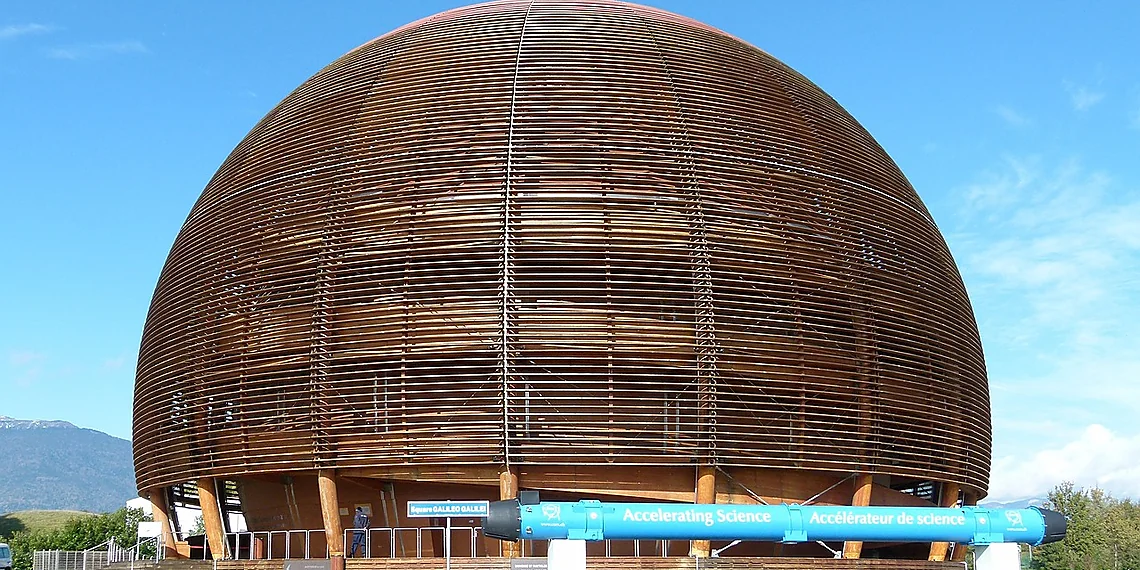



For two decades, an invisible network has been quietly revolutionizing how we understand the universe, a collaboration so vast and complex it defies easy description. The Worldwide LHC Computing Grid (WLCG) is celebrating its 20th anniversary this year, marking a pivotal moment in international scientific partnership and technological innovation. It’s more than just computers; it’s a testament to human ingenuity and collaborative problem-solving on an unprecedented scale.
The Large Hadron Collider at CERN generates colossal amounts of data – petabytes every second – requiring a distributed infrastructure capable of handling the sheer volume and complexity. The WLCG was born from this need, evolving into a globally interconnected network of computing centers supporting particle physics research and extending its influence to other fields. This anniversary provides a perfect opportunity to examine how it has shaped modern scientific practices.
From astrophysics simulations to climate modeling and medical imaging, the principles and technologies pioneered by the WLCG have become foundational across diverse disciplines requiring advanced scientific computing capabilities. Its success demonstrates the transformative power of shared resources and coordinated effort in tackling some of humanity’s biggest questions.
The grid’s architecture allows researchers worldwide to access and analyze data, fostering a truly global community of scientists. It represents a landmark achievement in distributed systems and data management, pushing the boundaries of what’s possible with collaborative research.
The Genesis of a Global Grid
The sheer volume of data generated by the Large Hadron Collider (LHC) presented an unprecedented challenge when it first came online. Traditional computing infrastructure simply couldn’t handle hundreds of petabytes of information – a scale far exceeding anything previously encountered in scientific research. This critical need for massive data processing and storage spurred the creation of what would become the Worldwide LHC Computing Grid (WLCG). The initial vision wasn’t just about storing the data, but distributing it globally to enable scientists around the world to analyze it effectively, fundamentally changing how large-scale experiments could be conducted.
Building the WLCG was a monumental undertaking requiring an unprecedented level of international collaboration. It involved hundreds of institutions and thousands of individuals across dozens of countries, each contributing computing resources, expertise, and personnel. Les Robertson played a pivotal role in orchestrating this complex network, fostering a shared vision and navigating the inevitable logistical and political hurdles that arise when coordinating such a vast global effort. The early days were marked by significant technological challenges too; ensuring data consistency, security, and efficient transfer across diverse hardware and software platforms demanded innovative solutions.
The initial design of the WLCG focused heavily on replicating LHC data across numerous geographically dispersed computing centers. This redundancy ensured data availability even in the event of localized failures and allowed researchers to access data closer to their locations, reducing latency for analysis. Early experiments involved establishing robust communication protocols and developing sophisticated middleware to manage data flow and resource allocation across this distributed grid – a far cry from centralized processing systems common at the time. The lessons learned during these formative years have profoundly influenced subsequent global scientific computing initiatives.
From LHC Data to Distributed Computing
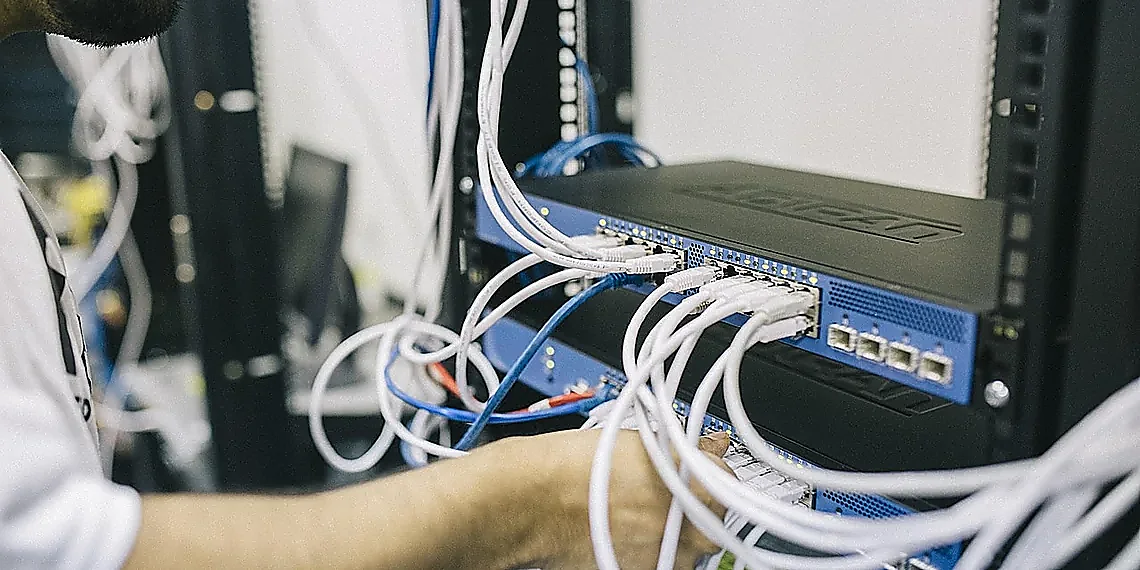
The Large Hadron Collider (LHC), beginning operations in 2008, presented a monumental challenge to scientific computing. Its experiments generate an astonishing volume of data – roughly 15 petabytes per year at peak performance. This equates to roughly double the global digital storage capacity in 2007. Managing and analyzing this deluge required a fundamentally new approach beyond traditional high-performance computing centers, necessitating a globally distributed solution.
The Worldwide LHC Computing Grid (WLCG) emerged as the direct response to this data management crisis. It wasn’t simply about adding more storage; it was about creating a virtual grid connecting over 150 computing centers in 40 countries. This network allowed for geographically dispersed processing and analysis, leveraging available resources from universities, research institutions, and national labs worldwide – effectively distributing the computational workload across continents.
Developing the WLCG involved significant innovation in areas like data replication, middleware technologies (software that manages distributed resources), and security protocols to ensure data integrity and access control. The project fostered unprecedented collaboration between thousands of scientists, engineers, and IT specialists, establishing a blueprint for future large-scale scientific collaborations and significantly advancing the field of distributed computing.
Pioneering Cooperation and Innovation

The Worldwide LHC Computing Grid (WLCG) stands as a testament to the power of international scientific collaboration. Born from the need to manage the colossal datasets generated by the Large Hadron Collider, its creation required unprecedented cooperation between research institutions and governments worldwide. Initially, individual labs struggled with the sheer scale of data processing; realizing that no single entity could handle it alone spurred the vision for a globally distributed computing infrastructure.
Building the WLCG wasn’t simply about connecting computers; it involved navigating significant logistical and political hurdles. Differences in hardware standards, network bandwidths, software compatibility, and even regional power grids presented substantial challenges. A key figure in overcoming these obstacles was Les Robertson, whose tireless efforts in fostering communication and establishing common protocols were instrumental in uniting the diverse computing resources needed for the project.
The shared goal of advancing scientific discovery – particularly in particle physics – provided a powerful unifying force. The WLCG’s success demonstrates that even complex technical challenges can be addressed when driven by a collective vision and supported by sustained international collaboration, ultimately creating a resource far greater than any one nation or institution could have achieved independently.
Expanding Horizons: Beyond Particle Physics
While initially designed to meet the immense computational demands of the Large Hadron Collider, the Worldwide LHC Computing Grid (WLCG) has proven remarkably adaptable, expanding its horizons far beyond particle physics. The infrastructure developed for handling petabytes of LHC data – a truly planetary computer in itself – possesses inherent versatility that makes it invaluable across numerous scientific disciplines. Recognizing this potential, researchers have increasingly leveraged the WLCG’s robust network and processing power to tackle complex challenges in fields vastly different from its origins.
A prime example lies within astronomy and astroparticle physics. The WLCG now supports projects like the Square Kilometre Array (SKA), a revolutionary radio telescope aiming to map the universe with unprecedented detail. Analyzing the colossal datasets generated by SKA requires distributed computing resources similar to those initially built for the LHC, and the WLCG provides that vital infrastructure. Similarly, gravitational-wave research, which detects ripples in spacetime caused by cataclysmic events like black hole mergers, relies on the grid’s capabilities to process data from detectors across the globe, enabling scientists to pinpoint these faint signals amidst background noise.
The benefits extend beyond simply providing computing power; the WLCG fosters crucial collaboration and resource sharing amongst researchers. By connecting hundreds of computing centers worldwide, it creates a platform for diverse scientific teams to work together, exchange data, and develop innovative analysis techniques. This collaborative environment accelerates discovery and maximizes the impact of publicly funded research investments. The evolution demonstrates that infrastructure built for one purpose can be repurposed and refined to serve a much wider community of scientists.
Ultimately, the WLCG’s journey highlights the enduring value of flexible, scalable computing infrastructures in scientific advancement. Its ability to support disciplines ranging from particle physics to astrophysics underscores its significance as a global resource, driving innovation and enabling groundbreaking discoveries across an ever-expanding range of research areas. The adaptability built into the system two decades ago continues to pay dividends for scientists worldwide.
A Hub for Diverse Scientific Fields
While initially designed to manage the massive data streams from the Large Hadron Collider, the Worldwide LHC Computing Grid (WLCG) has become a vital resource for numerous other data-intensive scientific fields. Astronomy benefits significantly, with projects like the Square Kilometre Array (SKA) leveraging WLCG infrastructure for processing and analyzing radio telescope data – volumes that dwarf even those produced by the LHC. Similarly, astroparticle physics experiments, such as IceCube Neutrino Observatory, utilize the grid to handle complex simulations and analyze detector data searching for high-energy neutrinos from cosmic sources.
Gravitational-wave research is another area where WLCG’s capabilities are crucial. The LIGO and Virgo collaborations rely on the grid’s distributed computing power for analyzing signals detected by their observatories, identifying potential gravitational wave events and characterizing the astrophysical phenomena that generate them. Beyond these headline examples, fields like materials science, medical imaging, and climate modeling increasingly utilize the WLCG’s resources to tackle computationally challenging problems.
A key strength of the WLCG lies in its ability to facilitate global collaboration and resource sharing. By providing a standardized platform and infrastructure, researchers from diverse institutions can seamlessly access computing power and storage regardless of their geographical location or institutional affiliation. This shared approach maximizes efficiency, reduces redundancy, and accelerates scientific discovery across a broad spectrum of disciplines.
The Human Element and Societal Impact
Beyond the impressive scale of its infrastructure – a planetary computer handling hundreds of petabytes of data – the Worldwide LHC Computing Grid (WLCG) has fostered something equally vital: a thriving global scientific community. For two decades, it hasn’t just facilitated research; it’s actively built connections between scientists from diverse backgrounds and institutions worldwide. This collaborative ecosystem transcends geographical boundaries, enabling knowledge sharing and accelerating discoveries in ways that would be impossible otherwise. The WLCG isn’t merely about data transfer; it’s about people collaborating on a shared goal.
The Academia Sinica Grid Centre provides a compelling illustration of this human element. Their participation has extended far beyond simply providing computing resources. They’ve actively engaged in training programs, knowledge exchange initiatives and have fostered deep relationships with colleagues across the globe. This reciprocal learning environment strengthens both individual expertise and the overall resilience of the WLCG network, ensuring continued innovation and adaptability as scientific challenges evolve.
The impact extends far beyond particle physics. The techniques and infrastructure developed for the WLCG are increasingly being applied to address pressing societal challenges in fields like medical imaging, climate modeling, and materials science. This demonstrates the remarkable versatility of a globally connected computing network when leveraged by a collaborative community driven by shared purpose. It’s a testament to how investing in scientific collaboration yields returns that benefit humanity as a whole.
Ultimately, the WLCG’s 20th anniversary isn’t just about celebrating technological advancements; it’s about recognizing the power of human connection and its crucial role in driving scientific progress. The network’s success is inextricably linked to the dedication and collaboration of individuals working together towards a common goal – pushing the boundaries of knowledge and addressing some of the world’s most complex problems.
Building a Global Scientific Community
The Worldwide LHC Computing Grid (WLCG) has been instrumental in forging a truly global scientific community. Initially established to manage the massive data streams produced by the Large Hadron Collider, it quickly expanded beyond particle physics, supporting research across fields like astrophysics, medical imaging, and climate science. This distributed infrastructure necessitated close collaboration between scientists, engineers, and technicians from diverse regions, breaking down geographical barriers and fostering a shared purpose.
A prime example of this collaborative spirit is the experience of the Academia Sinica Grid Centre (ASGC) in Taiwan. Joining the WLCG early on, ASGC not only contributed significant computing resources but also gained invaluable expertise through knowledge transfer and mentorship from veteran grid operators across Europe and North America. This reciprocal relationship enabled ASGC to develop its own advanced capabilities while simultaneously contributing to the global pool of scientific computing knowledge.
The WLCG’s impact extends beyond technological advancements; it has cultivated a culture of open collaboration and data sharing, essential for tackling complex societal challenges. Through joint projects, workshops, and training programs, scientists from different backgrounds build relationships, share best practices, and collectively advance the boundaries of scientific discovery – demonstrating how distributed computing can unite researchers around shared goals.
Future Directions and Technological Advancements
The future of scientific computing, particularly within the Worldwide LHC Computing Grid (WLCG), is inextricably linked to emerging technologies like artificial intelligence (AI) and quantum computing. As we move into the High-Luminosity LHC era and beyond, the sheer volume of data generated will demand revolutionary approaches to processing and analysis. AI offers incredible potential for automating tasks such as data curation, anomaly detection in experimental results, and even optimizing resource allocation within the grid itself. Machine learning algorithms can sift through vast datasets with unprecedented speed and accuracy, uncovering subtle patterns that might otherwise be missed by human researchers, potentially accelerating scientific breakthroughs across numerous disciplines.
Quantum computing represents a more disruptive shift, promising to tackle computational problems currently intractable for even the most powerful supercomputers. While still in its early stages of development, quantum algorithms could revolutionize areas like particle physics simulations and materials science research, which rely heavily on complex calculations. Integrating quantum capabilities into the WLCG presents significant challenges – including hardware limitations, algorithm development tailored to scientific computing workloads, and a need for specialized expertise – but the potential rewards are transformative. We can envision scenarios where quantum computers assist in analyzing complex collision events or simulating novel materials with atomic-level precision.
However, integrating these advanced technologies isn’t without its hurdles. The WLCG’s existing infrastructure, built over two decades, must be adapted and modernized to accommodate AI/ML pipelines and eventually, quantum processors. This requires significant investment in both hardware and software, as well as training a new generation of scientists and engineers skilled in these emerging fields. Furthermore, ensuring the reproducibility and reliability of results generated by AI-powered analyses will require careful validation and transparency protocols.
Ultimately, the continued success of scientific computing hinges on embracing innovation while maintaining the core principles of collaboration and open access that have defined the WLCG. The convergence of AI, quantum computing, and advanced data management techniques promises a future where global research collaborations can unlock even deeper insights into the fundamental workings of our universe – ushering in an era of unprecedented scientific discovery.
AI and Quantum Computing’s Role
Artificial intelligence (AI) presents a significant opportunity to enhance the Worldwide LHC Computing Grid’s (WLCG) capabilities. Machine learning algorithms can be applied to automate tasks such as data quality assessment, event reconstruction, and detector calibration – processes currently requiring substantial human effort. Furthermore, AI can improve anomaly detection, identifying rare events or unexpected patterns within vast datasets that might otherwise go unnoticed, potentially leading to groundbreaking scientific discoveries beyond the Standard Model of particle physics. The High-Luminosity LHC (HL-LHC) era will generate even larger volumes of data, making automated and intelligent processing solutions essential.
Quantum computing, while still in its nascent stages, holds transformative potential for scientific computing within the WLCG framework. Certain computational problems inherent to particle physics simulations, such as those involving complex quantum field theories or materials science calculations, are exceptionally well-suited for quantum algorithms. While current quantum computers lack the scale and stability required for full-scale LHC data analysis, ongoing advancements in qubit technology and error correction offer a pathway towards tackling previously intractable scientific challenges, potentially unlocking deeper insights into fundamental physics.
Integrating AI and quantum computing into the WLCG presents both challenges and opportunities. Data security and privacy are paramount concerns when leveraging AI, especially given the sensitive nature of research data. Quantum computers also pose a future threat to current encryption methods, necessitating proactive development and implementation of post-quantum cryptography. However, collaborative efforts between physicists, computer scientists, and quantum engineers can overcome these hurdles, fostering innovation and enabling the WLCG to remain at the forefront of scientific discovery in the decades to come.
The journey of the Worldwide LHC Computing Grid (WLCG) over these past two decades stands as a testament to the power of international collaboration and innovative engineering, fundamentally reshaping how we approach large-scale data analysis.
From its inception supporting the Large Hadron Collider, the WLCG has evolved into a model for distributed computing across diverse scientific disciplines, demonstrating that complex research challenges can be tackled effectively through shared resources and expertise.
The sheer volume of data generated by experiments like those at CERN demands increasingly sophisticated infrastructure, constantly pushing the boundaries of what’s possible in areas like storage, network bandwidth, and advanced algorithms – all core components of robust scientific computing.
Looking ahead, as we enter an era of even more ambitious projects requiring exascale capabilities and novel analysis techniques, the lessons learned from the WLCG remain invaluable; its principles of efficiency, scalability, and open collaboration will continue to guide us forward in addressing future research questions across astrophysics, materials science, and beyond. The need for advancements in scientific computing is only accelerating as data volumes grow exponentially. The WLCG’s legacy isn’t simply about what we’ve achieved; it’s about the foundation it laid for a new way of working together globally to unlock scientific breakthroughs. We believe this spirit of collaboration will be essential for the next generation of discoveries, and invite you to join us in shaping that future.
Continue reading on ByteTrending:
Discover more tech insights on ByteTrending ByteTrending.
Discover more from ByteTrending
Subscribe to get the latest posts sent to your email.