The world of particle physics just reached a monumental checkpoint, marking a pivotal moment in scientific discovery. CERN, home to the Large Hadron Collider (LHC), has officially surpassed one exabyte of experimental data collected since the collider’s inception – a truly staggering figure representing years of tireless research and groundbreaking experiments. This achievement isn’t merely about accumulating numbers; it signifies an unprecedented volume of information holding the potential to unlock deeper understandings of the universe’s fundamental building blocks. The sheer scale involved necessitates innovative approaches to LHC data storage, demanding constant evolution in technology and infrastructure.
Reaching this one exabyte milestone underscores the immense complexity and ambition inherent in high-energy physics research. Each collision within the LHC generates a torrent of data, requiring sophisticated systems for capture, processing, and long-term preservation. The implications extend far beyond CERN’s walls, impacting fields like computing, data science, and materials engineering as researchers strive to manage and analyze these colossal datasets effectively. We’ll delve into what this achievement means for the future of particle physics and explore the ongoing challenges associated with managing such a vast archive.
Understanding the significance requires appreciating the context: one exabyte equals roughly two million terabytes. It’s equivalent to storing over 500 million Blu-ray discs or all of YouTube’s video library. This volume reflects not only the intensity of the LHC experiments but also the sophistication of the detector technology and the dedication of the global collaboration involved in analyzing these results.
Understanding the Scale: What Does One Exabyte Mean?
Reaching one exabyte of stored experimental data from the Large Hadron Collider (LHC) is an incredible achievement, but understanding just *how* big that number truly is can be challenging. An exabyte isn’t something most people encounter in their daily lives, so it’s helpful to put it into perspective with some relatable comparisons. Think of a standard DVD: it holds roughly 4.7 gigabytes of data. One exabyte equates to approximately 213,000 DVDs – a stack taller than the Eiffel Tower if you were to physically arrange them!
To further illustrate the scale, consider video files. A high-definition movie might take up around 5 gigabytes. Therefore, one exabyte could store roughly 200,000 HD movies! Imagine having that much content readily available – it’s an almost unimaginable amount of information. This vast quantity underscores the complexity and ambition inherent in CERN’s research endeavors; each byte represents a tiny piece of potentially groundbreaking scientific discovery.
The LHC generates this colossal volume of data because it collides billions of protons every second, meticulously recording the resulting particle showers to test fundamental physics theories. Analyzing this much information requires incredibly sophisticated storage and processing infrastructure – systems that are constantly evolving alongside the collider’s capabilities. Reaching one exabyte represents not only a milestone in data storage but also a testament to the ingenuity and collaborative effort of engineers and scientists working together at CERN.
Beyond DVDs: A Visual Analogy
To put one exabyte into perspective, consider the capacity of DVDs. A single DVD can hold approximately 4.7 gigabytes of data. An exabyte is equal to 1,024 petabytes, and a petabyte is itself 1,024 terabytes, which further breaks down into 1,024 gigabytes. Therefore, one exabyte represents roughly 215,000 DVDs – a truly staggering number of discs!
Another way to visualize this immense volume is through video length. A standard definition (SD) movie takes up around 1-2 gigabytes of storage space. Assuming an average of 1.5 GB per movie, one exabyte could store approximately 670,000 SD movies – enough to keep every person on Earth entertained with a new movie every day for over six years!
Reaching the one exabyte milestone underscores the incredible scale of experiments at CERN and the sophisticated infrastructure required to manage this data deluge. It’s not just about storing information; it’s about ensuring that physicists can access, analyze, and ultimately extract valuable insights from this vast ocean of experimental results.
The Data Generation Process & The Trigger System
The Large Hadron Collider (LHC) isn’t just a giant machine; it’s a colossal data generator. Every second, the LHC accelerates billions of protons to near light speed and collides them head-on. These collisions aren’t tidy affairs – they result in incredibly complex particle showers, with hundreds or even thousands of new particles popping into existence momentarily before decaying. Each of these events releases a cascade of information that physicists meticulously record to understand the fundamental building blocks of our universe and test theories like the Standard Model.
The raw data produced by these collisions is overwhelming – an estimated 150 terabytes (TB) *per hour*. Imagine trying to store the equivalent of several high-definition movies every minute! Without a sophisticated filtering system, this deluge would render analysis impossible. That’s where the LHC’s trigger system comes into play, acting as a crucial gatekeeper. This system analyzes data from detectors in real-time, identifying and selecting only those collisions deemed most interesting for further study.
The trigger system doesn’t simply discard everything else; it employs multiple levels of filtering based on specific criteria – the energy of particles, their trajectories, and other properties. Each level refines the selection, drastically reducing the data volume while preserving the potentially groundbreaking events that hold clues to new physics. Even after this rigorous filtering process, a significant amount of data remains, highlighting the scale of the challenge in storing and analyzing it.
Essentially, the LHC’s operation creates an ongoing torrent of information, requiring constant innovation in both detector technology and data management techniques. The ability to manage and store one exabyte of experimental data is a testament to CERN’s engineering prowess and underscores the crucial role of selective filtering in transforming this raw data flood into valuable scientific insights.
Billions of Collisions Per Second

The Large Hadron Collider (LHC) accelerates beams of protons to nearly the speed of light, then collides them head-on. These collisions aren’t simple bumps; they are incredibly energetic events where protons shatter into a cascade of thousands of new particles. The frequency of these collisions is staggering – approximately 600 million per second – creating an immense volume of data that needs to be recorded and analyzed.
Each collision results in a ‘particle shower,’ a complex spray of subatomic particles, including quarks, leptons, and bosons. Physicists study the characteristics of these showers—their energy, momentum, and interactions—to understand fundamental forces and search for new particles or phenomena not explained by existing theories like the Standard Model. Reconstructing each particle’s trajectory and properties from detector signals is a computationally intensive process.
Given the sheer number of collisions and the complexity of the data generated per collision, recording every single event would be impossible. The LHC employs a sophisticated ‘trigger system,’ which acts as a rapid filter, selecting only the most interesting events (those with specific characteristics indicating potential discoveries) for detailed storage and analysis. Even after this filtering process, the volume of data remains enormous, necessitating CERN’s extensive and continually expanding data storage infrastructure.
Storage and Preservation: The Technological Backbone
The Large Hadron Collider’s groundbreaking discoveries wouldn’t be possible without a robust and scalable infrastructure to manage its colossal data output. Reaching one exabyte of stored experimental data represents not just a numerical milestone, but a testament to the ingenuity and evolution of CERN’s data storage solutions. This achievement highlights the critical role played by advanced technology in enabling fundamental physics research.
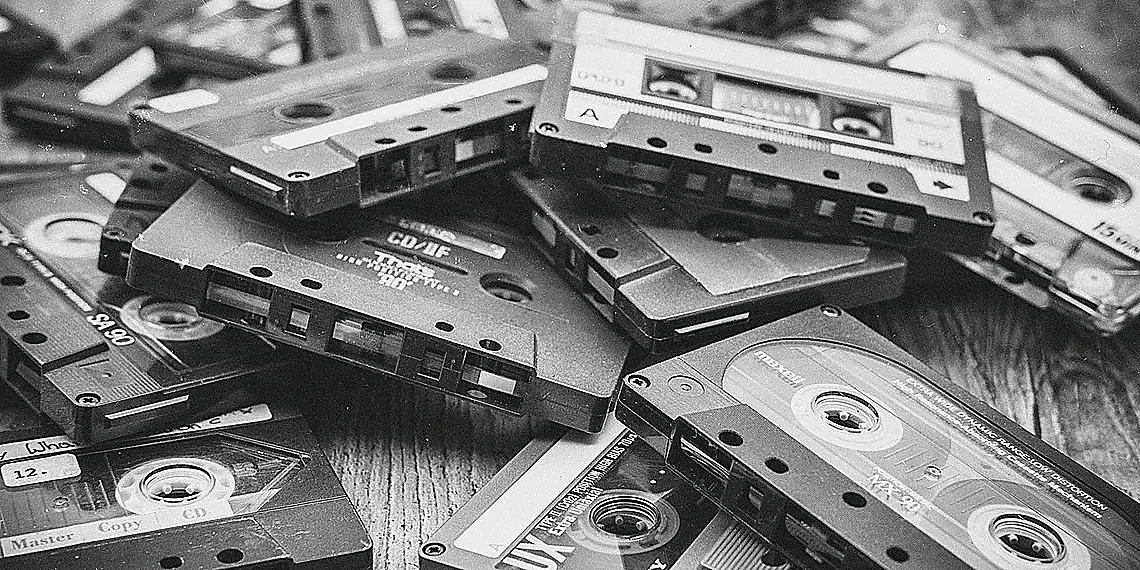
At the heart of this impressive feat lies magnetic tape – a seemingly archaic medium that has proven surprisingly well-suited for long-term data archiving. While often associated with 8-track tapes and obsolete formats, modern magnetic tape technology is vastly different. It offers exceptional cost-effectiveness compared to other storage options like hard drives or solid-state memory, especially when considering the sheer volume of data involved. Furthermore, tape provides a high degree of security through offline storage, minimizing vulnerability to cyberattacks.
CERN’s approach isn’t simply about storing data; it’s about preserving it for future generations of scientists. The organization employs sophisticated robotic libraries that manage thousands of tapes, ensuring consistent and reliable access while minimizing degradation over time. Continuous advancements in tape technology have also improved storage density and transfer rates, allowing CERN to efficiently handle the ever-increasing stream of LHC data – a cycle of innovation born from the necessity of managing an unprecedented scientific challenge.
The success of CERN’s magnetic tape archive demonstrates that sometimes, proven technologies can be revitalized for cutting-edge applications. While solid-state solutions continue to evolve, the combination of cost, longevity, and security makes magnetic tape an indispensable component of the LHC data storage infrastructure, ensuring that these invaluable experimental records remain accessible for decades to come.
Magnetic Tape: A Surprisingly Robust Solution
Despite advancements in solid-state storage, CERN’s long-term LHC data archiving relies heavily on magnetic tape – a technology that might seem antiquated but proves surprisingly robust for this purpose. The sheer scale of the data generated by the Large Hadron Collider (over one exabyte and growing) necessitates extremely cost-effective solutions. While initially viewed as a temporary measure, magnetic tape’s affordability per terabyte has consistently made it the most practical choice for preserving decades’ worth of experimental results.
The history of magnetic tape dates back to formats like 8-track tapes used for music in the 1970s and early 80s. However, modern LHC data storage utilizes advanced LTO (Linear Tape-Open) technology, which offers significantly higher capacities and faster transfer rates than its predecessors. These cartridges currently hold up to 360 terabytes of uncompressed data, and advancements continue to push this limit even further, ensuring CERN can meet the ever-increasing demands for data preservation.
Beyond cost savings, magnetic tape provides inherent security advantages. Data is physically stored on cartridges, making it less vulnerable to cyberattacks compared to cloud-based solutions or online storage. Furthermore, LTO tapes exhibit remarkable stability when stored properly, offering a reliable medium for long-term archival that can potentially last for decades – crucial for ensuring the scientific community has access to this invaluable research data well into the future.
Looking Ahead: The High-Luminosity LHC and Future Challenges
The achievement of one exabyte of stored LHC data represents a remarkable feat, but it’s merely a stepping stone towards even greater challenges. Looking ahead, the High-Luminosity LHC (HL-LHC) project promises to dramatically increase collision intensity and luminosity, ultimately generating roughly ten times more data than the current LHC. This means that the already impressive storage infrastructure will need to scale significantly to keep pace with the exponential growth in raw data volume.
CERN is actively preparing for this ‘data deluge’ through a multi-faceted approach. Current upgrades focus on improving existing storage systems, including increasing capacity and optimizing data transfer speeds. This involves expanding disk arrays, enhancing network bandwidth, and refining data management software to handle the increased load efficiently. Crucially, these efforts are not solely about brute force expansion; they involve intelligent strategies for data filtering and prioritization, ensuring that physicists can access the most relevant information quickly.
Beyond immediate upgrades, CERN is exploring more radical future storage solutions. These include investigating technologies like tape-based archiving systems with automated robotics to manage vast quantities of offline data, as well as considering potential advancements in solid-state storage technology. The development of efficient and scalable data compression techniques will also be vital to minimize the overall storage footprint while preserving the integrity of scientific results.
Ultimately, successfully navigating these future challenges requires a holistic approach encompassing hardware upgrades, software innovation, and evolving data management practices. CERN’s continued commitment to research and development in this area is essential not only for advancing particle physics but also for pushing the boundaries of large-scale data storage technology itself.
Preparing for a Data Deluge
The current Large Hadron Collider (LHC) already generates an immense amount of data – roughly 25 petabytes per year – requiring a sophisticated and globally distributed storage system. However, the upcoming High-Luminosity LHC (HL-LHC), scheduled to begin operation in the late 2020s, represents a significant escalation. This upgrade will increase the collision rate by a factor of ten, which translates directly into approximately ten times more data being produced annually – potentially reaching 250 petabytes per year and beyond.
To prepare for this data deluge, CERN is undertaking several infrastructure upgrades. These include expanding existing Tier-1 and Tier-2 computing centers, improving network bandwidth between them, and implementing advanced data compression techniques. A key focus is on optimizing the Worldwide LHC Computing Grid (WLCG), a global collaboration of over 170 institutions that provides the computational resources needed to process and analyze LHC data. Furthermore, CERN is actively exploring new storage technologies like tape silos with higher density and improved robotics to manage the ever-growing archive.
Looking further ahead, alternative storage solutions are also being investigated. These include leveraging cloud computing services for increased scalability and cost-effectiveness, as well as researching emerging storage mediums such as DNA data storage – a technology that offers potentially enormous capacity in a remarkably small physical footprint, although current challenges remain in terms of read/write speeds and overall practicality.

Reaching one exabyte of LHC data storage is far more than just a number; it represents an extraordinary feat of engineering and collaborative effort, pushing the boundaries of what’s possible in scientific data management. This achievement underscores the sheer scale of particle physics research and the vital role robust infrastructure plays in enabling groundbreaking discoveries. The ongoing evolution of these systems, from initial designs to current capabilities, demonstrates a remarkable commitment to innovation and adaptation within the global scientific community. Managing this volume requires sophisticated techniques for data compression, replication, and retrieval – all critical components that are constantly being refined. The implications extend beyond particle physics, offering valuable lessons applicable to fields dealing with massive datasets like climate modeling, genomics, and astrophysics. It’s a testament to human ingenuity that we can not only generate such immense quantities of information but also effectively store and analyze it, furthering our understanding of the universe. Delving into the intricacies of LHC data storage reveals a complex ecosystem of hardware, software, and expertise working in concert. To truly appreciate the scope and sophistication behind this milestone, we invite you to explore CERN’s dedicated video resource for a deeper dive into the technology and people powering these incredible advancements.
https://home.cern/science/computing/data-management/lhc-data-storage
Continue reading on ByteTrending:
Discover more tech insights on ByteTrending ByteTrending.
Discover more from ByteTrending
Subscribe to get the latest posts sent to your email.