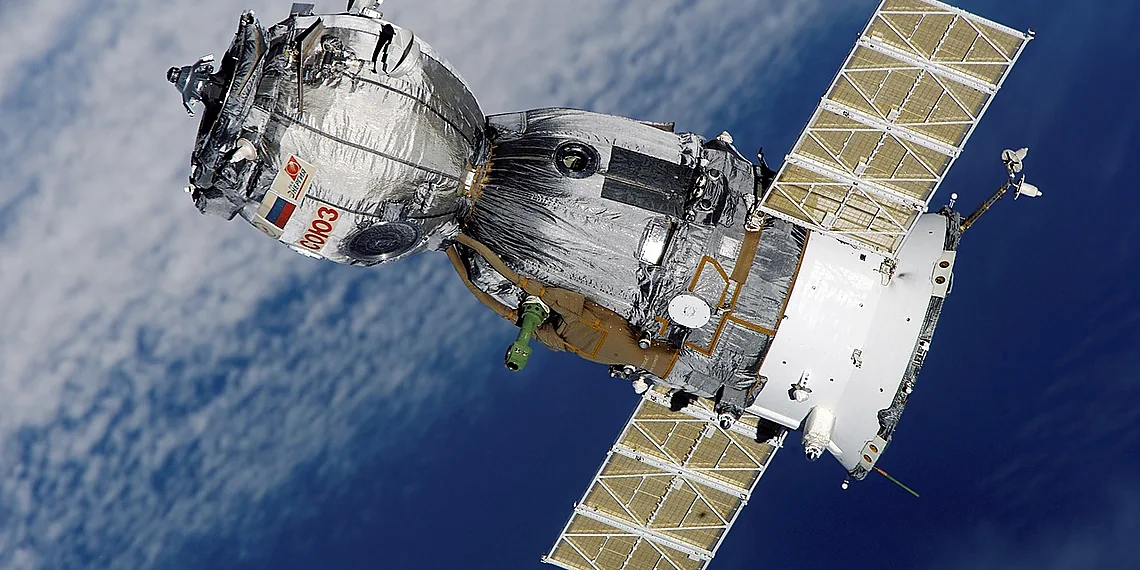

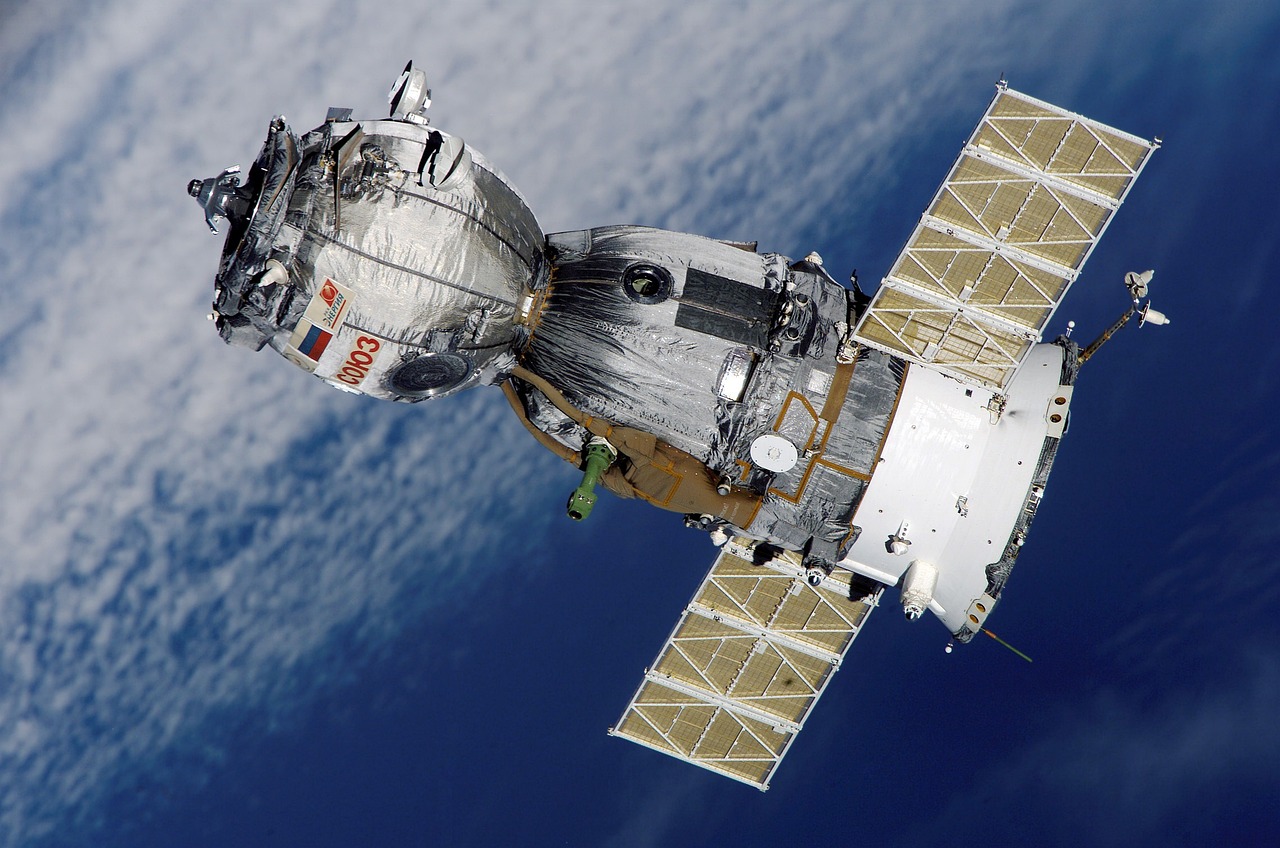
Imagine a future where unwanted materials, or even people, aren’t buried in landfills or launched into deep space, but instead are directed towards our nearest star – the Sun. It sounds like science fiction, doesn’t it? This isn’t about creating a cosmic incinerator; rather, it’s an exploration of a fascinating theoretical concept rooted firmly in physics and engineering: solar disposal. We’re diving headfirst into the seemingly outlandish idea of sending objects on trajectories that lead them to the Sun, examining both the mind-bending calculations involved and the monumental challenges such a feat would present. The implications are profound, sparking questions about resource management, space debris mitigation, and ultimately, our relationship with the cosmos.
This article isn’t a blueprint for building a solar disposal system—at least not yet! Instead, we’ll unpack the complex orbital mechanics required to achieve such a trajectory, considering factors like delta-v needs, gravitational assists, and atmospheric entry heating. We’ll examine how precisely calculated burns and trajectories could theoretically guide an object towards its fiery destination, while also acknowledging the significant hurdles in propulsion technology and material science that stand in the way. The sheer energy requirements alone make this a formidable prospect, demanding a deeper understanding of orbital transfer windows and advanced spacecraft design.
While currently confined to theoretical discussions and thought experiments, analyzing the feasibility of solar disposal—even hypothetically—forces us to confront fundamental questions about space travel and our future in orbit. We’ll be exploring the physics behind these extreme trajectories, considering everything from escape velocity to the intricacies of celestial navigation, all while acknowledging that the practical realities are far more complex than they initially appear.
The Theoretical Foundation: Orbital Mechanics & Escape Velocity
The idea of ‘solar disposal,’ while dramatic, hinges on surprisingly well-understood physics principles rooted in orbital mechanics. To even begin contemplating sending something hurtling towards our star, we need to grasp the concept of escape velocity. Simply put, escape velocity is the minimum speed an object needs to break free from a gravitational field and never return. For Earth, it’s roughly 11.2 kilometers per second; for the Sun, however, that number skyrockets to about 665 kilometers per second – a staggering difference reflecting the immense mass of our star.
Achieving this incredible velocity isn’t just about raw speed; it requires precise maneuvering within orbital space. Objects don’t simply ‘shoot’ towards the sun; they need to be placed into a trajectory that utilizes gravitational assists and carefully calculated burns to gradually lower their orbit. Think of it like throwing a ball – you can throw it harder, but without angling it correctly, it won’t go where you want. Similarly, spacecraft destined for solar disposal must constantly adjust their path, accounting for the gravitational influence of other planets and celestial bodies along the way.
The targeting aspect is perhaps the most complex element. Hitting the Sun – or even its corona, a region far from the surface due to the sun’s immense energy output – isn’t as simple as pointing and firing. The Sun isn’t a stationary target; it moves within our solar system, and any trajectory calculation must account for this constant motion. Minute errors in targeting can result in the object missing entirely or entering an unstable orbit that could eventually lead to a return trip – something we’d certainly want to avoid with a ‘disposal’ mission.
Furthermore, the sheer distance involved adds another layer of complexity. Even at close approach, spacecraft are still millions of kilometers from the Sun’s surface. This vast distance necessitates extremely precise navigation and propulsion systems capable of making tiny adjustments over long periods. While currently theoretical, advancements in propulsion technology like solar sails or advanced ion drives could potentially make such ambitious ‘solar disposal’ scenarios more feasible in the future.
Escape Velocity and Solar Orbits Explained
Escape velocity is the minimum speed an object needs to break free from the gravitational influence of a celestial body. It’s not about reaching infinite speed; it’s about achieving enough kinetic energy to overcome the gravitational potential energy binding the object. The formula for escape velocity (v_esc) is derived from conservation of energy: v_esc = sqrt(2GM/r), where G is the universal gravitational constant, M is the mass of the celestial body, and r is the distance from the center of that body to the object’s starting point. This means an object’s escape velocity increases with the mass of the attracting body and decreases as you increase your distance from it.
For the Sun, calculating escape velocity presents a significant number. Due to its immense mass (approximately 333,000 times that of Earth), the escape velocity is roughly 617.5 kilometers per second (around 1.37 million miles per hour). To achieve this speed requires incredibly powerful propulsion systems far beyond our current capabilities for large objects. Simply reaching this speed isn’t sufficient; it also needs to be directed in a specific trajectory – an ‘escape orbit’ – that ensures the object will not return.
To ensure an object actually *collides* with the Sun, rather than simply entering a solar orbit, requires even more precise targeting and velocity adjustments. While an escape orbit would send something spiraling outwards, a carefully calculated trajectory can be established to gradually decrease its orbital radius. This is achieved by introducing slight perturbations – tiny course corrections – over extended periods of time that cause the object’s orbit to decay inwards. Reaching the Sun’s corona (the outermost layer) presents further challenges due to extreme heat and density, making a direct impact unlikely; instead, disintegration within the corona would be the more probable outcome.
Engineering Challenges: Propulsion & Heat Shielding
The concept of ‘solar disposal,’ while dramatic in its imagery, presents an absolutely staggering set of engineering challenges. Simply put, getting something to a trajectory that intercepts the sun isn’t just about pointing it and firing; it requires immense velocity changes – delta-v – far beyond what current chemical rocket technology can provide. Think of it this way: Earth’s escape velocity is around 11 kilometers per second (roughly 25,000 mph). To achieve a solar intercept trajectory, we need to impart *significantly* more energy than that, accounting for gravitational losses and the precision needed to actually hit the sun rather than simply whizzing past. The sheer scale of this requirement immediately highlights why solar disposal remains firmly in the realm of theoretical possibility, not practical application – at least for now.
Conventional chemical rockets, which rely on combustion reactions for propulsion, are fundamentally limited by their exhaust velocity and fuel efficiency. They’re great for getting to orbit, but utterly inadequate for a solar intercept mission. To bridge this gap, we need to consider far more advanced propulsion systems. Fusion drives, harnessing the power of nuclear fusion, offer potentially much higher exhaust velocities than chemical rockets, although containing and controlling sustained fusion reactions remains one of humanity’s greatest scientific hurdles. Antimatter propulsion, theoretically offering the highest possible energy density, is even further out – antimatter production is incredibly expensive and difficult, and safely handling it poses enormous technological difficulties.
Advanced ion engines represent a more near-term possibility, though still requiring substantial advancements. These engines accelerate ions (charged particles) using electric fields, producing very low thrust but over extremely long durations. While the thrust is weak, continuous acceleration can eventually achieve high velocities – albeit with lengthy mission times spanning decades or even centuries. The energy requirements for these advanced systems are also astronomical; we’re talking about needing gigawatts of power continuously generated in space, likely requiring massive solar arrays or potentially even orbiting nuclear reactors to provide the necessary electricity.
Beyond propulsion, the heat shielding presents another formidable barrier. As an object approaches the sun, it encounters increasingly intense solar radiation and thermal flux. The spacecraft would need a heat shield capable of reflecting or dissipating this energy without melting or ablating away. Current materials struggle under such conditions; we’d likely require radically new composite materials with exceptional reflectivity and extremely high temperature resistance – materials that are currently only conceptualized in research labs, not readily available for spacecraft construction.
Propulsion Systems Beyond Chemical Rockets

Conventional chemical rockets, while reliable for reaching Earth orbit and even venturing to other planets within our solar system, are fundamentally inadequate for ‘solar disposal’. The immense distances and required delta-v (change in velocity) necessary to fling an object into a trajectory that intersects with the Sun demand energy levels far beyond what chemical reactions can provide. Chemical rockets operate on relatively low specific impulse – a measure of fuel efficiency – meaning they require vast quantities of propellant, making the overall mass of the system prohibitive for anything beyond small payloads. The sheer scale of propellant needed to achieve solar disposal would render such missions economically and practically impossible with current technology.
Looking towards future propulsion systems reveals potential avenues for achieving these incredible velocities. Fusion drives, harnessing the power of nuclear fusion reactions, offer significantly higher specific impulse than chemical rockets – potentially hundreds or even thousands of times greater. While still in early stages of development, successful fusion drives could theoretically provide sustained acceleration over extended periods, gradually building up the necessary velocity for a solar trajectory. Antimatter propulsion represents an even more radical concept, offering the highest possible energy density; however, producing and storing antimatter remains an extraordinarily challenging technological hurdle with significant safety concerns.
The energy requirements are staggering. To accurately target an object into the Sun’s gravitational well requires not just high velocity but precise trajectory control. Estimates suggest that propelling even a relatively small object (e.g., a defunct satellite) to intersect with the solar orbit would necessitate terawatts of power, and potentially gigajoules of total energy expenditure – orders of magnitude beyond current space-based power generation capabilities. Advanced ion engines, utilizing electric fields to accelerate ionized propellant, represent a more near-term possibility for increased efficiency, but their thrust levels are generally low, requiring exceedingly long mission durations.
The Heat Problem: Surviving Solar Proximity
The prospect of ‘solar disposal,’ while dramatic in its imagery, immediately confronts us with an almost insurmountable hurdle: heat. The sun’s surface temperature is a scorching 5,500 degrees Celsius (9,932 degrees Fahrenheit), and the intensity of solar radiation increases dramatically as you approach it. Simply put, anything – be it debris, defunct satellites, or, hypothetically, something more… substantial – needs an extraordinary level of protection to survive that journey. Current heat shield technology, like those used for planetary probes, are designed for brief periods of intense heating followed by relatively rapid cooling in the vacuum of space; a sustained descent towards the sun presents a wholly different and far more demanding scenario.
The standard ablative shielding – materials designed to vaporize and carry away heat – faces limitations. While effective for short bursts, continuous ablation would require an immense amount of material, adding significant mass and complexity to the mission. This mass penalty drastically increases the energy required for the initial trajectory correction, making solar disposal even more challenging. Active cooling systems, which circulate fluids to dissipate heat, are also problematic; maintaining these systems requires power, adds further weight, and introduces potential failure points in a harsh radiation environment. Radiative shielding, relying on emitting excess heat as infrared radiation, is theoretically possible but demands extremely high emissivity materials operating at peak efficiency – requiring significant breakthroughs in material science.
Beyond simply radiating heat, the concept of shadow-casting structures offers an intriguing, albeit complex, solution. Imagine a deployable shield, meticulously designed and positioned to block direct solar radiation from reaching the payload. This would drastically reduce the thermal load on the protected object. However, such a structure would need to be incredibly large, lightweight, precisely oriented, and capable of withstanding extreme temperature gradients – presenting its own set of engineering nightmares. The materials used for this shield would also require exceptional stability in the intense solar environment, resisting degradation from radiation and micrometeoroid impacts.
Ultimately, achieving successful ‘solar disposal’ necessitates a paradigm shift in thermal protection technology. We’re not just talking about incremental improvements to existing methods; we need fundamentally new approaches – potentially combining multiple strategies like advanced ablative composites coupled with active cooling and shadow-casting structures. The development of such technologies would represent a significant advancement across several scientific disciplines, from material science and aerospace engineering to robotics and control systems – pushing the boundaries of what’s currently considered feasible in space exploration.
Advanced Thermal Protection Systems
Current spacecraft heat shields, like those used on the Apollo missions and Mars rovers, primarily rely on ablative materials – substances designed to vaporize and carry away heat during atmospheric entry or close solar proximity. While effective for certain scenarios, these shields have limitations. The mass penalty associated with sufficient ablation material becomes prohibitive for large payloads destined for a direct solar trajectory; the shield itself would need to be incredibly massive, negating much of the benefit of disposal. Furthermore, ablative materials erode unevenly and offer diminishing protection as they thin, requiring complex designs and precise trajectory control.
Researchers are exploring advanced thermal protection system (TPS) concepts beyond simple ablation. Active cooling systems, utilizing circulating fluids or even phase-change materials to absorb and radiate heat, hold promise but introduce complexity – pumps, reservoirs, and radiators add mass and potential failure points. Radiative shielding, which would involve deploying large structures designed to reflect incoming solar radiation, is theoretically appealing but faces significant challenges in terms of structural integrity under intense thermal gradients and the sheer scale required for effective coverage. Shadow-casting structures, similar to giant umbrellas, present even more extreme engineering hurdles.
The realization of viable solar disposal methods hinges on breakthroughs in material science. We need materials with exceptionally high melting points, superior radiative properties (capable of efficiently shedding heat), and potentially self-healing capabilities to withstand micrometeoroid impacts and thermal stress. Nanomaterials like carbon nanotubes and graphene are being investigated for their potential to create ultra-lightweight, highly resistant shielding layers, but scaling these technologies for large-area applications remains a significant obstacle. Furthermore, developing materials that can actively adapt their radiative properties based on environmental conditions would represent a paradigm shift in heat shield technology.
Ethical & Philosophical Considerations (and Why This is Mostly Hypothetical)
The notion of ‘solar disposal’ – essentially, sending unwanted objects into the sun – immediately conjures up a complex web of ethical and philosophical considerations. While seemingly fantastical, it forces us to confront uncomfortable questions about our responsibility towards waste, the value we place on life (even non-human entities), and the potential for misusing powerful technologies. It’s vital to emphasize from the outset that this remains firmly in the realm of theoretical physics; a thought experiment designed to explore extreme engineering challenges rather than a viable solution for any current problem.
Beyond the immediate technical hurdles (which we’ll discuss elsewhere), the societal implications are perhaps even more significant. Could humanity ever genuinely accept, or even consider, such a method of disposal? The historical evolution of justice systems – from ancient practices like throwing criminals to lions to modern legal frameworks – demonstrates a clear trend towards increased empathy and due process. ‘Solar disposal,’ however conceptually efficient, would likely be seen as profoundly barbaric and morally reprehensible by most contemporary societies.
The very concept challenges our current values regarding resourcefulness and sustainability. Instead of seeking innovative recycling or repurposing solutions for obsolete materials, ‘solar disposal’ represents a complete rejection of those principles, opting instead for permanent removal from the planetary system. While space debris is certainly a pressing issue, resorting to solar incineration as a solution would be an extreme overreaction – one that carries significant risks and reflects a profound lack of ingenuity. It’s a fascinating thought experiment precisely *because* it’s so far removed from any realistic or desirable future.
Ultimately, the discussion surrounding ‘solar disposal’ serves more as a cautionary tale than a practical proposal. It highlights the importance of ethical considerations alongside scientific advancement and reinforces the need for responsible innovation in space exploration. While pushing the boundaries of what’s physically possible is essential, it must always be tempered by careful reflection on its potential societal impact – an impact that, in this case, would likely be overwhelmingly negative.
Beyond the Science: The Moral Implications
The notion of ‘solar disposal,’ while rooted in a fascinating physics problem, immediately raises profound moral questions. Even framed as a theoretical solution to dealing with exceptionally dangerous individuals or persistent hazards, the act of intentionally directing something – or someone – towards the sun carries significant ethical weight. It evokes historical parallels to capital punishment and other forms of societal exile, but on an unprecedented scale, removing any possibility of rehabilitation or return.
Beyond the immediate moral objections surrounding taking a human life (or destroying complex systems), consider the potential for misuse and the slippery slope it creates. Who decides what warrants such a drastic measure? How do we ensure due process and prevent abuse of power if this technology were ever conceivable? The very suggestion invites scrutiny regarding our values, justice systems, and the sanctity of existence – regardless of how problematic that existence might be.
It’s crucial to reiterate that solar disposal remains firmly in the realm of thought experiments. The engineering challenges are immense, far beyond current capabilities, and societal acceptance would be virtually nonexistent. This isn’t a practical proposal for waste management or criminal justice; it serves as a lens through which we can examine our ethical boundaries and consider the potential consequences – both scientific and philosophical – of pursuing increasingly extreme technologies.
The concept of sending defunct satellites directly into the sun, or ‘solar disposal,’ paints a compelling picture for orbital debris mitigation, but the reality is far more complex than simple physics allows right now. We’ve explored the immense energy requirements and navigational precision needed to achieve such a maneuver, highlighting how current propulsion technology falls drastically short of what would be necessary. The sheer heat generated during atmospheric entry, even with advanced shielding, presents an almost insurmountable engineering hurdle for anything beyond very small payloads. While mathematically feasible within certain theoretical frameworks, solar disposal remains firmly in the domain of science fiction given present-day capabilities and foreseeable advancements. Ethical considerations surrounding potential impacts on solar activity and interplanetary space also add significant layers of complexity to any future consideration of this method. Ultimately, while a fascinating thought experiment, we’re not likely to see satellites being actively targeted for fiery demise anytime soon; more practical solutions are needed in the near term. If you found yourself captivated by the challenges involved in achieving such ambitious feats, we encourage you to delve deeper into related fields pushing the boundaries of space exploration. Understanding advanced propulsion systems, like those utilizing fusion or antimatter, is crucial for envisioning future orbital maneuvers. Furthermore, exploring the cutting-edge developments in heat shield technology will provide a better appreciation for the extreme engineering required to survive reentry – even without aiming directly for the sun.
Consider how much further we have to go to make concepts like solar disposal a reality.
Continue reading on ByteTrending:
Discover more tech insights on ByteTrending ByteTrending.
Discover more from ByteTrending
Subscribe to get the latest posts sent to your email.