
The universe holds mysteries that have captivated scientists for centuries, and now a revolutionary new project is poised to dramatically reshape our understanding of it.
Imagine attempting to chart not just our own galaxy, but the very structure of the cosmos across billions of light-years – that’s precisely what the Euclid mission aims to achieve.
This ambitious endeavor, spearheaded by the European Space Agency (ESA), is designed to map a third of the observable universe, providing unprecedented insights into dark matter and dark energy, the enigmatic forces driving cosmic expansion.
Recent publications are already hinting at the incredible data flowing in from Euclid, showcasing early results that challenge existing models and open up exciting new avenues for research – we’ll explore some of these breakthroughs shortly. The mission’s unique approach combines wide-field imaging with high precision astrometry to create a detailed 3D map of cosmic structures, revealing how gravity has shaped the universe over time. Take a moment to appreciate this stunning collage showcasing galaxy morphologies captured by Euclid – it’s just a glimpse of the visual wonders yet to come as data processing continues and more images are released. The sheer scale of the Euclid mission is staggering; its observations will cover two billion galaxies and over ten thousand square degrees of the sky, providing an unparalleled dataset for astronomers worldwide.
What is Euclid & Why Does It Matter?
The Euclid mission represents a monumental leap in our quest to understand the universe’s deepest mysteries: dark matter, dark energy, and its overall geometry. Named after the ancient Greek mathematician who pioneered the study of geometry, the European Space Agency’s (ESA) Euclid telescope isn’t looking for planets or stars directly; instead, it’s meticulously charting the distribution of invisible forces that shape the cosmos. Think of it as creating a vast, three-dimensional map of the universe’s scaffolding – revealing where dark matter lurks and how dark energy is driving its expansion.
So, what are dark matter and dark energy? They make up roughly 95% of the universe, yet we can’t directly see or interact with them. Dark matter provides extra gravitational pull, holding galaxies together and influencing their motion. Dark energy acts as a repulsive force, accelerating the universe’s expansion – a phenomenon that challenges our current understanding of physics. Euclid aims to precisely measure how these forces have influenced the universe over cosmic time, allowing scientists to test fundamental cosmological models and potentially rewrite textbooks.
Euclid achieves this incredible feat through two primary techniques: weak gravitational lensing and galaxy clustering. Weak lensing is the subtle distortion of light from distant galaxies as it passes through regions of dark matter – a bit like looking at something through rippled glass. By analyzing these distortions across billions of galaxies, Euclid can create a map of the underlying dark matter distribution. Simultaneously, Euclid observes how galaxies are clustered together on large scales; this pattern is also influenced by both dark matter and dark energy, providing another crucial piece of the puzzle.
Ultimately, the Euclid mission tackles profound questions about cosmic evolution: How has the universe expanded since its birth? What is the nature of dark matter and dark energy? Is Einstein’s theory of general relativity still accurate on the largest scales? The data Euclid provides will not only refine our understanding of these fundamental concepts but also potentially reveal entirely new physics, pushing the boundaries of human knowledge about our place in the universe.
Mapping the Invisible Universe

The Euclid mission is designed to create a 3D map of the Universe unlike anything we’ve seen before. While we can observe stars and galaxies, much of the Universe is made up of ‘dark matter’ and ‘dark energy,’ which we can’t directly see. Euclid aims to indirectly reveal their distribution by studying how they warp space-time through a phenomenon called weak gravitational lensing. Imagine looking at a distant galaxy – its light has been subtly bent and distorted as it travels through the gravity of all the dark matter lying between us and that galaxy. Euclid meticulously measures these tiny distortions across billions of galaxies.
Another key method Euclid uses is analyzing ‘galaxy clustering.’ Galaxies aren’t randomly scattered throughout space; they tend to group together in patterns. These patterns are influenced by the underlying distribution of dark matter and dark energy, acting as a kind of cosmic scaffolding. By studying how galaxies cluster together on vast scales, scientists can infer the properties of these invisible components that shaped their arrangement over billions of years. Essentially, Euclid is using the visible structures to understand the unseen forces at play.
By combining weak gravitational lensing and galaxy clustering measurements across a huge swathe of the sky, Euclid will allow astronomers to precisely measure how the Universe’s expansion rate has changed over time. This data will help us refine our understanding of dark energy – what’s causing this accelerated expansion – and test fundamental theories about the evolution of the cosmos. The ultimate goal is to better understand the geometry and fate of the universe, addressing some of the biggest unanswered questions in cosmology.
First Insights & Scientific Breakthroughs
The European Space Agency’s Euclid mission is rapidly transforming our understanding of the cosmos, and recent publications are showcasing just that. The Euclid Consortium has just released a stunning suite of seven scientific papers based on data from the mission’s Quick Data Release (QDR), marking a significant milestone in the project’s timeline. These early results aren’t merely confirming existing theories; they’re offering tantalizing glimpses into the nature of dark matter, dark energy, and the large-scale structure of the universe – areas that have long puzzled scientists.
Among the key findings highlighted in these papers is a refined measurement of the Hubble constant, which describes the rate at which the universe is expanding. While still exhibiting tension with measurements derived from observations of the early universe, Euclid’s data provides a fresh perspective and crucial constraints for future refinements to cosmological models. Another significant breakthrough involves detailed mapping of galaxy shapes and distributions over vast cosmic distances. This allows scientists to probe the growth of structure in the universe and test General Relativity on scales previously inaccessible.
Interestingly, some initial observations have presented unexpected challenges. The distribution of galaxies doesn’t perfectly align with predictions from current cosmological models, hinting at potential gaps in our understanding or even requiring adjustments to fundamental assumptions about dark energy’s behavior. These ‘surprises,’ as researchers are calling them, aren’t failures – they represent invaluable opportunities for scientific progress and a chance to refine the Standard Model of Cosmology. The Euclid mission is designed precisely to push these boundaries.
Beyond the data itself, the Euclid team unveiled a visually striking collage depicting galaxy morphologies arranged in a modern interpretation of the classic “Tuning Fork” diagram. This artistic representation not only highlights the richness of the data but also serves as a powerful reminder of how far we’ve come in classifying and understanding galaxies across cosmic time. With more data expected soon, the Euclid mission promises to continue revealing profound secrets about our universe’s past, present, and future.
Early Data Reveals Surprises?

The initial data releases from the Euclid mission, while still preliminary, have already presented some intriguing deviations from expectations based on current cosmological models. Early analyses reveal subtle but persistent tensions in measurements of galaxy clustering and weak gravitational lensing – effects which are used to map the distribution of dark matter across cosmic time. These discrepancies don’t necessarily invalidate the standard Lambda-CDM model (which describes our universe as dominated by dark energy and cold dark matter), but they suggest a need for further investigation and potentially refinements to our understanding of how structures formed in the early universe.
The Euclid Consortium has recently published seven scientific papers detailing these early findings. These papers cover topics ranging from detailed assessments of systematic errors in the data processing pipeline to preliminary measurements of cosmic shear and galaxy distributions. Notably, some studies have indicated a possible conflict between the observed distribution of galaxies at large scales and predictions based on current dark energy models, hinting that either our understanding of dark energy is incomplete or there are unaccounted-for effects influencing galaxy formation. The papers also highlight the exceptional quality and precision of Euclid’s data, allowing for unprecedented scrutiny of these cosmological parameters.
One particularly surprising result discussed in several of the papers concerns the morphology of galaxies at high redshifts (i.e., very distant and therefore viewed as they were billions of years ago). The observed distribution of galaxy shapes doesn’t perfectly align with theoretical predictions about how galaxies should have evolved over time, challenging assumptions about star formation rates and feedback mechanisms within early galaxies. While these initial results require further validation with larger datasets, they underscore the potential for Euclid to reshape our understanding of cosmic evolution and offer valuable constraints on future cosmological models.
The ‘Tuning Fork’ Reimagined
For decades, astronomers have used the ‘Tuning Fork’ diagram – a visual representation of galaxy morphology developed by Edwin Hubble in 1923 – to categorize galaxies based on their appearance. This iconic chart arranges galaxies from elliptical shapes at one end, spiraling into barred spiral galaxies at the other. While invaluable for initial classification, the Tuning Fork has always been somewhat subjective and lacked a robust evolutionary framework. It presented a snapshot, not an explanation of how these diverse forms arise and change over cosmic time.
Now, thanks to data from the Euclid mission, we’re getting a dramatically more detailed look at galaxy shapes than ever before. The newly released visual collage derived from Euclid’s observations isn’t just a prettier version of Hubble’s diagram; it represents an ongoing effort to refine and expand upon that classic classification system. Euclid’s wide-field survey allows astronomers to observe a vast number of galaxies across immense distances, providing a much larger sample size than previously possible. This wealth of data is challenging long-held assumptions about how galaxy evolution proceeds.
Euclid’s observations are revealing subtle variations within each category of the Tuning Fork and highlighting galaxies that don’t neatly fit into existing classifications – suggesting an evolutionary continuum rather than discrete steps. By combining Euclid’s precise measurements of distance, redshift (a measure of how quickly a galaxy is receding), and detailed morphology with simulations of cosmic structure formation, scientists are beginning to understand the interplay between galactic mergers, star formation rates, and the influence of dark matter in shaping these stunning structures.
Ultimately, this reimagined Tuning Fork powered by the Euclid mission promises to revolutionize our understanding of galaxy evolution. It’s not just about cataloging shapes; it’s about unraveling the physical processes that drive them – revealing how galaxies transform over billions of years and contributing significantly to our broader picture of the universe’s history.
A New Perspective on Galaxy Shapes
For over a century, astronomers have classified galaxies using the “Tuning Fork” diagram, developed by Edwin Hubble in 1923. This iconic chart organizes galaxies based on their visual appearance: elliptical galaxies at one end, spiral galaxies with bars or without at the middle, and irregular galaxies at the other. The ‘tuning fork’ shape simply represents this progression – a conceptual tool to understand how galaxies might relate to each other morphologically. While incredibly useful, it’s always been recognized as a simplification of a far more complex reality; the underlying physical processes driving these shapes weren’t fully understood.
The Euclid mission is now providing an unprecedented dataset that allows astronomers to refine and expand upon Hubble’s original classification. By observing billions of galaxies across vast cosmic distances, Euclid’s data reveals subtle differences in galaxy shapes and structures previously undetectable. This new information is challenging some long-held assumptions about how different galaxy types evolve over time. For example, it suggests that the transition between elliptical and spiral galaxies might be more fluid than initially thought, with many galaxies exhibiting characteristics of both.
Euclid’s observations are helping to populate the ‘Tuning Fork’ diagram with a much richer set of data points, revealing previously unknown galaxy types and blurring the lines between established categories. The new visual collage released by the Euclid Consortium isn’t just a pretty picture; it represents a significant step towards a more detailed understanding of how galaxies formed and evolved throughout cosmic history – helping us to piece together the puzzle of our universe’s structure.
Future Prospects & The Bigger Picture
The Euclid mission isn’t just about delivering a snapshot of the universe; it’s laying the groundwork for decades of cosmological research. Looking ahead, the mission has several years of observation time remaining, with future data releases planned to progressively reveal more detailed and expansive views of the cosmos. These releases will build upon the already impressive initial findings, refining our understanding of dark matter and dark energy distributions, and providing increasingly precise measurements of the universe’s expansion history. The Euclid Consortium anticipates further refinements to their cosmological models as more data becomes available, allowing for even tighter constraints on fundamental parameters.
A crucial element of Euclid’s long-term impact lies in its potential for synergistic collaborations with other astronomical observatories. We can expect to see Euclid data being combined with observations from telescopes like the James Webb Space Telescope (JWST), which provides unparalleled detail on individual galaxies, and ground-based facilities like the Vera C. Rubin Observatory’s Legacy Survey of Space and Time (LSST). These complementary datasets will allow astronomers to cross-validate findings, explore connections between large-scale structure and galaxy evolution in greater depth, and potentially uncover new phenomena that neither mission could detect alone.
Beyond refining our understanding of dark matter and dark energy, the Euclid mission is poised to test some of the most fundamental assumptions underlying the standard cosmological model. Discrepancies or unexpected patterns revealed within Euclid’s data could necessitate revisions to our theories about gravity, particle physics, or even the very nature of spacetime. While such revolutionary changes aren’t guaranteed, the mission’s sensitivity and precision offer a unique opportunity to probe the boundaries of current knowledge and potentially usher in a new era of cosmological discovery.
Ultimately, the Euclid mission represents a pivotal moment in our quest to understand the universe’s past, present, and future. By meticulously mapping the distribution of galaxies across billions of light-years, it’s providing an unprecedented window into the forces shaping cosmic evolution. Its legacy will extend far beyond its operational lifetime, serving as a cornerstone for cosmological research and inspiring future generations of astronomers and physicists to grapple with the universe’s most profound mysteries.
What’s Next for Euclid?
The Euclid mission is currently in its survey phase, which is expected to last approximately six years (2024-2030). During this period, the spacecraft will systematically scan a vast area of the sky, accumulating data on billions of galaxies. Data releases will continue periodically; the current Quick Data Release 2 (QDR2) was released in November 2023 and future planned releases are anticipated roughly every eighteen months. These releases allow the scientific community to analyze the data and contribute to discoveries, fostering a collaborative environment for cosmological research.
Beyond the primary survey goals of mapping dark matter and dark energy distribution, Euclid is designed to be complementary to other observatories. Planned collaborations include combining Euclid’s wide-field imaging with observations from telescopes like the James Webb Space Telescope (JWST) – allowing astronomers to study individual galaxies within Euclid’s large-scale maps in greater detail. Ground-based surveys such as the Vera C. Rubin Observatory’s Legacy Survey of Space and Time (LSST) will also be crucial for cross-validation and a more complete picture of cosmic structure.
Looking further ahead, the data collected by Euclid will continue to be analyzed and re-analyzed for years to come. The mission’s legacy extends beyond its operational lifetime; it’s expected to refine our understanding of dark energy’s properties, test models of galaxy formation, and potentially reveal unexpected phenomena that challenge current cosmological theories. Ultimately, Euclid aims to provide a crucial piece in the puzzle of understanding the universe’s past, present, and future.
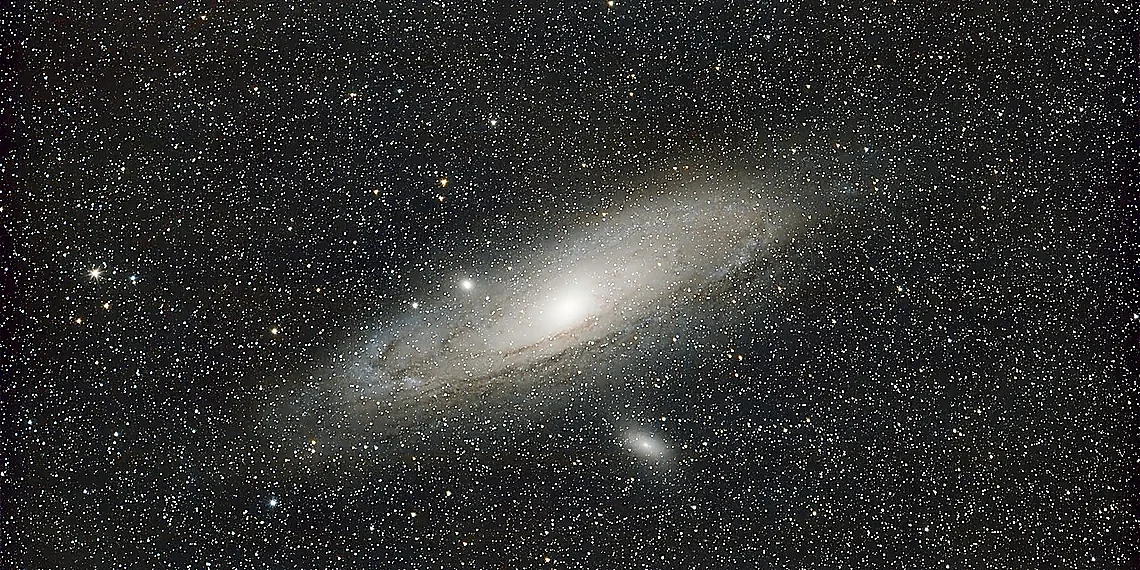
The journey to map a third of the observable universe has truly begun, and the early data from the Euclid mission promises to reshape our cosmological models in profound ways. We’ve seen how this ambitious project is tackling some of the biggest mysteries surrounding dark matter, dark energy, and the accelerating expansion of the universe, offering unprecedented insights into the large-scale structure of space-time. The meticulous measurements of billions of galaxies, combined with sophisticated analysis techniques, will undoubtedly challenge existing theories and pave the way for a more complete picture of our cosmic origins and ultimate fate. Understanding these fundamental forces is crucial not just for astronomers but for anyone curious about our place in the vast expanse of existence; the Euclid mission represents a giant leap forward in that pursuit. The potential for groundbreaking discoveries remains immense, and we’re only at the cusp of what this incredible telescope can reveal. Stay tuned as scientists continue to process data and refine their understanding of the cosmos – it’s an exciting time to be following these developments! For those eager to delve deeper, we’ve compiled a list of links to the Euclid mission website, related research papers, and stunning visualizations; explore them to expand your knowledge and share in the wonder of cosmic exploration.
https://www.esa.int/Science_Exploration/Euclid
https://www.space.com/euclid-mission-unveils-first-images
https://www.nasa.gov/mission_pages/euclid/main/index.html
Continue reading on ByteTrending:
Discover more tech insights on ByteTrending ByteTrending.
Discover more from ByteTrending
Subscribe to get the latest posts sent to your email.