

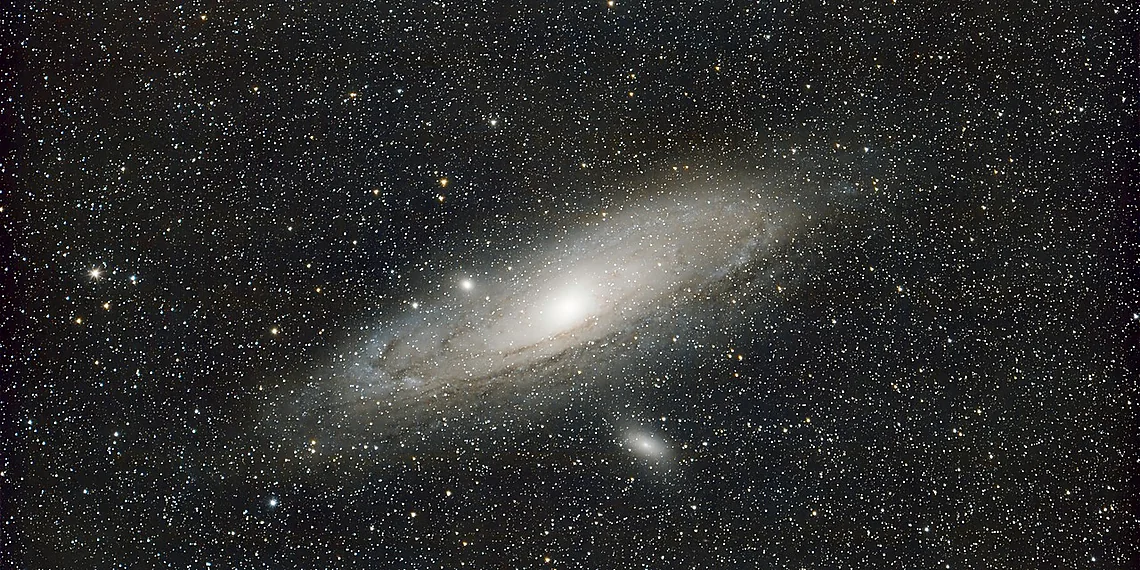

The universe holds secrets, vast and profound, that challenge our fundamental understanding of reality. For decades, scientists have grappled with a perplexing enigma: the existence of dark matter, an invisible substance making up roughly 85% of all matter in the cosmos. We can’t see it, we don’t know what it’s made of, but its gravitational influence shapes galaxies and drives cosmic structure formation on a grand scale.
A crucial aspect of this unseen architecture are dark matter halos – vast, spherical regions where dark matter accumulates, acting as scaffolding for the formation of galaxies. These halos aren’t directly observable either; their presence is inferred through their gravitational effects on visible matter. Mapping these elusive structures has been historically difficult and computationally intensive, hindering our ability to fully understand how galaxies evolve.
Now, a groundbreaking new code promises to revolutionize this process, offering unprecedented speed and accuracy in simulating and visualizing dark matter halos. This innovative tool allows researchers to explore the intricate details of cosmic structure formation with greater precision than ever before, potentially unlocking vital clues about the nature of dark matter itself.
The Dark Matter Enigma
For nearly a century, physicists have grappled with one of the universe’s biggest mysteries: dark matter. It’s called ‘dark’ not because it’s inherently sinister, but because it doesn’t interact with light – meaning we can’t see it directly. Despite this invisibility, its existence is inferred through powerful gravitational effects. Galaxies rotate far faster than they should based on the visible matter alone; stars are flung outward if gravity isn’t holding them in. Similarly, light bends around massive objects more than expected, a phenomenon called gravitational lensing, further suggesting the presence of unseen mass. Without dark matter’s gravitational influence, galaxies wouldn’t have formed as we observe them, and our very existence would be impossible.
The importance of understanding dark matter extends far beyond galactic rotation curves. It plays a crucial role in cosmology – the study of the universe’s origin, evolution, and structure. Current models suggest that dark matter makes up roughly 85% of all matter in the universe, dwarfing the visible ‘ordinary’ matter we’re familiar with. Its distribution dictates how large-scale structures like galaxies and galaxy clusters form over cosmic time. Therefore, unlocking its secrets is fundamental to building a complete picture of our universe’s history and future.
However, studying something you can’t directly observe presents immense challenges. Scientists rely on indirect evidence—gravitational effects—which are often subtle and difficult to isolate from other astrophysical phenomena. Numerous theoretical candidates for dark matter have been proposed over the years, ranging from Weakly Interacting Massive Particles (WIMPs) – once a leading contender – to axions and self-interacting dark matter (SIDM). SIDM, in particular, suggests that dark matter particles interact with each other via forces beyond gravity; this interaction could subtly alter the distribution of dark matter within galaxies and galaxy clusters, potentially providing clues to its true nature.
The difficulty lies in distinguishing between the effects of different dark matter models. Traditional ‘cold dark matter’ simulations predict a specific structure for dark matter halos – the massive gravitational wells that surround galaxies – which don’t always perfectly match observations. This discrepancy fuels the search for alternative models like SIDM, and innovative tools are crucial to explore their implications. New code being developed by researchers is designed to map these dark matter halos with greater precision, offering a vital pathway towards resolving this cosmic enigma.
What Exactly *Is* Dark Matter?

For decades, astronomers have known that something unseen is influencing how galaxies behave. We call this ‘dark matter,’ and it makes up roughly 85% of all matter in the universe – meaning everything we *can* see (stars, planets, gas) only accounts for a small fraction of what’s actually out there! The term ‘dark’ refers to the fact that it doesn’t interact with light; it neither emits nor absorbs it, making it invisible to telescopes.
The existence of dark matter isn’t just a theoretical hunch. We infer its presence through its gravitational effects. For example, galaxies rotate much faster than they should based on the visible matter alone – stars at their outer edges are flung outwards unless there’s extra mass providing additional gravity. Similarly, light from distant galaxies bends around massive objects in a phenomenon called gravitational lensing; the degree of bending is far greater than can be explained by visible matter, suggesting the presence of unseen dark matter ‘halos’ surrounding these galaxies.
Scientists have proposed various candidates for what dark matter might actually *be*. Some leading contenders include WIMPs (Weakly Interacting Massive Particles), which are hypothetical particles that interact very weakly with normal matter, and SIDM (Self-Interacting Dark Matter), a class of models where dark matter particles can collide with each other. Detecting these particles directly remains one of the biggest challenges in modern physics, pushing researchers to develop increasingly sensitive instruments and sophisticated simulations like the new code highlighted in this article.
Introducing ‘HaloMapper’: A New Tool for Cosmic Cartography
For decades, physicists have grappled with the enigmatic nature of dark matter – an invisible substance that makes up roughly 85% of the universe’s mass. While we can’t directly observe it, its gravitational influence shapes the large-scale structure of the cosmos. Now, a team at Perimeter Institute has developed ‘HaloMapper’, a groundbreaking new code designed to meticulously map these elusive dark matter halos – regions where dark matter accumulates and influences galaxy formation. This tool represents a significant leap forward in our ability to study this fundamental component of the universe.
Previous methods for mapping dark matter halos have often struggled with accuracy, particularly when dealing with scenarios involving self-interacting dark matter (SIDM). SIDM proposes that dark matter particles interact with each other, unlike the standard ‘cold dark matter’ model. These interactions can subtly alter the shapes and distributions of dark matter halos, making them appear smoother and less concentrated than predicted by traditional simulations. HaloMapper directly addresses this challenge by incorporating sophisticated algorithms that accurately simulate these subtle differences, allowing researchers to distinguish between SIDM effects and those produced by cold dark matter.
So how does HaloMapper work? At its core, the code simulates the evolution of cosmic structures from tiny density fluctuations in the early universe. It tracks the gravitational interactions of both visible (baryonic) matter and dark matter over billions of years. By carefully adjusting parameters that represent SIDM’s interaction strength, researchers can observe how these forces reshape halo distributions – creating a detailed ‘map’ revealing the potential influence of self-interacting dark matter on galaxy formation. This allows for testing various theoretical models and refining our understanding of the universe’s hidden architecture.
The development of HaloMapper marks an exciting moment in astrophysics. It not only provides a powerful new tool for studying dark matter halos but also opens up avenues for exploring alternative theories about dark matter’s behavior. By allowing scientists to more precisely map these invisible structures, HaloMapper promises to unlock deeper insights into the fundamental nature of our universe and potentially shed light on one of cosmology’s biggest mysteries.
How HaloMapper Works: Simulating the Invisible
HaloMapper, developed at Perimeter Institute, tackles a significant challenge in cosmology: visualizing and understanding the distribution of dark matter. Dark matter itself is invisible – it doesn’t interact with light – so scientists can’t directly observe it. Instead, its presence is inferred through its gravitational effects on visible matter like galaxies. HaloMapper works by simulating how structures form in the universe over billions of years, starting from tiny fluctuations in density after the Big Bang. These simulations track the growth of dark matter ‘halos,’ which are vast regions where dark matter concentrates and within which galaxies eventually form.
The code’s power lies in its ability to model a wide range of scenarios, including those involving self-interacting dark matter (SIDM). Standard cosmological models assume that dark matter particles barely interact with each other. However, SIDM posits that these particles *do* interact, albeit weakly. This interaction changes the way halos form and evolve; they become less concentrated and more spherical compared to halos formed from collisionless dark matter. HaloMapper allows researchers to explore how different amounts of self-interaction affect the shape and distribution of these halos, offering valuable insights into whether SIDM is a viable explanation for observed cosmic structures.
Previous methods often relied on simplified approximations or computationally expensive techniques that limited their ability to map large volumes of space with sufficient detail. HaloMapper overcomes these limitations by employing advanced algorithms and optimized code, enabling simulations across much larger scales and with higher resolution. This allows scientists to compare the simulated halo distributions with observations from galaxy surveys more accurately, potentially revealing subtle clues about the true nature of dark matter.
Self-Interacting Dark Matter and Cosmic Evolution
The prevailing theory of dark matter, known as Cold Dark Matter or CDM, has successfully explained many aspects of the universe’s large-scale structure. However, it struggles to fully account for observations within galaxies themselves – particularly the distribution of stars and gas in dwarf galaxies. A compelling alternative gaining traction is self-interacting dark matter (SIDM). Unlike CDM, which interacts with ordinary matter only through gravity, SIDM posits that dark matter particles can bump into each other. This interaction isn’t strong enough to dramatically alter the universe’s overall structure but could significantly impact how individual galaxies form and evolve.
These interactions fundamentally change the dynamics within dark matter halos – the vast, invisible structures that surround galaxies and dictate their formation. CDM predicts a ‘cuspy’ density profile in these halos: meaning a steep increase in density towards the center. Observations often reveal shallower, more even distributions, known as ‘cored’ profiles. SIDM offers a potential explanation for this discrepancy; the self-interactions effectively smooth out the central density, creating those observed cores. Furthermore, SIDM can lead to halos that are less spherical and more elongated than what CDM predicts, impacting how galaxies settle within them.
To rigorously test these theories, scientists need powerful tools capable of mapping dark matter halos with unprecedented precision. Enter HaloMapper, a new code developed at Perimeter Institute. This sophisticated software uses simulations to generate detailed models of dark matter distribution based on varying SIDM interaction strengths. By comparing these simulated halo shapes and densities with real-world observations – particularly those obtained from gravitational lensing or stellar kinematics – researchers can constrain the parameters governing self-interaction and determine whether SIDM is a viable explanation for galactic evolution.
HaloMapper’s ability to generate detailed, customizable simulations represents a significant advancement. It allows scientists to explore a wider range of SIDM models than previously possible and directly compare theoretical predictions with observational data. Ultimately, this tool promises to shed light on the nature of dark matter itself, refining our understanding of not only galaxies but also the fundamental forces shaping the cosmos.
The Role of Self-Interaction: Shaping Galaxies?

For decades, scientists have assumed that dark matter – the mysterious substance making up roughly 85% of the universe’s mass – interacts very weakly with itself and normal matter. This standard model, known as Cold Dark Matter (CDM), predicts a specific distribution of dark matter in galaxies and across the cosmos. However, observations sometimes contradict these predictions, particularly concerning the density profiles within dwarf galaxies and the smoothness of some galactic structures. Enter self-interacting dark matter (SIDM): an alternative theory suggesting that dark matter particles *do* interact with each other through forces beyond gravity.
The ‘self-interaction’ part is key. Unlike CDM where dark matter clumps solely due to gravitational pull, SIDM experiences additional pressure from these particle interactions. This pressure can smooth out the density peaks predicted by CDM, leading to less concentrated, or ‘cored,’ dark matter halos around galaxies. Imagine squeezing playdough – the more you press it, the smoother and less lumpy it becomes. Similarly, self-interactions would flatten the central regions of dark matter halos, potentially resolving discrepancies observed in dwarf galaxies that appear ‘too fluffy’ according to CDM.
These differences in halo shape and density have significant implications for galaxy formation. The way a galaxy’s dark matter halo influences its evolution – how it attracts gas, how stars form within it – is crucial. Because HaloMapper allows researchers to simulate and map these halos with unprecedented detail, it provides an invaluable tool to test whether SIDM or CDM more accurately describes the universe we observe. By comparing simulations generated with different self-interaction strengths against real observational data, scientists can begin to discern which model best explains the distribution of dark matter and its impact on cosmic structures.
Beyond Mapping: Future Implications & Research
The development of HaloMapper isn’t just about creating a more detailed map of existing dark matter halos; it’s a springboard for tackling fundamental questions about the universe’s structure and evolution. This new code provides researchers with an unprecedented ability to simulate and analyze SIDM, allowing them to test theoretical models against each other in ways previously impossible. By varying parameters within the simulations – things like the strength of self-interaction or the density profile – scientists can generate a range of halo shapes and distributions, directly comparing these predictions to observations from telescopes currently probing distant galaxies.
Looking ahead, HaloMapper’s capabilities extend beyond simply refining our understanding of SIDM. It can be used to explore how different dark matter models impact smaller-scale structures within halos, potentially revealing subtle signatures that could distinguish between various candidates. Furthermore, the code’s ability to rapidly generate and analyze simulations opens doors for collaborative efforts with observational astronomers. By providing detailed mock observations based on these simulations, researchers can help guide telescope surveys and optimize data analysis techniques, ultimately maximizing the chances of detecting faint signals related to dark matter.
The implications aren’t limited to pure astrophysics either. The algorithms developed within HaloMapper – particularly those dealing with complex spatial mapping and efficient computational processing – could potentially find applications in other fields. Imagine using similar techniques for optimizing resource allocation in logistics, creating more accurate climate models, or even improving medical imaging. While these are early speculative possibilities, the core technological advancements driving this code’s performance could have surprising spin-off benefits.
Ultimately, HaloMapper represents a powerful new tool that will continue to shape our understanding of dark matter and its influence on the cosmos. Future research utilizing this code is likely to focus on probing the ‘missing baryon problem’ – why we observe less ordinary matter than predicted by cosmological models – and testing whether self-interacting dark matter can explain discrepancies between simulations and observations in dwarf galaxies. The ongoing exploration promises not only a deeper glimpse into the invisible scaffolding of our universe but also potential technological advancements along the way.
What’s Next? Unlocking Further Cosmic Secrets
The development of HaloMapper opens exciting avenues for refining our understanding of galaxy formation. By providing a more detailed and computationally efficient way to simulate dark matter halos, researchers can test various cosmological models with unprecedented precision. This includes exploring scenarios beyond the standard Cold Dark Matter (CDM) model, particularly those involving self-interacting dark matter (SIDM). SIDM’s unique properties, like increased scattering between particles, could explain discrepancies observed in galaxy cluster distributions and dwarf galaxy morphologies – features that CDM struggles to fully account for.
Beyond simply refining existing models, HaloMapper has the potential to probe alternative dark matter candidates. While SIDM is a leading hypothesis, other possibilities exist, each leaving distinct imprints on halo structure. The code’s flexibility allows scientists to incorporate different dark matter interaction strengths and particle physics properties into simulations, facilitating searches for subtle deviations from CDM predictions. This could involve investigating axions or sterile neutrinos, broadening the scope of dark matter research significantly.
Crucially, the utility of HaloMapper extends far beyond purely computational efforts. Close collaboration with observational astronomers is essential to validate these simulated maps against actual observations of galaxy clusters and dwarf galaxies using telescopes like the James Webb Space Telescope. This synergy – combining detailed simulations with high-resolution astronomical data – promises a more complete picture of dark matter halos and their role in shaping the universe. While direct technological spin-offs are unlikely, the advanced computational techniques developed for HaloMapper could find applications in other fields requiring large-scale simulations, such as climate modeling or materials science.
The development of this innovative code marks a pivotal moment in our pursuit of understanding the universe’s hidden architecture, offering an unprecedented ability to model and visualize cosmic structures previously shrouded in mystery. It represents a significant leap forward from existing methods, allowing researchers to explore simulations with far greater detail and efficiency than ever before possible. This advancement is particularly exciting because it promises to refine our understanding of how galaxies form and evolve within the gravitational influence of vast, invisible structures like dark matter halos. The ability to simulate these complex processes with such accuracy opens doors to testing fundamental cosmological theories and potentially revealing new physics beyond our current grasp. We’re now poised to investigate not just *where* these dark matter halos exist but also how their properties shape the distribution of visible matter we observe, ultimately painting a more complete picture of cosmic evolution. The future of astrophysics is bright, fueled by increasingly sophisticated tools and the relentless curiosity of scientists pushing the boundaries of our knowledge. To stay informed about this fascinating field and other groundbreaking discoveries, we encourage you to delve deeper into dark matter research through reputable scientific resources. Follow ByteTrending to remain at the forefront of these exciting breakthroughs – new revelations are always just around the corner!
ByteTrending will continue to bring you updates on this crucial area of study and many more, so be sure to subscribe for future insights.
Continue reading on ByteTrending:
Discover more tech insights on ByteTrending ByteTrending.
Discover more from ByteTrending
Subscribe to get the latest posts sent to your email.