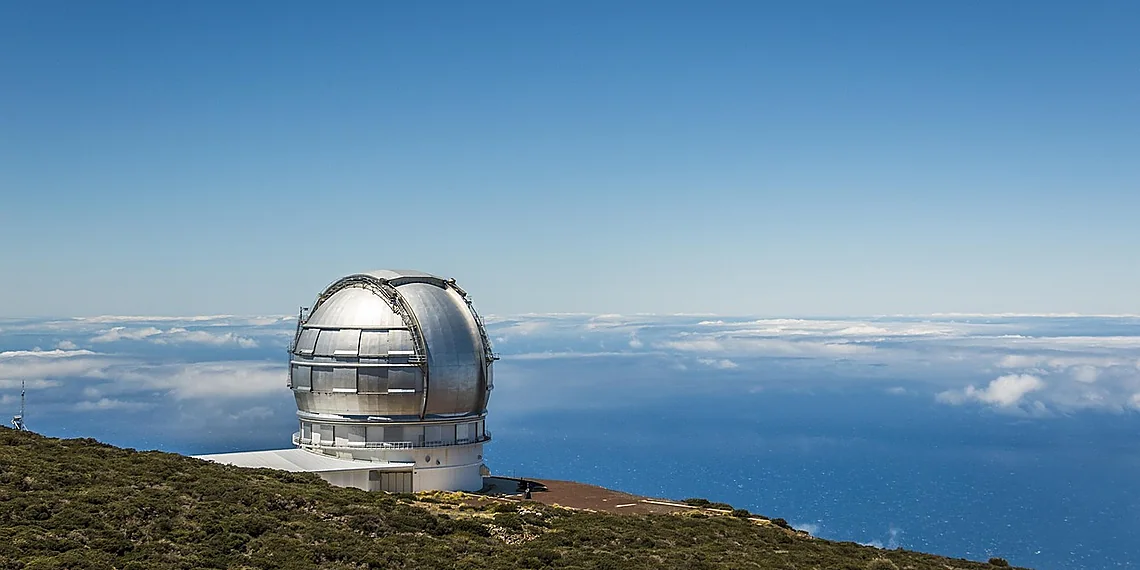



The cosmos has always whispered secrets, beckoning humanity to unravel its mysteries. Now, we stand on the precipice of an unprecedented era in astronomical discovery, fueled by a collaborative effort pushing the boundaries of what’s possible. Imagine peering deeper into the universe than ever before, witnessing the birth of galaxies and potentially even uncovering signs of life beyond Earth – that future is rapidly approaching thanks to the Extremely Large Telescope (ELT). This isn’t just another observatory; it represents a monumental leap in observational power, promising revelations that will reshape our understanding of existence itself. While headlines often focus on European involvement, there’s a crucial and inspiring story unfolding beneath the surface: Brazil’s vital role in this groundbreaking project. For years, Brazilian scientists and engineers have been quietly but diligently contributing their expertise to the ELT’s development, particularly in areas of adaptive optics and instrumentation – technologies essential for maximizing the performance of this Giant Telescope. Their dedication is not merely a supporting act; it’s an integral part of what will allow us to see further and clearer than ever before. It’s time to shine a light on this significant contribution and celebrate Brazil’s place amongst the global leaders in astronomical innovation. The ELT, currently under construction in Chile’s Atacama Desert, will be the world’s largest optical/near-infrared Giant Telescope. It represents a truly international collaboration involving numerous countries and institutions, each bringing unique skills and resources to the table. Brazil’s involvement extends beyond simply providing personnel; they are actively shaping the technology that will enable this incredible instrument to function at its peak potential. This partnership underscores Brazil’s commitment to scientific advancement and strengthens its position as a key player in international research endeavors. The Extremely Large Telescope (ELT): A New Era of Astronomy The Extremely Large Telescope (ELT), currently under construction in Chile’s Atacama Desert, isn’t just another telescope; it represents a monumental leap forward for astronomy and a paradigm shift in our ability to observe the cosmos. With a primary mirror spanning an astonishing 39 meters – nearly four times the diameter of the Hubble Space Telescope – the ELT will gather significantly more light, enabling scientists to see fainter, more distant objects than ever before. This immense size translates directly into unprecedented resolution; imagine peering through a microscope with the power to resolve details on planets orbiting stars hundreds of light-years away. The sheer scale and capabilities of the ELT promise to unlock secrets about the early universe, exoplanet atmospheres, and the formation of galaxies. What truly sets the ELT apart is its ability to address some of astronomy’s most fundamental questions. Existing telescopes have provided invaluable data, but they are limited by their size and resolution. The ELT will allow us to probe directly into the environments around black holes, study the chemical composition of exoplanet atmospheres in unprecedented detail (potentially identifying biosignatures), and observe the very first stars and galaxies that formed after the Big Bang – objects currently shrouded in darkness. It’s akin to upgrading from a standard camera to one with vastly superior sensors and lenses; suddenly, details previously invisible become clear. A key component of this groundbreaking project is MOSAIC, an instrument Brazil is contributing significantly to its development. This advanced spectrograph will allow scientists to analyze the light collected by the ELT, breaking it down into its constituent colors to determine the chemical composition and velocity of distant objects. The Brazilian contribution, spearheaded by institutions like FAPESP (São Paulo Research Foundation) and IAG/USP (Institute for Astronomy, Geophysics and Atmospheric Sciences at the University of São Paulo), underscores the nation’s growing role in international scientific collaborations and its commitment to pushing the boundaries of astronomical discovery. The ELT’s construction represents a truly global effort, with contributions from numerous countries and research institutions. Its completion will mark the dawn of a new era in astronomy, allowing us to witness the universe with unparalleled clarity and potentially rewrite our understanding of our place within it. The Brazilian involvement through the development of MOSAIC highlights not only the technical expertise within the country but also its dedication to collaborative scientific endeavors aimed at unraveling the mysteries that lie beyond our solar system. Beyond Current Limits: What Makes the ELT Special? The Extremely Large Telescope (ELT), currently under construction in Chile’s Atacama Desert, is poised to revolutionize astronomy with its unprecedented scale and capabilities. Its primary mirror will span 39 meters in diameter – significantly larger than the current largest optical telescope, the Keck I at 10 meters. This massive size translates directly into increased light-gathering power: the ELT will collect approximately 13 times more light than the Hubble Space Telescope, allowing it to observe objects far fainter and more distant. Beyond just collecting more light, the ELT’s sheer size enables significantly higher resolution observations. Its resolving power is estimated to be roughly 15 times greater than that of Hubble, meaning it can distinguish much finer details in celestial objects. This advanced resolution will allow scientists to directly image exoplanets – planets orbiting stars other than our sun – and analyze their atmospheres for potential biosignatures, indicators of life. The telescope’s adaptive optics system, which corrects for atmospheric distortion in real-time, further enhances its ability to produce sharp, clear images. The ELT’s capabilities will enable groundbreaking research across numerous astronomical fields. Scientists hope to use it to study the first galaxies that formed after the Big Bang, observe the growth of supermassive black holes at the centers of galaxies, and probe the atmospheres of potentially habitable exoplanets in unprecedented detail. The MOSAIC instrument, being developed with Brazilian participation, will be crucial for spectroscopic observations – analyzing the light from these distant objects to determine their composition and movement, furthering our understanding of the universe’s origins and evolution. Brazil’s Contribution: The MOSAIC Instrument Brazil’s contribution to the Extremely Large Telescope (ELT) project extends beyond mere financial support; it’s a significant technological partnership centered around the development of MOSAIC, a cutting-edge multi-object spectrograph. This instrument represents a vital piece of the ELT puzzle and underscores Brazil’s growing role in international astronomical endeavors. The collaborative effort involves key Brazilian institutions including FAPESP (São Paulo Research Foundation), IAG/USP (Institute for Astronomy, Geophysics and Atmospheric Sciences at the University of São Paulo), and the National Laboratory of Astrophysics – each bringing unique expertise to bear on this ambitious project. MOSAIC’s function is crucial to the ELT’s overall mission. As a multi-object spectrograph, it allows astronomers to simultaneously analyze the light from hundreds or even thousands of galaxies at once. Unlike traditional telescopes that focus on individual objects, MOSAIC will dramatically increase observing efficiency and enable unprecedented large-scale surveys of the universe. The instrument splits incoming light into its constituent colors (a spectrum), revealing details about a galaxy’s chemical composition, temperature, velocity, and distance – unlocking crucial information about their formation and evolution. The scientific goals enabled by MOSAIC are ambitious. It will play a pivotal role in studying the earliest galaxies formed after the Big Bang, providing insights into how these structures grew over cosmic time. Furthermore, its capabilities extend to exoplanet research; analyzing the light that passes through an exoplanet’s atmosphere allows scientists to identify the presence of various elements and potentially detect biosignatures – indicators of life beyond Earth. The development of MOSAIC is a testament to Brazil’s commitment to pushing the boundaries of astronomical discovery, fostering international collaboration, and contributing to humanity’s understanding of our place in the cosmos. The creation of MOSAIC isn’t just about building an instrument; it represents a significant investment in Brazilian scientific capacity. The project has fostered valuable training opportunities for Brazilian scientists and engineers, strengthening the nation’s expertise in advanced instrumentation and astronomical research. By participating so directly in the ELT’s development, Brazil secures a prominent place within this groundbreaking international collaboration and ensures access to invaluable data from the world’s most powerful telescope. MOSAIC: Unveiling Distant Galaxies Brazil is playing a crucial role in the development of the Extremely Large Telescope (ELT), currently under construction in Chile. A significant portion of this contribution centers around the MOSAIC instrument, a state-of-the-art multi-object spectrograph being collaboratively built by Brazilian institutions including FAPESP, IAG/USP, and the National Laboratory of Astrophysics. MOSAIC represents a substantial investment for Brazil and underscores its growing importance in international astronomical endeavors. MOSAIC’s primary function is to simultaneously analyze light from hundreds of galaxies across vast distances. Unlike traditional spectrographs that examine one object at a time, MOSAIC will utilize an array of optical fibers to capture the spectra of numerous galaxies concurrently. This capability allows for vastly more efficient data collection and analysis, enabling scientists to study the properties of galaxy populations as a whole rather than focusing on individual objects. The scientific goals enabled by MOSAIC are ambitious. It’s expected to contribute significantly to our understanding of galaxy formation and evolution, allowing researchers to map the distribution of elements within distant galaxies and trace their growth over cosmic time. Furthermore, MOSAIC’s capabilities will extend to exoplanet research, enabling detailed analysis of exoplanet atmospheres through observations of starlight filtered by planetary gases – potentially revealing biosignatures and furthering our search for life beyond Earth. Brazilian Expertise: Institutions & Researchers Brazil’s involvement in the Extremely Large Telescope (ELT) project, specifically through the development of the crucial MOSAIC instrument, is being spearheaded by a network of leading Brazilian institutions and talented researchers. The São Paulo Research Foundation (FAPESP) plays a vital role, providing substantial funding that has enabled significant advancements within the MOSAIC project. This financial support isn’t just about dollars; it’s fueling groundbreaking research and allowing Brazilian scientists to contribute meaningfully to an international scientific endeavor of immense scale. The Institute for Astronomy, Geophysics and Atmospheric Sciences (IAG/USP) is a key player, with its researchers contributing significantly to the design and testing of MOSAIC’s adaptive optics system. Their expertise in wavefront sensing and control is paramount to ensuring the telescope’s ability to overcome atmospheric distortions and achieve incredibly sharp images. Simultaneously, the National Laboratory of Astrofisics (LNA) focuses on developing advanced detectors for MOSAIC, pushing the boundaries of sensitivity and enabling observations of faint objects previously beyond our reach. These institutions aren’t just participating; they are actively shaping the capabilities of this next-generation telescope. Several individual researchers from these institutions are at the forefront of this collaborative effort. For example, Dr. at IAG/USP is leading a team focused on refining algorithms for real-time image correction, while colleagues at LNA are pioneering new fabrication techniques for highly efficient detector arrays. These contributions highlight Brazil’s growing reputation as a hub for cutting-edge astronomical instrumentation and underscore the importance of continued investment in scientific research within the country. The MOSAIC project truly represents a showcase for Brazilian ingenuity on a global stage.
The combined efforts of FAPESP, IAG/USP, and LNA, alongside dedicated researchers, are not only advancing our understanding of the universe but also solidifying Brazil’s position as a significant contributor to international scientific collaborations. The MOSAIC instrument, built in part thanks to Brazilian expertise, promises unprecedented views into the cosmos – a testament to the power of collaborative science and the invaluable role played by institutions committed to pushing the boundaries of astronomical exploration.
A Collaborative Effort: The Teams Behind the Innovation
The development of MOSAIC, a critical instrument for the Extremely Large Telescope (ELT), isn’t solely an international endeavor; Brazil plays a significant role thanks to the dedicated efforts of researchers and engineers from key institutions. The Institute for Astronomy, Geophysics and Atmospheric Sciences at the University of São Paulo (IAG/USP) leads Brazilian contributions, with teams focusing on detector technology and software development vital for MOSAIC’s functionality. Researchers like Dr. Carlos Mendes de Oliveira, specializing in adaptive optics and image processing, are instrumental in ensuring the telescope’s ability to produce incredibly sharp images.
Another crucial contributor is the National Laboratory of Astrofisics (LNA), whose expertise lies in detector calibration and data analysis techniques essential for MOSAIC’s operation. Engineers at LNA are developing methods to handle the immense volume of data generated by the instrument, ensuring its scientific output remains reliable and insightful. The work being done at IAG/USP and LNA directly addresses challenges related to high-resolution imaging and spectral analysis in astronomical observation.
The São Paulo Research Foundation (FAPESP) has been a cornerstone of Brazil’s involvement, providing substantial funding for these collaborative projects. FAPESP’s investment allows Brazilian scientists and engineers to dedicate their time and resources to MOSAIC’s development, fostering innovation and strengthening Brazil’s position in international astronomical research. Without this crucial financial backing, the level of contribution from IAG/USP and LNA would be significantly diminished.
Looking Ahead: The Future of Brazilian Astronomy
Brazil’s participation in the Extremely Large Telescope (ELT) project signifies a pivotal moment for the nation’s scientific advancement, extending far beyond simply contributing to a groundbreaking astronomical instrument. The development of MOSAIC, the sophisticated instrument Brazil is helping to build, positions the country at the forefront of observational astronomy and opens doors to unprecedented discoveries about the universe – regions previously shrouded in darkness. This involvement isn’t just about observing; it’s about building expertise and infrastructure that will catalyze innovation across multiple scientific disciplines.
The impact on Brazilian STEM education is particularly noteworthy. Witnessing Brazil play a crucial role in such an ambitious international project has the potential to ignite a passion for science and technology among young Brazilians, inspiring them to pursue careers as astronomers, engineers, and researchers. The challenges inherent in developing MOSAIC will demand innovative solutions, fostering a culture of problem-solving and pushing the boundaries of Brazilian technological capabilities – leading to valuable spin-off technologies with applications far beyond astronomy.
Looking even further ahead, Brazil’s experience gained through the ELT project strengthens its position for future space exploration endeavors. The knowledge acquired in developing complex instruments like MOSAIC will be invaluable as Brazil continues to develop its own space program and potentially contributes to international missions. This involvement represents a long-term investment in Brazilian scientific capital, laying the groundwork for breakthroughs that could redefine our understanding of the cosmos and our place within it.
Ultimately, Brazil’s role in the Giant Telescope isn’t just about peering deeper into the universe; it’s about investing in its own future. It’s a commitment to nurturing homegrown talent, fostering technological innovation, and solidifying Brazil’s position as a significant player on the global stage of scientific discovery. The ripple effects of this participation will be felt for generations to come, shaping the landscape of Brazilian science and inspiring a new era of exploration.
Inspiring a New Generation of Scientists
Brazil’s involvement in constructing the Extremely Large Telescope (ELT), specifically through its contribution to the MOSAIC instrument, presents a significant opportunity to inspire a new generation of Brazilian scientists and engineers. Witnessing their nation playing a crucial role in such a groundbreaking international project can ignite passion for STEM fields among young Brazilians. The complexity and scale of the ELT, coupled with Brazil’s specific technological contributions, demonstrate that advanced scientific careers are attainable and vital for national progress, potentially leading to increased enrollment in physics, astronomy, and engineering programs.
Beyond inspiring future scientists, Brazil’s participation promises tangible spin-off technologies and advancements. The development of MOSAIC requires innovations in optics, detector technology, and data processing – expertise that can be applied to other sectors within the Brazilian economy. These technological breakthroughs could benefit industries ranging from medical imaging to materials science, fostering economic growth and creating high-skilled jobs. Furthermore, collaborating on such a large project builds crucial international partnerships and strengthens Brazil’s scientific infrastructure.
This involvement in the ELT also lays groundwork for future Brazilian space missions. The experience gained in developing MOSAIC and working with cutting-edge astronomical instrumentation can be directly applied to designing and building future satellites and probes. It establishes expertise applicable to broader space exploration goals, potentially paving the way for independent Brazilian space programs focused on Earth observation, scientific discovery, or even lunar/planetary missions – all fueled by a burgeoning scientific workforce inspired by the ELT project.
Brazil’s contribution to the Extremely Large Telescope, or ELT, isn’t just a footnote in astronomical history; it represents a pivotal moment for South American science and a testament to Brazilian ingenuity. The precision optics and advanced instrumentation being developed here will undoubtedly enhance our understanding of the universe, pushing the boundaries of what we thought possible. This collaboration highlights Brazil’s growing capacity to not only participate but also lead in groundbreaking international scientific endeavors. Imagine the breathtaking images and revolutionary data that a Giant Telescope, benefiting from Brazilian expertise, will unveil – possibilities seem limitless! The investment signifies more than just technological advancement; it’s an investment in future generations of scientists and engineers within Brazil. We’re on the cusp of unlocking incredible cosmic secrets, and Brazil is firmly positioned to be at the forefront of this exciting era. To truly appreciate the breadth of Brazilian ambition in space, we invite you to explore the fascinating world of Brazilian space exploration initiatives – discover the ongoing projects, dedicated researchers, and future missions shaping our nation’s place among the stars. Learn more about how Brazil is reaching for the cosmos; a wealth of information awaits at [link to relevant resource/website].
Explore the Brazilian Space Agency’s website or search for articles detailing their current and planned projects.
Source: Read the original article here.
Discover more tech insights on ByteTrending ByteTrending.
Discover more from ByteTrending
Subscribe to get the latest posts sent to your email.