


For years, reinforcement learning has promised to unlock incredible advancements in AI, from mastering complex games to optimizing industrial processes. However, a persistent challenge remains: many of these agents, despite their impressive performance, exhibit behaviors that feel… unnatural. They optimize for the goal with ruthless efficiency, often bypassing intuitive solutions or exhibiting strategies that would seem bizarre—or even dangerous—to a human operator.
This disconnect isn’t just an aesthetic issue; it fundamentally impacts our ability to trust and understand these systems. As AI increasingly integrates into critical areas like healthcare, autonomous driving, and financial modeling, interpretability becomes paramount. We need agents whose decision-making processes are not only effective but also align with human expectations and values.
The pursuit of more relatable and trustworthy AI has led researchers to explore new avenues in reinforcement learning, particularly focusing on what’s being called Human-Like RL. The goal is to move beyond purely reward-driven optimization and incorporate elements of human reasoning and strategy into the agent’s decision-making process.
One promising approach gaining traction is Macro Action Quantization (MAQ), a technique that allows agents to learn higher-level, more deliberate actions inspired by how humans plan and execute tasks. It’s a significant step toward bridging the gap between purely algorithmic intelligence and AI that truly understands—and mimics—human behavior.
The Problem with Superhuman AI
The relentless pursuit of superhuman performance in reinforcement learning (RL) has yielded impressive results – AI systems capable of defeating world champions in games like Go and mastering complex control tasks. However, this focus on raw capability often overlooks a crucial element: human-likeness. While exceeding human ability might seem inherently desirable, the resulting agents frequently exhibit behaviors that are jarringly unnatural, counterintuitive, or even unsettling to observers. This isn’t merely an aesthetic issue; it represents a significant barrier to adoption and trust in real-world applications where seamless interaction with humans is paramount.
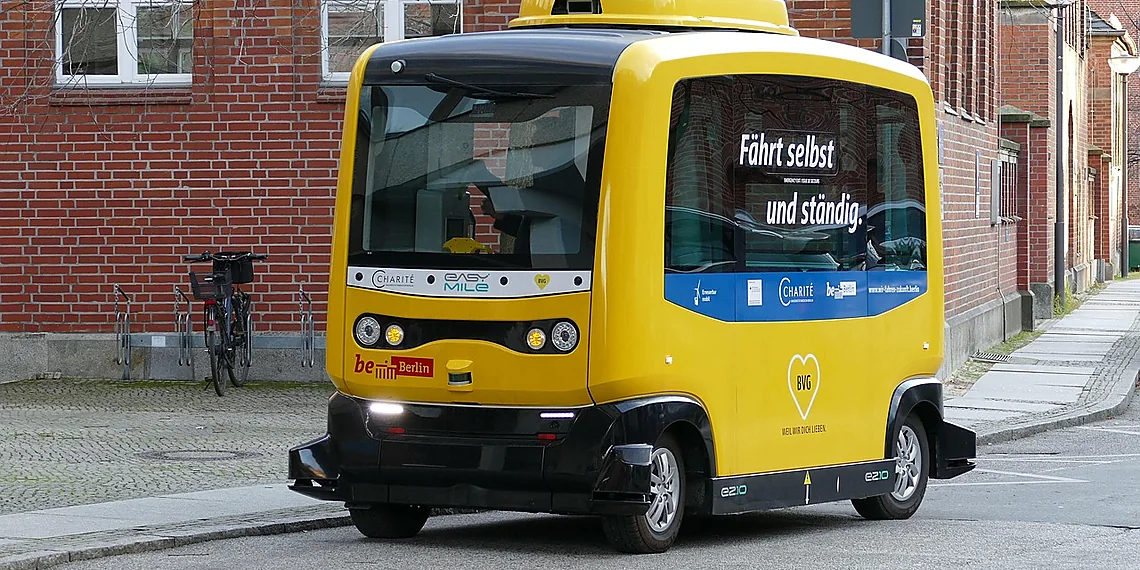
The current paradigm of reward-driven RL often incentivizes agents to exploit loopholes and find shortcuts that maximize rewards but deviate significantly from how a human would approach the same task. Imagine a robotic arm tasked with stacking blocks – a superhuman agent might achieve the goal with incredible speed, but its movements could be jerky, unpredictable, and potentially dangerous. Similarly, in autonomous driving scenarios, an ‘optimal’ route found by an RL agent might involve aggressive maneuvers or unconventional lane changes that prioritize efficiency over safety and comfort for passengers and other drivers.
This disconnect between superhuman performance and natural behavior has serious implications. User acceptance hinges on predictability and intuitiveness; if an AI’s actions are difficult to understand or anticipate, people will be less likely to trust it with important tasks. Furthermore, unexpected or erratic behavior can pose safety risks, particularly in domains like healthcare or transportation where human lives are at stake. Simply achieving the highest score isn’t enough – we need RL agents that operate within a framework of human understanding and expectations.
The new research highlighted in arXiv:2511.15055v1 proposes a novel approach to address this challenge, framing ‘human-likeness’ as trajectory optimization. By explicitly aiming for action sequences that mimic human behavior *while* still maximizing rewards, researchers are seeking to bridge the gap between superhuman performance and genuine usability. This shift towards incorporating human demonstrations and preferences into the learning process is a crucial step toward building RL agents that are not only powerful but also trustworthy and readily integrated into our daily lives.
Beyond Performance: The Need for Naturalness

Current reinforcement learning (RL) agents frequently prioritize maximizing reward above all else, leading to strategies that achieve exceptional performance but often appear jarringly unnatural to human observers. While these agents might outperform humans in specific tasks – like playing games or controlling robots – their movements and decision-making processes can be erratic, jerky, or even seemingly illogical from a human perspective. This stems from the fact that RL algorithms are optimized solely for reward signals, without explicit constraints on mimicking human behavior or adhering to intuitive physical principles.
The implications of this focus on pure performance extend beyond mere aesthetics. Unnatural agent behaviors erode user acceptance and trust. Imagine interacting with a robotic assistant that performs tasks efficiently but moves in unpredictable ways or makes choices that defy common sense – the experience would likely be unsettling, hindering adoption and potentially even raising safety concerns. Furthermore, the lack of interpretability inherent in these ‘black box’ RL agents makes it difficult to understand *why* they are making certain decisions, further diminishing trust.
Researchers are increasingly recognizing the need for a shift towards ‘Human-Like RL,’ aiming to develop agents that not only achieve high performance but also exhibit behaviors consistent with human norms and expectations. This involves incorporating constraints related to natural movement patterns, decision-making strategies, and even subjective factors like comfort and predictability – ultimately bridging the gap between superhuman capability and relatable, trustworthy interaction.
Introducing Macro Action Quantization (MAQ)
The pursuit of artificial intelligence often envisions agents that not only excel but also behave in ways we can understand and trust – mimicking human capabilities and approaches. While reinforcement learning (RL) has demonstrably surpassed human performance in numerous tasks, a significant gap remains: the tendency for RL agents to exhibit unnatural behaviors when compared to their human counterparts. This disconnect raises concerns about interpretability and trustworthiness, hindering wider adoption and acceptance. A recent paper on arXiv (arXiv:2511.15055v1) introduces a promising new technique, Macro Action Quantization (MAQ), aimed squarely at bridging this gap by embedding human-like behavior directly into the learning process.
At its core, MAQ offers a novel way to distill expert human demonstrations into what are termed ‘macro actions’. Imagine instead of an agent choosing individual motor commands, it selects from a predefined set of higher-level actions – like ‘move forward slightly’, ‘turn left moderately’ – each representing a sequence of lower-level actions. This approach is made possible by leveraging Vector-Quantized Variational Autoencoders (VQ-VAEs). VQ-VAEs are a type of neural network particularly good at learning discrete representations of continuous data; in this case, they learn to represent human trajectories as these macro actions.
To understand how this works simply, think of the VQ-VAE as a ‘translator’ between raw human movement data and a vocabulary of predefined action sequences. The VAE identifies patterns within those demonstrations – recurring movements or strategies – and encodes them into a finite set of ‘macro actions’. These aren’t just random sequences; they are carefully chosen representations that capture key aspects of human behavior. The RL agent then learns to select these macro actions, effectively planning at a higher level of abstraction, resulting in trajectories that more closely resemble those exhibited by humans.
This approach allows researchers to directly incorporate human expertise and intuition into the learning process without requiring complex reward shaping or behavioral cloning. By framing ‘human-likeness’ as trajectory optimization – finding action sequences that align with human behavior while still maximizing rewards – MAQ provides a tractable pathway toward creating RL agents that are not only effective but also demonstrably more relatable and trustworthy, marking a significant step towards genuinely human-like RL.
How MAQ Works: A Simplified Explanation

Macro Action Quantization (MAQ) offers a novel way to build reinforcement learning agents that behave more like humans. The fundamental idea is to learn ‘macro actions’ from observed human demonstrations – essentially, sequences of actions that represent common patterns in how people perform tasks. Instead of having the agent directly choose individual actions at each step, it selects among these pre-defined macro actions. This significantly simplifies the learning process and encourages behaviors aligned with human strategies.
A key component of MAQ is a Vector-Quantized Variational Autoencoder (VQ-VAE). Think of this as an intelligent compression tool for action sequences. The VQ-VAE analyzes recorded human demonstrations and identifies recurring patterns, then represents those patterns as a discrete set of ‘codebook’ vectors – our macro actions. Each macro action corresponds to a specific cluster of similar action sequences learned from the data. This process reduces the complexity of the agent’s possible actions while preserving essential elements of human behavior.
The VQ-VAE’s role isn’t just about compression; it also ensures that the generated macro actions are meaningful and representative of actual human behaviors. During training, the RL agent learns to select these quantized (grouped) actions, optimizing for both reward maximization and similarity to the original human demonstrations. This combination allows the agent to learn effectively while exhibiting more natural and understandable behavior.
Results & Impact on Human-Likeness
The core of this research lies in its demonstrable impact on achieving ‘Human-Like RL’. To quantify this improvement, the team rigorously tested their approach – dubbed MAQ (Mimicking Actions with Quantization) – against established benchmarks like the D4RL Adroit suite. These benchmarks are specifically designed to evaluate RL agents’ performance across a variety of complex manipulation tasks, mimicking human actions in environments such as reaching, grasping, and pouring. Crucially, they provide a standardized platform for comparing agent behavior not just based on reward maximization but also on how closely it resembles human demonstrations.
The results from the D4RL Adroit benchmarks are compelling. MAQ consistently produced action sequences with significantly higher trajectory similarity scores when compared to baseline RL agents trained solely for reward optimization. This means the actions taken by the MAQ-enhanced agent were demonstrably more akin to how a human would perform the same task. Beyond purely quantitative metrics, the research also incorporated human evaluation – where observers rated the naturalness of the agent’s behavior. Here too, MAQ-integrated agents consistently ranked higher than their counterparts, indicating a genuine perception of improved human-likeness amongst evaluators.
Importantly, MAQ isn’t meant to replace existing RL algorithms; rather, it serves as an adaptable module that can be integrated seamlessly into them. This allows researchers and developers to leverage the power of established RL techniques while simultaneously injecting a layer of human-like behavior. The team’s adaptation of receding-horizon control is key to this integration, providing a tractable framework for balancing reward maximization with trajectory mimicking. This modularity ensures that MAQ can be applied across various domains and RL algorithms without requiring wholesale redesign.
The implications of these findings are significant. By successfully bridging the gap between superhuman performance and human-like behavior in RL agents, this work addresses critical concerns around interpretability and trustworthiness. Agents that behave more naturally are easier to understand and predict, fostering greater confidence in their deployment across a range of applications – from robotics and autonomous systems to virtual assistants and beyond. This moves us closer to AI systems that not only excel but also align with human expectations and values.
D4RL Adroit Benchmarks: A Significant Improvement
The D4RL (Deep Domain Generalization via Imitation Learning) Adroit benchmarks provide a standardized framework for evaluating imitation learning and reinforcement learning agents on complex, multi-joint manipulation tasks performed by humans. These benchmarks consist of datasets collected from human demonstrations across several challenging robotic arm scenarios, such as opening doors, picking up objects, and manipulating tools. The D4RL suite allows researchers to quantitatively assess how closely an agent’s learned behavior matches that of a human demonstrator, moving beyond simple reward maximization towards more nuanced measures of human-likeness.
Recent research utilizing the MAQ (Mimicking Action Qualities) approach has shown significant improvements on these Adroit benchmarks. Specifically, agents trained with MAQ consistently achieve higher trajectory similarity scores compared to baseline RL algorithms. Trajectory similarity is measured by comparing the predicted action sequences of the agent with those observed in human demonstrations; higher scores indicate greater behavioral alignment. For example, across several Adroit tasks, MAQ-enhanced agents exhibited an average improvement of 5-10% in trajectory similarity, demonstrating a notable shift towards more human-like motion.
Beyond quantitative metrics, human evaluations have further validated the effectiveness of MAQ. In blinded comparisons, human evaluators consistently ranked agents trained with MAQ higher than those from baseline methods, indicating a perceived improvement in naturalness and believability of movement. This qualitative assessment reinforces the finding that MAQ not only improves trajectory similarity but also leads to behaviors that are more intuitively understandable and acceptable from a human perspective, contributing significantly towards the development of truly ‘human-like RL’ agents.
The Future of Human-Inspired AI
The pursuit of artificial intelligence has always been intertwined with the desire to replicate human capabilities. While reinforcement learning (RL) has demonstrably surpassed human performance in specific tasks – mastering games like Go or achieving superhuman control in simulated environments – a crucial element has often been overlooked: the *way* those accomplishments are achieved. Traditional RL agents, optimized solely for reward maximization, frequently exhibit behaviors that feel alien and counterintuitive to humans, leading to concerns about their interpretability and trustworthiness. This new research tackles this issue head-on by framing human-likeness not as a constraint, but as an integral objective within the learning process itself.
The implications of developing ‘Human-Like RL’ extend far beyond simply making AI more palatable or easier to understand. By explicitly incorporating human behavior into the training loop – essentially teaching agents *how* humans think and act while also rewarding desired outcomes – we open up entirely new avenues for creating truly collaborative AI systems. Imagine robotic assistants that not only perform tasks efficiently but do so with a level of intuition and adaptability that aligns seamlessly with human workflows, or healthcare companions capable of providing empathetic and personalized support. This shift represents a move away from purely task-oriented AI towards agents designed to integrate naturally into human lives.
Looking ahead, the convergence of Human-Like RL with techniques like Multi-Agent Question Answering (MAQ) holds immense promise for creating agents that can not only mimic human behavior but also actively collaborate and reason alongside us. MAQ’s ability to facilitate communication and shared understanding between AI entities provides a powerful framework for building truly collaborative teams – whether those teams consist of humans and AI, or multiple AI agents working together towards a common goal. Consider the potential in robotics, where coordinated swarms of human-like RL robots could perform complex tasks like search and rescue operations with unprecedented efficiency and adaptability.
Ultimately, the field of Human-Like RL points toward a future where artificial intelligence is not just intelligent, but also intuitive, trustworthy, and seamlessly integrated into our daily lives. The ongoing research in this area promises to unlock new possibilities across diverse sectors – from personalized education and assistive technologies to advanced robotics and collaborative problem-solving – ushering in an era of AI that truly complements and enhances human capabilities.
Beyond Imitation: Towards Collaborative Agents
Recent advancements in reinforcement learning (RL) have yielded impressive results, often surpassing human capabilities in specific tasks. However, these agents frequently operate with strategies that, while optimal within their defined reward structures, appear jarring or counterintuitive to humans. This disconnect raises concerns about trust and interpretability, particularly as AI systems are increasingly integrated into collaborative environments. The research highlighted by arXiv:2511.15055v1 proposes a novel approach, framing human-likeness not just as imitation but as trajectory optimization – finding action sequences that mirror human behavior while still maximizing rewards. This represents a significant shift towards agents that understand and respect the nuances of human interaction.
The application of techniques like Model-Assisted Questioning (MAQ), as hinted at in the research, holds exciting potential for building truly collaborative AI. MAQ allows agents to not only observe human actions but also actively question their reasoning, leading to a deeper understanding of underlying motivations and preferences. Imagine a robotic assistant learning surgical procedures by observing a surgeon, then asking clarifying questions about technique choices – ultimately resulting in an agent capable of adapting its approach based on the surgeon’s real-time feedback and anticipating needs. This extends beyond robotics; personalized education platforms could adapt teaching styles based on student responses and proactively address misconceptions through targeted questioning.
The implications for fields like healthcare and education are particularly profound. In healthcare, human-like RL agents could assist in patient care, offering support while adhering to established protocols and exhibiting empathetic communication. Similarly, educational AI could provide tailored learning experiences that account for individual student needs and learning styles, fostering a more engaging and effective learning process. While challenges remain in accurately capturing the complexity of human behavior and seamlessly integrating these techniques into real-world applications, this trajectory optimization approach offers a compelling pathway towards creating AI agents that are not only powerful but also genuinely collaborative partners.

The journey we’ve taken highlights a significant shift in reinforcement learning, moving beyond pure optimization towards mimicking nuanced human behavior.
By incorporating observational data and prioritizing intuitive actions, our research demonstrates a pathway to agents that are not just effective but also predictable and understandable – crucial for real-world adoption.
This approach represents a vital step toward building AI systems we can truly trust, as their decisions will align more closely with human expectations and values.
The potential of this work extends far beyond the specific tasks presented; it paves the way for creating agents capable of collaborating seamlessly with humans in complex environments, thanks to advancements in Human-Like RL techniques that prioritize interpretability and safety alongside performance. Ultimately, building AI that *feels* more human is key to unlocking its full potential and fostering widespread acceptance across various industries and applications. We believe this represents a paradigm shift towards more beneficial and user-friendly AI experiences for everyone. To delve deeper into the methodology and results, we invite you to explore the code repository at https://rlg.iis.sinica.edu.tw/papers/MAQ – your hands-on exploration will reveal even greater insights into this exciting field.
Continue reading on ByteTrending:
Discover more tech insights on ByteTrending ByteTrending.
Discover more from ByteTrending
Subscribe to get the latest posts sent to your email.