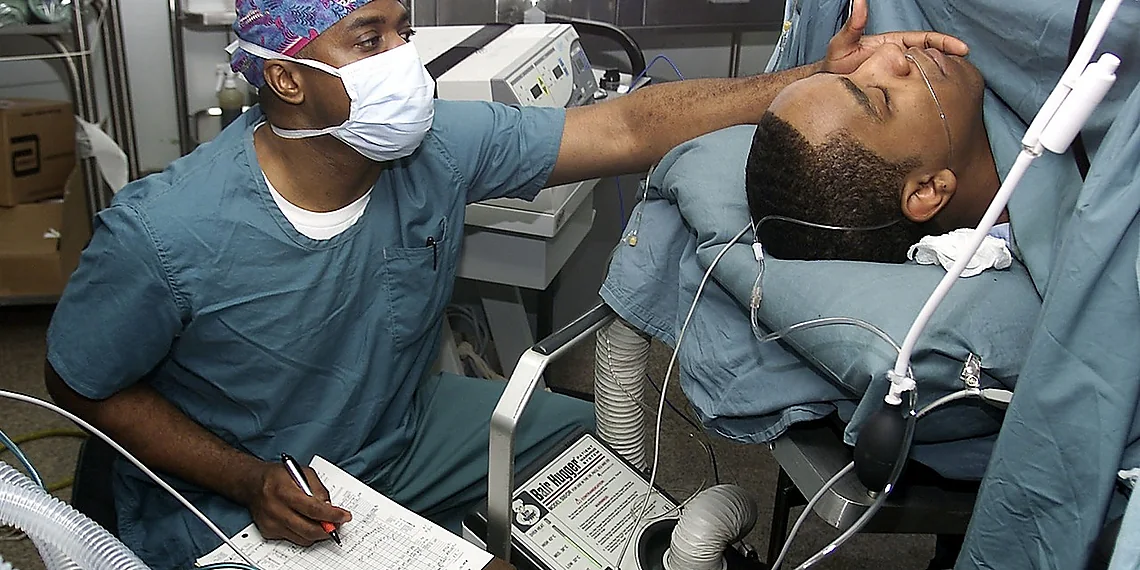



The operating room is arguably one of the most complex and dynamic environments in healthcare, demanding split-second decisions and unwavering precision from surgical teams. As artificial intelligence continues its rapid advancement, there’s immense potential to assist surgeons by providing real-time insights and predictive capabilities – particularly around patient health. However, realizing this promise requires a rigorous framework for evaluating AI models designed for the operating room, something that has been notably lacking until now. Current methods of assessing these algorithms are often fragmented, relying on proprietary datasets and varying evaluation metrics, making direct comparison and meaningful progress exceptionally difficult.
Imagine trying to compare the performance of two self-driving cars without a standardized testing track; you’d be left guessing which truly excels. The same challenge exists in the AI-powered surgical space, especially when it comes to critical functionalities like vital sign prediction. Models designed to anticipate changes in patient physiology during procedures are crucial for proactive intervention and improved outcomes, yet their performance is often assessed inconsistently across different research groups. This lack of standardization hinders collaboration, slows innovation, and makes deploying these powerful tools into clinical practice a significant hurdle.
To address this critical need, we’re excited to introduce VitalBench – a new open-source benchmark designed specifically for evaluating AI models focused on surgical applications, with a particular emphasis on vital sign prediction. This initiative aims to establish a common ground for researchers and developers, fostering a more transparent and reproducible landscape for advancing AI in surgery. We believe VitalBench will be instrumental in accelerating the development of reliable and trustworthy AI solutions that can truly transform patient care within the operating room.
The Problem with Current AI Models
Current deep learning models for vital sign prediction show promise in research settings, but their translation to practical surgical environments has been surprisingly difficult. Many existing approaches are trained on relatively small datasets that lack the diversity and complexity of actual operating rooms. This leads to a significant gap between theoretical performance metrics and real-world applicability – a model might achieve impressive accuracy on a curated dataset, only to falter when faced with the unpredictable variations inherent in diverse patient populations, surgical procedures, and equipment configurations.
A core issue is the often incomplete or biased nature of the training data. Medical datasets are frequently plagued by missing values (due to sensor failures or interruptions), imbalanced representations of different patient demographics, and a lack of sufficient examples for rare but critical events. Consequently, models trained on these skewed datasets can exhibit poor robustness and fail to generalize effectively when deployed in new clinical settings. Many existing benchmarks don’t adequately account for these realities; they often present idealized scenarios that simply aren’t representative of the challenges surgeons face.
The absence of a standardized benchmark has further exacerbated this problem. Without a common platform for evaluating and comparing different models, it’s difficult to objectively assess their performance and identify areas for improvement. This fragmentation hinders progress and makes it challenging to determine which techniques are truly ready for clinical integration. VitalBench aims to change this by providing a rigorous evaluation framework that includes data from multiple centers and addresses the critical aspects of incomplete data and cross-center validation, ultimately pushing the field towards more reliable and clinically relevant vital sign prediction.
Ultimately, achieving reliable vital sign prediction in surgery demands models capable of handling noisy, incomplete data and generalizing across different clinical environments. The shortcomings of current approaches highlight a need for benchmarks like VitalBench that reflect these real-world complexities and drive the development of truly robust and trustworthy AI solutions for surgical care.
Data Scarcity & Bias

Current deep learning models designed to predict patient vital signs during surgery frequently struggle to translate from research labs to actual operating rooms, largely due to the inherent challenges in acquiring sufficient and representative training data. Medical datasets are notoriously scarce compared to other fields like image recognition or natural language processing. Patient privacy regulations, the complexity of surgical procedures, and the cost of data annotation all contribute to this scarcity. Consequently, models trained on limited datasets often overfit to specific patient populations or surgical techniques, hindering their ability to generalize effectively.
Compounding the issue of data scarcity is the problem of bias. Existing medical datasets may disproportionately represent certain demographics, surgical specialties, or hospital protocols. This bias can lead to models that perform well for a subset of patients but poorly for others – a potentially dangerous outcome in a clinical setting where equitable care is paramount. Traditional AI benchmarks often fail to adequately address these biases because they’re frequently constructed from relatively homogenous datasets, neglecting the diversity encountered in real-world surgical environments.
The inadequacy of existing benchmarks contributes directly to the lack of real-world applicability for many vital sign prediction models. These benchmarks typically focus on idealized conditions – complete and clean data – which rarely mirror the messy reality of an operating room. Factors like missing sensor readings, noisy signals from patients with comorbidities, and variations in surgical workflows are routinely glossed over. The newly introduced VitalBench aims to rectify this by incorporating incomplete data scenarios and explicitly evaluating cross-center generalization capabilities, offering a more realistic assessment of model performance.
Introducing VitalBench: A New Benchmark
The field of AI in surgery is rapidly evolving, with deep learning models showing promise for predicting vital signs during operations – a capability crucial for patient safety and improved outcomes. However, progress has been hampered by a significant hurdle: the absence of a robust and standardized benchmark to accurately assess these models’ capabilities. Existing datasets often lack the breadth and realism needed to truly evaluate performance in diverse surgical settings. Enter VitalBench, a newly released benchmark designed specifically to overcome these limitations and provide a more comprehensive assessment of intraoperative vital sign prediction algorithms.
VitalBench distinguishes itself through several key features. Unlike previous attempts, it incorporates data from over 4,000 surgeries performed across two geographically distinct medical centers, representing a substantial increase in dataset size and diversity. Crucially, the benchmark offers three distinct evaluation tracks to mirror the complexities of real-world clinical practice. The ‘complete data’ track allows for initial baseline comparisons using all available information. More realistically, the ‘incomplete data’ track simulates scenarios where sensor readings are missing or unreliable – a common occurrence in operating rooms.
The third and arguably most significant feature is the ‘cross-center generalization’ track. This evaluates how well models trained on data from one medical center perform when applied to patients at another, addressing a critical weakness of many existing approaches which often overfit to specific hospital protocols or patient populations. Performance across these tracks will be assessed using standard metrics like Root Mean Squared Error (RMSE) and Mean Absolute Error (MAE), offering clear quantitative measures for comparing different models and guiding future research.
By incorporating complete and incomplete data scenarios, alongside a focus on cross-center generalization, VitalBench represents a substantial leap forward in the development of reliable AI tools for surgical vital sign prediction. The benchmark’s design directly tackles shortcomings present in previous evaluation methods, paving the way for more robust and clinically applicable models that can ultimately contribute to safer and more effective surgical procedures.
Tracks & Evaluation Metrics
VitalBench offers three distinct evaluation tracks to comprehensively assess vital sign prediction models, each designed to reflect different aspects of real-world surgical scenarios. The ‘Complete Data’ track provides researchers with full access to all recorded vital signs during surgery, allowing for baseline performance measurement and algorithm development under ideal conditions. This track serves as a foundation for understanding model capabilities before introducing more complex challenges.
Recognizing that clinical data is often incomplete due to sensor malfunctions or patient movement, VitalBench includes an ‘Incomplete Data’ track. This simulates realistic situations where models must make predictions with missing vital sign readings, forcing them to leverage temporal context and imputation strategies. The cross-center generalization track evaluates a model’s ability to perform accurately when applied to data from a different medical center than it was trained on, addressing the critical need for robust performance across diverse patient populations and clinical protocols.
Model performance within VitalBench is evaluated using standard time series forecasting metrics such as Root Mean Squared Error (RMSE) and Mean Absolute Error (MAE). These metrics quantify the difference between predicted and actual vital sign values, providing a clear indication of prediction accuracy. Lower RMSE and MAE scores signify improved model performance across all three evaluation tracks.
Why This Matters for Medical AI
The introduction of VitalBench marks a significant turning point for research in medical AI, particularly concerning intraoperative vital sign prediction. Currently, progress is often hampered by the absence of a universally accepted benchmark to compare model performance. This new framework directly addresses that issue, providing researchers with a standardized dataset and evaluation tracks—complete data, incomplete data, and cross-center generalization—derived from over 4,000 surgeries across two distinct medical centers. The sheer scale and diversity of this data will allow for far more rigorous testing and comparison of different predictive models than previously possible.
Beyond simply achieving high accuracy scores, VitalBench actively pushes the field towards developing robust and generalizable AI solutions. Real-world surgical environments are messy; data is often incomplete or unreliable, and patient populations vary significantly between hospitals. The inclusion of an ‘incomplete data’ track explicitly encourages researchers to utilize techniques like masked loss—effectively training models to perform well even when faced with missing vital sign readings – a common occurrence in clinical practice. This focus on robustness ensures that AI systems developed using VitalBench are more likely to translate into tangible improvements for patient safety and surgical outcomes.
The ‘cross-center generalization’ track is arguably one of the most crucial aspects of VitalBench. Models trained on data from a single hospital often fail spectacularly when deployed in another due to subtle differences in protocols, equipment, or patient demographics. By requiring models to demonstrate performance across multiple institutions, VitalBench fosters innovation aimed at creating truly adaptable and reliable AI tools that can benefit patients regardless of where they receive care. This will ultimately accelerate the adoption of these technologies into clinical workflows.
Ultimately, VitalBench isn’t just about setting a new standard for vital sign prediction; it’s about accelerating the responsible development and deployment of medical AI. By emphasizing robustness, generalization, and realistic data scenarios, this benchmark provides a clear roadmap for researchers to build solutions that are not only technically impressive but also genuinely beneficial for patients undergoing surgery.
Beyond Accuracy: Robustness & Generalization

Current medical AI development often prioritizes accuracy metrics without adequately addressing crucial aspects like robustness and generalizability. Models that perform exceptionally well on a specific dataset can falter dramatically when faced with real-world scenarios involving missing data or variations in patient populations – issues inherently present in surgical settings. VitalBench directly tackles this problem by introducing evaluation tracks specifically designed to test model performance under incomplete data conditions, mirroring the unpredictable nature of intraoperative monitoring.
A key component of VitalBench’s design incorporates ‘masked loss’ techniques during training and evaluation. This involves intentionally removing portions of the input data (e.g., specific vital sign readings) to force models to learn robust representations and rely on available information for prediction. By penalizing errors arising from missing data, masked loss encourages the development of models that are less susceptible to data gaps – a critical advantage in time-sensitive surgical environments where data interruptions are common.
The inclusion of cross-center generalization as an evaluation track is particularly significant. It assesses a model’s ability to perform reliably when deployed across different hospitals or clinical settings, accounting for variations in patient demographics, equipment calibration, and monitoring protocols. This ultimately pushes researchers toward creating AI solutions that can be readily adopted and benefit patients universally, rather than remaining confined to the specific conditions of their training data.
Looking Ahead: Future Directions
VitalBench’s emergence marks a significant step towards realizing the full potential of AI in surgical settings, but it’s only the beginning. Looking ahead, we can envision a future where vital sign prediction models, rigorously tested and validated through benchmarks like VitalBench, become seamlessly integrated into operating room workflows. Imagine personalized risk assessments generated pre-operatively, allowing surgeons to proactively adjust anesthetic plans or surgical techniques based on predicted patient responses – all powered by AI trained on diverse datasets and evaluated with the precision VitalBench provides.
Beyond simply predicting individual vital signs, future iterations of VitalBench could incorporate multimodal data streams – combining physiological signals with imaging data (e.g., endoscopic video) and even surgeon input. This ‘holistic’ approach would move beyond reactive prediction to proactive intervention. For example, a model might not only predict hypotension but also suggest specific interventions like fluid boluses or vasopressor adjustments, alongside an estimated time of effectiveness based on the patient’s individual physiology and surgical context. The development of specialized VitalBench tracks focusing on rare surgical procedures could unlock advancements in those niche areas as well.
The cross-center generalization track within VitalBench is particularly crucial for ensuring robust and equitable AI solutions. Future research leveraging this benchmark should focus on techniques to mitigate biases inherent in medical data, leading to models that perform reliably across diverse patient populations and healthcare systems. This includes exploring methods like federated learning, which allows models to be trained on distributed datasets without sharing sensitive patient information – a vital consideration for widespread adoption of AI-powered surgical assistance.
Ultimately, VitalBench’s impact extends beyond simply improving predictive accuracy; it fosters collaboration and accelerates innovation in the field. By establishing a common ground for researchers and clinicians, it facilitates the development of safer, more efficient, and ultimately, patient-centered surgical care – moving us closer to a future where AI actively contributes to better outcomes and reduced risk for every patient undergoing surgery.
Continue reading on ByteTrending:
Discover more tech insights on ByteTrending ByteTrending.
Discover more from ByteTrending
Subscribe to get the latest posts sent to your email.