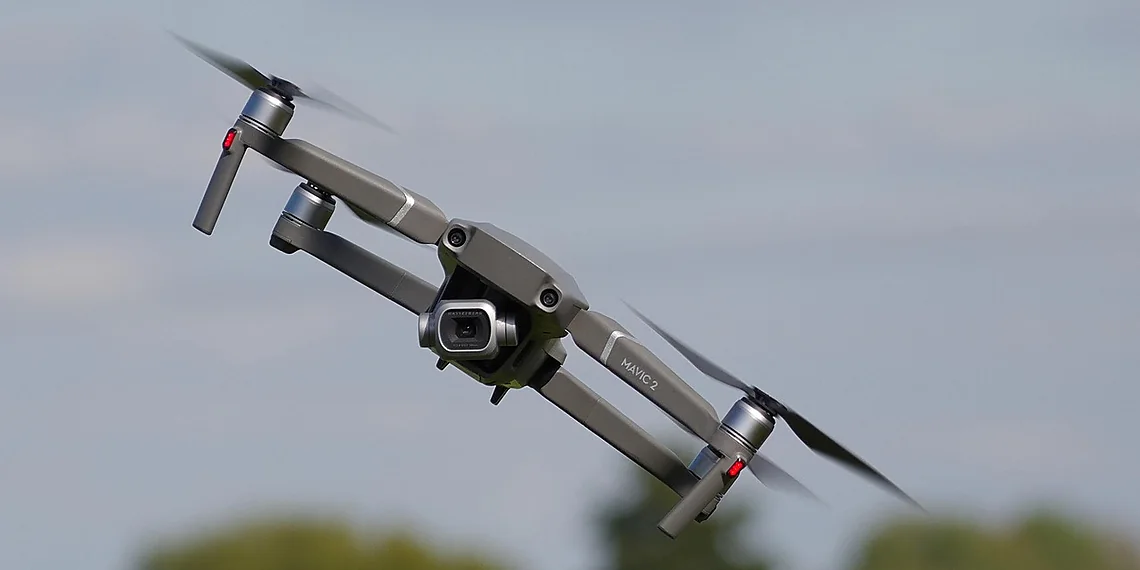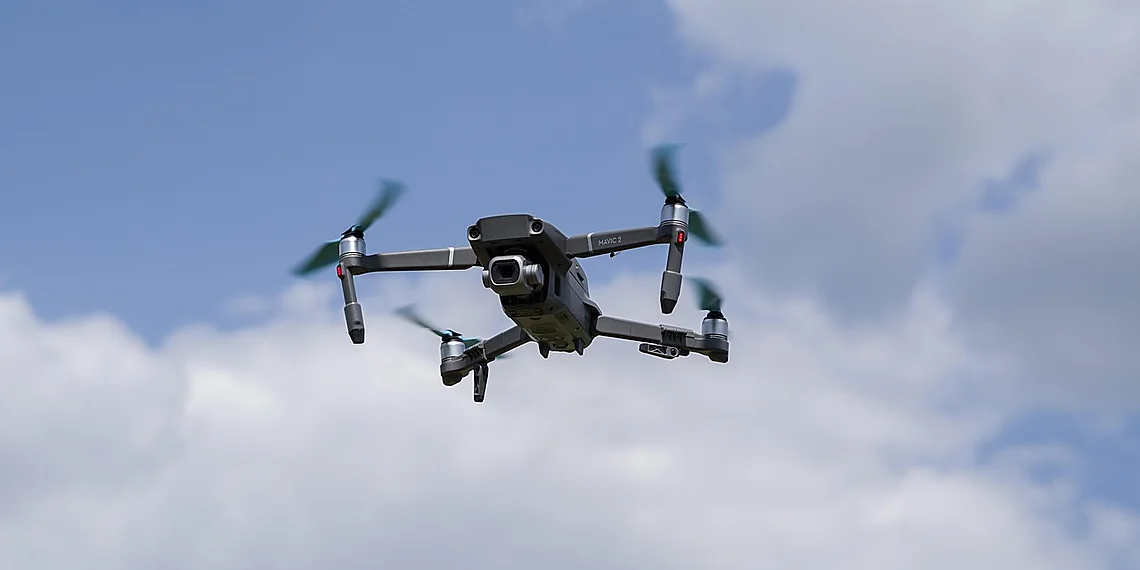



The skies are buzzing, quite literally, as drones transform industries from agriculture to infrastructure inspection and beyond. Remote sensing capabilities previously requiring expensive aircraft or complex ground teams are now accessible through these agile platforms, offering unprecedented data acquisition opportunities for businesses worldwide.
However, harnessing this potential isn’t always straightforward; the vast amounts of visual information captured by drone cameras present a significant processing challenge. Traditional AI models designed for object recognition often struggle to keep pace with the real-time demands and limited onboard resources common in drone applications.
The quest for efficient and accurate image analysis has driven innovation, particularly in the field of drone object detection. Balancing high precision identification of targets with swift processing speed is a critical hurdle to overcome for truly autonomous drone operations.
A groundbreaking new framework promises to redefine this landscape by delivering significantly improved performance without sacrificing efficiency. This lightweight approach paves the way for more responsive and versatile drones capable of tackling increasingly complex tasks.
The Remote Sensing Bottleneck
Traditional object detection models have long been a bottleneck in drone-based remote sensing applications. While powerful algorithms like Faster R-CNN and YOLO offer impressive accuracy in identifying objects from images, their computational demands are substantial. Running these complex networks onboard a drone necessitates significant processing power, which translates directly into increased energy consumption. This limited flight time is a critical constraint for many use cases, particularly in scenarios requiring extended observation periods or rapid deployment like search and rescue operations.
The issue isn’t just about flight duration; it’s also about real-time responsiveness. Many remote sensing tasks require immediate analysis of captured imagery – identifying hazards during disaster assessment, tracking wildlife populations, or monitoring infrastructure integrity. Heavy object detection models introduce latency in the data processing pipeline, delaying critical insights and potentially hindering timely decision-making. Processing data after landing is often impractical given the urgency inherent in many drone applications.
Furthermore, the size of these models poses challenges for deployment on resource-constrained drone platforms. Many UAVs have limited memory and storage capacity, making it difficult to accommodate large object detection networks without sacrificing other essential functionalities like navigation or communication systems. This restriction forces a trade-off between accuracy and operational feasibility, often leading to compromises that hinder performance in the field.
Ultimately, achieving the full potential of drone remote sensing requires a shift towards more efficient object detection solutions – models that can deliver high accuracy without sacrificing speed, energy efficiency, or ease of deployment. The need for lightweight alternatives is driving significant innovation and paving the way for a new generation of drones capable of truly transforming industries reliant on aerial data.
Why Traditional Models Struggle

Traditional object detection architectures, while powerful on desktop computers and servers, present significant challenges when deployed onboard drones. Models like Faster R-CNN and YOLO (You Only Look Once), popular choices for their accuracy, require substantial computational resources. Specifically, these models demand considerable processing power—often measured in tera operations per second (TOPS)—and memory bandwidth that exceeds the capabilities of embedded systems commonly found within drone platforms. This heavy reliance on hardware translates directly into increased energy consumption.
The high computational demands directly impact drone flight time. The power required to run complex object detection models drains battery life, significantly reducing operational endurance. Furthermore, real-time or near-real-time processing is crucial for many applications like autonomous navigation and immediate threat assessment. However, the latency introduced by these resource-intensive models can delay response times, hindering their effectiveness in dynamic environments. Data processing speed also suffers; transmitting raw video feeds to a ground station for analysis negates the benefits of onboard intelligence.
Beyond flight time and data processing, the size of these models – often hundreds of megabytes or even gigabytes – poses logistical hurdles. Limited storage space on drones restricts the number of pre-trained models that can be deployed, limiting adaptability to different environments. This combination of factors—high power consumption, latency, and large model sizes—creates a bottleneck in realizing the full potential of drone-based remote sensing.
Introducing the ‘SwiftDetect’ Framework
The demand for reliable and actionable insights from drone imagery is exploding across industries, but the computational burden of traditional object detection models has been a significant bottleneck. Running complex AI algorithms onboard drones – or even processing data quickly after capture – requires substantial power and resources, limiting deployment options and real-time responsiveness. To address this challenge, we’re excited to introduce SwiftDetect, a new framework designed specifically for efficient and accurate drone object detection. SwiftDetect isn’t just another model; it represents a fundamental rethinking of how we balance accuracy with resource constraints in the context of aerial imagery.
At its core, SwiftDetect achieves its efficiency through a layered approach focused on minimizing computational overhead without sacrificing performance. A key innovation is our dynamic pruning strategy which intelligently removes less critical connections within the neural network during training, reducing model size and inference time while preserving essential feature extraction capabilities. We also leverage quantization techniques to represent model parameters with fewer bits, further shrinking the model’s footprint and speeding up calculations – a decision made after extensive testing to ensure minimal impact on accuracy across diverse drone camera resolutions.
Beyond pruning and quantization, SwiftDetect incorporates streamlined attention mechanisms tailored for aerial scenes. Traditional attention layers can be computationally expensive; our approach prioritizes identifying salient features crucial for object detection in typical drone-captured environments like roads, buildings, or vegetation. This targeted focus allows us to significantly reduce the computational load of attention without compromising performance on common objects. We meticulously evaluated various attention architectures and their impact on both speed and accuracy, settling on a design that optimizes for real-world drone deployment scenarios.
The development of SwiftDetect involved careful trade-offs – reducing model size always carries some risk to accuracy. However, through rigorous testing across a wide range of datasets and drone camera configurations, we’ve demonstrated that SwiftDetect consistently achieves state-of-the-art accuracy while maintaining a dramatically smaller footprint and faster inference speed compared to existing solutions. This allows for more versatile deployment options, from resource-constrained drones performing critical tasks like search & rescue to enabling real-time analytics directly on board.
Key Architectural Innovations

SwiftDetect’s design prioritizes minimizing computational overhead to enable real-time object detection onboard drones with limited processing power. A key innovation is aggressive model pruning, which involves systematically removing less important connections within the neural network. Think of it like trimming unnecessary branches from a tree – this reduces the overall size and complexity without significantly impacting the core functionality. While pruning can sometimes decrease accuracy if done too aggressively, SwiftDetect employs sophisticated algorithms to identify redundant components with minimal performance loss, carefully balancing model size with detection precision.
Further enhancing efficiency, SwiftDetect leverages quantization techniques. This process converts the floating-point numbers that represent neural network parameters into smaller integer values – essentially simplifying the math involved in making predictions. This drastically reduces memory usage and accelerates computations, allowing for faster inference speeds. A trade-off here is a potential slight decrease in accuracy; however, SwiftDetect’s architecture incorporates training strategies to mitigate this effect and maintain high detection rates.
Finally, we’ve incorporated an efficient attention mechanism, inspired by recent advances in natural language processing. Unlike traditional methods that process every part of an image equally, the attention mechanism allows the model to focus on the most relevant regions for object identification – a bird might be more important than the sky behind it. This targeted approach reduces unnecessary computations and improves accuracy, particularly in complex scenes with many potential distractions. The design aimed for simplicity and speed within this mechanism to avoid adding significant overhead.
Real-World Impact & Applications
The advancements in drone object detection powered by frameworks like SwiftDetect aren’t just theoretical breakthroughs; they’re driving tangible improvements across a wide range of real-world applications. Consider disaster response, where rapid assessment and identification of affected areas are paramount. With faster processing and smaller model sizes, drones equipped with SwiftDetect can analyze imagery significantly quicker, allowing first responders to pinpoint survivors or structural damage with unprecedented speed – potentially shaving crucial minutes off rescue times and ultimately saving lives. This enhanced responsiveness translates directly into more effective resource allocation and a higher probability of successful intervention.
Beyond disaster relief, the impact of improved drone object detection is transforming industries like agriculture and infrastructure management. In precision agriculture, for instance, drones can now autonomously identify crop stress, pest infestations, or irrigation problems with greater accuracy and efficiency than ever before. This allows farmers to target interventions precisely where needed, minimizing waste (water, fertilizer, pesticides) and maximizing yields – some early adopters are reporting yield increases of up to 15% thanks to this level of granular data analysis. Similarly, infrastructure inspection, from power lines to bridges, becomes safer and more cost-effective as drones can automatically identify defects without requiring human climbers or specialized equipment.
Environmental monitoring also benefits immensely. Wildlife tracking, previously a labor-intensive process relying on manual observation, is being revolutionized by drone object detection. SwiftDetect enables automated identification of animal species and population counts from aerial imagery, providing valuable data for conservation efforts. Imagine researchers able to monitor endangered populations across vast terrains with minimal human intervention – this level of scalability simply wasn’t possible before the advent of lightweight, high-performance object detection models. The ability to automatically differentiate between various tree species or assess forest health also opens up new avenues for sustainable forestry practices.
Ultimately, the real-world impact of drone object detection boils down to increased efficiency, improved safety, and expanded possibilities. SwiftDetect’s contribution lies in making these advancements accessible – empowering users with a framework that delivers high accuracy without sacrificing performance or requiring significant computational resources on board the drone itself. This democratization of advanced aerial analytics promises to unlock even more innovative applications for UAVs in the years to come.
Beyond Disaster Response: Expanding Horizons
While disaster response remains a crucial application for drones equipped with object detection, advancements like SwiftDetect are enabling expansion into previously inaccessible areas. Precision agriculture is seeing significant benefits; farmers can now use drone imagery to identify stressed crops or pest infestations at early stages, allowing for targeted interventions and reducing the need for broad-spectrum pesticide applications. Early trials using similar object detection models have demonstrated yield increases of up to 10% in some cases while simultaneously lowering fertilizer usage by as much as 30%, showcasing a substantial improvement in both efficiency and environmental sustainability.
Infrastructure inspection is another burgeoning field, where drones can autonomously identify cracks, corrosion, or other damage on bridges, power lines, and wind turbines. Traditional manual inspections are costly, time-consuming, and often dangerous. Automated drone inspections with robust object detection capabilities drastically reduce these costs – some estimates suggest a 50-70% reduction in inspection expenses while also improving safety for human inspectors. Furthermore, the consistency of automated data collection leads to more reliable long-term assessments of infrastructure health.
Beyond agriculture and infrastructure, environmental monitoring is benefiting from improved drone object detection. Researchers are employing drones with advanced models to track wildlife populations, monitor deforestation rates, and assess habitat degradation. For example, SwiftDetect’s accuracy allows for the differentiation between various bird species in aerial imagery, providing vital data for conservation efforts. The ability to accurately identify individual animals or specific plant types over large areas significantly accelerates research timelines and provides more granular insights compared to traditional ground-based surveys.
The Future of Drone Intelligence
The advancements in lightweight drone object detection represent far more than just incremental improvements to UAV capabilities; they signal a fundamental shift towards truly intelligent and autonomous aerial systems. Historically, the computational demands of robust object recognition have often necessitated powerful, energy-intensive onboard processors or reliance on cloud-based processing – both limiting factors for many real-world applications. By enabling accurate and rapid object detection directly on the drone itself, we’re opening doors to scenarios previously deemed impractical, from immediate disaster response in areas with limited connectivity to persistent environmental monitoring without constant operator intervention.
Looking ahead, the integration of this technology extends beyond simply identifying objects. We can anticipate a future where drones proactively respond to their environment, making decisions based on detected information and acting autonomously within predefined parameters. Imagine swarms of drones coordinating rescue efforts after an earthquake, analyzing structural damage in real-time and dynamically adjusting search patterns – all powered by lightweight object detection models running locally. Furthermore, the trend towards edge computing is crucial; SwiftDetect’s ability to operate efficiently onboard aligns perfectly with this movement, minimizing latency and maximizing responsiveness.
However, significant challenges remain. While current advancements are impressive, improving robustness to adverse conditions—such as poor lighting, inclement weather, or obscured views—is paramount. Future research will likely focus on incorporating data from other sensors like LiDAR or thermal cameras to enhance object recognition accuracy in these challenging scenarios. The ethical considerations surrounding autonomous drone operation also need careful consideration and proactive regulation, ensuring responsible deployment across various industries.
Ultimately, the future of drone intelligence is inextricably linked to advancements in lightweight drone object detection. As models become increasingly efficient and accurate, we can expect a proliferation of innovative applications that leverage the unique capabilities of UAVs, transforming fields ranging from agriculture and logistics to public safety and scientific research. The ongoing pursuit of greater efficiency and robustness promises a new era of autonomous aerial systems capable of addressing some of the world’s most pressing challenges.
Looking Ahead: Edge Computing & Beyond
The rise of SwiftDetect exemplifies a crucial shift towards edge computing within the realm of drone object detection. Traditionally, complex AI models for image processing have relied on cloud-based infrastructure, introducing latency and bandwidth limitations that hinder real-time decision making for drones operating in remote or dynamic environments. Edge computing allows SwiftDetect – and similar lightweight models – to perform object detection directly onboard the drone itself, significantly reducing response times and enabling autonomous operation without constant network connectivity. This is particularly vital for applications like search and rescue where immediate action is paramount.
Looking forward, the integration of sensor data beyond visual imagery promises to further enhance the capabilities of drone-based object detection systems. Combining camera feeds with LiDAR point clouds or thermal imaging can provide a more comprehensive understanding of the environment, improving accuracy and robustness in challenging conditions like low light or obscured visibility. Imagine a drone not only identifying a person but also assessing their body temperature or detecting structural damage to a building – all processed locally and instantly.
Future research will likely focus on increasing the resilience of these lightweight models to adversarial attacks and varying environmental factors such as weather, lighting changes, and sensor noise. Furthermore, advancements in neuromorphic computing could lead to even more efficient hardware architectures specifically tailored for running complex AI algorithms onboard drones, pushing the boundaries of what’s possible with real-time, autonomous aerial systems.
The emergence of SwiftDetect marks a pivotal moment, demonstrating that high accuracy in drone object detection doesn’t necessitate massive computational overhead.
We’ve seen firsthand how this lightweight approach unlocks incredible possibilities for real-time analysis and decision-making directly onboard drones, moving beyond reliance on cloud processing.
From precision agriculture to search and rescue operations, the potential impact across industries is truly transformative; imagine autonomous inspection of critical infrastructure or rapid assessment in disaster zones – all powered by efficient AI.
SwiftDetect’s success serves as a powerful catalyst for further innovation, inspiring researchers and developers to push the boundaries of what’s achievable with embedded systems and edge computing within drone platforms. This signifies a broader trend toward more intelligent, self-sufficient aerial robotics, especially when considering complex scenarios requiring robust drone object detection capabilities in challenging environments. The future is undoubtedly bright for advancements leveraging these principles, promising even greater efficiency and capability in the years to come. It’s an exciting time to be involved in this rapidly evolving field of technology, with implications extending far beyond current applications. We believe SwiftDetect’s approach will influence how drone AI continues to develop and integrate into our world. The demonstrated reduction in processing demands is a key factor for wider adoption and more sophisticated deployments across diverse sectors. Ultimately, it’s about enabling drones to ‘see’ and react intelligently, wherever they are needed most effectively.
Continue reading on ByteTrending:
Discover more tech insights on ByteTrending ByteTrending.
Discover more from ByteTrending
Subscribe to get the latest posts sent to your email.