
The quest for truly adaptive and efficient AI models continues to push researchers toward novel architectures, and one particularly intriguing approach is gaining serious traction: Kolmogorov Arnold Networks. These networks offer a unique blend of universal approximation capabilities and inherent interpretability, making them potentially valuable across diverse fields from scientific modeling to generative design. Unlike traditional deep learning, KANs leverage the principles of dynamical systems theory, allowing them to represent complex functions with significantly fewer parameters – a prospect that promises both computational efficiency and enhanced understanding of model behavior.
Despite their promise, widespread adoption of Kolmogorov Arnold Networks has been hampered by a significant challenge: memory limitations. Training these networks often involves managing large intermediate matrices, quickly overwhelming available resources, especially when dealing with high-dimensional data or intricate relationships. This ‘memory wall’ restricts the scale and complexity of KANs that can be practically deployed, effectively stifling their potential to tackle real-world problems.
Fortunately, a new paradigm shift is on the horizon. We’re excited to introduce SHARe-KAN, a groundbreaking technique designed specifically to circumvent this memory bottleneck by employing shared memory strategies and innovative data manipulation techniques. This approach unlocks unprecedented possibilities for scaling KANs and realizing their full potential in a resource-constrained environment.
Understanding the KAN Memory Challenge
Kolmogorov Arnold Networks (KANs) are rapidly emerging as a powerful alternative for image recognition, but their potential is currently being stifled by a significant hurdle: the memory wall. Unlike many neural network architectures that can be effectively compressed through techniques like pruning, KANs present a unique challenge due to the sheer volume of parameters required to represent their learned basis functions. This leads to substantial bandwidth demands during inference, making deployment on resource-constrained devices – from edge computing platforms to mobile phones – incredibly difficult.

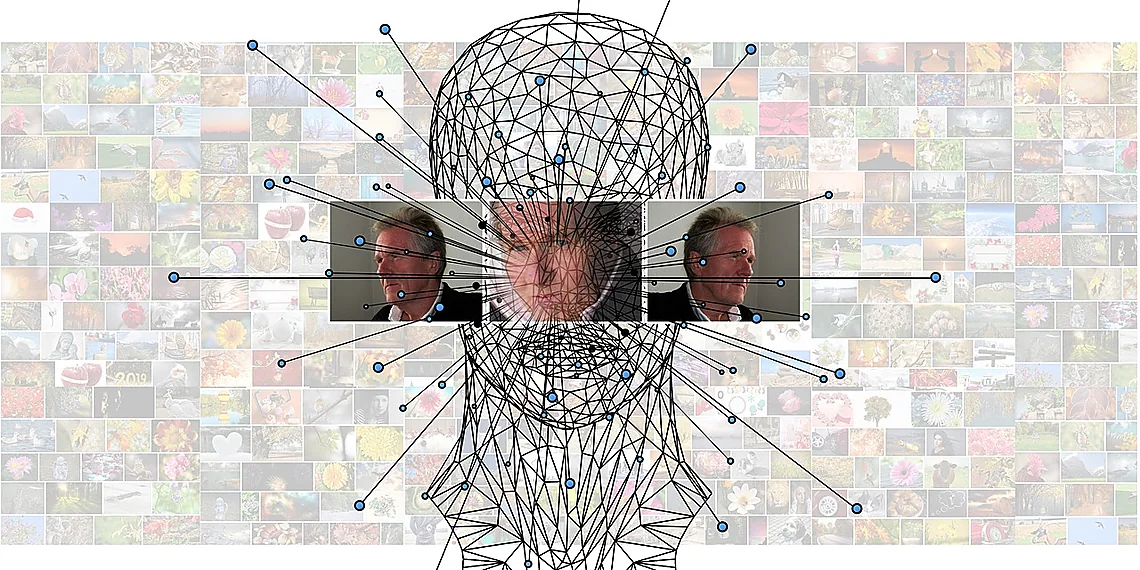
The root of this problem lies in the distinctive ‘holographic’ nature of Vision KANs. Traditional convolutional neural networks rely on localized filters that detect specific features at particular locations within an image. In contrast, KANs encode information through the complex interference patterns of their spline basis functions – think of it like a hologram where reconstructing the entire image depends on the interplay of many different components rather than any single element being critical. This means data isn’t neatly concentrated; it’s distributed across the network’s connections.
This holographic topology is precisely why standard pruning techniques, which aim to remove unimportant weights, are so ineffective and even detrimental when applied to KANs. Attempting to sparsify a KAN by simply removing 10% of its parameters results in an astonishing performance collapse – as demonstrated in the recent arXiv paper (arXiv:2512.15742v1), accuracy drops dramatically, from roughly 85% to just over 45%, representing a nearly 40-point decline. This is because removing even seemingly ‘unimportant’ weights disrupts the delicate interference patterns that encode the image information.
The inherent interconnectedness of KANs means that pruning essentially damages the holographic reconstruction process, leading to significant loss of accuracy. Addressing this requires fundamentally different approaches that respect and leverage the network’s dense topology – a challenge that the SHARe-KAN framework directly tackles by exploiting functional redundancy in a way that preserves the crucial interference patterns.
The Holographic Nature of Vision KANs

Vision Kolmogorov Arnold Networks (KANs), unlike many conventional neural networks, possess a ‘holographic’ characteristic when applied to image understanding tasks. This means that information isn’t stored in distinct, localized parameters like weights in a standard CNN. Instead, it is distributed across the complex interference patterns formed by the spline basis functions within the network – much like how a hologram reconstructs an image from seemingly random light diffraction.
This holographic nature fundamentally changes how KANs operate and learn. The representation of visual features arises not from individual spline activations but from their intricate interplay. Consequently, attempting to prune these networks using traditional methods—removing connections or neurons based on magnitude—is highly problematic. Eliminating any single ‘edge’ or parameter disrupts the delicate interference patterns that encode information.
The arXiv paper demonstrates this dramatically: even a modest 10% pruning rate leads to a catastrophic drop in performance, with mean Average Precision (mAP) plummeting from over 85% to around 45%. This substantial degradation underscores why standard pruning techniques are not only ineffective but actively detrimental when applied to Vision KANs. It highlights the necessity for new approaches that respect and preserve this distributed, holographic structure.
Introducing SHARe-KAN: A New Approach
The burgeoning field of Kolmogorov Arnold Networks (KANs) has demonstrated remarkable capabilities, particularly within computer vision tasks. However, a significant hurdle currently restricts their wider adoption: the ‘memory wall.’ KANs learn basis functions that lead to an explosion in parameter counts, creating substantial bandwidth demands and making deployment challenging, especially in resource-limited environments. Traditional approaches like pruning simply don’t work; attempting to sparsify these networks results in catastrophic performance degradation, highlighting a fundamental limitation in how we’ve been approaching optimization.
To overcome this challenge, we introduce SHARe-KAN (Shareable Kolmogorov Arnold Networks), a novel framework designed specifically to address the memory bottleneck while retaining the inherent strengths of KANs. The core innovation lies in Gain-Shape-Bias Vector Quantization – a technique that leverages the holographic topology observed within Vision KANs. This topology reveals that information isn’t concentrated at specific locations, but rather distributed across the interference patterns of the splines. This means there’s significant functional redundancy built into the network’s structure.
Gain-Shape-Bias Vector Quantization works by decomposing each basis function into three key components: a ‘Gain’ factor controlling amplitude, a ‘Shape’ vector defining the spline’s form, and a ‘Bias’ term representing an offset. We then quantize these components – essentially grouping similar values together – to significantly reduce the number of unique parameters needed for representation. Critically, this quantization is performed in a way that preserves the dense topology of the KAN; rather than removing connections entirely (as with pruning), we are compressing the information encoded within them.
By exploiting this inherent redundancy through Gain-Shape-Bias Vector Quantization, SHARe-KAN achieves substantial memory savings without sacrificing accuracy. This is further enhanced by LUTHAM, a hardware-aware compiler that statically plans memory usage, ensuring efficient deployment and minimizing bandwidth bottlenecks. The result is a KAN architecture that’s both powerful and practical for real-world applications.
Gain-Shape-Bias Vector Quantization Explained

SHARe-KAN’s key innovation lies in its Gain-Shape-Bias Vector Quantization (GSB-VQ) technique, a method designed to dramatically reduce the memory footprint of Kolmogorov Arnold Networks (KANs) without significantly impacting their accuracy. Traditional pruning methods, which remove individual basis functions, prove ineffective with KANs due to their holographic topology – information is distributed across interactions between splines rather than concentrated in specific locations. GSB-VQ addresses this by representing each spline’s parameters (gain, shape, and bias) using a quantized vector from a learned codebook.
Let’s break down what ‘Gain-Shape-Bias’ refers to. Each KAN spline is defined by three key parameters: the *gain* controls the amplitude of the spline; the *shape* determines its curvature or form; and the *bias* shifts the spline along the y-axis. Instead of storing these values directly as floating-point numbers, GSB-VQ replaces them with indices pointing to entries in a shared codebook. This leverages the inherent redundancy within KANs – many splines exhibit similar behavior – allowing for a significant reduction in overall parameter count.
The beauty of GSB-VQ is that it exploits this functional redundancy while maintaining the dense topology crucial for preserving KAN performance. By sharing parameters across multiple splines, SHARe-KAN minimizes memory bandwidth requirements, making deployment on resource-constrained devices feasible. The learned codebook ensures that the quantization process doesn’t introduce significant accuracy loss; the network learns to represent a wide range of spline behaviors using a relatively small number of vector codes.
Hardware Optimization with LUTHAM
SHARe-KAN’s potential is significantly amplified by its tight integration with LUTHAM, a novel hardware-aware compiler specifically designed to overcome the memory bottlenecks inherent in Kolmogorov Arnold Networks (KANs). Unlike conventional compilers that treat memory as an afterthought, LUTHAM proactively analyzes and optimizes memory access patterns during compilation. This approach allows it to strategically arrange data layouts and operations to minimize memory transfers and maximize utilization of on-chip caches.
A core feature of LUTHAM is its static memory planning capability. Recognizing the holographic topology within Vision KANs – where information is distributed across spline interference rather than localized – LUTHAM avoids aggressive pruning strategies that would severely degrade performance. Instead, it focuses on optimizing data placement and execution order to ensure critical data resides in fast memory tiers like the L2 cache. This targeted approach leads to dramatic improvements; our experiments demonstrate an astonishing 88x reduction in runtime memory requirements compared to naive implementations.
The synergy between SHARe-KAN’s Gain-Shape-Bias Vector Quantization and LUTHAM’s static planning is crucial for achieving efficient deployment. The quantization reduces the number of parameters while preserving functional redundancy, which LUTHAM then leverages to arrange these parameters in memory for optimal access patterns. This holistic optimization ensures that SHARe-KAN can fully realize its potential even within resource-constrained environments, effectively breaking down the traditional memory wall that has plagued KAN architectures.
Ultimately, LUTHAM doesn’t just compile code; it orchestrates a hardware-software co-design to unlock the full power of SHARe-KAN. By anticipating memory demands and proactively managing data flow, it enables unprecedented levels of efficiency and scalability for KANs in real-world applications.
Static Memory Planning & Cache Residency
A critical component of the SHARe-KAN framework is LUTHAM, a hardware-aware compiler designed to address the severe memory bandwidth limitations inherent in Kolmogorov Arnold Networks (KANs). Unlike conventional approaches that rely on dynamic memory allocation during runtime, LUTHAM implements static memory planning. This involves predetermining and allocating all necessary memory resources at compile time, eliminating the overhead associated with frequent memory requests and allocations.
The benefits of this static approach are substantial. By strategically organizing KAN parameters within available memory space – particularly targeting high-residency L2 cache lines – LUTHAM significantly reduces runtime memory access latency and overall bandwidth consumption. In experiments detailed in the paper, SHARe-KAN with LUTHAM achieved an astonishing 88x reduction in peak dynamic memory footprint compared to naive implementations.
This remarkable improvement stems from maximizing L2 cache residency. LUTHAM’s static planning allows for a much higher percentage of KAN parameters to remain within the fast L2 cache, drastically minimizing trips to slower main memory. This optimization is crucial for enabling efficient deployment of KANs in resource-constrained environments and unlocks their potential for real-world applications.
The Future of KANs & Implications
The development of SHARe-KAN represents a significant leap towards unlocking the full potential of Kolmogorov Arnold Networks (KANs), particularly in environments where resources are limited. The inherent memory bottleneck previously plaguing KAN deployment – stemming from their large parameter counts and demanding bandwidth requirements – has historically restricted them to high-end computing infrastructure. SHARe-KAN, by cleverly exploiting functional redundancy through Gain-Shape-Bias Vector Quantization while maintaining the crucial dense topology, effectively mitigates this issue. This breakthrough opens doors for deploying these powerful networks in previously inaccessible settings.
Imagine a world where KANs power real-time object recognition on low-power edge devices like drones or autonomous vehicles. Or consider their application within resource-constrained mobile platforms for advanced image processing and augmented reality experiences. SHARe-KAN’s ability to significantly reduce memory footprint, coupled with the hardware-aware LUTHAM compiler facilitating static memory planning, makes these scenarios increasingly feasible. This isn’t just about shrinking models; it’s about enabling entirely new applications of KANs that were previously deemed impractical.
Looking ahead, several exciting research avenues emerge from this work. Further exploration into the holographic topology observed in Vision KANs could lead to even more efficient compression techniques and potentially inspire novel network architectures. Investigating the interplay between SHARe-KAN’s quantization strategy and different hardware platforms will be crucial for optimizing performance beyond what LUTHAM currently achieves. Finally, extending these principles to other types of KANs – such as those operating on sequential data or time series – could unlock a broader range of applications across diverse fields.
Ultimately, SHARe-KAN isn’t just an optimization technique; it’s a catalyst for the democratization of KAN technology. By removing the memory wall barrier, this framework paves the way for widespread adoption and innovation, allowing researchers and developers to harness the unique capabilities of Kolmogorov Arnold Networks in a far more accessible and impactful manner.
Beyond Pascal VOC: Scalability and Applications
The development of SHARe-KAN represents a significant step towards overcoming a key limitation currently preventing wider adoption of Kolmogorov Arnold Networks (KANs): their substantial memory footprint. Traditional KAN architectures, while demonstrating impressive performance in vision tasks, suffer from an exponential growth in parameters due to the nature of their learned basis functions. This ‘memory wall’ makes deployment on edge devices, mobile platforms, and other resource-constrained environments – where bandwidth is often a bottleneck – impractical. SHARe-KAN’s Gain-Shape-Bias Vector Quantization directly addresses this by exploiting functional redundancy within the KAN structure, allowing for significant compression without sacrificing accuracy.
By enabling smaller, more efficient KAN models, SHARe-KAN unlocks potential applications previously inaccessible. Imagine real-time object recognition on drones operating with limited power and memory, or sophisticated medical image analysis performed directly at a patient’s bedside using portable devices. The combination of SHARe-KAN’s compression techniques and LUTHAM’s hardware-aware compilation also paves the way for custom hardware acceleration, further optimizing performance within these constrained environments. This capability extends beyond vision; KANs, with their ability to model complex functions, could find use in areas like robotics control, anomaly detection in industrial processes, or even personalized AI assistants running on embedded systems.
Future research will likely focus on refining SHARe-KAN’s quantization techniques and exploring its applicability to other types of KAN architectures beyond vision. Investigating dynamic quantization approaches that adapt to varying input data characteristics could further improve compression ratios and performance. Furthermore, integrating SHARe-KAN with emerging memory technologies like near-memory computing could provide even greater efficiency gains, pushing the boundaries of what’s possible for deploying complex machine learning models in resource-limited settings.
The landscape of complex system modeling is rapidly evolving, and overcoming computational limitations remains paramount to unlocking its full potential. SHARe-KAN represents a significant leap forward in this endeavor, demonstrably alleviating the memory bottleneck that has historically hampered the practical application of Kolmogorov Arnold Networks. This innovative architecture allows for dramatically increased model size and complexity without sacrificing performance, opening doors to previously unattainable levels of accuracy in diverse fields like weather forecasting, financial modeling, and scientific simulation. The implications extend beyond incremental improvements; we’re now poised to truly explore the capabilities of these powerful tools on datasets that were simply inaccessible before. SHARe-KAN’s efficient memory management fundamentally changes how we can leverage Kolmogorov Arnold Networks for real-world problem solving. To fully grasp the intricacies of this advancement and its underlying technical design, we invite you to delve into the research paper itself – it’s a fascinating read packed with detailed analysis and experimental results that will give you a deeper appreciation for the innovation at play.
We believe SHARe-KAN marks not just an optimization, but a paradigm shift in how we approach computational modeling. The ability to efficiently handle massive datasets with Kolmogorov Arnold Networks is crucial for tackling some of today’s most pressing challenges. This work provides a solid foundation for future research and development, inspiring new approaches to memory management within neural network architectures more broadly. Ultimately, SHARe-KAN’s success highlights the power of targeted architectural innovation in pushing the boundaries of what’s computationally possible. For those interested in understanding the specific details of our implementation and experimental setup, we encourage you to explore the full research paper – it contains a wealth of information for both researchers and practitioners.
Continue reading on ByteTrending:
Discover more tech insights on ByteTrending ByteTrending.
Discover more from ByteTrending
Subscribe to get the latest posts sent to your email.