
Imagine a region in space so dense that nothing, not even light, can escape its gravitational pull – that’s the realm of a black hole, and it consistently defies our everyday understanding of physics. These cosmic behemoths warp spacetime itself, creating some of the most bizarre and powerful phenomena we know of. For decades, astronomers have been captivated by their enigmatic nature, constantly pushing the boundaries of observation to unravel their secrets.
But what if these silent devourers weren’t always so quiet? Many black holes are surrounded by swirling disks of superheated gas and dust, a cosmic maelstrom feeding into the abyss. From the poles of some of these systems erupt colossal structures – incredibly focused beams of plasma traveling at near-light speed, known as black hole jets. These spectacular outflows represent one of the biggest puzzles in astrophysics.
Understanding how such immense energy is channeled and accelerated to create these powerful black hole jets has been a long-standing challenge for scientists. Recent advancements in telescope technology and theoretical modeling are finally beginning to shed light on this captivating mystery, revealing surprising details about their formation and behavior. We’re going to dive into what we’ve learned so far.
The Enigma of Relativistic Jets
Black hole jets, also known as relativistic jets, are among the most spectacular and perplexing phenomena in the universe. Imagine a powerful beam of plasma – superheated gas stripped of its electrons – shooting outwards from the vicinity of a black hole at nearly the speed of light. That’s essentially what we’re talking about. These aren’t just ‘fast’ beams; they are *relativistic*, meaning their speeds approach the cosmic speed limit, causing time and length to distort in ways predicted by Einstein’s theory of relativity. Astronomers observe them as extraordinarily bright, focused emissions across a wide range of wavelengths, from radio waves to gamma rays, allowing us to trace their paths for millions of light-years.

The sheer scale and energy involved are staggering. These jets can extend far beyond the host galaxy itself, sometimes stretching hundreds of thousands of light-years – many times larger than our own Milky Way galaxy! The energy they carry is immense; a single jet from M87*, for instance, releases energy equivalent to converting several Suns’ worth of mass into pure power every second. It’s this incredible power that makes them such fascinating targets for study and raises profound questions about the underlying physics at play.
The puzzle lies in *how* black holes manage to launch these jets. Black holes themselves are regions of spacetime where gravity is so intense that nothing, not even light, can escape. Yet, somehow, material manages to be accelerated to such phenomenal speeds and channeled into incredibly narrow beams. Conventional physics struggles to fully explain this process; the energy extraction mechanism requires a complex interplay between the black hole’s rotation, magnetic fields, and surrounding accretion disk – the swirling mass of gas and dust feeding the black hole.
Recent breakthroughs, like the numerical code developed at Goethe University, are crucial steps toward unraveling this mystery. These advanced simulations allow scientists to model the intricate processes involved with unprecedented accuracy, helping us understand how rotational energy is converted into these powerful outflows and ultimately test our theoretical understanding of black holes and their interaction with surrounding matter. The continued study of black hole jets promises to reveal even more about the fundamental laws governing our universe.
What Are These Cosmic Beams?

Black hole jets, also known as relativistic jets, are incredibly powerful beams of matter and energy that shoot out from the poles of some rotating black holes. They aren’t like simple streams; these jets travel at a significant fraction of the speed of light – often approaching 99% of *c*, which is about 670 million miles per hour! The material within them can consist of particles, magnetic fields, and radiation, all accelerated to astonishing velocities.
The term ‘relativistic’ in this context refers specifically to these incredibly high speeds. According to Einstein’s theory of special relativity, as an object approaches the speed of light, time slows down for it relative to a stationary observer, and its mass effectively increases. This means that the energy required to accelerate something close to *c* becomes astronomical – far exceeding what we might naively expect. Understanding how black holes can generate and sustain these relativistic jets remains one of the biggest challenges in astrophysics.
Astronomers observe black hole jets as extraordinarily bright, focused beams emanating from the galactic center. They’re often detected across a wide range of wavelengths, from radio waves to X-rays and gamma rays. These observations reveal that jets can extend for millions of light-years, far beyond the galaxy containing the black hole itself. Their intense luminosity and narrow structure are key clues pointing towards the relativistic speeds involved.
The Theoretical Challenge
Explaining the existence and behavior of black hole jets presents a formidable theoretical challenge for astrophysicists. While we observe these spectacular, ultra-fast outflows emanating from the poles of many supermassive black holes—like the iconic M87* jet—the underlying mechanisms remain surprisingly elusive. The sheer power involved is mind-boggling; jets can carry energy equivalent to that released by entire galaxies over extended periods. Simply put, understanding how a black hole manages to convert its rotational energy into such focused and sustained beams of plasma requires a level of precision in our models that has historically been difficult to achieve.
The key lies in the immense rotational energy stored within rotating black holes, known as Kerr black holes. These objects possess angular momentum – essentially, they’re spinning incredibly fast. However, efficiently transforming this spin into the highly collimated and relativistic jets we observe isn’t a straightforward process. It requires overcoming fundamental physical constraints related to magnetic fields, plasma dynamics, and the complex interplay with an accretion disk—the swirling mass of gas and dust that feeds the black hole. The energy transfer is incredibly inefficient if not handled correctly; much of it could dissipate as heat or radiation instead of contributing to the jet.
The process hinges on a delicate balance within the accretion disk. Magnetic fields, generated by ionized plasma in the disk, are believed to play a crucial role in ‘tapping’ into the black hole’s rotational energy and channeling it outwards. However, accurately simulating these magnetic field interactions, along with the turbulent behavior of the plasma itself, demands sophisticated numerical models capable of handling extreme conditions—intense gravity, relativistic speeds, and complex electromagnetic phenomena. Previous attempts often struggled to reconcile theoretical predictions with observational data regarding jet power and structure.
The recent work from Goethe University represents a significant step forward because it incorporates significantly improved mathematical precision in describing this process. By developing a high-fidelity numerical code, researchers can now explore the dynamics of black hole jets with greater accuracy, potentially uncovering subtle details that have previously been obscured by simplified models and offering new insights into how these cosmic powerhouses operate.
Energy & Angular Momentum: The Bottleneck
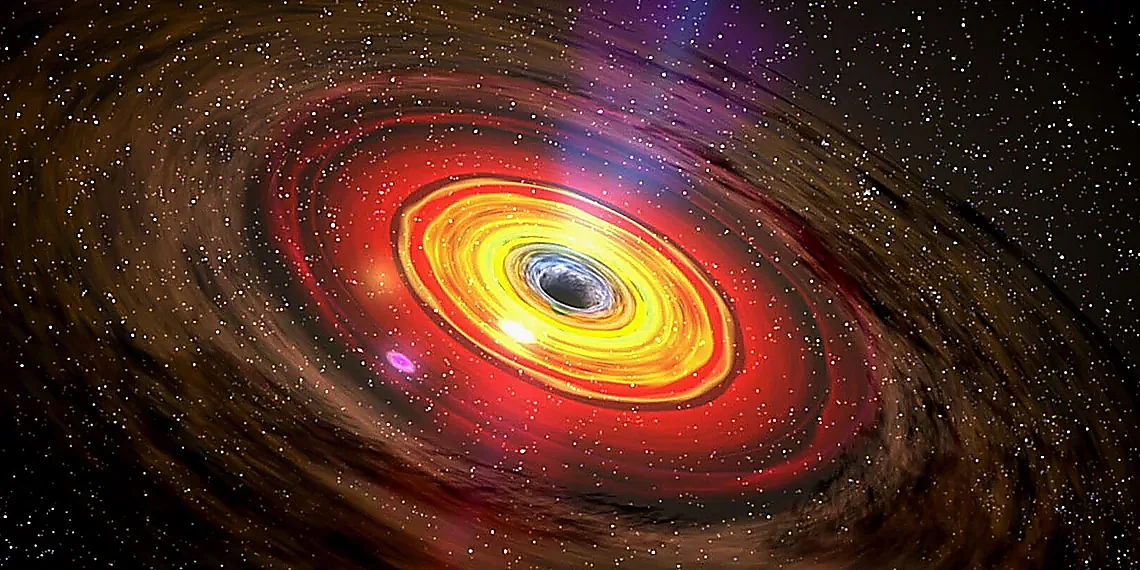
Rotating black holes, known as Kerr black holes, possess an astonishing amount of rotational energy – sometimes referred to as ‘spin’ energy. This energy isn’t simply ‘there’; it is intrinsically linked to the spacetime geometry surrounding the black hole. The challenge for astrophysicists lies in understanding how this immense rotational energy can be efficiently extracted and converted into the incredibly focused and relativistic jets observed emanating from many supermassive black holes. Simply put, converting that spin energy into a directed beam of particles moving at near light speed is a fundamentally difficult problem governed by the laws of physics.
A crucial component in this process is the accretion disk – a swirling vortex of gas and dust orbiting the black hole. Material within the disk loses angular momentum through friction and magnetic interactions, gradually spiraling inwards towards the event horizon. However, much of this material doesn’t fall directly into the black hole; instead, it interacts with the black hole’s powerful gravitational field and magnetic fields, which are believed to play a critical role in jet formation. The exact mechanisms by which energy and momentum are transferred from the accretion disk to launch and sustain these jets remain a significant area of research.
The bottleneck lies in overcoming several fundamental physical constraints. Magnetic fields need to be configured precisely to channel and collimate the outflowing material. Turbulence within the accretion disk and the surrounding plasma can disrupt the process, leading to inefficient energy transfer or jet instabilities. The numerical code developed by Goethe University researchers represents a step forward in modeling these complex interactions with greater accuracy, but fully explaining the origin and behavior of black hole jets remains one of astrophysics’ most compelling challenges.
Goethe University’s Breakthrough Model
For decades, astronomers have observed powerful jets of matter erupting from the hearts of galaxies, propelled by supermassive black holes. These ‘black hole jets’ are among the most energetic phenomena in the universe, yet their formation has remained a profound puzzle. While Heber Curtis’s early observations hinted at this phenomenon, and the Event Horizon Telescope’s groundbreaking image of M87* provided stunning visual confirmation, understanding the underlying physics has been incredibly challenging. Now, theoretical astrophysicists at Goethe University Frankfurt have taken a significant leap forward with the development of a novel numerical code that promises to unlock deeper secrets surrounding these cosmic powerhouses.
The newly developed code represents a major advance over previous models attempting to simulate black hole jet formation. Earlier simulations often relied on simplifying assumptions and approximations, limiting their accuracy and ability to capture the complex interplay of physical processes at play near a black hole’s event horizon. This new model utilizes significantly more sophisticated mathematical techniques, allowing researchers to simulate jet formation with unprecedented precision. It accounts for intricate details like magnetic field structures and relativistic effects—crucial components in the jet ejection process that were previously either ignored or treated with substantial simplification.
At its core, the code meticulously tracks how a black hole’s rotational energy is converted into the incredibly fast-moving jets we observe. This involves solving complex equations describing magnetohydrodynamics – the interaction of magnetic fields and fluid motion – in a highly curved spacetime environment. The sheer complexity demands immense computational resources; researchers utilized powerful supercomputers to run these simulations, highlighting the intersection of cutting-edge physics and high-performance computing. The ability to accurately model this process offers invaluable insights into not just jet formation but also the broader dynamics of black hole accretion disks and their surrounding galaxies.
The implications of Goethe University’s breakthrough are far-reaching. With this enhanced numerical code, scientists can now test theoretical predictions about jet behavior against observational data with greater confidence. This will facilitate a deeper understanding of how these jets influence galaxy evolution, contribute to the cosmic web, and potentially even seed the formation of new stars. Further refinement of the model and continued simulations are expected to reveal even more nuanced details about the captivating phenomenon of black hole jets.
A Numerical Code to Unravel the Mystery
For decades, modeling black hole jets has been a significant challenge due to their complex physics and extreme conditions. Previous simulations often relied on simplifying assumptions that limited accuracy, particularly when dealing with the intricate interplay between the black hole’s magnetic fields, accretion disk, and the jet itself. The new numerical code developed by researchers at Goethe University represents a substantial leap forward because it incorporates significantly more detailed physical processes and utilizes higher-resolution grids to capture these interactions with unprecedented precision.
The core innovation lies in the code’s ability to resolve smaller scales within the jet formation region, allowing for a more accurate representation of how rotational energy from the black hole is converted into kinetic energy propelling the jet outward. Previous models often smeared out critical features; this new code can differentiate and track magnetic field lines and plasma behavior with far greater fidelity. This improved accuracy allows scientists to test theoretical predictions about jet launch mechanisms against realistic simulations, potentially revealing details previously hidden by coarser approximations.
Running these high-resolution simulations demands immense computational power. The Goethe University team utilized the Hazel HPC cluster at the High Performance Computing Center Stuttgart (HLRBN) for their calculations, requiring thousands of processor cores working in parallel over extended periods. This level of computational intensity underscores the complexity of the problem and highlights the crucial role of advanced computing infrastructure in pushing the boundaries of astrophysical research.
Future Implications & Open Questions
The Goethe University team’s new numerical code represents a significant leap forward, not just in our ability to model black hole jets, but also in our broader comprehension of how these cosmic engines function and interact with the universe around them. By accurately depicting the transformation of rotational energy into incredibly fast outflows—black hole jets—we gain deeper insight into fundamental physics at play near supermassive black holes. This refined understanding can inform models of galaxy formation and evolution; after all, these powerful jets often dramatically impact the gas and star formation within their host galaxies, sometimes even suppressing it entirely.
While this breakthrough provides a more detailed framework for jet generation, many crucial questions remain unanswered. The precise mechanism behind particle acceleration to such extreme velocities within the jets themselves is still elusive—how do particles gain energy so efficiently? Furthermore, scientists are striving to fully grasp how these jets influence the evolution of galaxies over cosmic timescales; do they primarily act as destructive forces, or do they play a role in dispersing heavier elements throughout the intergalactic medium? These complexities demand continued investigation.
Future research will likely focus on refining the numerical code to incorporate even more intricate physical processes. This includes accounting for magnetic fields’ complex interplay with the accretion disk and jet outflow, which are thought to be vital drivers of the acceleration process. Combining these advanced simulations with observational data from next-generation telescopes like the Extremely Large Telescope (ELT) will be crucial in testing and validating theoretical predictions. Ultimately, unraveling the mysteries surrounding black hole jets could provide a window into understanding other energetic phenomena throughout the cosmos.
Beyond their immediate impact on our understanding of black holes, insights gleaned from these models may reveal connections to other astrophysical puzzles. The principles governing jet formation could potentially shed light on processes in active galactic nuclei (AGN) and even offer clues about the behavior of accretion disks around neutron stars. As we continue to probe the universe’s most extreme environments, advancements like this numerical code promise to unlock new secrets and redefine our place within the grand cosmic tapestry.
Beyond M87*: What We Still Don’t Know
The recent development of a high-precision numerical code simulating black hole jets, while a monumental achievement, doesn’t represent a complete solution to our understanding of these powerful phenomena. The model successfully describes the transformation of rotational energy into ultra-fast jets emanating from black holes like M87*, but it leaves key questions unanswered. For instance, the precise mechanism by which particles within these jets are accelerated to near light speed remains elusive – current models offer plausible explanations involving magnetic fields and turbulence, but a definitive answer is still sought.
Beyond particle acceleration, the broader impact of black hole jets on their host galaxies presents another significant open question. These jets carry immense energy and momentum; understanding how they interact with the surrounding interstellar medium, influencing star formation rates and galaxy morphology, is crucial for a complete picture of galactic evolution. Does the jet suppress or trigger star formation? How does it affect the distribution of gas within the galaxy? These are complex interactions that require further investigation.
The insights gained from modeling black hole jets have broader implications beyond just understanding M87*. The principles governing these energetic outflows likely apply to other astrophysical systems, such as active galactic nuclei and even potentially contribute to our understanding of gamma-ray bursts. Refining these models and applying them to different scenarios promises to unlock further secrets about the universe’s most extreme environments.
The journey into understanding these cosmic phenomena has revealed a breathtaking complexity, demonstrating that black holes are far from simple gravitational sinks; they’re dynamic engines driving some of the most energetic processes in the universe. Our exploration of magnetic fields, particle acceleration, and relativistic effects paints a vivid picture of how material surrounding a black hole is funneled and propelled outwards at near-light speed, creating spectacular features like black hole jets. This research reinforces the crucial link between general relativity and plasma physics, highlighting areas where our models need refinement and further investigation to fully capture these intricate interactions. The sheer scale of energy involved in launching these powerful outflows—the formation and propagation of black hole jets—underscores the fundamental questions we still have about how matter behaves under extreme conditions. Continued observations with increasingly sophisticated telescopes promise even more revelations, potentially allowing us to observe jet formation at unprecedented detail. Ultimately, unraveling the mysteries surrounding black holes pushes the boundaries of our knowledge in physics and astrophysics, providing invaluable insights into the evolution of galaxies and the universe itself. To delve deeper into the fascinating world of black hole physics—from event horizons to gravitational waves—we encourage you to explore resources like NASA’s website, educational videos from institutions like Caltech and MIT, and peer-reviewed articles available through academic databases; there’s a whole cosmos waiting to be discovered.
The ongoing quest to decode black hole jets is not just about understanding these individual phenomena but also about refining our broader cosmological models. Each new observation and theoretical advancement brings us closer to a more complete picture of how galaxies form and evolve, and the role that supermassive black holes play in this grand narrative. We hope this article has sparked your curiosity and appreciation for the profound beauty and complexity hidden within these cosmic powerhouses.
Continue reading on ByteTrending:
Discover more tech insights on ByteTrending ByteTrending.
Discover more from ByteTrending
Subscribe to get the latest posts sent to your email.