
The universe whispers secrets, and humanity’s been listening intently, but traditional methods of searching for extraterrestrial intelligence (SETI) have yielded little more than static so far. We’ve scanned the skies for radio signals, analyzed atmospheric compositions, and meticulously examined exoplanet data, all in the hope of finding evidence that we’re not alone. But what if we’re looking in the wrong way? What if the most compelling signs aren’t broadcasts, but something far more ambitious – a physical presence exploring the cosmos?
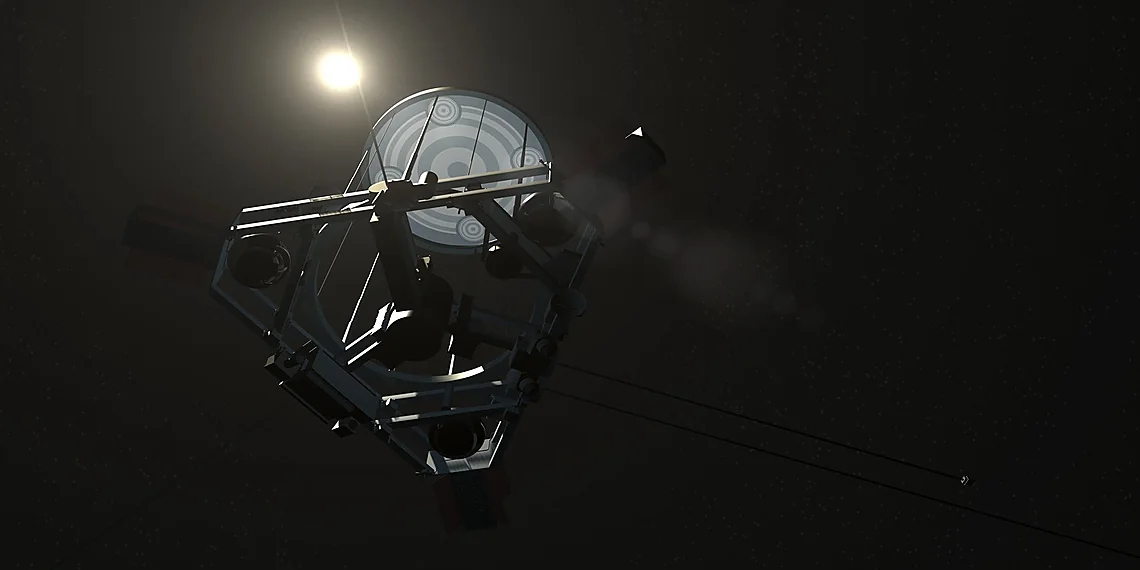
Imagine a civilization possessing the technological prowess to create machines capable of independent travel and resource acquisition; these are self-replicating space probes, often referred to as Von Neumann probes. These theoretical devices could utilize raw materials from asteroids or planetary surfaces to build copies of themselves, exponentially expanding their reach across interstellar distances. The implications for discovering alien intelligence are profound – a single probe could seed the galaxy with explorers, effectively turning the cosmos into a vast, interconnected network.
This article delves into the fascinating possibility of actively searching for these self-replicating space probes. While passively listening for signals remains valuable, we can also employ strategies to detect the telltale signs of their existence: the subtle modifications they make to celestial bodies, the unique spectral signatures of their manufacturing processes, and even the potential ‘waste products’ of their replication efforts. Our focus will be on outlining these detection methods and considering how a proactive approach could revolutionize our search for life beyond Earth.
Understanding Von Neumann Probes
The notion of a self-replicating space probe, often referred to as a Von Neumann probe, stems from the brilliant mind of mathematician John von Neumann. In the 1940s, he explored the theoretical possibility of creating machines capable of replicating themselves – essentially, robots that could build copies of themselves using available resources. While true self-replication remains largely in the realm of science fiction today, applying this concept to space probes presents a truly mind-boggling prospect: imagine probes capable of traveling vast interstellar distances and establishing new outposts without constant direction from Earth.


A Von Neumann probe wouldn’t simply follow pre-programmed instructions. Instead, it would be equipped with the ability to harvest raw materials – asteroids, comets, even planetary surfaces – and utilize them to construct copies of itself. These ‘daughter’ probes could then repeat the process, exponentially expanding the reach of the original mission. The initial probe might contain a blueprint for its construction, along with instructions on how to find resources and assemble new units. This capability drastically reduces the reliance on Earth-based support, allowing exploration far beyond our solar system over timescales that dwarf human lifespans.
The significance of such technology is immense. If an advanced extraterrestrial civilization possessed (or had once possessed) Von Neumann probes, they could have explored and potentially colonized a significant portion of the galaxy long ago. Detecting evidence of these probes – perhaps remnants of their construction or unusual resource depletion patterns on distant celestial bodies – would provide compelling evidence for past or present extraterrestrial activity. The recent study proposes specific search strategies focused on identifying these telltale signs, representing a novel approach to the search for intelligent life beyond Earth.
While building such a probe presents monumental engineering challenges—requiring advanced robotics, automated resource extraction, and sophisticated 3D printing capabilities—the potential rewards are equally staggering. A single Von Neumann probe launched today could, in principle, seed countless star systems with exploration units, effectively turning the galaxy into a vast network of interconnected outposts. The implications for scientific discovery, resource acquisition, and even interstellar colonization are truly transformative.
The Original Concept & Its Potential

The concept of self-replicating machines originates with mathematician John von Neumann. In the 1940s, he explored the possibility of creating a machine capable of constructing copies of itself. His theoretical ‘Universal Constructor’ wasn’t intended for space exploration initially; it was an exercise in understanding how complex systems could arise from simple components and instructions. Von Neumann envisioned a machine that could read its own blueprints, gather raw materials, and use those materials to build identical versions of itself, essentially creating a chain reaction of replication.
Extrapolating this idea to space probes—dubbed ‘Von Neumann probes’—paints an astonishing picture. These probes would be equipped with the ability to mine resources from asteroids or planetary surfaces (water ice, metals, etc.), manufacture copies of themselves using those resources, and then program these new probes to continue exploring outwards. Each probe could, in theory, create multiple successors, exponentially expanding a civilization’s reach across the galaxy without requiring constant resource shipments from a home world.
The potential impact of such technology deployed by an advanced extraterrestrial civilization is profound. A single Von Neumann probe launched centuries ago could, through repeated replication and exploration, have seeded countless star systems with robotic scouts – far more than any directed mission could ever achieve. The sheer scale of such an undertaking would represent a level of technological sophistication beyond our current capabilities, and its detection would provide compelling evidence for the existence of extraterrestrial intelligence.
Searching for Signs – The New Approach
The search for extraterrestrial intelligence (ETI) has traditionally focused on radio signals or direct observation of alien megastructures. However, a groundbreaking new study proposes an intriguing alternative: searching for evidence of self-replicating space probes – often referred to as Von Neumann probes – deployed by an advanced civilization. Instead of actively transmitting messages, these probes would silently explore and potentially replicate themselves across vast interstellar distances, leaving behind subtle but detectable traces.
The proposed methodology outlined in the study shifts the focus from ‘listening’ for signals to ‘looking’ for anomalies within our solar system and beyond. The core concept rests on the understanding that self-replicating space probes require resources – raw materials essential for construction and operation. These resources wouldn’t be available infinitely; a probe would need to harvest them, primarily from asteroids, moons, or even planetary bodies. This resource acquisition isn’t inherently suspicious, but the study suggests actively searching for patterns of resource depletion that defy conventional explanations.
Specifically, scientists should scrutinize areas with abundant raw materials, like asteroid belts and icy moons, for evidence of ‘anomalous’ resource depletion – rates or locations that cannot be accounted for by known natural processes such as impacts or geological activity. A sudden, localized disappearance of a specific mineral, or an unusual pattern of mining across multiple asteroids, could indicate the presence of automated systems at work. The study emphasizes that these anomalies wouldn’t necessarily be dramatic; subtle deviations from expected resource behavior, accumulated over time, might paint a clearer picture.
Furthermore, the researchers suggest expanding this search to include other unexpected phenomena potentially linked to probe activity. While resource depletion is a primary indicator, any unusual energy signatures or localized disturbances in space could warrant further investigation. The challenge lies in distinguishing these potential ‘probe fingerprints’ from naturally occurring events, requiring advanced analytical techniques and a deep understanding of planetary processes – a truly exciting frontier in the ongoing search for life beyond Earth.
Resource Depletion Anomalies

Self-replicating space probes, also known as Von Neumann probes, are theoretical machines designed to autonomously explore and colonize regions of space. A core requirement for their functionality is access to raw materials. These probes wouldn’t simply ‘travel’; they would need to gather resources – metals like iron and nickel from asteroids, water ice from moons or comets, and potentially even silicates from planetary surfaces – to construct copies of themselves and continue their expansion.
The recent study proposes a novel method for detecting evidence of such probes. Instead of searching directly for the probes themselves (a difficult task given the vastness of space), researchers suggest looking for ‘resource depletion anomalies’. These are patterns of resource extraction that defy explanation by known natural processes, like asteroid impacts or geological activity.
Specifically, scientists would analyze data on asteroid compositions and lunar surface features over time. A sudden, localized, and unusually rapid depletion of a specific mineral from an asteroid, or the appearance of artificial structures built from lunar regolith, could indicate the presence of a self-replicating probe actively harvesting resources for its own propagation – a telltale sign of extraterrestrial technological activity.
Challenges & Considerations
The very nature of self-replicating space probes presents a significant hurdle in their potential discovery: stealth. A civilization deploying these probes wouldn’t necessarily want to advertise their presence. They might actively design the probes to be as inconspicuous as possible, minimizing electromagnetic emissions or utilizing materials that render them difficult to detect against the cosmic background. This intentional obfuscation dramatically complicates our search efforts, requiring us to consider scenarios far beyond simply looking for bright signals.
The sheer distances involved in interstellar travel also pose a monumental challenge. Even within our own Solar System, detecting small objects across vast gulfs of space is already difficult; searching for probes light-years away multiplies that difficulty exponentially. Current telescope technology, while impressive, has inherent limitations in its ability to resolve such distant and potentially tiny targets. Radar detection becomes practically impossible at interstellar distances due to signal attenuation and the immense time delays involved.
Our current methods of detecting objects – primarily relying on optical telescopes and radio wave scans – are geared towards finding relatively bright or actively transmitting sources. A truly advanced civilization might deploy probes designed for passive observation, avoiding any transmissions that could betray their existence. Future detection strategies will require a shift in approach, perhaps leveraging gravitational lensing to magnify distant objects or developing entirely new sensor technologies capable of detecting subtle anomalies in the interstellar medium – changes caused by even small robotic explorers.
Ultimately, the search for self-replicating space probes represents a technological and scientific frontier. Overcoming these challenges will necessitate breakthroughs not just in telescope design but also in our understanding of physics and potentially require entirely new paradigms for observing the universe. The detection limits we face today are substantial, but continued innovation driven by this ambitious goal could unlock unprecedented insights into both extraterrestrial intelligence and the capabilities of future space exploration.
The Stealth Factor & Detection Limits
An advanced civilization deploying self-replicating space probes would likely prioritize operational longevity and resource efficiency. This could easily include active measures to avoid detection by other civilizations, including our own. Such ‘stealth’ tactics might involve using low-reflectivity materials, minimizing electromagnetic emissions (radio waves, infrared radiation), and adopting trajectories that avoid predictable or obvious paths through the galaxy. They might even mimic naturally occurring celestial objects in appearance and movement, essentially blending into the cosmic background noise.
Our current detection capabilities face significant hurdles in identifying such concealed probes. Optical telescopes are limited by a probe’s size and reflectivity; a small, dark object at interstellar distances is incredibly difficult to discern. Radar systems suffer from similar limitations – signal attenuation over vast distances makes detection improbable unless the probe actively transmits or possesses reflective surfaces. Even gravitational lensing, while powerful, requires precise alignment and favorable conditions making it an unlikely discovery method for deliberately hidden objects.
Future technologies offer some promise in improving our chances of finding these elusive probes. Advanced interferometry techniques, combining signals from multiple telescopes to create a virtual larger aperture, could significantly increase resolution. Gravitational wave observatories might detect subtle gravitational disturbances caused by probe activity (though this is highly speculative). Perhaps most importantly, developing dedicated ‘searchlight’ missions – focused observation campaigns targeting specific regions of space based on theoretical probe trajectories – represents a proactive approach that surpasses the limitations of passive astronomical surveys.
Beyond Detection – Implications & Future Research
The hypothetical discovery of self-replicating space probes – often referred to as Von Neumann probes – would fundamentally reshape humanity’s place in the cosmos. Beyond the sheer scientific validation that another civilization possesses interstellar travel capabilities, the implications are staggering. Imagine a network of these probes scattered throughout our solar system and beyond, silently charting unknown territories long before we even ventured past Mars. This realization could trigger profound philosophical shifts, forcing us to re-evaluate our understanding of life, intelligence, and our own significance in the universe. The scientific community would be galvanized; every telescope, radio array, and theoretical physicist would be focused on deciphering the probes’ origins, purpose, and underlying technology – a collaborative effort unlike any seen before.
However, alongside the immense potential for advancement lie considerable risks. While some probes might be benign explorers, their creators’ intentions remain unknown. The very act of self-replication introduces an element of unpredictability; even with careful programming, unforeseen consequences could arise. A probe malfunction or a deliberate directive we misunderstand could pose a threat to our solar system’s stability or even humanity itself. The discovery would necessitate immediate and robust international protocols for interaction – or non-interaction – with these extraterrestrial artifacts, demanding unprecedented levels of global cooperation and caution. It’s crucial that any contact attempts prioritize understanding and safety above all else.
Future research directions are multifaceted. Firstly, refining our detection methods is paramount. The current study outlines promising strategies based on analyzing subtle anomalies in asteroid trajectories or unusual radio signals, but these need significant improvement to reduce false positives. Secondly, we must invest heavily in reverse-engineering potential probe technology – a monumental task requiring breakthroughs in materials science, robotics, and artificial intelligence. Understanding how such complex machines operate would not only unlock incredible technological advancements for ourselves but also provide invaluable insight into the capabilities of our extraterrestrial counterparts. Finally, ethical frameworks surrounding interaction with these probes need to be developed *now*, before contact is made – establishing clear guidelines for scientific investigation, potential communication attempts, and contingency plans for unforeseen circumstances.
Ultimately, the search for self-replicating space probes represents a profound gamble. The rewards of discovery are potentially limitless – access to advanced technology, expanded knowledge of the universe, and perhaps even a path towards interstellar civilization. However, we must proceed with humility, caution, and a deep awareness of the potential risks involved. This isn’t merely about finding alien machines; it’s about confronting our place in a vast and possibly complex cosmic landscape.
What Discovery Would Mean for Humanity
Confirmation that another civilization deployed self-replicating space probes throughout our solar system would fundamentally alter humanity’s understanding of its place in the universe. The sheer technological feat implied by such a capability – the ability to autonomously gather resources and construct copies of itself – suggests an intelligence far exceeding our own current capabilities. This wouldn’t just be evidence of extraterrestrial life; it would represent proof of advanced engineering prowess, potentially centuries or millennia beyond anything we’ve achieved. The philosophical implications are profound, challenging long-held assumptions about uniqueness and the prevalence of intelligent life.
Scientifically, the discovery offers unprecedented opportunities for study. Analyzing the probe’s design, materials, and operational methods could unlock revolutionary advancements in fields like robotics, material science, energy generation, and propulsion systems. However, caution is paramount. Attempting to reverse-engineer alien technology without a thorough understanding of its purpose and potential safeguards carries inherent risks. Establishing communication would be crucial, though the nature and complexity of such interaction remain entirely speculative; we might encounter a long-dormant system or an active intelligence with unknown intentions.
Societally, the revelation would likely trigger widespread cultural shifts and potentially significant geopolitical upheaval. While some may view it as a source of hope and inspiration, others could experience fear and anxiety regarding potential threats. International collaboration in research and response protocols would become essential to navigate this paradigm shift responsibly. Future research should prioritize developing robust detection methods, establishing clear ethical guidelines for interaction (or non-interaction), and fostering global dialogue about the implications of encountering such advanced technology.
The implications of self-replicating technology, particularly as it relates to interstellar exploration, are truly profound, reshaping our understanding of what’s possible beyond Earth. This study offers a vital stepping stone towards realizing these ambitious goals, demonstrating that autonomous construction and expansion in the cosmos isn’t merely science fiction but a potentially achievable reality. Considering the vastness of the universe and the limitations of traditional methods, deploying fleets of space probes capable of self-replication could revolutionize our ability to survey distant star systems and search for signs of life. The prospect of automated exploration, driven by evolving algorithms and fueled by resources gathered in situ, opens up a future filled with unprecedented discovery opportunities. While challenges remain – from perfecting the technology to addressing ethical considerations – the potential rewards are immense. It’s humbling to contemplate that somewhere out there, beyond our immediate reach, other civilizations might also be looking towards the stars, perhaps even utilizing similar strategies for exploration. The ongoing search for extraterrestrial intelligence remains a testament to humanity’s innate curiosity and desire to connect with something larger than ourselves. Let this glimpse into self-replicating technology inspire you to delve deeper into these fascinating areas of research and consider your place in this grand cosmic narrative. To continue exploring the possibilities, we invite you to investigate the Search for Extraterrestrial Intelligence (SETI) Institute’s website and discover their groundbreaking work; numerous other initiatives are also pushing the boundaries of our understanding – find them and join the conversation!
Your journey into the future of space exploration doesn’t have to end here. There’s a whole universe of knowledge waiting to be uncovered regarding interstellar travel, advanced robotics, and the ongoing quest for life beyond Earth.
Continue reading on ByteTrending:
Discover more tech insights on ByteTrending ByteTrending.
Discover more from ByteTrending
Subscribe to get the latest posts sent to your email.