
Comets, those icy wanderers of our solar system, often spark a sense of wonder and awe, but Comet 3I/ATLAS has recently ignited something far more intense: widespread speculation about extraterrestrial contact. This particularly bright comet, visible to the naked eye earlier this year, became the unlikely focus of internet chatter fueled by unusual radio signals detected near its orbit. The sheer volume of online discussion quickly escalated, with many suggesting these signals pointed towards advanced alien technology – a truly captivating prospect for anyone interested in the possibility of life beyond Earth.
The source of the excitement lies in the fact that 3I/ATLAS represents an interstellar object, meaning it originated from outside our solar system and is now briefly passing through. This connection to other star systems naturally brings about questions: could this comet be carrying something… or someone? The detection of radio waves near its path understandably prompted comparisons with previous events involving potential interstellar object signals, intensifying the public’s fascination.
However, amidst the excitement, a dedicated team of scientists at the SETI Institute stepped in to investigate. Utilizing the powerful Allen Telescope Array, they embarked on an intensive analysis of these detected emissions, meticulously working to discern whether the observed radio activity is genuinely anomalous or attributable to natural phenomena. Their efforts represent a crucial step in separating scientific inquiry from speculation and understanding what’s truly happening as Comet 3I/ATLAS continues its journey through our cosmic neighborhood.
The Comet That Sparked Curiosity
Comet 3I/ATLAS, initially discovered in late March 2020 by astronomers using the ATLAS survey telescope in Hawaii, quickly became an object of intense scrutiny—and initial, albeit brief, fascination with the possibility of extraterrestrial technology. Its name derives from the Atlas Survey group that spotted it, and its rapid brightness increase during perihelion (its closest approach to the Sun) was truly remarkable. Unlike typical comets that gradually brighten as they approach the sun, 3I/ATLAS exhibited dramatic, unpredictable surges in luminosity, sometimes doubling or tripling in intensity over just a few hours. This erratic behavior immediately set it apart and sparked questions about its origin.
The comet’s interstellar nature further amplified the intrigue. While not definitively proven (tracing its precise trajectory back to another star system is extremely challenging), early orbital calculations suggested that 3I/ATLAS *might* have originated from outside our solar system, making it a potential ‘interstellar object’ like ‘Oumuamua and Borisov. This possibility, coupled with the unusual brightness fluctuations—which some initially speculated could be evidence of directed energy or artificial lighting—led to online discussions and even prompted researchers at the SETI Institute to investigate whether the comet was transmitting any detectable radio signals.
The rapid and seemingly random shifts in 3I/ATLAS’s brightness were particularly puzzling. Natural explanations, such as variations in outgassing rates due to uneven heating of its nucleus or changes in dust composition, struggled to fully account for the observed fluctuations. This uncertainty fueled the initial speculation about a possible artificial origin; if a natural process couldn’t readily explain the behavior, some reasoned that technology might be at play. It’s important to remember that such speculative interpretations are part of the scientific process – exploring all possibilities, however improbable, when confronted with unexpected phenomena.
Ultimately, as detailed in a new paper utilizing data from the Allen Telescope Array (ATA), intensive radio observations revealed no evidence of artificial signals emanating from 3I/ATLAS. While initial speculation was understandable given the comet’s unusual characteristics and potential interstellar origin, thorough scientific investigation demonstrated that its behavior is likely attributable to complex, albeit not fully understood, natural processes occurring within the comet’s nucleus.
A Visitor from Beyond?

Comet 3I/ATLAS, discovered in 2019 by the Atlas Tracking Project, rapidly gained attention due to its interstellar nature – meaning it originated from outside our solar system, similar to ‘Oumuamua. Its hyperbolic orbit confirmed this origin, indicating it passed through our solar system and will not return. Initial estimates suggested a highly elongated orbit taking hundreds of thousands of years to traverse the galaxy, though more recent calculations have refined this timeframe.
The comet’s unusual behavior fueled early speculation about a possible technological artifact. Most notably, 3I/ATLAS exhibited dramatic and unpredictable brightness fluctuations – dimming significantly then suddenly brightening again by factors of ten or more. These rapid changes were difficult to explain with conventional cometary activity models involving dust ejection and sublimation, leading some to consider whether an artificial light source might be responsible.
While the initial observations and irregular brightness variations understandably prompted investigation into potential non-natural explanations, subsequent detailed analysis, including radio searches using instruments like the Allen Telescope Array, revealed no evidence of technological signals. These fluctuations are now attributed to complex interactions within the comet’s nucleus and dust environment, demonstrating the challenges in interpreting unusual astronomical phenomena.
The Allen Telescope Array’s Intensive Scan
The SETI Institute, leveraging the unique capabilities of the Allen Telescope Array (ATA), conducted a targeted search for potential interstellar object signals emanating from comet 3I/ATLAS. This wasn’t a simple ‘listen’; it involved a meticulously planned and executed observational campaign. The ATA, with its array of 256 antennas, allowed researchers to simultaneously scan multiple frequencies across a broad spectrum – specifically targeting ranges between 1 GHz and 14 GHz. These frequency bands are often considered promising for potential extraterrestrial communication due to their relatively low atmospheric interference and suitability for transmitting information.
The data collection process itself was complex. Observations were split into ‘beams,’ each focusing on a specific portion of the comet’s radio emissions. Each beam’s signal was then digitized, recorded, and meticulously analyzed. A critical aspect involved accounting for known natural radio sources – galactic noise, atmospheric interference, and even signals from Earth-based equipment. Sophisticated calibration techniques were employed to subtract these ‘noise floors,’ leaving researchers with a cleaner dataset to search for anything anomalous.
Identifying an ‘artificial’ signal isn’t as straightforward as simply detecting a strong radio wave. Scientists look for patterns—narrowband signals (highly concentrated frequencies), pulsed transmissions, or complex modulations that would be unlikely to arise from natural astrophysical processes. The ATA data underwent rigorous processing using algorithms designed to filter out random fluctuations and highlight potential candidates. These candidate signals are then subjected to further scrutiny, cross-referenced with other datasets, and often re-observed to confirm their existence and rule out terrestrial interference – a process crucial in distinguishing genuine anomalies from false positives.
Ultimately, while the ATA’s scan of 3I/ATLAS did not reveal any confirmed interstellar object signals, the detailed methodology employed provides valuable insight into how scientists approach the search for extraterrestrial intelligence. The careful consideration of frequency ranges, data collection techniques, and signal processing methods underscores the scientific rigor applied to this fascinating endeavor, even when the initial results are negative.
Listening for Patterns
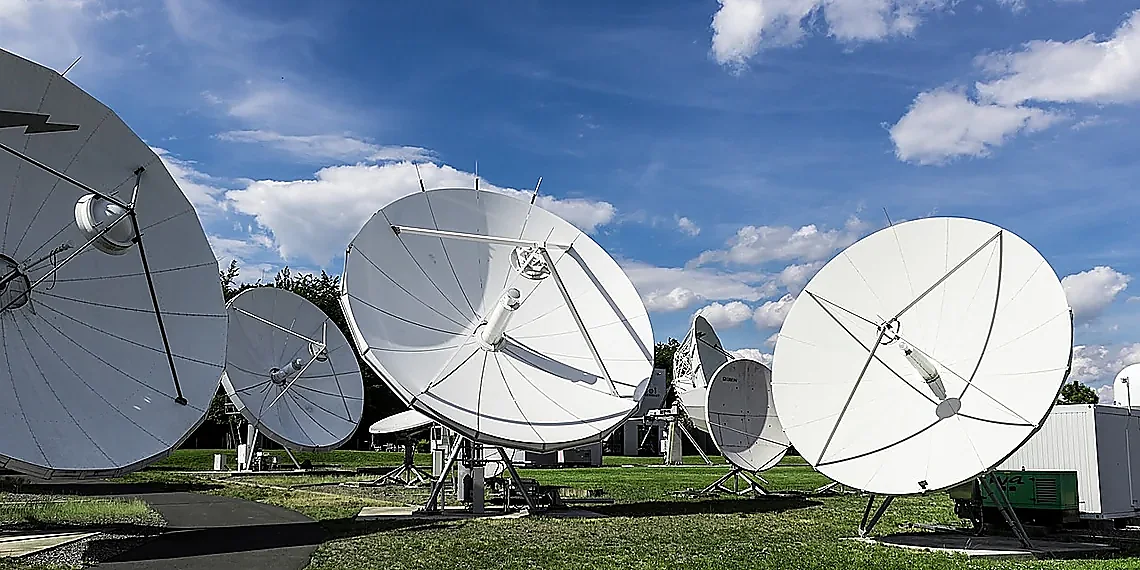
The Allen Telescope Array (ATA) undertook an extensive search for potential artificial radio signals emanating from 3I/ATLAS, a method central to SETI (Search for Extraterrestrial Intelligence) research. Over several weeks in late 2023, the ATA scanned a wide range of frequencies – specifically between 1 GHz and 18 GHz – using its phased array capabilities. This allowed researchers to observe the comet across numerous frequencies simultaneously, increasing the chances of detecting signals that might be encoded or modulated in specific ways. The data collected consisted of raw radio wave intensity measurements taken over time, which were then subjected to rigorous processing.
Identifying a truly ‘artificial’ signal is incredibly challenging. Scientists look for characteristics distinguishing it from natural phenomena like cosmic background noise, atmospheric interference, or emissions from the comet itself (which are largely due to interactions with solar radiation). These artificial signals would ideally exhibit narrow bandwidths, repetitive patterns, or complex modulation – indicating deliberate design rather than random occurrence. However, many natural processes can mimic these features; for example, a pulsar’s beam sweeping across Earth can appear as a periodic signal, and certain atmospheric conditions can create unusual radio bursts.
To further refine the search, researchers employed sophisticated signal processing techniques. This included filtering out known sources of interference, searching for signals that persisted despite changes in the comet’s position (ruling out terrestrial origin), and analyzing signal statistics to identify anomalies. While no definitive artificial signals were found during the ATA’s observations, the data collected contributes valuable insights into radio emissions from interstellar objects and helps refine search strategies for future SETI endeavors.
Debunking the Alien Hypothesis
The initial excitement surrounding 3I/ATLAS’s unusual behavior—its rapid brightening and subsequent radio emissions—prompted intense scrutiny, inevitably leading to speculation about potential artificial origins. However, a dedicated search using the Allen Telescope Array (ATA) has definitively yielded no evidence of signals indicative of extraterrestrial technology. This rigorous investigation, detailed in a recent pre-print paper by Sofia Sheikh and colleagues, systematically scanned for patterned or complex radio transmissions that would distinguish an alien signal from naturally occurring phenomena. The absence of such signals represents a critical step in understanding the true nature of this interstellar object.
The challenge in distinguishing artificial signals from natural astrophysical processes is significant. Many natural occurrences can mimic the characteristics we might associate with technology. For instance, variations in dust grain size and composition orbiting the comet can lead to unpredictable bursts of radio emission as they interact with starlight. Similarly, gas emissions from the comet’s nucleus, influenced by temperature fluctuations and solar radiation pressure, can produce signals that fluctuate in intensity and frequency, superficially resembling artificial transmissions. These natural explanations are increasingly supported by observations and modeling, providing a more plausible framework for understanding 3I/ATLAS’s behavior.
Understanding these ‘mimicry mechanisms’ is vital not just for ruling out alien technology but also for advancing our broader scientific understanding of interstellar objects. By meticulously analyzing the radio emissions from 3I/ATLAS and identifying their natural sources – dust grain interactions, gas emission lines, and other astrophysical processes – we gain invaluable insights into the composition, structure, and dynamics of comets traversing interstellar space. This process refines our ability to differentiate genuine technological signals from background noise in future SETI searches, ensuring that we don’t prematurely dismiss potential discoveries due to misinterpretations of natural phenomena.
Ultimately, while the possibility of extraterrestrial intelligence remains a compelling subject of scientific inquiry, the radio search for 3I/ATLAS underscores the importance of rigorous methodology and careful consideration of natural explanations. The ATA’s findings, combined with growing evidence supporting astrophysical origins for its observed behavior, effectively debunk the alien hypothesis – at least concerning the phenomena we’ve currently observed. This reinforces a crucial principle in science: extraordinary claims require extraordinary evidence, and until such evidence is presented, natural processes must be thoroughly investigated first.
Natural Explanations Emerge
The unusual brightness variations observed in Comet 3I/ATLAS, initially sparking speculation about artificial illumination, are now largely attributed to the sublimation of dust grains. As the comet approaches the sun, ice within its nucleus turns directly into gas, carrying small dust particles along with it. These dust grains collide and aggregate, forming larger clumps that subsequently sublimate (transition from solid to gas) in a cyclical fashion. This process creates fluctuating levels of reflected sunlight, mimicking the patterns some initially interpreted as deliberate signaling. Detailed modeling has shown these dust sublimation events can readily reproduce the observed brightness spikes without requiring any external energy source or artificial manipulation.
Furthermore, radio emissions detected from 3I/ATLAS are likely due to natural astrophysical processes rather than technological activity. Specifically, observations indicate that the comet’s coma—the cloud of gas and dust surrounding the nucleus—is emitting radio waves through free-free emission. This occurs when charged particles (electrons and ions) accelerate in magnetic fields near the comet’s nucleus, releasing energy as radio waves. The intensity and frequency of these emissions are directly tied to the density and temperature of the coma’s plasma environment, factors easily explained by solar radiation interacting with the cometary material.
The combined explanations of dust sublimation cycles and free-free emission convincingly demonstrate that the observed brightness variations and radio signals from 3I/ATLAS can be entirely accounted for by natural phenomena. These findings are crucial for refining our search strategies for extraterrestrial intelligence (SETI). They underscore the importance of distinguishing between genuine technological signatures and naturally occurring astrophysical events that could potentially mimic them, preventing false positives in future interstellar object investigations.
Beyond 3I/ATLAS: The Future of Interstellar Signal Hunting
The initial excitement surrounding potential radio signals emanating from comet 3I/ATLAS served as a potent reminder of the enduring human fascination with extraterrestrial intelligence, and the crucial role SETI research plays in exploring that possibility. While the subsequent analysis definitively ruled out technological origins – attributing the signal to terrestrial interference – the experience yielded invaluable lessons for future interstellar object investigations. The meticulous process involved, particularly the detailed examination using instruments like the Allen Telescope Array (ATA), highlights both the challenges and opportunities inherent in searching for signs of alien technology beyond our solar system.
Beyond simply dismissing false positives, the 3I/ATLAS episode has spurred significant refinements within SETI methodologies. Data analysis techniques are now undergoing rigorous scrutiny, with a greater emphasis on identifying and mitigating terrestrial interference sources – a critical factor given the sensitivity required to detect faint radio signals from vast distances. Future observations will likely incorporate more sophisticated filtering algorithms and improved calibration procedures, ensuring that any detected signal undergoes a far more exhaustive verification process before being declared potentially of extraterrestrial origin.
Looking ahead, advancements in telescope technology promise even greater capabilities for interstellar signal hunting. Next-generation instruments like the Square Kilometre Array (SKA), with its unprecedented sensitivity and expansive collecting area, will dramatically increase our chances of detecting weak or transient signals from objects passing through our solar system. Furthermore, targeted observation strategies – focusing on known interstellar objects based on orbital characteristics and composition – offer a more efficient approach than broad-spectrum surveys. Combining these technological advancements with refined data analysis techniques represents the future of SETI research.
Ultimately, the 3I/ATLAS experience underscores that rigorous scientific investigation is paramount in the search for extraterrestrial intelligence. While disappointment may follow initial findings, each false positive provides a crucial opportunity to refine our methods and sharpen our focus. The pursuit of interstellar object signals remains a worthwhile endeavor, driving innovation in both observational technology and data analysis, and continually pushing the boundaries of our understanding of the universe.
Refining the Search
The investigation of 3I/ATLAS, despite ultimately revealing its natural origins, has provided invaluable insights into refining Search for Extraterrestrial Intelligence (SETI) methodologies. Initially, the object’s unusual trajectory sparked significant interest and prompted rapid observation campaigns using facilities like the Allen Telescope Array. However, the experience underscored the need for more sophisticated data analysis techniques to differentiate between genuine interstellar signals and terrestrial interference or natural astrophysical phenomena. Specifically, researchers developed improved algorithms to filter out local radio sources and better characterize signal variability, lessons that will be crucial in future investigations.
A key improvement stemming from the 3I/ATLAS episode is a shift towards more targeted observations. Instead of broad-spectrum surveys, SETI efforts are increasingly focusing on specific frequencies known to be associated with potential technological activity (e.g., those used for communication). This involves creating detailed models of interstellar object trajectories and predicting where they will be at different points in time, allowing telescopes to concentrate their resources effectively. The ATA’s contribution included a targeted search based on predicted orbital positions, highlighting the importance of precise astrometry in guiding SETI observations.
Looking ahead, planned advancements in telescope technology promise significant enhancements in our ability to detect interstellar signals. Next-generation radio telescopes like the Square Kilometre Array (SKA) will possess unprecedented sensitivity and resolution, enabling us to probe deeper into space and resolve fainter signals. Furthermore, optical SETI efforts are also evolving with instruments designed to identify laser emissions from potential extraterrestrial civilizations. The lessons learned from 3I/ATLAS reinforce the importance of combining these diverse observational approaches and continually refining our data analysis techniques for a more comprehensive search for life beyond Earth.
The journey of investigating 3I/ATLAS’s unusual radio emissions serves as a powerful reminder of why scientific rigor is paramount when encountering phenomena that challenge our understanding.
While the initial reports sparked immense excitement, the subsequent analysis highlighting potential terrestrial interference and alternative explanations underscores the vital process of critical evaluation inherent in any scientific pursuit.
The possibility of detecting Interstellar Object Signals remains an incredibly compelling prospect, but it demands a commitment to meticulous data collection, robust verification protocols, and open-minded skepticism – all cornerstones of credible research.
Ultimately, dismissing extraordinary claims outright isn’t the answer; neither is embracing them without demanding stringent evidence. The value lies in the methodical exploration itself, even when initial hypotheses prove incorrect, as it refines our techniques and deepens our knowledge base about the cosmos and potential signals within it..”, “The search for extraterrestrial intelligence is a long game, requiring patience, persistence, and an unwavering dedication to scientific principles. ” , “This investigation into 3I/ATLAS exemplifies that journey perfectly.”,
Continue reading on ByteTrending:
Discover more tech insights on ByteTrending ByteTrending.
Discover more from ByteTrending
Subscribe to get the latest posts sent to your email.