


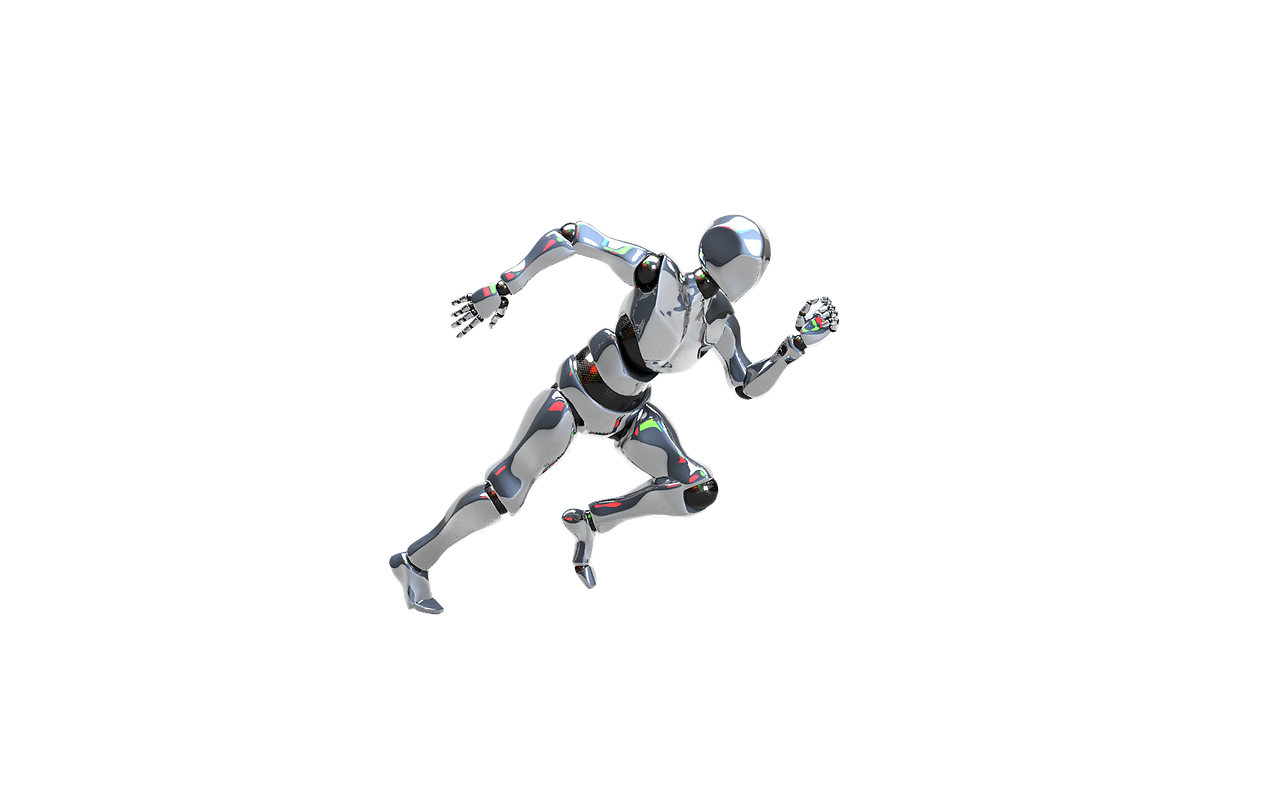
We’ve all seen the robotic demonstrations – impressive feats of strength, intricate assembly lines, and even surprisingly agile movements. Yet, something feels…missing.
Too often, current robotics competitions prioritize flashy displays over practical application, showcasing robots that excel at specific tasks but struggle to adapt to real-world scenarios.
The disconnect between these demonstrations and the everyday challenges humans face sparked an idea: what if we created a competition focused on mimicking human capabilities in a comprehensive way?
Imagine a series of tests mirroring common household chores, navigation through dynamic environments, and even collaborative problem-solving – that’s the core concept behind ‘My Humanoid Olympics’. This isn’t about speed or brute force; it’s about adaptability, dexterity, and intelligent decision-making in complex situations. The goal is to push the boundaries of what’s possible with machines capable of truly assisting us in our lives, particularly through advancements in humanoid robots. We envision a platform that fosters innovation beyond simple automation, encouraging researchers to build robots that can learn, reason, and react like we do – or at least, perform tasks *as* well as we do. We believe this focused challenge will accelerate progress towards genuinely useful robotic assistants for everyone.
Current State of the Art
The World Humanoid Robot Games showcased a glimpse into the future of robotics, but current capabilities are largely built upon techniques like learning from demonstration (LfD). This approach fundamentally involves a human ‘teacher’ guiding a robot – often through specialized interfaces like VR headsets or even by physically puppeteering a second, identical robot. The human’s movements are recorded as data and then used to train a neural network that allows the humanoid robot to replicate those actions autonomously. LfD shines when dealing with complex, multi-step tasks involving nuanced motions; it’s far easier to teach a robot how to assemble furniture or prepare a meal by demonstrating than it is to program every individual joint movement explicitly.
However, the current state of LfD presents significant limitations that highlight why creating genuinely capable humanoid robots remains an immense challenge. A core issue lies in the absence of crucial sensory feedback. During demonstration, the human feels resistance, understands weight distribution, and uses tactile information—things a robot typically lacks. Consequently, replicated actions often lack robustness; a slight change in environment or unexpected force can easily derail the process. While impressive visually, these demonstrations frequently omit critical aspects of physical interaction.
Further complicating matters is the limited dexterity achievable with current robotic hardware and software. Precise finger control remains a major hurdle – grasping delicate objects or manipulating tools with finesse requires significantly more advanced sensing and actuation than most humanoid robots currently possess. The lack of comprehensive touch sensing means robots operate largely ‘blind,’ unable to adapt their grip based on pressure or texture. Even moderate precision, the ability to consistently hit a target or place an object in a specific location, is often compromised by these limitations.
Ultimately, while learning from demonstration has proven invaluable for teaching humanoid robots complex sequences of actions, it’s clear that bridging the gap between human capability and robotic performance requires substantial advancements in areas like force feedback, tactile sensing, and fine motor control. The challenges presented by a ‘Humanoid Olympics,’ therefore, aren’t just about clever programming; they demand significant breakthroughs in hardware, sensor technology, and AI algorithms capable of filling in the gaps left by imperfect demonstrations.
Learning from Demonstration: The Current Approach

A prominent approach to programming complex humanoid robots involves ‘learning from demonstration’ (LfD). Instead of explicitly coding every movement – a task that quickly becomes overwhelming given the degrees of freedom in a humanoid body – LfD allows humans to demonstrate desired actions, which are then recorded and used to train machine learning models. This often utilizes specialized interfaces like virtual reality headsets or even dual-robot systems where a human operator physically controls one robot while its movements are mirrored (and recorded) by the learning robot.
The core of LfD lies in capturing kinematic data – joint angles, velocities, and forces – during these demonstrations. This data is then fed into neural networks, often recurrent or imitation learning architectures, which learn to map observed states (e.g., visual input, current joint positions) to appropriate actions. The strength of this method is its ability to handle intricate sequences of movements that would be nearly impossible to program directly; a human can intuitively perform tasks like wiping a window or picking up an object without consciously calculating the precise robot commands needed.
However, LfD also presents challenges. The quality and quantity of demonstration data are crucial – noisy or insufficient data leads to poor performance. Furthermore, these models often struggle with generalization; they may excel at replicating demonstrated actions but falter when faced with slightly different environmental conditions or unexpected disturbances. This limitation underscores the difficulty in creating robust humanoid robots capable of operating reliably in dynamic real-world scenarios.
Limitations of Current Techniques

A dominant technique for programming humanoid robots to perform complex tasks is ‘learning from demonstration,’ where a human demonstrates the desired movements which are then recorded and mimicked by the robot. While effective in some scenarios, this approach faces significant limitations when it comes to replicating nuanced human capabilities. A core issue stems from the lack of force feedback during demonstrations; humans naturally adjust their actions based on resistance or contact, information robots typically don’t receive, leading to jerky movements and potential collisions.
Furthermore, current learning from demonstration systems struggle with fine motor control, particularly in the hands. Human fingers possess a remarkable degree of dexterity – allowing for precise grasping and manipulation – that is difficult to replicate. Robots often exhibit limited finger control, relying on simplified gripping strategies that are far less adaptable than human hand movements. The absence of tactile sensing exacerbates this problem; without the ability to ‘feel’ objects, robots lack crucial information about their grip stability and object properties.
Ultimately, even with advanced algorithms, learning from demonstration typically yields only moderate precision in humanoid robot tasks. While a robot might successfully pick up an object, its accuracy regarding placement or orientation may be significantly lower than what a human could achieve. This limitation highlights the significant gap between current robotic capabilities and true human-level dexterity, underscoring the challenges inherent in the proposed Humanoid Olympics.
Event 1: Doors
The inaugural ‘Doors’ event at my Humanoid Olympics serves as a deceptively simple yet profoundly challenging starting point for these aspiring robotic athletes. While seemingly commonplace to humans, manipulating doors – particularly the variety encountered in everyday life – represents a significant hurdle for humanoid robots striving for true dexterity and adaptability. It’s not just about opening a door; it’s about understanding its mechanics, predicting its behavior, and executing precise movements under varying conditions – factors that demand sophisticated perception, planning, and control systems.
The initial ‘Bronze Medal’ level focuses on the seemingly innocuous task of pushing open a round-knob door. This requires not only accurately locating the handle but also generating sufficient force to overcome friction while maintaining balance and avoiding collisions with the frame. A successful bronze medal performance signifies basic grasp stability, rudimentary force control, and an ability to execute a simple trajectory – all crucial building blocks for more complex tasks. Many robots falter here, demonstrating the difficulty of even this introductory challenge.
Progressing to the ‘Gold Medal’ level introduces a lever-handle self-closing pull door, dramatically increasing the complexity. This necessitates dynamic movement planning – anticipating and reacting to the door’s closing action – or even utilizing a secondary limb for stabilization. The robot must precisely coordinate its grip strength with the rate of closure, potentially requiring advanced feedback loops and predictive algorithms. Achieving gold demands not just strength and precision but also an understanding of physics and momentum that pushes the boundaries of current humanoid robotic capabilities.
Ultimately, the ‘Doors’ event isn’t about creating a door-opening champion; it’s about exposing the limitations of existing technology and inspiring innovation in areas such as tactile sensing, motion planning, and robust control. It sets the stage for the rest of the competition, highlighting the long road ahead to truly human-like robotic dexterity.
Bronze Medal: Entering a Round-Knob Push Door
The initial bronze medal task in our hypothetical Humanoid Olympics focuses on a seemingly simple action: entering a standard round-knob push door. While humans perform this maneuver instinctively, it presents a surprisingly complex series of challenges for even the most advanced humanoid robots. The requirement isn’t just to open the door; it involves approaching the doorway, accurately perceiving its dimensions and knob location, generating appropriate grasping force, rotating the knob, pushing the door inward with precise control to avoid slamming, and then stepping through – all while maintaining balance.
The difficulty stems from several factors. First, robust visual perception is crucial for identifying the door and its handle amidst varying lighting conditions and potential obstructions. Second, accurate motor control is needed to apply the correct torque to the knob without stripping it or overextending the robot’s arm joints. Finally, dynamic balance must be maintained throughout the entire sequence; a slight shift in weight during the pushing phase could easily lead to a fall, especially given the limited stability of many current humanoid designs.
Successfully completing this task requires a combination of advanced sensing, sophisticated planning algorithms, and precise actuator control – capabilities that are still under development for most humanoid robots. It serves as an early benchmark, highlighting the gap between human dexterity and robotic proficiency in everyday manipulation tasks.
Gold Medal: Entering a Lever-Handle Self-Closing Pull Door
The ‘Gold Medal: Entering a Lever-Handle Self-Closing Pull Door’ challenge epitomizes the difficulty of even seemingly simple human actions when translated to robotics. While opening a standard push or pull door is within the capabilities of many current humanoid robots, this specific scenario introduces complexities that demand advanced dynamic movement planning and often require the utilization of a secondary limb or coordinated manipulation.
The lever-handle itself presents an obstacle; it necessitates a grasping action coupled with precise rotational force to initiate opening. Crucially, the ‘self-closing’ element adds a time constraint – robots must open the door quickly enough before it swings shut. This isn’t simply about strength; it demands accurate timing and potentially reactive adjustments based on the door’s movement.
Successfully navigating this task often requires more than just arm movements. Some winning solutions involve using a leg or torso to stabilize the robot while opening, or employing a second arm for counterbalancing or added force. The need for these secondary actions highlights the gap between current robotic capabilities and achieving truly human-like dexterity and adaptability.
Event 2: Laundry
The ‘Laundry’ event at the World Humanoid Robot Games might seem mundane compared to feats of parkour or weightlifting, but its significance lies in showcasing a crucial aspect of truly useful robotic assistance: everyday household tasks. This isn’t about dazzling displays of strength; it’s about demonstrating the ability to perform actions we take for granted, consistently and reliably. Successfully navigating laundry requires not just grasping objects, but also understanding their properties – fabric types, potential fragility, and the need for careful manipulation.
The event itself involves a series of increasingly complex tasks centered around handling clothes. One particularly challenging element is ‘Hang a Men’s Dress Shirt,’ which immediately exposes the limitations of current humanoid robot technology. It’s not simply about picking up a shirt; it requires precise dexterity to button the placket, manage the sleeves without crushing them, and ultimately hang the garment neatly on a hanger. This demands sophisticated vision systems to identify buttons and fabric folds, coupled with finely tuned motor control – a far cry from the jerky movements often seen in early robotic prototypes.
The difficulty stems from the inherent variability of real-world objects. A shirt isn’t perfectly symmetrical or uniformly weighted; it might be slightly wrinkled or have a stray button. Humanoid robots need to adapt to these inconsistencies, something that pre-programmed routines struggle with. Progress in this area directly translates to improved performance in other household chores – folding towels, loading dishwashers, even putting away toys. The ‘Laundry’ event is therefore a vital benchmark for evaluating the practical utility of humanoid robot designs.
Ultimately, success in the Laundry event isn’t about winning a medal; it’s about demonstrating tangible steps toward robots that can genuinely assist humans in their daily lives. While flashy displays capture attention, the ability to reliably handle everyday tasks like laundry represents a more profound and impactful advancement in the field of humanoid robotics.
Gold Medal: Hang a Men’s Dress Shirt
The seemingly simple task of hanging a men’s dress shirt proved remarkably challenging for competing humanoid robots during the ‘Laundry’ event at the World Humanoid Robot Games. While robots excel at repetitive tasks in controlled environments, replicating the nuanced dexterity required to manipulate fabric and fasten buttons presents a significant hurdle. This particular challenge – specifically, achieving gold medal status – demanded more than just grasping; it required precise control over multiple joints to avoid crumpling or tearing the shirt.
Buttoning a dress shirt is far from straightforward for robotic systems. It involves not only aligning buttonholes with buttons but also applying the correct amount of force to secure them without damaging the fabric or the robot’s own actuators. Sleeve manipulation added another layer of complexity, as robots needed to accurately fold and position the sleeves while maintaining a firm grip on the shirt’s body – a process requiring sophisticated visual perception and feedback control.
The difficulty highlights a key limitation in current humanoid robotics: the gap between laboratory demonstrations and real-world applicability. Successfully mastering this ‘Hang a Men’s Dress Shirt’ challenge signifies substantial progress toward robots capable of performing everyday household chores, offering a glimpse into the future of assistive technology where robotic helpers can genuinely contribute to our daily lives.
Event 5: Wet Manipulation
Event 5 of the World Humanoid Robot Games, ‘Wet Manipulation,’ highlighted a significant hurdle for aspiring household helpers: dealing with liquids. While many demonstrations showcased impressive dexterity – grasping objects, walking on uneven terrain – few adequately addressed the complexities introduced by water and soap. The simple act of cleaning, something humans perform effortlessly daily, becomes a monumental challenge when executed by a humanoid robot. It’s not just about preventing short circuits; it’s about maintaining grip, stability, and functionality in an environment actively working against those qualities.
Consider the ‘Gold Medal’ task: using a sponge to wash grease off a pan in a sink. This seemingly trivial action encapsulates the multifaceted difficulties of wet manipulation. The robot must contend with slippery surfaces – both the pan itself and the surrounding countertop – while simultaneously applying appropriate force to dislodge stubborn grease. Soap introduces another layer of complexity, often reducing friction and making grasping even more precarious. A slight miscalculation in pressure could result in a dropped pan or a soapy deluge.
The hardware requirements for success in this event are also demanding. Robots need robust waterproofing – not just surface protection but internal sealing to prevent water ingress into sensitive electronics. Grippers must be designed with materials that maintain friction when wet, and actuators capable of providing consistent force despite the shifting dynamics of a liquid environment. This isn’t simply about programming clever algorithms; it’s about building robots that can physically withstand and adapt to the realities of household chores.
Ultimately, mastering wet manipulation is crucial for humanoid robots aiming to truly integrate into our homes. Tasks like dishwashing, laundry, or even cleaning up spills are commonplace, and until these challenges are effectively addressed, we’ll be a long way from having robotic assistants that can reliably handle the full spectrum of domestic duties.
Gold Medal: Use a Sponge to Wash Grease off a Pan in a Sink
The ‘Gold Medal’ task – using a sponge to wash grease off a pan in a sink – appears deceptively simple but represents an enormous challenge for humanoid robot development. It combines several complex elements that push the boundaries of current robotic capabilities. The presence of water introduces significant slippage issues; even slight moisture can dramatically reduce friction and make grasping objects reliably incredibly difficult. This is compounded by the need to manipulate a flexible sponge, which deforms easily and requires precise force control.
Furthermore, the task necessitates dealing with grease, an oily substance that alters surface tension and adhesion properties. A robot must effectively emulsify the grease with water and soap, requiring nuanced adjustments in pressure and motion. Existing robotic grippers are often designed for dry environments and struggle when faced with wet or slippery surfaces; water intrusion can also damage sensitive electronics within the hand itself.
Ultimately, successfully completing this task demands a robust hardware platform capable of operating reliably in a wet environment. This includes waterproof motors, sensors, and grippers, as well as sophisticated software algorithms for perception, planning, and control that account for the complexities of fluid dynamics and deformable objects – all while maintaining balance and stability characteristic of humanoid locomotion.
Continue reading on ByteTrending:
Discover more tech insights on ByteTrending ByteTrending.
Discover more from ByteTrending
Subscribe to get the latest posts sent to your email.