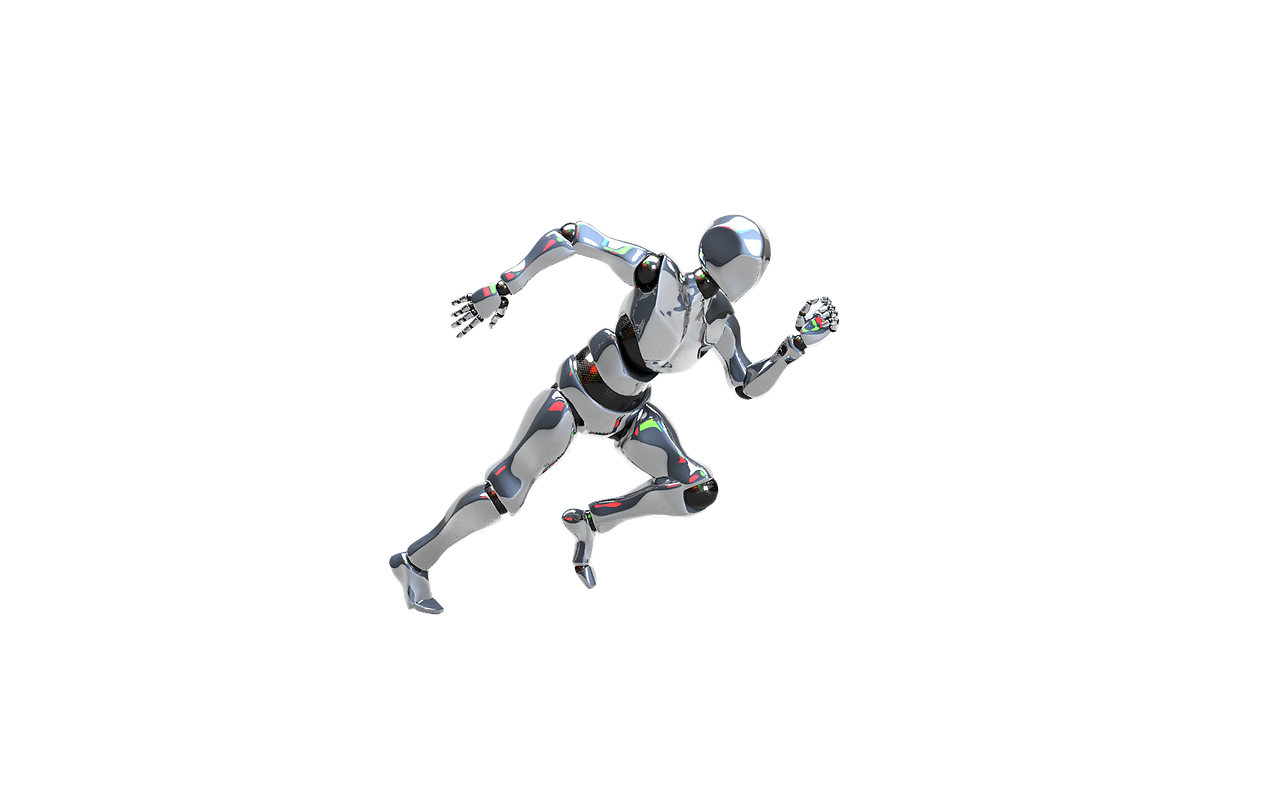


- Humanoid robots are rapidly advancing, driven by curiosity and potential applications. This episode explores the motivations behind building robotic humans with experts from leading institutions. Research into humanoid robots is a rapidly advancing field, with companies around the world striving to produce robots that look and act more like us. But what is it about recreating ourselves in robot form that we find so captivating? Why do humanoid robots both enthral and terrify us? And is our obsession with robotic humans just vanity, or could they play valuable roles in our future society?
In this special live recording at Imperial College London as part of the Great Exhibition Road Festival, Claire chatted to Ben Russell (Science Museum), Maryam Banitalebi Dehkordi (University of Hertfordshire) and Petar Kormushev (Imperial College London) about humanoid robotics.
Ben Russell has been the Science Museum’s Curator of Mechanical Engineering since 2004. He has curated six permanent galleries and temporary exhibitions at the museum, including Engineers (2023), Robots (2017), Cosmonauts (2015) and James Watt’s Workshop (2011). He is the author of James Watt: Making the World Anew, (Reaktion Books, 2014), and editor of Robots (Scala, 2017), as well as numerous published and conference papers.
Maryam Banitalebi Dehkordi is a Senior Lecturer in Robotics and AI at the University of Hertfordshire. She has a master’s degree in Mechatronics and Automatic Control Engineering from the University Technology Malaysia and a Ph.D. in Perceptual Robotics from Scuola Superiore Sant’Anna in Italy. Her expertise spans assistive robots, mobile robots, agricultural robots, industrial robots, humanoid robots, parallel manipulators, navigation, and outdoor autonomous vehicles.
Petar Kormushev is Director of the Robot Intelligence Lab at Imperial College London and an Associate Professor in Robotics at the Dyson School of Design Engineering. His research focus is on reinforcement learning algorithms and their application to autonomous robots. Petar’s long-term goal is to create robots that can learn by themselves and adapt to dynamic environments. His machine learning algorithms have been applied to a variety of humanoid robots, including COMAN and iCub.
Humanoid robots represent a fascinating intersection of engineering, artificial intelligence, and our inherent fascination with replicating ourselves. The potential applications are vast, ranging from assisting the elderly and disabled to exploring hazardous environments. As these technologies continue to evolve, it’s crucial to consider both the benefits and ethical implications associated with creating increasingly sophisticated robotic humans. The field is brimming with innovation, pushing the boundaries of what’s possible with robotics – a testament to human ingenuity and our enduring quest to understand ourselves.
The pursuit of humanoid robots isn’t solely about replicating humanity; it’s also about developing advanced AI systems capable of complex problem-solving and adaptation. The challenges involved are significant, requiring breakthroughs in areas such as sensor technology, motor control, and machine learning. However, the potential rewards – a future where robots can seamlessly interact with humans and contribute to society – justify continued investment and research. Further advancements will undoubtedly lead to more capable and versatile humanoid robots, solidifying their role in various industries and applications. The ongoing exploration of this field underscores our desire to push the limits of technology and unlock new possibilities for human-robot collaboration. The main keyword, Humanoid Robots, is central to this exciting development.
Furthermore, Maryam Banitalebi Dehkordi’s work on assistive robots highlights a critical application. Her research into mobile robots demonstrates how these technologies can be adapted for practical use. The diverse expertise of all three panelists – Ben Russell’s historical perspective, Maryam’s focus on AI and Petar’s reinforcement learning – offers a well-rounded view of the field. The development of these humanoid robots represents a significant step forward in our understanding of robotics and its potential impact on society. Considering the ethical implications is paramount as we continue to advance this technology. The research being conducted at Imperial College London, exemplified by Petar Kormushev’s work with COMAN and iCub, showcases the innovative approaches being taken. The advancement of Humanoid Robots is transforming our understanding of automation and its integration into everyday life.
In conclusion, the drive to create humanoid robots isn’t merely a technological endeavor; it’s a reflection of our fundamental curiosity about ourselves and our ability to shape the future. The progress made by experts like Ben Russell, Maryam Banitalebi Dehkordi and Petar Kormushev demonstrates that this field is rapidly evolving and holds tremendous promise for addressing some of society’s most pressing challenges. This exploration of Humanoid Robots underscores the importance of continued research and collaboration to unlock its full potential.
Source: Read the original article here.
Discover more tech insights on ByteTrending.
Discover more from ByteTrending
Subscribe to get the latest posts sent to your email.