

3D Printed Robots: Designs & How to Build Them
Unleash your creativity with our detailed guide to building your own 3D printed robot! Learn how to design, print, and assemble a fully functional robotic companion – perfect for beginners and tech enthusiasts alike. Build the future of automation today!
For years, the development of soft robots—machines constructed from pliable materials like silicone—has been largely confined to small, experimental batches. These delicate creations, often used for tasks requiring gentle manipulation or navigating complex environments, have proven challenging to mass-produce. However, a team at the University of Edinburgh is poised to change that with their innovative approach to 3D printed robotics.
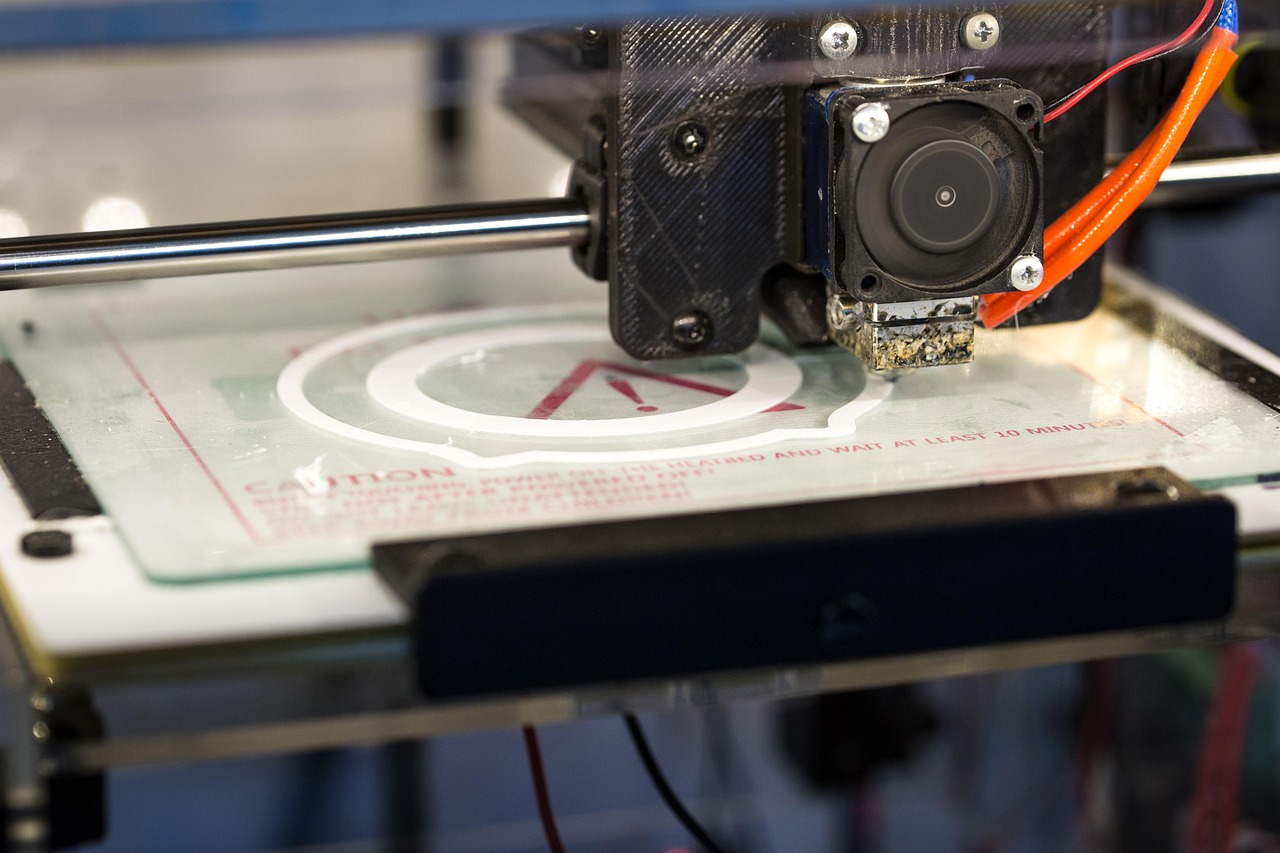
The key breakthrough lies in the robot’s design and manufacturing process. Unlike traditional methods which involve assembling multiple components, this demonstrator robot—measuring just 67mm (2.6 inches) long with a paper clip for scale—is printed using a specialized 3D printing technique. Crucially, the entire structure is produced upside down, a deliberate choice that simplifies the assembly process and ultimately leads to a more robust design.
How Does it Work? The robot’s movement relies on compressed air, channeled through internal pneumatic actuators. This system provides the necessary force to propel the robot forward, allowing it to ‘walk’ across surfaces. The upside-down printing method allows for efficient routing of these air channels directly into the body of the robot, minimizing weight and maximizing functionality.
A Scalable Solution The team’s innovative approach addresses a critical bottleneck in soft robotics development: scalability. By streamlining the manufacturing process and eliminating the need for complex assembly, they’ve created a system that could potentially be adapted for mass production. This opens up exciting possibilities for deploying these robots in diverse applications, from search-and-rescue operations to environmental monitoring.
Beyond the Prototype The current prototype serves as a proof of concept, demonstrating the feasibility of this 3D printed soft robot design. However, the researchers are already exploring ways to refine and improve the technology. Future iterations could incorporate sensors, enhanced mobility capabilities, and even more sophisticated control systems.
This development represents a significant step forward in robotics, offering a pathway toward affordable, mass-producible soft robots with a wide range of potential applications. The ability to create complex mechanisms from a single 3D print fundamentally changes the landscape of robotics design and manufacturing. The team’s work truly highlights the power of 3D Printed Robot technology.
Source: Read the original article here.
Discover more tech insights on ByteTrending.
Discover more from ByteTrending
Subscribe to get the latest posts sent to your email.