
The cosmos holds wonders, but also potential hazards, and humanity is increasingly focused on understanding and mitigating those risks.
Just last year, NASA’s DART mission made headlines by successfully altering the orbit of a small asteroid – a pivotal moment showcasing our ability to influence celestial bodies.
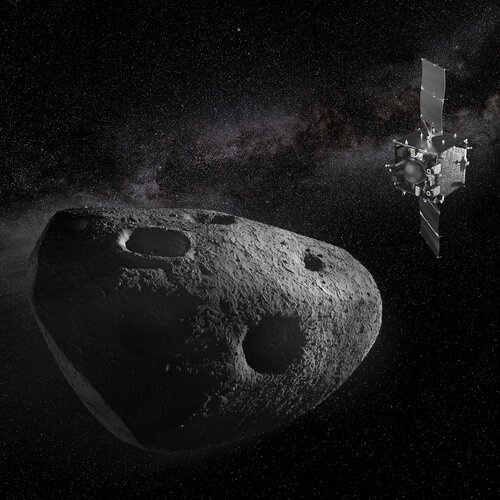
Following in DART’s wake, the European Space Agency (ESA) is launching Hera, a complementary mission designed to provide vital data and refine our understanding of this groundbreaking technique.
Imagine an image, a ‘Swoosh!’ across space, visually representing the precise path an asteroid takes – that’s what Hera aims to map with incredible detail, analyzing the aftermath of DART’s impact and revealing the composition and structure of its target Dimorphos in unprecedented clarity. This data is essential for improving future planetary defense strategies worldwide. The mission represents a significant step forward in our capabilities regarding asteroid defense, allowing scientists to build more accurate models and predict potential threats with greater confidence. Hera isn’t just about observing; it’s about learning how we can protect Earth from the small but potentially devastating impacts that could occur far in the future. Let’s dive into what makes Hera so important and how it builds upon DART’s success.
The DART-Hera Connection: A Two-Part Planetary Defense Plan
The recent success of NASA’s Double Asteroid Redirection Test (DART) mission demonstrated humanity’s capability to alter the trajectory of an asteroid, a crucial step in planetary defense. DART intentionally collided with Dimorphos, a small moon orbiting the larger asteroid Didymos, proving that kinetic impact could be used to nudge potentially hazardous objects away from Earth. However, while DART provided invaluable confirmation of this technique’s feasibility, it only offered a limited snapshot of the event and its long-term effects. We learned about Dimorphos’ orbital period change and witnessed a spectacular plume of debris, but crucial details regarding the asteroid’s internal structure and composition remained largely unknown – information vital for refining future deflection strategies.
Enter ESA’s Hera mission: a carefully planned follow-up to DART designed to provide precisely that missing data. Unlike DART’s focused impact, Hera will conduct a detailed reconnaissance of both Didymos and Dimorphos after the dust from DART’s collision has settled. This includes high-resolution imaging to map their shapes, precise mass determination using gravity measurements, and spectral analysis to reveal their elemental makeup. Understanding these characteristics is essential for accurately modeling how asteroids respond to deflection attempts; a denser asteroid will behave differently than a loosely bound rubble pile, impacting the required force needed for trajectory alteration.
The DART-Hera connection represents a powerful example of international collaboration in asteroid defense. DART’s impact created an unprecedented opportunity for Hera’s science – essentially providing a freshly disturbed asteroid system to study. Hera’s observations will allow scientists to validate and refine the models used to predict how future deflection missions might behave, significantly improving our ability to protect Earth from potential asteroid threats. Without Hera, we would be operating with incomplete data, potentially leading to inaccurate calculations and less effective planetary defense strategies.
Ultimately, the DART-Hera partnership isn’t just about responding to an immediate threat; it’s about building a robust framework for long-term asteroid defense. By combining the demonstrative impact of DART with Hera’s comprehensive analysis, we are laying the groundwork for a more proactive and informed approach to safeguarding our planet from near-Earth objects.
DART’s Impact: What We Learned & What Remains Unknown

In September 2022, NASA’s Double Asteroid Redirection Test (DART) successfully impacted Dimorphos, a small moon orbiting the asteroid Didymos. The primary goal of DART was to demonstrate that altering an asteroid’s trajectory is possible – a crucial step in planetary defense against potential Earth-threatening asteroids. Data confirmed that DART’s impact significantly shortened Dimorphos’ orbital period around Didymos, proving the kinetic impactor technique as a viable mitigation strategy.
While DART provided invaluable confirmation of this method, much remains unknown about Dimorphos and its parent asteroid. The initial observations from Earth-based telescopes and the DRACO instrument onboard DART offered limited insight into the asteroids’ composition and internal structure. For example, the precise density and material properties of Dimorphos were not definitively determined, which are critical for accurately modeling how an impact would affect different types of asteroids.
This is where ESA’s Hera mission comes in. Scheduled to arrive at the Didymos system in late 2024, Hera will conduct a detailed post-impact study. Using its sophisticated suite of instruments, Hera will map the shape and mass distribution of both Didymos and Dimorphos, analyze the composition of the ejecta (material thrown out by the impact), and search for any lingering debris field – data that DART simply couldn’t collect.
Hera’s Mission Objectives: Beyond Orbital Change
While NASA’s DART mission successfully demonstrated the feasibility of kinetic impactor technology for asteroid defense – essentially, nudging an asteroid off course – ESA’s Hera mission takes that initial step a significant leap further. Hera isn’t just about altering an orbit; it’s fundamentally about *understanding* what happened and why. Following closely behind DART’s collision with the asteroid Dimorphos, Hera will conduct a detailed post-impact analysis, providing crucial data that DART simply couldn’t capture.
Hera’s primary scientific objective is to comprehensively characterize Dimorphos and its resulting debris field. Unlike DART, which focused on the impact itself, Hera boasts advanced high-resolution cameras and other instruments designed for precise mapping and composition analysis. This includes using sophisticated techniques like flyby radar and visible/infrared mapping to determine Dimorphos’s shape, mass, density, and internal structure – all vital pieces of information currently missing from our understanding of such asteroids.
The debris field left behind by DART is a treasure trove for scientists. Hera’s meticulous mapping will allow researchers to analyze the distribution and properties of these fragments, providing unprecedented insights into Dimorphos’s composition and how it responded to the impact. This data is absolutely critical for refining existing asteroid impact models; current simulations often rely on assumptions about asteroid structure that may not be accurate, leading to potentially flawed predictions in future planetary defense scenarios.
Ultimately, Hera’s mission extends beyond a simple follow-up. The knowledge gained from its observations will significantly improve our ability to predict the behavior of asteroids when subjected to deflection attempts, bolstering the long-term effectiveness and safety of asteroid defense strategies – ensuring we’re not just reacting to potential threats but proactively understanding them.
Mapping the Debris Field & Unveiling Dimorphos’ Secrets
Following NASA’s Double Asteroid Redirection Test (DART) mission, ESA’s Hera spacecraft is uniquely positioned to comprehensively study the resulting debris field surrounding asteroid Dimorphos. While DART successfully demonstrated the kinetic impactor technique for asteroid defense, it lacked the sophisticated instrumentation needed to analyze the aftermath in detail. Hera’s advanced suite of cameras and spectrometers will create a high-resolution map of the ejected material, revealing its distribution and characteristics – information crucial for understanding how Dimorphos responded to the collision.
This detailed mapping goes beyond simply charting the debris’ location; it allows scientists to infer properties about Dimorphos itself. The composition and size distribution of the ejecta provide clues about the asteroid’s internal structure, including its density, porosity, and layering. By analyzing how the material spread during the impact, researchers can also gain insights into Dimorphos’s rotational state and overall integrity – details previously obscured by the impact event.
The data Hera collects is invaluable for refining our understanding of asteroid impacts and improving the accuracy of future asteroid defense models. Current models rely on assumptions about asteroid composition and structure; Hera’s observations will provide empirical data to validate and refine these models, allowing us to better predict how a given impactor might alter an asteroid’s orbit and potentially mitigate any future collision risks. This feedback loop is essential for ensuring the effectiveness of planetary defense strategies.
The Technology Behind Hera: A Deep Dive
The ESA’s Hera mission isn’t just about deflecting an asteroid; it’s a showcase of cutting-edge space technology designed for precision observation and analysis. At its core, Hera relies on a suite of advanced imaging and radar systems crucial for characterizing the target asteroid Dimorphos and its parent body Didymos. The SHALM (Shape Hunter And Lander camera) is particularly noteworthy – it’s not just taking pictures; it’s designed to reconstruct 3D models of the asteroids with unprecedented detail, even in challenging lighting conditions. This capability will allow scientists to understand their structure far better than ever before, informing deflection strategies and providing valuable insights into asteroid formation.
Complementing SHALM is MiSS (Multi-Spectral Stereo Sensor), which combines stereo imaging with spectral analysis. Think of it as a camera that not only captures depth information but also identifies the composition of the asteroids’ surfaces based on how they reflect light. This data is invaluable for understanding their geological history and potential fragility – crucial factors in predicting how effectively a deflection maneuver will work. The radar system, Janus, plays another vital role. It penetrates beneath the asteroid’s surface, bouncing radio waves to map internal structures that are invisible to cameras alone. This subsurface mapping capability is unique within this class of planetary missions.
Beyond the specific instruments, Hera’s technological prowess extends to its autonomous navigation capabilities. The spacecraft will operate largely independently, making crucial decisions about trajectory adjustments and data collection based on real-time sensor readings. This level of autonomy is essential given the vast distances involved and limited communication bandwidth with Earth. Sophisticated algorithms allow Hera to react to unexpected events and optimize its observations, pushing the boundaries of robotic space exploration.
Advanced Imaging & Radar Systems for Asteroid Characterization

To really understand Dimorphos and its parent asteroid Didymos, ESA’s Hera spacecraft is equipped with an impressive suite of cameras designed for incredibly detailed imaging. The SHALM (Shape, Haze, and Light Microscope) camera will capture high-resolution color images and stereo views, allowing scientists to map the asteroids’ surfaces in 3D. MiSS (Mapping Imaging Spectrometer for Asteroids) acts like a ‘chemical fingerprint’ scanner; it analyzes reflected sunlight to determine the composition of the asteroid’s surface – identifying minerals and organic materials that can tell us about its origin and history. These cameras aren’t just taking pretty pictures; they’re gathering crucial data for precise shape modeling and understanding the asteroids’ physical properties.
Beyond visible light imaging, Hera carries a sophisticated radar system called MASP (Multi-frequency Airborne Sounder Probe). Unlike standard radar that simply bounces signals off a surface, MASP transmits multiple frequencies of radio waves. By analyzing how these waves interact with the asteroid, scientists can probe *beneath* the surface, revealing hidden layers and internal structures – something no previous mission has accomplished at this level of detail for asteroids. This is particularly important for understanding Dimorphos’ composition and potentially identifying subsurface water ice or other volatile materials.
A unique aspect of Hera’s imaging setup is its ability to perform ‘shape-from-shading’ analysis using SHALM. Traditional 3D mapping often relies on multiple viewpoints, but shape-from-shading uses subtle variations in brightness and shadow within a single image to reconstruct the surface topography. This technique is especially valuable for areas with complex terrain or limited lighting conditions, ensuring a comprehensive understanding of Dimorphos’ structure even as Hera orbits at varying distances.
Future Implications: Refining Planetary Defense Strategies
The ESA’s Hera mission isn’t just about understanding Didymos and Dimorphos; it’s a pivotal step towards significantly improving our global capabilities in asteroid defense. The data collected – detailed measurements of the asteroids’ mass, shape, composition, and spin state – will be directly incorporated into existing planetary defense models. Currently, these models rely on limited observational data and assumptions, leading to uncertainties when predicting an asteroid’s trajectory or assessing the effectiveness of potential deflection strategies. Hera’s precision observations will allow scientists to refine these simulations, providing more accurate predictions and enabling us to develop more effective mitigation plans for future threats.
A key area where Hera’s contribution will be transformative is in understanding the momentum transfer resulting from a kinetic impact – exactly what NASA’s DART mission achieved. While DART successfully altered Dimorphos’ orbit, Hera provides crucial follow-up data to validate and calibrate models used to predict the outcome of similar deflection attempts. This includes analyzing the debris field created by the impact, which is far more complex than initially anticipated. Understanding how this material disperses and its influence on orbital changes will be vital for planning future asteroid redirection efforts – ensuring we can reliably nudge potentially hazardous objects onto safer paths.
Beyond immediate planetary defense applications, Hera’s findings also have profound implications for space exploration itself. The techniques used to characterize these asteroids—high-resolution imaging, radar mapping, and detailed compositional analysis—are directly applicable to studying other small bodies in our solar system, including near-Earth objects (NEOs) that are not currently considered threats but could become so in the future. Furthermore, a deeper understanding of asteroid structure and behavior gleaned from Hera will inform mission designs for resource utilization – potentially paving the way for extracting valuable materials from asteroids for use in space.
Ultimately, Hera serves as an invaluable testbed for refining our overall approach to planetary defense. Its success highlights the importance of international collaboration and data sharing in tackling global challenges like asteroid impact mitigation. By combining Hera’s detailed observations with ongoing ground-based surveys and future missions, we can collectively build a more robust and proactive system for protecting Earth from potential cosmic hazards – while simultaneously expanding our knowledge of the solar system.
Improving Asteroid Impact Models & Protecting Earth
The ESA’s Hera mission is poised to significantly enhance our understanding of asteroid behavior and dramatically refine planetary defense models. By closely observing the Dimorphos asteroid after NASA’s DART mission impacted it, Hera will provide crucial data on its mass, composition, and resulting structural changes – information currently missing from most asteroid impact simulations. These observations are essential for validating existing trajectory prediction algorithms and developing more accurate models capable of forecasting an asteroid’s future path with greater precision.
Current asteroid deflection strategies, like the kinetic impact technique demonstrated by DART, rely on simplified assessments of how much an object’s orbit will change based on factors like mass and velocity. Hera’s detailed post-impact analysis of Dimorphos will allow scientists to calibrate these models, improving our ability to predict the effectiveness of future deflection attempts. Understanding how an asteroid’s internal structure responds to impact is vital; a ‘rubble pile’ asteroid behaves very differently from a solid rock, and Hera’s data will help us account for this complexity.
Ultimately, Hera contributes to building a more robust planetary defense system. Improved trajectory prediction minimizes the risk of surprise impacts, while refined deflection models ensure that any mitigation efforts are effective in altering an asteroid’s course. This knowledge isn’t just about protecting Earth; it also informs future space exploration missions, particularly those involving resource utilization from asteroids or establishing bases on them, as a deeper understanding of their physical properties is paramount for safe and successful operations.
The Hera mission represents a monumental leap forward in our understanding of planetary defense, offering unprecedented insights into the aftermath of the DART impact and fundamentally reshaping how we approach potential threats from space. We’ve seen firsthand that altering an asteroid’s trajectory is possible, but Hera’s detailed analysis will reveal precisely *how* Dimorphos changed – its composition, internal structure, and long-term stability are all crucial pieces of this complex puzzle. This knowledge is absolutely vital for refining future asteroid defense strategies and ensuring the safety of our planet. The success of Hera also underscores a critical point: space exploration isn’t a solo endeavor; it thrives on international collaboration. ESA’s partnership with NASA, alongside contributions from various nations, showcases the power of shared expertise and resources in tackling challenges that transcend borders. Ultimately, Hera is not just about studying an asteroid; it’s about safeguarding Earth through meticulous investigation and proactive planetary protection. To stay abreast of this groundbreaking mission’s discoveries and witness firsthand the unfolding science, we strongly encourage you to follow ESA’s updates on the Hera mission – you won’t want to miss a single revelation.
Keep an eye out for upcoming data releases and stunning visuals as Hera gets closer to Dimorphos!
Continue reading on ByteTrending:
Discover more tech insights on ByteTrending ByteTrending.
Discover more from ByteTrending
Subscribe to get the latest posts sent to your email.