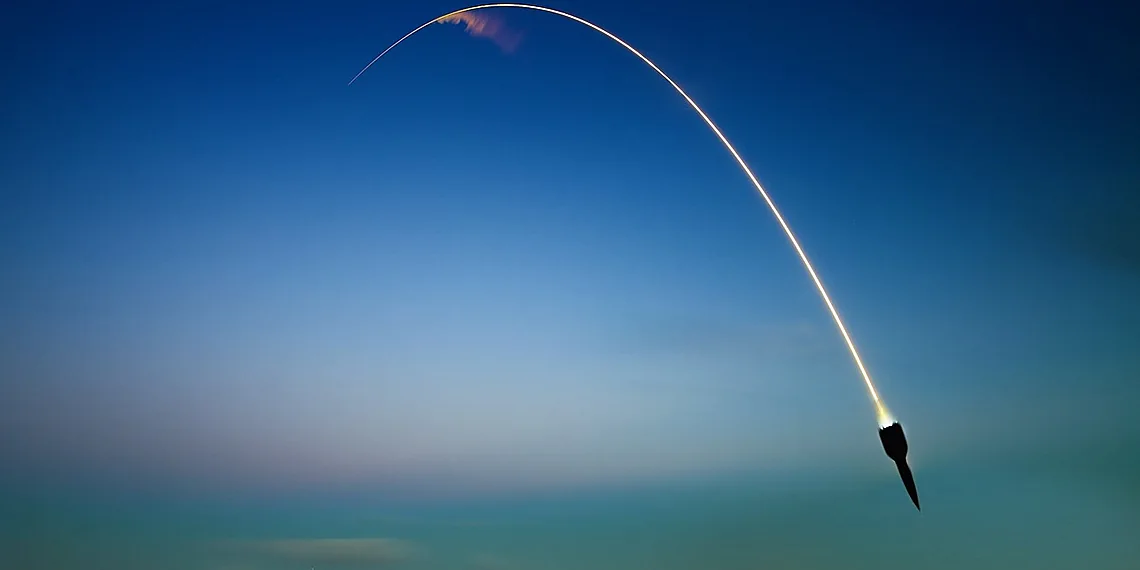

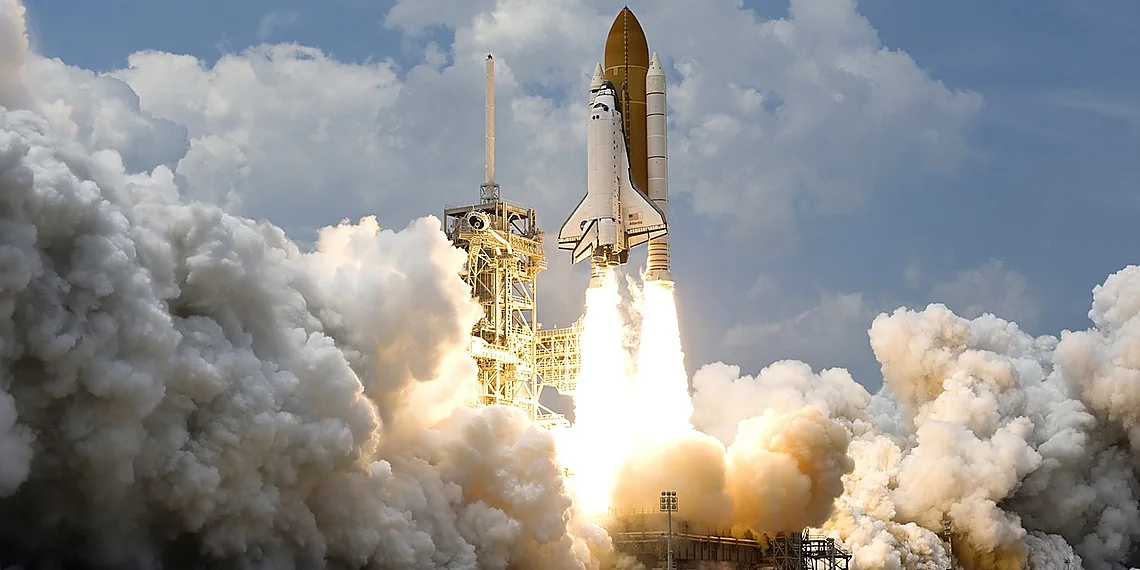
For decades, humanity’s reach into the cosmos has been fundamentally limited by the need for massive amounts of fuel – a constraint that dictates mission duration, payload capacity, and ultimately, where we can explore. The sheer cost and logistical complexity of launching rockets laden with propellant represent significant barriers to deeper space exploration, hindering our ambitions of establishing lunar bases or venturing further into the solar system.
But what if we could break free from this dependence? Imagine spacecraft silently gliding through space, propelled not by explosive chemical reactions but by harnessing the very fabric of spacetime. This isn’t science fiction; it’s a burgeoning field focused on propellantless space travel, a revolutionary approach that promises to redefine our understanding of how we move amongst the stars.
The concept hinges on innovative technologies like advanced electric propulsion systems and potentially even more exotic methods involving gravitational manipulation or quantum phenomena. While still largely in their nascent stages, these approaches offer tantalizing glimpses into a future where spacecraft can travel vast distances without carrying heavy fuel tanks, opening up entirely new possibilities for scientific discovery and resource utilization.
Of course, the path to realizing propellantless space travel isn’t without its considerable challenges; overcoming issues like low thrust, energy requirements, and maintaining precise control will demand groundbreaking advancements in materials science, physics, and engineering. However, the potential rewards – a truly boundless future for space exploration – make these hurdles worthwhile.
The Propellant Problem & Current Limitations
Traditional rocket propulsion, while undeniably effective in getting us off Earth and into orbit, presents a significant bottleneck when considering deep space exploration. The core issue lies in the sheer quantity of propellant required for even relatively modest interplanetary journeys. Rockets operate on Newton’s Third Law – every action has an equal and opposite reaction. To accelerate a spacecraft, we expel mass (propellant) at high velocity. This means that a substantial portion of any spacecraft’s initial mass is simply fuel, destined to be jettisoned as the journey progresses. For example, a typical launch can see over 90% of a rocket’s initial mass being propellant – a staggering figure when you consider the cost and complexity associated with manufacturing and launching that much material.
The implications extend far beyond just weight; it’s about cost too. Rocket fuel is incredibly expensive to produce, transport, and handle. The more fuel needed, the exponentially higher the launch costs become. Missions targeting destinations like Mars or the outer planets require even greater propellant reserves, pushing budgets into the billions of dollars – a level of investment that limits how often we can undertake such ambitious endeavors. Moreover, each kilogram of propellant needs to be lifted against Earth’s gravity and accelerated to escape velocity, representing a massive energy expenditure.
Consider this: a significant portion of any interplanetary mission’s budget isn’t dedicated to the scientific payload itself – the instruments designed to gather data about distant worlds – but rather to the fuel needed to simply get it there. This constraint has historically dictated mission architecture and destination choices, often favoring closer targets or requiring extremely long travel times due to limited delta-v (change in velocity). The current reliance on chemical rockets effectively caps our ability to explore beyond our immediate cosmic neighborhood.
Ultimately, the mass and cost associated with carrying propellant represent a fundamental barrier to widespread deep space exploration. Overcoming this challenge is crucial if we are to truly expand humanity’s presence throughout the Solar System and eventually venture further afield – and that’s precisely what the emerging field of propellantless space travel aims to achieve.
Rocket Fuel: A Weighty Burden

The sheer volume of propellant required for space travel is staggering, representing a significant barrier to deeper exploration. Consider that even relatively modest interplanetary missions demand enormous quantities of fuel simply to overcome Earth’s gravity and achieve orbital velocity. For example, the Apollo program needed approximately 300 tons (660,000 pounds) of propellant just to send three astronauts to the Moon – a distance of roughly 238,900 miles. This illustrates that the vast majority of a spacecraft’s initial mass isn’t payload; it’s fuel.
A commonly cited statistic highlights this issue: for missions beyond Earth orbit, up to 90% of a spacecraft’s total launch mass is dedicated to propellant. This means only a small fraction—around 10% or less—is actually allocated to scientific instruments, crew supplies, or other mission-critical components. The cost implications are equally substantial; rocket fuel accounts for a significant portion of the overall mission budget, and launching heavier payloads dramatically increases expenses due to increased launch vehicle requirements.
The problem isn’t merely about mass, it’s also about efficiency. Every kilogram of propellant added necessitates an even larger and more powerful launch vehicle, creating a cascading effect that exponentially increases costs and complexity. This limitation fundamentally restricts the size and scope of missions we can undertake, as well as the destinations we can realistically reach within reasonable timeframes. It’s this very constraint that motivates research into alternative propulsion methods like propellantless systems.
Harnessing the Universe: Propulsion Concepts
The dream of interstellar travel has long been hampered by a seemingly insurmountable hurdle: propellant. Traditional rockets rely on expelling mass – fuel – to generate thrust, making each mission exponentially more complex and expensive as distances increase. Fortunately, scientists are exploring innovative approaches that sidestep this limitation entirely, ushering in the potential era of propellantless space travel. These methods don’t involve burning fuel or ejecting reaction mass; instead, they cleverly manipulate naturally occurring phenomena within our solar system and beyond to achieve motion.
One of the most well-known and actively pursued concepts is solar sailing. This technique leverages radiation pressure – the subtle force exerted by sunlight on any surface. Imagine a giant, reflective sail deployed in space; as photons (light particles) bounce off this sail, they impart tiny amounts of momentum, creating continuous thrust. While the acceleration produced by solar sails is incredibly small—far less than what’s achieved with chemical rockets—it’s constant and can accumulate over long periods, eventually achieving significant speeds. Projects like LightSail 2 have successfully demonstrated this principle in low Earth orbit, though scaling up to interstellar velocities remains a substantial engineering challenge due to the need for extremely large and lightweight sail structures.
Beyond solar sails, engineers are also investigating harnessing the relentless flow of charged particles emitted by the Sun – known as the solar wind. These particles carry momentum that can be captured using specialized magnetic fields or electrostatic collectors. Furthermore, ‘gravity assists,’ also called gravitational slingshots, offer a powerful, albeit indirect, form of propellantless propulsion. By carefully maneuvering a spacecraft to pass near a planet, its gravity can bend and accelerate the spacecraft’s trajectory, effectively utilizing the planet’s mass as a ‘free’ boost. The Voyager probes famously employed this technique to reach the outer planets and beyond, demonstrating its effectiveness for long-distance missions.
The future of space exploration may very well hinge on our ability to master these propellantless propulsion techniques. While significant technological hurdles remain – particularly in areas like sail material science and large-scale deployment mechanisms – the potential rewards are transformative: vastly reduced mission costs, access to previously unreachable destinations, and ultimately, a pathway towards true interstellar travel.
Solar Sails & Radiation Pressure
Solar sails offer a compelling approach to propellantless space travel by capitalizing on radiation pressure – the tiny but continuous force exerted by sunlight. Photons, while massless, carry momentum; when they strike a sail’s surface, they impart this momentum, resulting in a minuscule push. This principle is analogous to wind pushing against a traditional sailboat, except instead of wind, it’s sunlight providing the ‘wind.’ The larger the sail area and the more reflective its surface (to maximize photon reflection), the greater the cumulative thrust generated over time.
Several projects are actively pursuing solar sail technology. NASA’s NanoSail-D2, deployed from the International Space Station in 2010, demonstrated basic functionality. JAXA’s IKAROS mission, launched in 2010, successfully used a 200 square meter sail to navigate past Venus and Earth, proving the viability of solar sailing for interplanetary travel. The upcoming Near-Earth Asteroid Rendezvous (NEAR) mission from Astro Aerospace aims to use a large, deployable sail to rendezvous with an asteroid – demonstrating both propulsion and navigation capabilities. These missions represent significant steps towards refining and scaling up solar sail technology.
Despite their potential, solar sails face limitations. The acceleration produced by radiation pressure is extremely low; it’s far weaker than the thrust generated by chemical rockets. While this allows for continuous, gradual acceleration over long periods, reaching high velocities requires considerable time and distance from the Sun (where sunlight is more intense). Additionally, sail deployment and maintaining stability in space pose engineering challenges, requiring lightweight and robust materials capable of withstanding extreme temperatures and micrometeoroid impacts.
Solar Wind & Gravity Assists
Solar wind, a constant stream of charged particles emitted by the Sun, presents a subtle but potentially powerful source of thrust for spacecraft. While individually weak, these particles exert pressure on surfaces – a phenomenon known as solar radiation pressure. Specialized ‘solar sails’ are designed to maximize this surface area, allowing them to be pushed by the solar wind over extended periods. This method offers continuous, albeit slow, acceleration, enabling missions that require gradual course corrections or journeys to distant destinations where fuel would otherwise be prohibitive.
Gravity assists, also known as slingshot maneuvers, leverage a planet’s mass and velocity to alter a spacecraft’s trajectory and speed without consuming propellant. By carefully planning a close approach, the spacecraft ‘borrows’ momentum from the planet’s orbital motion. This interaction can significantly increase or decrease a spacecraft’s velocity relative to Earth, allowing for faster travel times and access to previously unreachable regions of the solar system. The Voyager probes famously utilized multiple gravity assists from Jupiter, Saturn, Uranus, and Neptune to explore the outer planets.
Combining solar wind propulsion with strategic gravity assists offers an even more compelling approach. A spacecraft could initially use a solar sail to reach a point where a carefully timed gravity assist can then propel it towards its final destination. This synergy minimizes the reliance on traditional propellant while maximizing efficiency and opening up possibilities for ambitious, long-duration space exploration missions.
Challenges & Technological Hurdles
While propellantless space travel offers a tantalizing glimpse into the future of exploration, the path to realizing this vision is paved with formidable engineering challenges. The very principles underpinning these technologies – utilizing solar radiation pressure, electric fields, or gravitational slingshots – require overcoming significant limitations in current materials science and structural design. For example, solar sails, arguably the most mature propellantless concept, demand incredibly thin yet robust membranes capable of reflecting sunlight efficiently over vast distances and enduring micrometeoroid impacts. Current sail materials struggle to balance these conflicting requirements; they’re either too fragile or too heavy, severely impacting overall system performance.
Scaling up these systems presents another major hurdle. A small solar sail might demonstrate proof-of-concept in a lab environment, but deploying and maintaining one the size of several football fields in the vacuum of space is an entirely different proposition. The structural integrity needed to prevent tearing or folding under the stresses of deployment and radiation pressure requires sophisticated, lightweight support structures – often involving complex deployable booms and tensioning systems that are themselves prone to failure. Similarly, electric sails, which utilize charged tethers to interact with the solar wind, face challenges in generating and maintaining sufficient electrical charge over extended periods.
Beyond materials and scale, precise control and maneuverability pose significant difficulties. Without traditional thrusters for course correction, changes in direction rely on subtle adjustments to sail orientation or tether positioning. This necessitates incredibly accurate attitude control systems and a deep understanding of the complex interactions between these structures and the surrounding space environment – including solar flares and gravitational anomalies. Modeling these effects with sufficient precision for reliable navigation is computationally demanding and requires advanced algorithms.
Finally, long-duration operation in the harsh conditions of space introduces reliability concerns. Components must withstand extreme temperature variations, radiation exposure, and the constant threat of micrometeoroid strikes without degradation or failure. The lack of readily available repair options far from Earth necessitates exceptionally robust designs with built-in redundancy – further adding to the complexity and mass (even propellantless systems require some onboard infrastructure) of these pioneering spacecraft.
Material Science & Scale

The development of propellantless propulsion methods, particularly those relying on solar sails or electromagnetic drives, places extraordinary demands on material science. These systems require exceptionally lightweight materials possessing incredible tensile strength and durability. Solar sails, for example, must be thin enough to maximize surface area for capturing radiation pressure – ideally a few micrometers thick – yet robust enough to withstand micrometeoroid impacts, extreme temperature fluctuations (-150°C to +120°C), and the constant stress of deployment and operation in the vacuum of space. Current materials like Kapton or aluminized Mylar are promising but still lack the ideal combination of strength-to-weight ratio and long-term resilience needed for interstellar missions.
Beyond material properties, scaling these technologies presents a significant hurdle. A solar sail capable of achieving meaningful acceleration would need to be incredibly large – potentially kilometers in diameter. Constructing and deploying such a massive structure in space is far from trivial; it requires advanced robotic assembly techniques and sophisticated control systems to prevent tearing or instability. Similarly, electromagnetic drives, while conceptually simple, require powerful and lightweight energy sources, which currently necessitate substantial mass increases that partially negate the propellantless advantage.
The challenge extends beyond simply creating a functional prototype. Long-duration missions introduce degradation factors like atomic oxygen erosion and ultraviolet radiation damage, further complicating material selection and requiring self-healing or replaceable components. Furthermore, any imperfections in the sail’s surface can create uneven forces, leading to unpredictable trajectory deviations. Overcoming these materials science and scaling challenges is critical for transforming propellantless space travel from a theoretical possibility into a practical reality.
The Future & Potential Impact
The implications of propellantless space travel extend far beyond simply reducing launch costs or shortening trip times within our Solar System; they fundamentally reshape humanity’s prospects for interstellar exploration. Currently, reaching even the closest star system, Alpha Centauri, would require generations aboard a spacecraft using conventional propulsion methods. Propellantless systems, while initially slow, offer the tantalizing possibility of continuous acceleration over decades and centuries, potentially allowing robotic probes – or even generation ships far into the future – to reach these distant destinations within reasonable timescales for scientific data transmission back to Earth.
Imagine a future where fleets of ‘solar sails’ or electrodynamic tethers are deployed across the Solar System and beyond. These vessels wouldn’t just be explorers; they could act as relay stations, establishing communication networks between star systems, and even harvesting resources from asteroids or comets along their journeys. The scientific discoveries awaiting us are almost unimaginable: detailed analysis of exoplanet atmospheres, direct observation of planetary formation around other stars, and perhaps, the detection of biosignatures indicating life beyond Earth. The sheer volume of data returned would dwarf anything we’ve collected to date.
However, realizing this interstellar future presents significant challenges. While the physics underpinning propellantless propulsion are sound, scaling these technologies to spacecraft capable of carrying substantial payloads will require breakthroughs in materials science and engineering. Furthermore, the long travel times necessitate robust systems that can operate autonomously for decades or even centuries, resistant to radiation damage and micrometeoroid impacts. Ethical considerations surrounding robotic exploration and potential contact with extraterrestrial life also need careful consideration as we venture further into the cosmos.
Ultimately, propellantless space travel isn’t just about reaching new destinations; it’s about redefining our relationship with the universe. It offers a pathway towards becoming a truly interstellar civilization, expanding humanity’s reach beyond the confines of our Solar System and potentially unlocking profound scientific discoveries that could reshape our understanding of life, the cosmos, and our place within it. The journey will be long and arduous, but the potential rewards are nothing short of transformative.
Beyond Our Solar System?
While current propellantless propulsion methods like solar sails and magnetic sails offer incremental improvements, their true potential lies in enabling journeys beyond our Solar System. Reaching even the closest star system, Alpha Centauri, which is 4.37 light-years away, remains a monumental challenge. Even with theoretical advancements maximizing efficiency, interstellar voyages using current concepts would necessitate travel times spanning centuries or millennia for human crews – demanding generational ships and entirely new societal structures within spacecraft. However, the ability to explore exoplanets in even distant systems, regardless of human presence, becomes significantly more feasible.
The scientific discoveries enabled by propellantless interstellar probes are immense. Imagine a fleet of tiny, lightweight probes capable of reaching multiple star systems over centuries, relaying data on planetary compositions, atmospheric conditions, and potential biosignatures back to Earth (though with significant communication delays). Such missions could revolutionize our understanding of planet formation, the prevalence of life in the universe, and perhaps even reveal evidence of extraterrestrial civilizations. The sheer volume of data returned would dwarf anything currently achievable with conventional probes.
It’s crucial to acknowledge the long timescales involved. Even optimistic projections suggest interstellar propellantless travel will be a multi-generational endeavor, requiring sustained technological development and international collaboration. Breakthroughs in miniaturization, power generation (particularly advanced solar energy capture), and autonomous systems are essential for maximizing mission effectiveness. While direct human interstellar colonization remains far-fetched with current technologies, the prospect of robotic exploration—and the knowledge gained—represents a profound shift in humanity’s ability to engage with the cosmos.
The journey through concepts like VASIMR, EM Drive, and quantum vacuum thrusters has undeniably painted a picture of a future vastly different from our current reliance on chemical rockets.
We’ve explored how these innovative approaches, particularly the tantalizing possibility of propellantless space travel, challenge fundamental assumptions about propulsion and offer pathways to unprecedented speeds and distances.
The challenges remain significant – scaling these technologies, addressing skepticism within the scientific community, and securing consistent funding are all hurdles that must be overcome.
However, the potential rewards are simply too substantial to ignore; imagine interstellar exploration becoming a reality, resource acquisition from asteroids dramatically cheaper, and space-based infrastructure expanding exponentially across our solar system and beyond – all facilitated by advancements in these areas. The implications of propellantless space travel extend far beyond just getting somewhere faster; they reshape what’s possible for humanity’s reach into the cosmos.
Continue reading on ByteTrending:
Discover more tech insights on ByteTrending ByteTrending.
Discover more from ByteTrending
Subscribe to get the latest posts sent to your email.