
The universe speaks a language far older than light, and we’re just beginning to understand its vocabulary. For decades, astronomers have listened for faint whispers from across cosmic distances, relying on electromagnetic radiation – visible light, radio waves, X-rays – to paint a picture of the cosmos. But a new era dawned in 2015 with the first direct detection of gravitational waves, ripples in spacetime itself predicted by Einstein over a century ago.
These gravitational waves offer an entirely unique window into some of the most violent and energetic events imaginable: black hole mergers, neutron star collisions, and potentially even glimpses into the very early universe. While initial detections focused on lower frequencies, scientists are now intensely focused on expanding our observational reach – particularly into what’s known as the ‘mid-band’ frequency range.
Currently, there’s a significant gap in our ability to detect gravitational waves between existing observatories; this ‘mid-band’ region holds immense potential for unlocking new astrophysical secrets. Filling this gap will allow us to probe previously inaccessible phenomena and refine our understanding of how massive objects interact across vast distances, offering a more complete picture of the universe’s evolution.
Imagine being able to hear not just the deep rumble of distant galaxies, but also the subtle chirps emanating from events closer to home. That’s the promise of mid-band gravitational wave astronomy – and it represents a thrilling new frontier for scientific discovery.
The Current Landscape of Gravitational Wave Detection
The field of gravitational wave astronomy has exploded in recent years thanks to observatories like LIGO (Laser Interferometer Gravitational-Wave Observatory) and Virgo. These facilities represent monumental feats of engineering, utilizing incredibly precise laser interferometry to detect the minuscule ripples in spacetime predicted by Einstein’s theory of general relativity. Essentially, each observatory consists of two extremely long arms – kilometers in length – arranged perpendicularly. Lasers are fired down these arms and reflected back by mirrors; any passing gravitational wave will slightly stretch and compress space, causing tiny changes in the laser light’s travel time, which is then detected as a signal.
Currently, LIGO and Virgo primarily detect gravitational waves produced by cataclysmic events involving massive objects. The most commonly observed sources include merging black holes – incredibly dense remnants of collapsed stars – and neutron star collisions. These events generate low-frequency gravitational waves that fall within the observatories’ sensitive range, typically between 10 Hz and a few hundred Hz. The signals are extremely faint; imagine detecting changes smaller than the width of a proton across distances spanning thousands of kilometers – that’s the level of precision required.
Despite their success, LIGO and Virgo have limitations. A significant ‘blind spot’ exists in what’s known as the mid-band frequency range – roughly between 100 Hz and 1 kHz. This gap prevents us from observing gravitational waves emitted by a variety of potential sources. For example, events involving smaller black holes or certain types of supernovae might produce signals within this neglected band. Understanding these phenomena requires new observational techniques capable of probing this currently inaccessible frequency range.
The inability to detect mid-band gravitational waves is due to the inherent design and technological constraints of current laser interferometry setups; higher frequencies introduce more noise and are harder to isolate from terrestrial vibrations. Future detectors, like those employing novel approaches leveraging atomic clock technology as discussed in other reports, aim to overcome these limitations and unlock a new window into the universe through gravitational wave astronomy.
How LIGO & Virgo Work
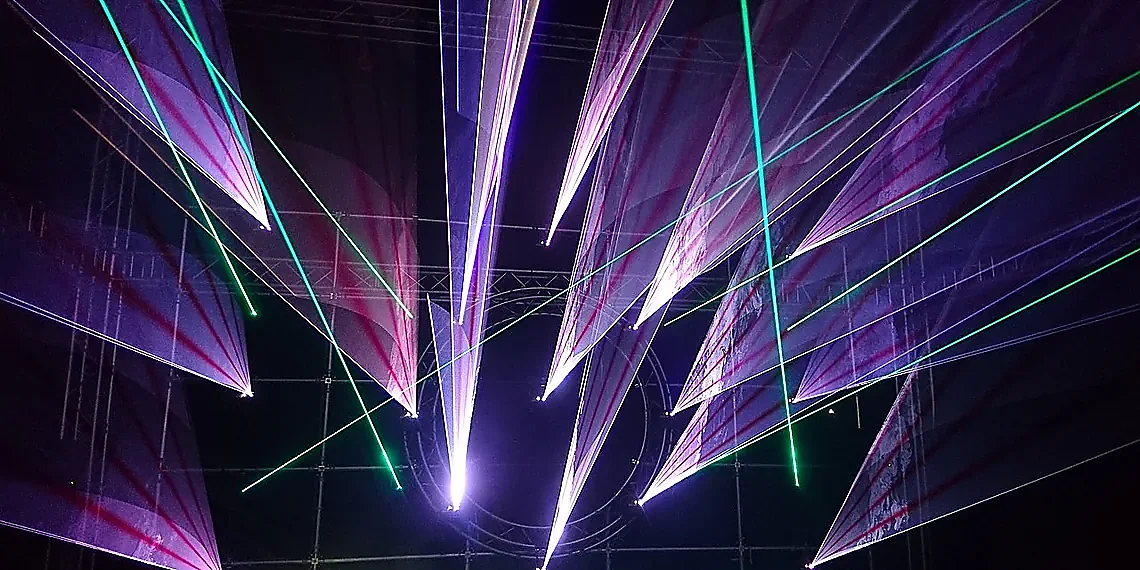
The most prominent gravitational wave detectors today, like LIGO (Laser Interferometer Gravitational-Wave Observatory) in the US and Virgo in Italy, rely on a technique called laser interferometry. Imagine two incredibly long tunnels, each several kilometers long, arranged perpendicularly to each other. Inside these tunnels are mirrors that bounce lasers back and forth repeatedly – effectively making the distance between the mirrors appear much longer than it actually is. Scientists precisely measure the time it takes for the laser light to travel down one tunnel and back, creating a baseline measurement.
Gravitational waves, ripples in spacetime caused by cataclysmic events like merging black holes or neutron stars, subtly distort space itself. When a gravitational wave passes through LIGO or Virgo, it stretches one tunnel slightly while compressing the other (and then reversing this process). This tiny change – far smaller than the width of an atom – alters the travel time of the laser light, and therefore changes the interference pattern created when the two beams recombine. Scientists analyze these shifts in the interference patterns to detect gravitational waves.
Currently, LIGO and Virgo are most sensitive to lower-frequency gravitational waves, those produced by massive objects orbiting each other before they collide. There’s a ‘mid-band’ frequency range – higher than what LIGO and Virgo can easily observe but lower than what future space-based detectors might target – that holds information about smaller, more distant events. The new detector concept leveraging atomic clock technology aims to bridge this gap and open up a whole new window into the universe.
The ‘Mid-Band’ Mystery
For years, the detection of gravitational waves has revolutionized our understanding of the cosmos, confirming Einstein’s century-old predictions and opening a new window onto extreme astrophysical phenomena. However, existing observatories like LIGO and Virgo primarily operate at low frequencies, focusing on massive events such as colliding black holes and neutron star mergers. A significant portion of the gravitational wave spectrum remains largely unexplored – a region known as the ‘mid-band’ frequency range, roughly between 10 Hz and 1000 Hz. This isn’t just about filling in gaps; it represents a potential revolution in what we can observe.
So, why is this mid-band so elusive? Current ground-based detectors are limited by seismic noise and other environmental vibrations that overwhelm faint gravitational wave signals at these frequencies. Think of trying to hear a whisper during an earthquake – the background rumble simply drowns it out. The lower frequency end of the spectrum is also challenging due to Earth’s geological activity, while higher frequencies are quickly attenuated as they travel through the atmosphere. This leaves a critical window in our observational capabilities, potentially masking entirely new classes of astrophysical events.
What kinds of cosmic spectacles might be hiding within this mid-band? Scientists theorize that smaller black hole mergers – those involving black holes significantly less massive than the ones LIGO and Virgo have detected – would likely emit gravitational waves at these frequencies. Similarly, interactions between white dwarfs, incredibly dense stellar remnants, could produce signals in the mid-band if they spiral close enough together. The possibility of observing exotic objects like rapidly spinning neutron stars (pulsars) or even entirely new types of compact objects that we haven’t yet conceived of makes exploring this frequency range exceptionally exciting.
The good news is that a novel approach, drawing inspiration from the precision of atomic clocks, offers a potential solution. This innovative detector design aims to overcome the limitations of traditional methods and finally unlock the secrets hidden within the mid-band gravitational wave spectrum. By leveraging techniques previously used to measure time with unprecedented accuracy, scientists hope to filter out noise and reveal the subtle ripples in spacetime that could rewrite our understanding of the universe’s most energetic events.
What’s Missing in the Frequency Spectrum?
Gravitational waves, ripples in spacetime predicted by Einstein’s theory of general relativity, have revolutionized astronomy since their first direct detection in 2015. Current ground-based detectors like LIGO and Virgo primarily ‘hear’ low-frequency gravitational waves – those produced by massive events involving black holes tens or hundreds of times the mass of our Sun merging. Space-based observatories such as LISA are designed for even lower frequencies, potentially revealing supermassive black hole mergers at the centers of galaxies. However, a significant portion of the gravitational wave spectrum, known as the ‘mid-band’ (roughly 10^-2 to 10^-6 Hertz), remains largely unexplored.
The challenge in detecting mid-band gravitational waves lies in the technology required. Low-frequency signals are long wavelengths and easily detected by large kilometer-scale interferometers. High-frequency signals, conversely, can be captured with smaller instruments. Mid-band frequencies fall between these extremes; their wavelengths are short enough to require sensitive detection techniques but too long to be effectively measured by existing high-frequency detectors. This ‘gap’ prevents us from observing gravitational waves emitted by sources like smaller black hole mergers (a few times the mass of our Sun), neutron star-black hole binaries, and potentially even white dwarf collisions.
Filling this mid-band gap promises a wealth of new astrophysical discoveries. Observing these smaller systems would help refine our understanding of stellar evolution and binary system dynamics. White dwarfs, incredibly dense stars roughly the size of Earth, are expected to produce characteristic gravitational wave signatures as they spiral towards each other before merging. Detecting these signals could offer unique insights into the properties of white dwarf matter and provide a new way to measure distances within our galaxy – essentially acting like ‘standard sirens’ alongside neutron star mergers.
A Novel Solution: Atomic Clocks to the Rescue
The current generation of gravitational wave observatories – like LIGO and Virgo – have revolutionized astronomy, allowing us to ‘hear’ the universe through ripples in spacetime. However, they are fundamentally limited by their design; they excel at detecting low-frequency gravitational waves but struggle with a crucial range known as the mid-band frequencies. This gap represents a significant blind spot, potentially concealing vital information about events like mergers of smaller black holes and other exotic astrophysical phenomena that emit signals within this elusive frequency window.
Enter atomic clocks, devices renowned for their unparalleled precision in measuring time. A team of researchers is now proposing an ingenious solution: leveraging the extreme stability of these clocks to build a new type of gravitational wave detector specifically tailored for mid-band frequencies. The core concept hinges on using pairs of atomic clocks separated by significant distances – potentially kilometers or even hundreds of kilometers. As a gravitational wave passes, it subtly stretches and compresses spacetime, causing tiny changes in the distance between these clock locations.
Traditionally, interferometers like LIGO use lasers to measure these minuscule length variations. However, at mid-band frequencies, the laser light itself becomes a limitation. The new atomic clock approach sidesteps this problem entirely. Instead of directly measuring distance with light, it uses the extraordinarily precise timekeeping of the clocks. By comparing the timing signals from each clock, researchers can infer incredibly small changes in distance – far smaller than anything detectable by conventional methods. Think of it as using the constancy of time itself to sense the warping of space.
This innovative technique promises a dramatically expanded view of the gravitational wave universe. It’s not about replacing existing observatories; rather, it’s about complementing them, filling in the mid-band gap and opening up new avenues for discovery. While still in its early stages of development, this atomic clock detector represents a significant leap forward, demonstrating how seemingly unrelated technologies – ultra-precise timekeeping and gravitational wave astronomy – can converge to unlock profound insights into the cosmos.
Leveraging Atomic Clock Precision
Existing gravitational wave detectors, like LIGO and Virgo, rely on incredibly precise laser interferometers – essentially measuring minuscule changes in distance caused by ripples in spacetime. However, these instruments are most sensitive to lower-frequency gravitational waves. A ‘mid-band’ frequency range remains largely unexplored because building sufficiently large and stable interferometers to detect those signals is extraordinarily challenging and expensive. This new approach aims to circumvent that limitation by utilizing the unparalleled precision of atomic clocks.
The core idea leverages the fact that gravitational waves subtly alter distances between objects. Atomic clocks, which measure time with astonishing accuracy based on the oscillations of atoms, can be used as incredibly sensitive rulers. By placing pairs of these clocks at significant distances from each other – potentially kilometers apart – and continuously comparing their readings, scientists can detect minute variations in the distance separating them. These fluctuations, if small enough to observe, would indicate the passage of a gravitational wave.
Think of it this way: a passing gravitational wave slightly stretches or compresses space between the atomic clocks. Because atomic clocks are so precise, they can sense even these tiny spatial changes that traditional interferometers struggle with at mid-band frequencies. This technique effectively transforms highly accurate time measurements into incredibly sensitive distance measurements, opening up a new window for observing previously undetectable gravitational phenomena.
The Future of Gravitational Wave Astronomy

The field of gravitational wave astronomy is poised for a revolution, thanks to the prospect of detecting signals in the largely unexplored ‘mid-band’ frequency range. Current observatories like LIGO and Virgo primarily operate at low frequencies, while pulsar timing arrays target extremely high frequencies. The gap in between – roughly 10 Hz to 1 kHz – represents a wealth of potential information about astrophysical phenomena that remain hidden from view. Detecting gravitational waves in this mid-band will dramatically expand our observational window, allowing us to probe previously inaccessible regions of the universe and unveil new insights into some of its most energetic events.
What makes mid-band detection so exciting? At these frequencies, we anticipate observing a wider variety of sources than are currently detectable. This includes more frequent detections of binary black hole mergers, potentially revealing populations of smaller, intermediate-mass black holes that bridge the gap between stellar-mass and supermassive black holes – a significant puzzle in astrophysics. We could also see signals from exotic objects like spinning neutron stars with complex internal structures or even evidence of gravitational wave ‘echoes’ reflecting off dark matter halos around galaxies. The detail in these signals will be far richer than what we currently observe, promising unprecedented data to test our theoretical models.
The innovative approach utilizing atomic clock technology is particularly compelling. Traditional gravitational wave detectors rely on massive mirrors and incredibly precise laser interferometry. This new technique offers a potentially more compact and cost-effective pathway to mid-band detection by leveraging the stability of atomic clocks as exquisitely sensitive sensors for minute changes in spacetime. While still in development, this approach hints at a future where smaller, distributed networks of gravitational wave detectors become feasible, dramatically increasing sky coverage and sensitivity – allowing us to pinpoint sources with greater accuracy and observe transient events in real time.
Looking ahead, the successful implementation of mid-band gravitational wave detection promises more than just new observations; it signifies a paradigm shift in how we understand the cosmos. We can anticipate refinements to our models of black hole formation and evolution, potentially shedding light on the early universe’s star formation processes. Further advancements might even allow us to probe fundamental physics, such as testing Einstein’s theory of general relativity under extreme conditions or searching for hints of new particles and forces influencing gravitational wave propagation – truly opening a new era in our exploration of the universe.
The emergence of mid-band gravitational wave detectors marks a pivotal moment for our understanding of the cosmos, promising insights previously locked beyond our reach.
We’ve seen how these instruments bridge a crucial gap in frequency range, allowing us to potentially observe signals from a wider variety of astrophysical events like intermediate-mass black hole mergers and exotic compact object binaries.
The data we anticipate receiving will undoubtedly reshape existing models and challenge current theoretical frameworks, pushing the boundaries of what we know about gravity and the universe’s most energetic phenomena.
This new era allows for a more complete picture; imagine combining low-frequency observations with high-frequency detections to truly pinpoint the location and properties of these events – it’s an incredibly powerful prospect facilitated by instruments sensitive to gravitational waves, ripples in spacetime itself that carry information from distant collisions across billions of light years. The potential for groundbreaking discoveries is immense, offering a window into previously unseen cosmic processes and fundamentally changing our view of black holes and neutron stars. This isn’t just about detecting signals; it’s about understanding the universe on an entirely new level through these unique messengers. It’s a testament to human ingenuity and a demonstration of how far we’ve come in probing the deepest mysteries of existence. We are only at the beginning of this journey, with countless more questions waiting to be answered by future observations and technological advancements. To keep abreast of these exciting developments, explore resources from organizations like LIGO, Virgo, KAGRA, and NASA’s gravitational wave programs – your curiosity will be richly rewarded.
Continue reading on ByteTrending:
Discover more tech insights on ByteTrending ByteTrending.
Discover more from ByteTrending
Subscribe to get the latest posts sent to your email.