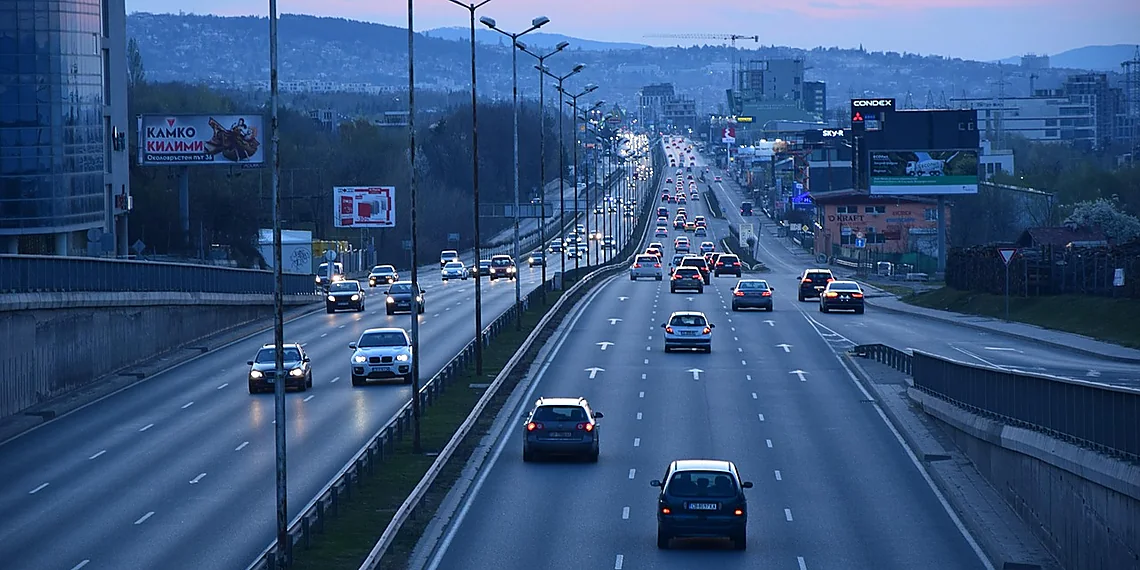

Imagine navigating rush hour – a frustrating ballet of stop-and-go vehicles where even small incidents can ripple across entire city networks. That’s because efficient transportation relies on accurately understanding and managing how people move, a complex problem known as traffic assignment. For decades, engineers have wrestled with this challenge, seeking to optimize routes and alleviate congestion, but traditional methods often fall short when faced with the dynamic nature of real-world conditions.
Historically, tackling traffic assignment has meant relying on intricate mathematical models that require significant computational power and meticulous calibration – a process prone to errors and slow response times. These older approaches struggle to incorporate rapidly changing factors like weather events, unexpected accidents, or even large public gatherings, leading to inaccurate predictions and suboptimal routing decisions. The need for something faster, more flexible, and capable of handling the sheer volume of data has become increasingly urgent.
Now, a new wave of innovation is sweeping through the field: Transformer models, originally developed for natural language processing, are proving remarkably effective at traffic flow prediction. These powerful architectures offer unprecedented speed and adaptability, allowing us to move beyond the limitations of previous methods and build smarter, more responsive transportation systems that can truly anticipate and manage the demands of modern urban life.
The Bottleneck of Traditional Traffic Assignment
For decades, predicting traffic flow – a critical element for urban planning, navigation systems, and even emergency response – has relied on the ‘traffic assignment problem’. Traditional approaches, rooted in mathematical programming and adhering to the Equilibrium principle, attempt to distribute vehicles across a road network until no driver can individually improve their travel time by switching routes. Imagine each car independently searching for the fastest path; equilibrium is reached when everyone’s settled on a route and further individual changes won’t help.
However, this seemingly elegant solution quickly hits a wall when dealing with real-world networks. The complexity of these calculations doesn’t increase linearly as the network grows – it exhibits non-linear growth. Think about multiplying two numbers: doubling one number doubles the product (linear). But calculating equilibrium in traffic assignment is more like exponentiation; doubling the number of roads or origin-destination (OD) pairs can easily multiply the computational effort by a factor of ten, or even much higher. This exponential rise makes solving these problems for large cities, with their sprawling road networks and countless commuters, practically impossible within reasonable timeframes.
The core issue stems from needing to simultaneously consider how *every* driver’s route choice impacts *everyone else’s*. A single change in one car’s path can ripple through the entire network, requiring recalculations across all routes. This interconnectedness creates a feedback loop that amplifies complexity and renders traditional methods computationally prohibitive as networks scale. The more OD pairs involved – essentially, the more possible starting points and destinations for commuters – the exponentially harder it becomes to find an equilibrium solution.
Consequently, these conventional approaches often rely on simplifying assumptions or limited network sizes, sacrificing accuracy and detail in the process. They primarily focus on link-level analysis (how much traffic is on each road), missing crucial information about how individual routes are contributing to overall flow patterns. This limitation highlights a clear need for innovative solutions that can overcome these computational bottlenecks and provide more granular insights into traffic dynamics.
Equilibrium Principles & Computational Complexity

Traditional traffic assignment models rely on the principle of equilibrium, which dictates that drivers choose routes to minimize their perceived travel time. This means that until no driver has an incentive to switch paths, the system is said to be in equilibrium. Imagine a group of people all trying to get to the same destination; if one person finds a faster route, others will follow, eventually congesting that new path and diminishing its advantage. The equilibrium principle aims to model this iterative process – drivers adjusting their routes until no further improvement can be achieved by any individual.
The computational challenge arises because finding this equilibrium often involves solving non-linear equations. To illustrate the complexity, consider a road network with just a few origin-destination (OD) pairs – say, two starting points and two destinations. The calculations are manageable. However, as the number of OD pairs increases – representing more people traveling between different locations – the problem’s complexity grows exponentially. It’s akin to trying to solve a maze; each additional possible route significantly expands the search space.
Mathematically, this exponential growth makes solving for equilibrium extremely demanding for large-scale networks. If doubling the number of OD pairs quadruples the computation time (or worse), then even moderately sized cities become intractable using these traditional methods. The non-linearity is a key factor; small changes in traffic volume on one route can have cascading effects throughout the network, requiring repeated recalculations to reach equilibrium – a process that quickly becomes computationally prohibitive.
Enter Transformers: A Data-Driven Approach
For decades, understanding and managing traffic flow has relied heavily on mathematical models aimed at optimizing network performance – a paradigm known as the Traffic Assignment Problem. These traditional approaches, built upon the Equilibrium principle, attempt to find the ‘best’ distribution of vehicles across roads. However, as road networks grow in size and complexity, with countless origin-destination (OD) pairs influencing traffic patterns, these optimization-based methods face a significant hurdle: computational complexity that grows non-linearly. Solving for equilibrium becomes increasingly impractical, hindering our ability to proactively address congestion.
A transformative shift is underway – moving from optimizing *how* vehicles should move to predicting *where* they will actually move. This data-driven approach leverages the power of deep learning, and specifically, Transformer models, to directly forecast path flows. Instead of forcing a solution onto the network, we’re now building models that learn from historical traffic data and predict future patterns. This fundamentally changes the game, allowing for more detailed and flexible analysis than traditional link-level approaches which often lack the granularity to capture complex interactions.
So, what are Transformers? Initially developed for natural language processing, they excel at identifying relationships between different elements within a sequence – think of how words relate to each other in a sentence. Applied to traffic flow prediction, this means Transformers can learn intricate correlations between various OD pairs. For example, the model might discover that an increase in trips from location A to B significantly impacts traffic on a particular route even if those routes aren’t directly connected. This ability to capture these complex dependencies is what makes them so powerful.
By predicting equilibrium path flows directly using Transformer models, researchers are drastically reducing computational burden while simultaneously gaining a deeper understanding of the factors influencing traffic movement. This represents not just an incremental improvement but a fundamental change in how we approach traffic flow analysis, paving the way for more responsive and effective traffic management strategies.
From Optimization to Prediction – The Paradigm Shift

Historically, traffic flow analysis heavily relied on optimization-based methods like the Traffic Assignment Problem (TAP), aiming to find an equilibrium state where supply meets demand. While theoretically sound, these approaches struggle with scalability. As network size and the number of origin-destination (OD) pairs increase, the computational complexity grows non-linearly, rendering solutions impractical for large metropolitan areas. This limitation significantly restricts our ability to model real-world traffic dynamics accurately.
A paradigm shift is underway, moving away from optimization towards prediction. Instead of attempting to calculate an equilibrium state, modern approaches focus on directly forecasting traffic flow patterns based on historical data and other relevant factors like time of day or weather conditions. This allows for a more flexible and detailed analysis without the computational bottlenecks associated with traditional methods.
Transformer models, initially developed for natural language processing, are proving remarkably effective in this predictive context. Their core strength lies in their ability to capture relationships between different data points – in the case of traffic flow prediction, these could be OD pairs or individual road segments. By using a self-attention mechanism, Transformers can weigh the importance of various factors and identify complex dependencies that would be missed by simpler models, leading to more accurate predictions.
How Transformers Predict Traffic Flows
Traditional methods for tackling the traffic assignment problem – a cornerstone of traffic flow analysis – rely heavily on mathematical programs striving for equilibrium across all routes. However, these approaches face significant computational hurdles as network size grows; complexity escalates non-linearly with each additional origin-destination (OD) pair. Recognizing this limitation, researchers are increasingly turning to data-driven alternatives, and a groundbreaking new study (arXiv:2510.19889v1) showcases the potential of Transformer models to revolutionize how we predict traffic flow.
This innovative research moves away from link-level analysis – which focuses on individual road segments – and instead adopts a *path*-level perspective. This means the model directly estimates the volume of traffic flowing along specific routes between different OD pairs, rather than just analyzing congestion at particular intersections. The shift to path-level detail offers a much more granular view of traffic patterns and allows for a more comprehensive understanding of how vehicles traverse the network.
The key to this approach lies in harnessing the power of Transformer architecture – famously used in natural language processing. Transformers excel at identifying and modeling complex relationships within data, and that capability translates remarkably well to traffic flow prediction. Specifically, the model is able to capture intricate correlations between different OD pairs; for example, how congestion on one route might influence travel choices for those originating from or destined towards a completely different location. This ability to understand these nuanced dependencies unlocks far greater flexibility and detail in analyzing network behavior than traditional methods.
By directly predicting equilibrium path flows using this Transformer-based model, the research promises to drastically reduce computational demands while simultaneously delivering more detailed and insightful traffic flow analysis. The shift from complex mathematical programming to a data-driven approach offers a compelling pathway towards improved traffic management and planning in increasingly congested urban environments.
Path-Level Detail & Correlation Capture
Traditional traffic flow prediction often concentrates on link-level data – analyzing traffic volume on individual road segments. However, this approach provides a limited view of overall network behavior. This new Transformer model takes a fundamentally different perspective by focusing directly on *path-level* traffic distribution. Instead of predicting how much traffic flows through each road segment, it predicts the flow along specific routes between origin and destination (OD) pairs. This path-centric approach allows for a more granular understanding of how travelers utilize the network.
The power of the Transformer architecture lies in its ability to model complex relationships. Unlike earlier neural networks, Transformers excel at capturing long-range dependencies within data. In the context of traffic flow prediction, this means the model can learn intricate correlations between different OD pairs – for example, understanding how congestion on one route impacts travel choices for another pair of locations. This allows it to consider a much wider range of factors influencing traffic patterns than link-level models.
By directly estimating path flows and capturing these interdependencies, this Transformer-based model provides a more detailed and flexible analysis of traffic behavior. It moves beyond simple predictions based on local conditions, offering insights into how the entire network responds to changes in demand or incidents – ultimately paving the way for more effective traffic management strategies.
Real-World Impact & Future Possibilities
The shift towards Transformer models for traffic flow prediction isn’t just an academic curiosity; it promises tangible benefits with significant real-world impact. Traditional methods relying on equilibrium principles quickly become computationally overwhelming when dealing with large, complex road networks. This new data-driven approach bypasses those limitations by directly predicting path flows, drastically reducing computation time – a critical advantage for agencies needing to respond rapidly to changing conditions.
One of the most compelling aspects of this Transformer-based model is its adaptability. Unlike conventional methods that require extensive recalculation with even minor changes in traffic demand or network configuration (like road closures or construction), this system can adjust quickly and efficiently. This agility allows for near real-time scenario planning – ‘what-if’ analyses to assess the impact of new developments, special events, or unexpected incidents on traffic patterns, enabling proactive management strategies.
The potential applications extend far beyond simply reacting to immediate problems. Accurate and rapidly generated traffic flow predictions can revolutionize long-term transportation planning. City planners could use these models to optimize infrastructure investments, design more efficient signal timing systems, and proactively address congestion hotspots before they develop. Furthermore, the detailed path-level data provides a richer understanding of traveler behavior than traditional link-based analyses.
Looking ahead, we can anticipate even greater integration of Transformer models into smart traffic management systems. Imagine dynamic routing adjustments based on predicted flow, personalized travel recommendations that consider real-time congestion forecasts, and autonomous vehicle navigation systems that leverage this granular level of traffic information – all powered by the speed and adaptability afforded by this revolutionary approach to traffic flow prediction.
Speed, Adaptability, and ‘What-If’ Scenarios
Traditional methods for traffic flow prediction, often relying on complex mathematical programs to achieve equilibrium, face a significant bottleneck when dealing with large-scale transportation networks. The computational complexity of these approaches grows nonlinearly as the number of origin-destination (OD) pairs increases, making them impractical for real-time or near-real-time applications. In stark contrast, this new Transformer model offers dramatic speed improvements; it bypasses the iterative equilibrium calculations and directly predicts traffic flow patterns, resulting in substantially reduced computation time.
A key advantage of the Transformer architecture lies in its adaptability. Unlike traditional models that require recalculation when faced with changes in traffic demand or network structure (e.g., road closures, new routes), this model can quickly adjust its predictions based on updated data without a full recomputation. This rapid adaptation is crucial for responding to unexpected events like accidents or sudden surges in travel requests.
This adaptability unlocks exciting possibilities for ‘what-if’ scenario planning. Transportation planners and traffic managers can rapidly assess the impact of proposed infrastructure changes, temporary road closures, or even large-scale events (like concerts) on traffic flow simply by feeding the model adjusted network parameters. This allows for proactive management and optimization strategies that were previously computationally infeasible.
The rise of Transformer models marks a significant leap forward in our ability to understand and anticipate urban mobility, fundamentally changing how we approach challenges within transportation networks.
We’ve seen firsthand how their capacity for parallel processing and long-range dependency modeling allows for more accurate and nuanced traffic flow prediction than previous methods, ultimately leading to smoother commutes and reduced congestion.
Beyond simply forecasting delays, these models offer the potential for proactive management – imagine dynamically adjusting signal timings or rerouting vehicles in real-time based on predicted bottlenecks; that’s the promise of this technology.
Looking ahead, research will likely focus on integrating even more diverse data sources, such as weather patterns and social media activity, to further refine predictive accuracy and account for unforeseen events impacting traffic flow prediction. We also anticipate advancements in explainable AI, allowing transportation professionals to understand *why* a model is making specific predictions, fostering trust and facilitating informed decision-making. Furthermore, the development of more computationally efficient Transformer architectures will be crucial for widespread deployment across resource-constrained environments and edge devices. The possibilities are truly expansive, from optimizing public transit schedules to enhancing autonomous vehicle navigation capabilities. Ultimately, this represents a paradigm shift in how we interact with our transportation infrastructure, moving away from reactive responses to proactive solutions built on intelligent data analysis.
Continue reading on ByteTrending:
Discover more tech insights on ByteTrending ByteTrending.
Discover more from ByteTrending
Subscribe to get the latest posts sent to your email.