
The hum of innovation continues to reverberate from Cape Canaveral as SpaceX prepares for another crucial journey to orbit. This isn’t just another launch; it represents a vital lifeline for the ongoing scientific endeavors aboard the International Space Station, ensuring researchers have the resources they need to push the boundaries of human knowledge. We’re on the cusp of witnessing the deployment of CRS-33, a mission packed with critical supplies and cutting-edge research payloads destined for our orbital laboratory.
The sheer magnitude of this undertaking is truly impressive; think of it as a carefully orchestrated delivery service reaching hundreds of miles above Earth. SpaceX ISS Resupply missions like this one are essential for maintaining the station’s operational capabilities, providing everything from fresh food and scientific equipment to spare parts and crew essentials. The cargo onboard CRS-33 includes experiments spanning fields like materials science, human health, and advanced plant biology – each poised to yield valuable insights.
This mission builds upon a remarkable legacy of collaboration between SpaceX and NASA, demonstrating the power of public-private partnerships in advancing space exploration. Every successful launch strengthens our ability to conduct long-duration research in microgravity, paving the way for future missions further into our solar system.
The Cargo Manifest: What’s Heading to Orbit?
SpaceX’s ISS Resupply Mission 33 isn’t just about delivering boxes; it’s a carefully orchestrated delivery of vital scientific tools and essential supplies crucial for ongoing research aboard the International Space Station. The Dragon spacecraft, packed with over 5,000 pounds of cargo, represents months of planning and preparation to support the astronauts’ work and push the boundaries of human knowledge in space. This resupply is particularly important as it ensures continuous operation of experiments requiring fresh materials and provides a lifeline for the crew’s daily needs.
Among the scientific payloads aboard this mission are several key experiments designed to explore diverse fields, from plant biology to advanced materials science. Notably, the ‘Veg-06’ experiment will continue investigating how plants grow in microgravity environments, studying the effects on nutrient uptake and overall crop health. This research is crucial for developing sustainable food sources for long-duration space missions and could also have implications for improving agricultural practices here on Earth. Another significant contribution comes from the Materials Science Laboratory (MSL), carrying samples to examine the behavior of materials under the unique conditions of space – potentially leading to breakthroughs in creating stronger, lighter, and more durable materials.
Furthering our understanding of human health in space is also a priority; the ‘Microbial Contact Angle Analysis’ (MCAA) experiment will analyze how microbial communities change on material surfaces in microgravity. This research aims to improve hygiene protocols and prevent biofouling within the ISS environment, which is vital for astronaut safety and maintaining the functionality of critical equipment. The MCAA results can also inform the development of better antimicrobial coatings for future spacecraft and habitats.
Beyond these headline experiments, the SpaceX ISS Resupply Mission 33 includes a wide range of supplies – everything from food and water to replacement parts and scientific hardware – ensuring the crew can continue their groundbreaking work and maintain the long-term viability of the International Space Station. This mission exemplifies the vital partnership between NASA and SpaceX in enabling continued exploration and discovery beyond our planet.
Scientific Experiments Aboard

Among the numerous investigations aboard SpaceX ISS Resupply Mission 33 is Veg-06, a continuation of previous plant growth studies on the ISS. This experiment focuses on optimizing growing conditions for Mizuna mustard greens in microgravity using a newly designed lighting and nutrient delivery system. Researchers hope to better understand how plants respond to altered gravitational forces and environmental controls, contributing to the development of sustainable food production systems for long-duration space missions and potentially offering insights applicable to agriculture on Earth.
Another significant payload is the Materials Science Experiment – Refrigerator and Freezer (MSRF). This facility provides a dedicated platform for conducting materials science research in both cryogenic freezer (-80°C) and refrigerator (+4°C) conditions. The mission carries several samples, including alloys and ceramics, to assess their behavior under microgravity and extreme temperatures—crucial for developing more durable and efficient components for spacecraft and other high-tech applications.
Finally, the ‘NanoBEE’ (Nanobubble Enhanced Environment for Growth) study is included on this resupply mission. This experiment investigates whether nanobubbles – tiny bubbles of gas suspended in a liquid – can enhance nutrient uptake and growth rates in plants cultivated within a closed environment. Preliminary results suggest that nanobubbles may improve oxygen delivery to roots, potentially leading to increased productivity for future space-based agriculture or even optimizing crop yields on Earth.
Dragon’s Journey & Return Capabilities
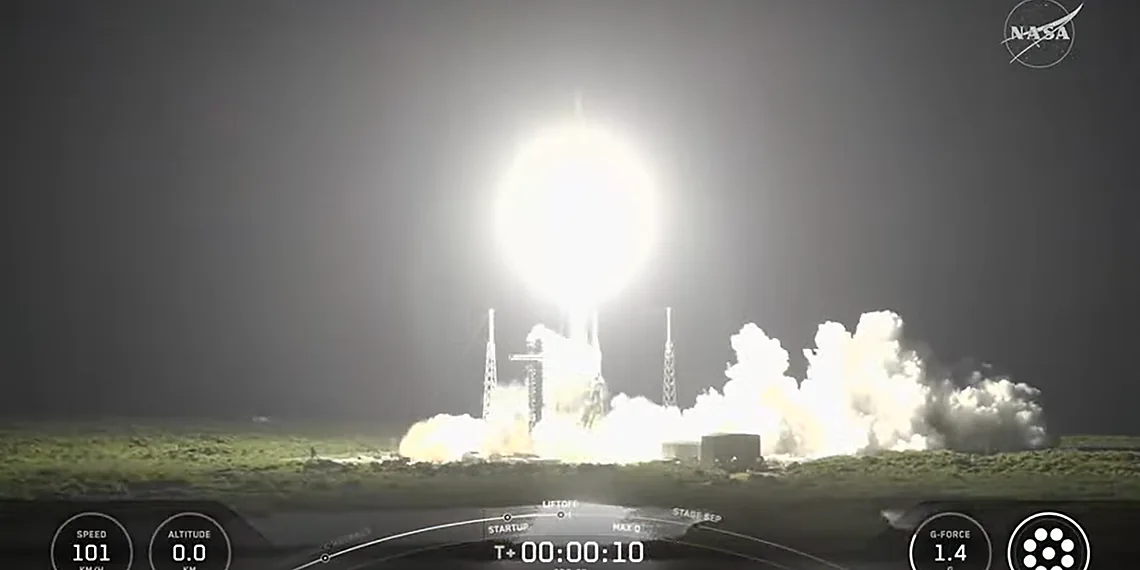
The SpaceX ISS Resupply mission 33 showcased a flawless demonstration of reusable space technology, beginning with a powerful ascent powered by the Falcon 9 rocket. Following liftoff from Cape Canaveral Space Force Station, the first stage separated approximately two minutes and thirty seconds into the flight, executing a controlled descent for landing on a droneship in the Atlantic – a routine but crucial step in SpaceX’s commitment to reusability. The second stage then continued its journey toward orbit, carefully placing the Dragon spacecraft onto the correct trajectory for rendezvous with the International Space Station.
The approach and docking sequence is a meticulously choreographed ballet of engineering precision. Utilizing onboard sensors and navigation systems, the Dragon autonomously navigated towards the ISS, adjusting its position and speed to match that of the orbiting laboratory. Once within range, it initiated a final, controlled docking procedure, securely attaching itself to the station’s Harmony module. This process demands exceptional accuracy, highlighting both SpaceX’s advanced guidance technology and NASA’s stringent safety protocols.
What truly sets the Dragon spacecraft apart is its ability to return cargo safely back to Earth. Unlike many other resupply vehicles that burn up upon re-entry, the Dragon is designed for a controlled descent, utilizing heat shields and parachutes to land in the ocean. This capability allows scientists to bring valuable samples – such as biological specimens or experimental hardware – back from orbit for detailed analysis, significantly enhancing the scope of research conducted on the ISS. Mission 33 will utilize this return capability to transport approximately 3,000 pounds of scientific experiments and other items back to Earth.
This return cargo functionality is a key differentiator in the commercial resupply program. It enables a two-way flow of materials, facilitating more complex and impactful research opportunities aboard the ISS. The SpaceX ISS Resupply mission 33 successfully reinforces this vital aspect of space exploration, demonstrating the ongoing evolution of capabilities that are pushing the boundaries of scientific discovery and technological advancement.
From Launchpad to Orbit: The Flight Profile

The SpaceX ISS Resupply Mission 33 commenced with a flawless Falcon 9 rocket launch from Kennedy Space Center’s Launch Complex 39A. Shortly after liftoff, approximately two minutes and thirty seconds into the flight, the first stage of the Falcon 9 separated. This booster, designated B1078, then executed a controlled descent and landing on the drone ship ‘A Shortfall of Gravitas’, stationed in the Atlantic Ocean – marking its fifth recovery by SpaceX. The second stage continued its ascent to orbit, propelling the Dragon spacecraft towards its destination.
Upon reaching Low Earth Orbit (LEO), the Dragon spacecraft began its autonomous approach to the International Space Station. Utilizing radar and navigation systems, it carefully maneuvered within visual range of the ISS crew. Following a final safety review and authorization from Mission Control, the Dragon spacecraft docked with the station’s Harmony module at 6:52 AM EDT. This docking procedure is crucial for transferring the over 5,000 pounds of cargo, including scientific experiments, food, water, and other necessities to the crew.
Notably, this mission utilized a previously flown Falcon 9 booster, demonstrating SpaceX’s commitment to reusable rocket technology and cost efficiency. The Dragon spacecraft itself is also designed for return capability; after its stay at the ISS, it will undock and splash down in the Pacific Ocean, bringing valuable research samples back to Earth – a key feature enabling broader scientific investigations.
Why Resupply Missions are Crucial
The recent launch of SpaceX’s 33rd Commercial Resupply Services mission highlights a critical aspect of maintaining human presence in space: consistent resupply. While breathtaking images of astronauts floating in zero gravity capture the imagination, the reality of long-duration spaceflight is heavily reliant on a constant stream of supplies from Earth. Without these regular deliveries – and missions like this SpaceX ISS Resupply – life aboard the International Space Station would be unsustainable. It’s far more than just bringing up fun snacks; it’s about ensuring survival.
The importance of resupply missions extends beyond basic necessities for the crew. Food, water, and breathable oxygen are obvious essentials, but so too are replacement parts for critical systems, hygiene products, and medical supplies. The logistical challenges involved are immense. Sending cargo into orbit isn’t as simple as dropping a package off at the post office; every item must be carefully planned, packaged to withstand launch conditions, and precisely timed to arrive when needed. Consider that items can’t simply be ‘reshipped’ if forgotten or damaged – each mission represents a significant investment of resources and planning.
Beyond keeping astronauts alive and healthy, these SpaceX ISS Resupply missions are absolutely vital for enabling the scientific research conducted on the ISS. The orbiting laboratory serves as a unique platform to conduct experiments in microgravity – studies that simply can’t be replicated effectively on Earth. New equipment, samples, and experimental materials arrive regularly thanks to missions like this, fueling breakthroughs in fields ranging from medicine and materials science to fundamental physics. Without them, the station would essentially become a very expensive orbiting museum.
Ultimately, the success of programs like SpaceX’s Commercial Resupply Services isn’t just about delivering cargo; it is about enabling sustained human presence beyond our planet and pushing the boundaries of scientific discovery. The ability to reliably and cost-effectively resupply the ISS paves the way for future missions further into space, demonstrating a crucial step towards establishing permanent off-world settlements and expanding humanity’s reach.
Sustaining Life & Research in Space
Long-duration spaceflight, as exemplified by the International Space Station (ISS), presents significant logistical challenges. Astronauts cannot simply ‘go to the store’ for necessities; everything from food and water to oxygen and scientific equipment must be transported from Earth. SpaceX ISS Resupply missions like Mission 33 are therefore absolutely vital for sustaining human life in orbit, providing a continuous flow of consumables that astronauts rely on daily. Without these regular deliveries, extended stays aboard the ISS would be impossible.
Beyond basic survival needs, resupply missions such as this one directly enable ongoing scientific research. SpaceX Dragon spacecraft carry specialized equipment and experiment payloads allowing researchers to conduct investigations across diverse fields including biology, materials science, and human physiology – all in a microgravity environment. These experiments often yield invaluable data that cannot be obtained on Earth, furthering our understanding of the universe and potentially leading to breakthroughs in medicine and technology.
The sheer volume of cargo delivered by SpaceX ISS Resupply missions highlights the complexity involved. Mission 33’s payload of over 5,000 pounds underscores the constant demand for resources needed to support both the crew and the scientific endeavors on board the ISS. Careful planning and precise timing are essential in coordinating these launches to ensure that astronauts have what they need when they need it.
Looking Ahead: Future Resupply and Space Exploration
The successful launch and ongoing operations of SpaceX ISS Resupply mission 33 aren’t just about delivering supplies; they represent vital building blocks for humanity’s broader ambitions in space. Each resupply mission, like CRS-33, provides invaluable experience in orbital logistics – a critical capability as we look towards establishing long-term presence on the Moon and eventually Mars. The precision required for docking, cargo handling in microgravity, and return of scientific samples hones skills and refines procedures directly applicable to future deep space endeavors.
Consider the Artemis program’s goals: building a sustainable lunar base and ultimately sending humans back to Mars. These ambitious projects necessitate reliable and frequent transportation of materials, equipment, and personnel. The lessons learned from SpaceX’s Commercial Resupply Services (CRS) – including CRS-33 – are instrumental in developing those capabilities. Specifically, the expertise gained in reusable rocket technology, spacecraft design optimized for cargo transport, and automated docking procedures contributes directly to the advancement of Artemis’ lunar landers and potential Martian transport systems.
Furthermore, the ongoing research conducted on the ISS, facilitated by missions like SpaceX ISS Resupply 33, is generating critical data about long-duration spaceflight. Understanding how materials behave in the harsh environment of space – from radiation exposure to microgravity’s impact on human physiology – informs the design and construction of habitats and life support systems needed for lunar bases and Martian colonies. The continuous cycle of experimentation and refinement fueled by these resupply missions is paving the way for a future where humans can thrive beyond Earth.
Ultimately, SpaceX ISS Resupply mission 33 exemplifies how seemingly routine operations contribute to revolutionary goals. It’s not just about keeping the ISS running; it’s about investing in the knowledge, technology, and infrastructure that will enable us to extend humanity’s reach further into the cosmos – toward a sustainable presence on the Moon and beyond.
Building Blocks for Deep Space Missions
The recent SpaceX ISS Resupply Mission 33, like its predecessors in the Commercial Resupply Services (CRS) program, isn’t just about delivering supplies to astronauts; it’s a crucial proving ground for technologies vital to future deep space endeavors. Each mission refines capabilities such as cargo handling and robotic docking procedures that will be essential for constructing lunar bases and eventually supporting human missions to Mars. The reliability demonstrated by SpaceX’s Falcon 9 rocket and Dragon spacecraft directly contributes to NASA’s confidence in utilizing these systems for more complex tasks.
Specifically, the experience gained from CRS missions informs the design and operation of future infrastructure projects beyond Earth orbit. For example, the automated cargo transfer techniques used during resupply missions are being adapted for lunar surface construction activities envisioned under the Artemis program. Similarly, understanding how materials behave and degrade in the space environment – a constant focus during ISS operations supported by these resupply flights – is critical for selecting appropriate building materials and designing life support systems for long-duration Mars habitats.
Furthermore, the iterative improvements in propulsion efficiency and payload capacity seen across SpaceX’s Falcon rocket family directly benefit ambitious missions. These advancements reduce mission costs and increase the amount of equipment that can be transported to distant destinations, making projects like establishing a permanent lunar outpost or sending human explorers to Mars increasingly feasible. The knowledge gained from each resupply mission helps optimize these systems for even greater performance.

Mission 33, a critical SpaceX ISS Resupply endeavor, has once again demonstrated the vital partnership between commercial space companies and NASA in sustaining long-duration spaceflight. The successful delivery of scientific equipment, crew supplies, and hardware upgrades ensures continued groundbreaking research aboard the International Space Station. This mission underscored the reliability and efficiency of reusable rocket technology, showcasing a significant leap forward in cost-effective access to low Earth orbit. Beyond simply delivering cargo, this resupply effort fuels ongoing experiments spanning fields like human health, materials science, and advanced plant growth – all contributing to our understanding of life beyond Earth and paving the way for future deep space exploration. The seamless integration of SpaceX’s capabilities with NASA’s operational expertise highlights a collaborative approach that maximizes scientific return and minimizes risk. It’s clear that these resupply missions are not just about logistics; they are integral components in building a sustainable presence in space. To delve deeper into the fascinating research happening aboard the ISS, and to stay informed about upcoming NASA initiatives like Artemis and beyond, we encourage you to explore the wealth of information available on NASA’s website. Discover the details behind these incredible scientific pursuits and witness firsthand how humanity continues to push the boundaries of exploration.
Your curiosity is the fuel for future innovation – learn more about NASA’s International Space Station research programs and upcoming missions today!
Continue reading on ByteTrending:
Discover more tech insights on ByteTrending ByteTrending.
Discover more from ByteTrending
Subscribe to get the latest posts sent to your email.