
The buzz around artificial intelligence isn’t just dominating boardrooms anymore; it’s rapidly infiltrating the workshops of makers and hobbyists worldwide. We’re seeing a seismic shift in how code is written, debugged, and even conceived, with AI tools promising to democratize programming like never before. From generating snippets to explaining complex algorithms, AI is poised to become an indispensable partner for anyone building something new.
While ChatGPT has rightfully captured much of the spotlight as an accessible coding companion, a fascinating alternative is quietly emerging within the Arduino ecosystem. Many makers are overlooking a powerful resource already integrated into their favorite platform: the Arduino AI Assistant. This isn’t just about generating code; it’s about leveraging localized intelligence to streamline your projects and unlock new creative possibilities.
This article dives deep into a direct comparison – Arduino AI vs. ChatGPT – exploring the strengths, weaknesses, and unique benefits each offers to the modern maker. We’ll unpack how these tools differ in functionality, accessibility, and suitability for various project types, ultimately helping you decide which approach best fits your needs and skill level.
Understanding the Players: AI for Makers
The world of coding is rapidly evolving, and artificial intelligence (AI) is playing an increasingly significant role in how we build software and hardware projects. Tools like ChatGPT have exploded in popularity, offering a seemingly effortless way to generate code snippets, debug existing programs, and even conceptualize entire applications. This rise of AI coding assistants promises to democratize development by lowering the barrier to entry for beginners while boosting productivity for experienced programmers. However, general-purpose AI models often struggle with the nuances of specific platforms and frameworks – they may produce functional code but miss critical details or introduce inefficiencies that can be frustrating for makers.

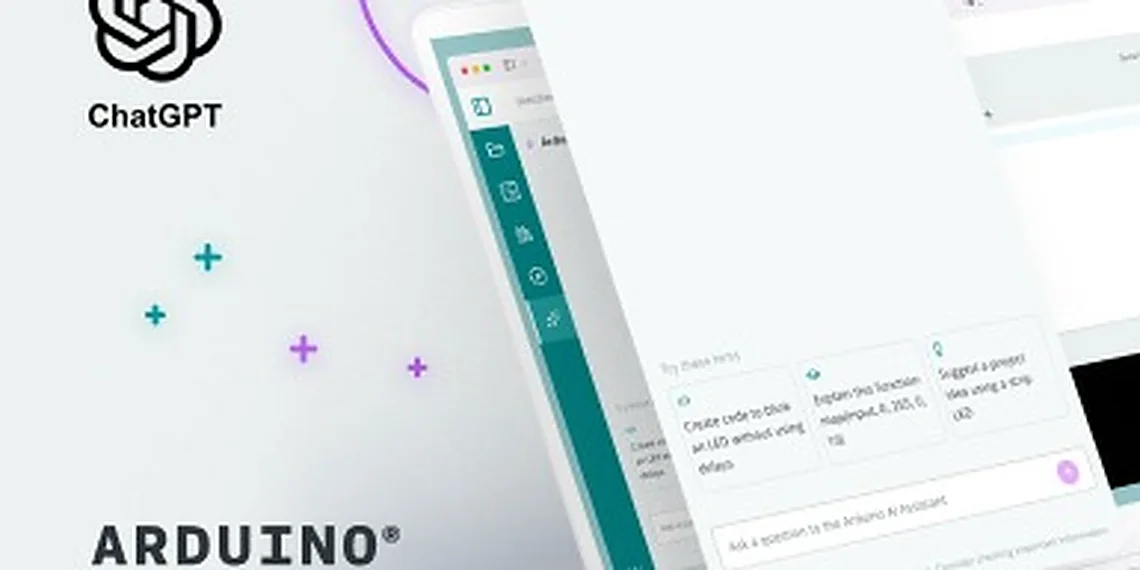
Enter the Arduino AI Assistant, a new tool directly integrated into the Arduino Cloud platform. Unlike ChatGPT, which is trained on a massive dataset of general programming knowledge, the Arduino AI Assistant is specifically designed to understand and assist with Arduino-based projects. It’s built with the intricacies of microcontroller programming in mind – it knows about specific libraries, hardware limitations, and common pitfalls that often trip up those working with Arduinos. This specialized focus aims to provide more accurate, relevant, and usable code suggestions tailored precisely to the maker’s needs.
The difference is significant: ChatGPT might generate a block of code to control an LED, but it could inadvertently use incorrect pin assignments or suggest libraries that aren’t compatible with your specific Arduino board. The Arduino AI Assistant, on the other hand, leverages its understanding of the Arduino ecosystem to provide suggestions that are more likely to work flawlessly right out of the box, saving valuable time and troubleshooting headaches for makers of all skill levels. It’s not just about generating code; it’s about providing intelligent assistance within the context of an Arduino project.
Ultimately, both ChatGPT and the Arduino AI Assistant offer unique benefits. While ChatGPT can be a powerful brainstorming partner and general coding helper, the Arduino AI Assistant shines as a dedicated tool for streamlining Arduino development. Understanding these distinctions is key to choosing the right assistant – or combining them strategically – to bring your maker projects to life.
The Rise of AI Coding Assistants
Artificial intelligence is rapidly changing software development workflows, and coding assistance tools are at the forefront of this shift. Generative AI models like ChatGPT have become popular for tasks ranging from generating boilerplate code to explaining complex concepts. These tools leverage vast datasets to predict and produce text, including code snippets in various programming languages, offering a seemingly quick solution for developers facing roadblocks or needing inspiration.
The benefits of using AI coding assistants are clear: increased productivity, reduced time spent on repetitive tasks, and potentially easier onboarding for beginners. However, these general-purpose models also have limitations. They can sometimes produce inaccurate or inefficient code, lack context specific to the project’s hardware or libraries, and may introduce security vulnerabilities if not carefully reviewed. Reliance on AI-generated code without understanding its underlying logic is discouraged.
As a result of this trend, more specialized AI tools are emerging that cater to specific development environments and platforms. The Arduino AI Assistant exemplifies this shift, being designed specifically for the Arduino ecosystem and addressing some of the shortcomings encountered when using general-purpose AIs like ChatGPT for microcontroller programming.
Introducing Arduino AI Assistant
The rise of artificial intelligence has significantly impacted various fields, including software development and hobbyist electronics. While general-purpose AI models like ChatGPT have become popular tools for generating code snippets, Arduino recognized the need for an AI specifically tailored to the unique challenges and requirements of microcontroller programming. This led to the creation of the Arduino AI Assistant, a new feature integrated directly within the Arduino Cloud platform.
The Arduino AI Assistant isn’t meant to replace traditional coding methods entirely; rather, it serves as a helpful companion for makers of all skill levels. Its primary function is to assist with code generation, debugging, and understanding existing Arduino sketches. It leverages a specialized knowledge base focused on Arduino hardware, libraries, and best practices – something general AI models often lack.
Unlike ChatGPT, which operates independently, the Arduino AI Assistant benefits from its tight integration with Arduino Cloud. This allows it to access project-specific information, such as connected boards, installed libraries, and existing code, leading to more accurate and relevant suggestions. It aims to bridge the gap between conceptual ideas and functional Arduino projects by providing contextually aware assistance.
Feature Face-Off: Capabilities Compared
Let’s dive into a detailed comparison of the capabilities offered by ChatGPT and the Arduino AI Assistant, specifically focusing on their practical applications within the realm of Arduino projects. While ChatGPT is undeniably powerful as a general-purpose language model, its strength doesn’t automatically translate to perfect code generation for embedded systems. You might find yourself battling incorrect library calls or missing dependencies when relying solely on ChatGPT for your Arduino endeavors. The Arduino AI Assistant, conversely, is purpose-built; it understands the nuances of the Arduino ecosystem and aims to deliver solutions tailored to that environment.
A key differentiator lies in hardware and library awareness. The Arduino AI Assistant’s direct integration with Arduino hardware specifications and available libraries provides a significant advantage. This allows it to generate code that’s not only syntactically correct but also optimized for the specific Arduino board you’re using, incorporating appropriate drivers and functions from the start. ChatGPT, lacking this intrinsic knowledge, often requires extensive manual correction and adaptation – potentially negating much of the time saved by initially generating the code.
When it comes to debugging and troubleshooting, both tools offer limited assistance in their current forms. ChatGPT can sometimes provide explanations of code behavior if prompted, but its suggestions for fixing errors are generally broad and require a good understanding of Arduino programming principles on your part. The Arduino AI Assistant, being newer, is still developing this functionality, but the promise lies in offering more targeted debugging advice rooted in common Arduino issues and best practices – potentially guiding users towards solutions tailored to their specific hardware setup.
Ultimately, while ChatGPT can be a useful brainstorming tool or for generating basic code snippets, the Arduino AI Assistant emerges as the stronger choice for serious makers working with Arduino. Its focused design ensures greater accuracy, reduces debugging headaches, and allows you to spend more time innovating rather than correcting errors.
Code Generation Accuracy & Context
When it comes to generating code specifically for Arduino hardware and libraries, ChatGPT often falls short due to its general-purpose nature. While capable of producing syntactically correct code snippets, these frequently lack crucial context. This can manifest as incorrect library inclusions, reliance on non-existent functions within those libraries, or a failure to account for specific board capabilities like pin availability or memory constraints. Users are then left with debugging and correcting the generated code, negating much of the intended time savings.
The Arduino AI Assistant, however, takes a targeted approach. Integrated directly into the Arduino Cloud IDE, it’s trained on a vast dataset of Arduino code examples, documentation, and hardware specifications. This allows it to generate code that is significantly more accurate and relevant to common Arduino tasks. It’s better equipped to understand the nuances of specific Arduino boards and libraries, reducing the likelihood of errors related to library usage or missing dependencies – issues commonly encountered with ChatGPT’s output.
Ultimately, the difference boils down to specialization. ChatGPT excels at broad creative text generation but struggles when precise technical accuracy is paramount. The Arduino AI Assistant prioritizes code correctness for a specific platform, making it a more reliable and efficient tool for makers working on Arduino projects – especially those new to microcontroller programming.
Hardware & Library Awareness
Unlike ChatGPT, which operates as a general-purpose language model, the Arduino AI Assistant possesses direct hardware and library awareness. It is intrinsically linked to the Arduino IDE and Cloud environment, allowing it to understand the specifics of available boards, sensors, actuators, and their associated libraries. This fundamental understanding enables the generation of code that’s immediately compatible with an Arduino project’s physical components.
This integration translates into significant advantages in code accuracy and optimization. The Arduino AI Assistant knows which libraries are installed on your system and can utilize them correctly, avoiding common pitfalls where ChatGPT might suggest unsupported or outdated functions. It also accounts for hardware limitations, such as pin availability and memory constraints, leading to more efficient and practical code solutions.
Furthermore, the assistant’s awareness extends beyond basic library usage. It understands Arduino’s unique programming conventions and best practices, ensuring generated code adheres to these standards. This results in not only functional but also maintainable and well-structured Arduino sketches – a crucial factor for long-term project success.
Debugging & Troubleshooting
Debugging and troubleshooting are crucial aspects of any project, and both ChatGPT and the Arduino AI Assistant offer varying degrees of support in this area. ChatGPT, being a general-purpose language model, can analyze code snippets you provide and attempt to identify potential errors or suggest improvements based on common programming practices. However, its understanding of embedded systems specifics is limited; it might flag issues that are perfectly valid within an Arduino context or miss subtle hardware-related problems.
The Arduino AI Assistant excels in debugging specifically for Arduino projects. It’s integrated with the Arduino IDE and Cloud environment, allowing it to understand your project’s dependencies, libraries, and hardware configuration. When you encounter errors, the Assistant can provide more targeted suggestions tailored to the Arduino ecosystem, often pointing out incorrect library usage, pin assignments, or common pitfalls related to microcontroller programming. This deeper integration enables it to offer explanations of code behavior in relation to specific Arduino functions and hardware components.
Ultimately, ChatGPT is a useful tool for general coding assistance and brainstorming, but when it comes to debugging Arduino projects, the specialized knowledge embedded within the Arduino AI Assistant proves invaluable. It reduces the likelihood of receiving generic or inaccurate advice, streamlining the troubleshooting process and helping makers resolve issues more efficiently.
Beyond Code: Project Workflow Integration
While both ChatGPT and the Arduino AI Assistant can generate code snippets, their roles in a complete Arduino project workflow differ significantly. The Arduino AI Assistant shines when considered as part of a holistic development process within the Arduino Cloud ecosystem. Imagine starting with an initial concept – say, building a smart plant watering system. With the AI Assistant, you can directly describe your goal and receive tailored code suggestions that are immediately compatible with your connected hardware, leveraging features like built-in library management and project templates available in Arduino Cloud. This tight integration streamlines the entire process from idea to functional prototype.
In contrast, using ChatGPT as a standalone tool presents challenges when it comes to broader project workflow. You’re essentially importing code generated by an external AI into your Arduino IDE or Cloud projects, which can introduce compatibility issues and require significant manual adjustments. While ChatGPT excels at generating creative solutions, it lacks the inherent understanding of specific hardware constraints, library dependencies, and the nuances of the Arduino environment that are baked into the AI Assistant. This often results in code needing substantial debugging and rework to function correctly within your project’s overall architecture.
The value of the Arduino Cloud’s collaborative features is also amplified when paired with the AI Assistant. Version control, shared projects, and real-time collaboration become seamless extensions of the coding process – allowing multiple makers to contribute and refine code generated by the assistant. This stands in stark contrast to the more isolated experience of using ChatGPT, where code sharing and integration can be cumbersome. Ultimately, for a truly integrated Arduino development experience, from initial concept sketching to final deployment, the AI Assistant offers a distinct advantage.
Consider the entire lifecycle of an Arduino project: conceptualization, coding, testing, debugging, and deployment. The Arduino AI Assistant is designed to support each stage within the Arduino Cloud environment, while ChatGPT operates as more of a code-generation supplement. While both have their place, understanding this fundamental difference – one integrated into the ecosystem, the other standalone – allows makers to choose the tool that best aligns with their project’s scope and development philosophy.
Arduino Cloud Synergy
The Arduino Cloud offers more than just remote access to your hardware; it’s a complete development environment, and the new AI Assistant is deeply integrated within this ecosystem. This means projects created with the AI Assistant automatically benefit from all the advantages of the Arduino Cloud, including secure storage, real-time data visualization, and easy sharing capabilities.
A key advantage lies in version control. All changes made through the AI Assistant – whether code generation or modifications – are tracked within the Arduino Cloud’s Git repository. This allows for effortless rollback to previous versions, branching for experimentation, and a clear history of project evolution. This functionality is especially valuable for complex projects or team collaborations.
Furthermore, the integration fosters collaborative development. Multiple users can access and contribute to an Arduino AI Assistant-powered project hosted on the Cloud, streamlining teamwork and enabling shared learning experiences. The cloud platform’s commenting features allow developers to discuss code directly within the environment, further enhancing collaboration.
ChatGPT’s Standalone Approach
While ChatGPT’s ability to generate code snippets is undeniably impressive, relying on it as a standalone solution for Arduino projects presents several limitations. The core issue stems from its lack of direct integration with the hardware and development environment. ChatGPT operates purely in the digital realm; it doesn’t inherently understand the specifics of your Arduino board – its connected sensors, actuators, or the nuances of real-time interaction.
This disconnect can lead to compatibility problems and necessitate extensive manual adjustments. Code generated by ChatGPT might utilize libraries that aren’t installed on your system, reference pins incorrectly configured for your specific hardware setup, or fail to account for power constraints unique to embedded systems. Debugging these issues often requires a deeper understanding of Arduino programming than the initial code generation was intended to alleviate.
Furthermore, ChatGPT lacks context beyond the immediate prompt. It doesn’t retain information about previous iterations of your project, custom libraries you’ve developed, or the overall architecture of your system. This means each request essentially starts from scratch, potentially generating redundant or conflicting code and hindering a streamlined development workflow.
The Verdict: Choosing Your AI Companion
Ultimately, the best ‘AI companion’ for your projects depends heavily on your experience level and specific needs. For absolute beginners venturing into the world of microcontrollers, the Arduino AI Assistant is undoubtedly the superior choice. Its tight integration with the Arduino ecosystem means it understands the nuances of the platform – from available libraries to hardware constraints – far better than a general-purpose model like ChatGPT. You’ll receive code that’s more likely to work ‘out of the box,’ minimizing frustrating debugging sessions and accelerating your learning curve. While ChatGPT can generate code snippets, those often require significant tweaking to be compatible with your Arduino setup.
Experienced makers aren’t entirely excluded from benefiting from the Arduino AI Assistant; in fact, it can significantly streamline repetitive tasks like generating basic sensor reading or motor control routines. However, if you’re looking for a broader range of creative coding ideas and want to explore solutions beyond the standard Arduino libraries – perhaps incorporating complex algorithms or experimenting with unusual hardware configurations – ChatGPT’s wider knowledge base might offer some initial inspiration. Just be prepared to do more heavy lifting in adapting that generated code to your specific Arduino project.
Looking ahead, the future of the Arduino AI Assistant is incredibly promising. The team at Arduino are actively working on expanding its capabilities, including improved natural language understanding for more complex requests and deeper integration with other Arduino Cloud services. We can expect to see it evolve into an even more indispensable tool for makers of all skill levels, further solidifying its position as the go-to AI assistant specifically designed to empower your Arduino projects.
In conclusion, while ChatGPT offers a glimpse into the potential of general-purpose AI coding assistance, the Arduino AI Assistant remains the clear winner for most makers. Its targeted expertise, seamless integration with the Arduino platform, and continuous development make it the ideal partner for bringing your creative electronics projects to life – allowing you to focus on building, learning, and innovating rather than wrestling with generic code that just isn’t quite right.
Beginner vs. Experienced Makers
For beginners just starting with Arduino, the Arduino AI Assistant is overwhelmingly the better option. Its integration within the Arduino Cloud environment means it’s specifically trained on Arduino-compatible hardware and libraries. This results in code suggestions that are more likely to work ‘out of the box,’ minimizing debugging headaches and allowing you to focus on learning core concepts like circuit design, sensor interaction, and basic programming logic. You avoid the common pitfalls of ChatGPT generating code requiring significant modification to function correctly with your specific Arduino setup.
Experienced makers who are comfortable troubleshooting and have a deeper understanding of embedded systems might find value in experimenting with ChatGPT’s broader capabilities. The ability to generate more complex algorithms or explore novel approaches can be appealing, but remember that the output will likely require careful review and adaptation for compatibility with an Arduino’s resource constraints and specific hardware configuration. Consider it a brainstorming tool rather than a complete code generator.
Ultimately, the Arduino AI Assistant offers a streamlined and reliable workflow for most makers, regardless of project complexity. It’s designed to be a helpful assistant, not a replacement for understanding the underlying principles of your projects. While ChatGPT can offer interesting possibilities, its lack of specialized training means it’s often more trouble than it’s worth for those seeking efficient Arduino development.
Future of Arduino AI
The future of the Arduino AI Assistant looks promising, with significant development planned to enhance its capabilities beyond basic code generation. Currently, it excels at suggesting code snippets and providing explanations based on existing Arduino examples and documentation. However, upcoming iterations aim to incorporate more sophisticated reasoning abilities, allowing it to understand project context better and generate more complete solutions. This includes a focus on improved error handling and debugging assistance directly within the Arduino IDE.
One key area of improvement will be deeper integration with the Arduino hardware ecosystem. Future versions are expected to offer personalized suggestions based on the specific Arduino board and connected sensors being used in a project. Imagine the AI Assistant automatically recognizing you’re using an ESP32 and suggesting relevant WiFi or Bluetooth code, or prompting you to calibrate a newly attached sensor – this level of tailored assistance is a primary goal. The team also intends to expand its knowledge base to include more third-party libraries and community projects.
Beyond functionality, the Arduino AI Assistant’s user interface will continue to evolve. Expect refinements in conversational flow and improved accessibility for users with varying levels of coding experience. Ultimately, the vision is to create an ‘AI companion’ that empowers makers of all skill levels to bring their creative electronics projects to life more easily and efficiently.
We’ve seen that both ChatGPT and the emerging world of embedded AI offer unique capabilities, but cater to vastly different needs in the maker space.
While ChatGPT excels at complex natural language processing and creative text generation, its reliance on cloud connectivity and computational power often makes it impractical for resource-constrained Arduino projects.
The beauty of microcontrollers lies in their ability to operate independently, making real-time responsiveness and localized data analysis paramount – areas where the Arduino AI Assistant truly shines.
It’s not about declaring one a definitive winner; rather, understanding that each tool serves a distinct purpose. For generating marketing copy, ChatGPT is fantastic. For controlling a robotic arm or analyzing sensor readings directly on your device, an Arduino AI Assistant provides a far more streamlined and efficient solution, removing latency issues and the need for constant internet access. The integration with hardware becomes significantly smoother too, allowing for truly embedded intelligence without external dependencies. This localized processing capability unlocks exciting possibilities for IoT devices and interactive installations that operate reliably even offline. Ultimately, embracing both tools strategically – leveraging ChatGPT for ideation and the Arduino AI Assistant for implementation – will empower makers to achieve even greater things. The future of accessible AI in hardware is bright, and we’re only just scratching the surface of what’s possible with this technology paired with familiar platforms like Arduino. It offers a powerful bridge between complex algorithms and tangible creations, making sophisticated AI more approachable than ever before. “ ,
Continue reading on ByteTrending:
Discover more tech insights on ByteTrending ByteTrending.
Discover more from ByteTrending
Subscribe to get the latest posts sent to your email.