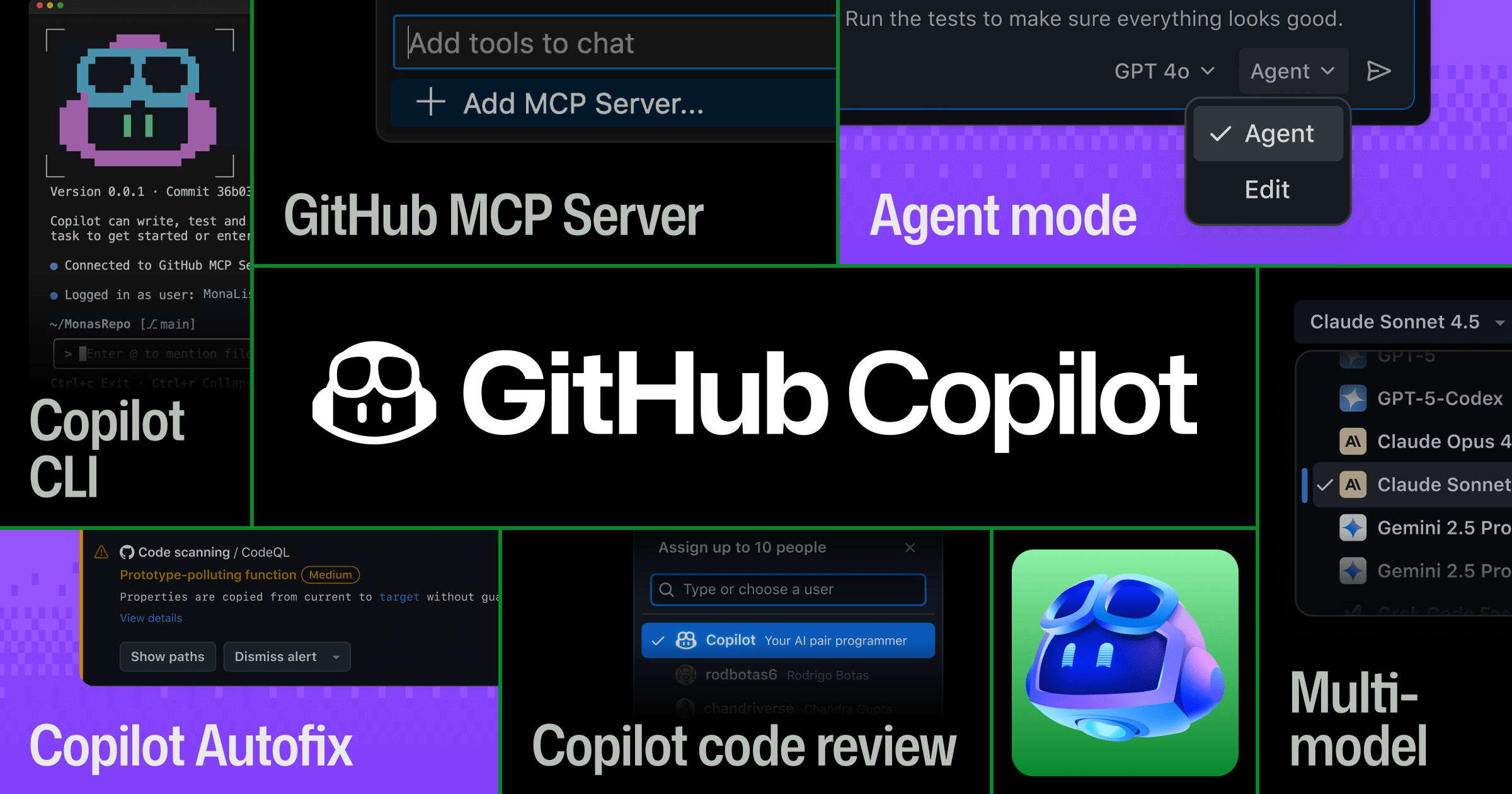


You probably remember when GitHub Copilot first appeared in your editor with that distinctive gray box. It was remarkably fast, surprisingly accurate, and occasionally quirky—hinting at a larger potential: AI could genuinely assist developers beyond simple autocomplete functionality. This tool is truly revolutionizing how we approach software development.
Fast forward to today, and artificial intelligence has become integral to our daily workflows. From Cursor to Windsurf and Claude Code to Gemini and OpenAI Codex, there’s no shortage of innovative tools available. Furthermore, developers need a variety of options to suit their individual needs and project requirements.
Notably, according to a recent Pragmatic Engineer survey, GitHub Copilot is the most widely used AI tool among developers, boasting over 20 million users across IDEs, the command line, and pull requests. Developers have leveraged Copilot to accept more than 3 billion code suggestions to date. As a result, every month, Copilot facilitates millions of code reviews and contributes approximately 1.2 million pull requests directly within GitHub.
And because GitHub is already the central hub for your codebase—including your pull requests, reviews, and tests—Copilot seamlessly integrates with everything you rely on via the GitHub MCP Server. This comprehensive integration allows Copilot to extend its capabilities beyond simply writing code.
While we may not have always been the fastest (though our Changelog might suggest otherwise), or the loudest, we’ve been developing Copilot since before ChatGPT existed, with a singular focus: to help developers transform TODOs into committed code. On the other hand, while some pursue the cutting edge, we recognize that developers prioritize stability and reliability in their production environments.
Therefore, if you initially tried Copilot and found it lacking, prepare for significant improvements—it has evolved considerably.
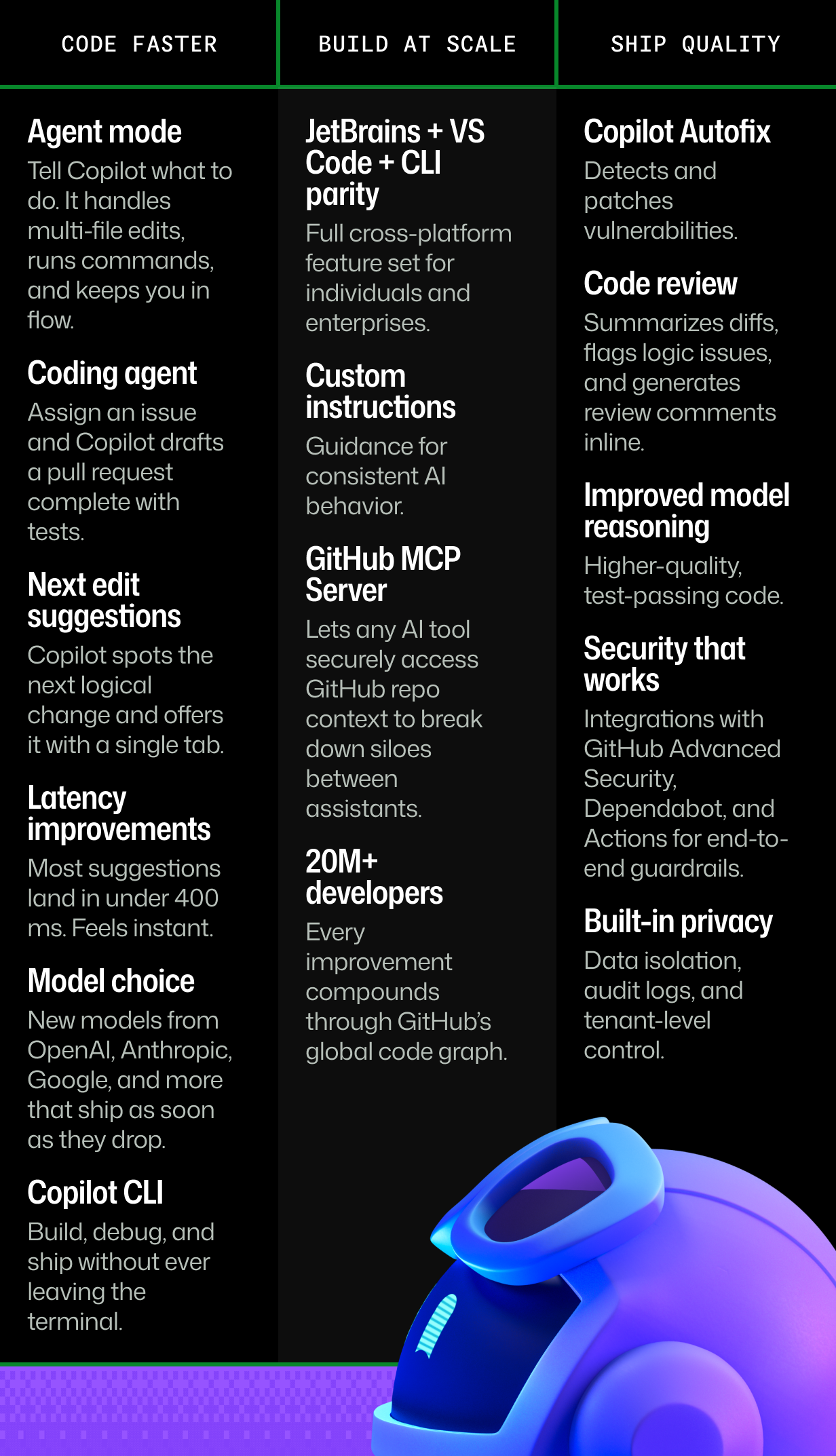
From Autocomplete to Collaborative Partner
If 2024 showcased what’s possible with AI, 2025 is about making those capabilities practical. Copilot has quietly matured from a neat autocomplete trick into a sophisticated, multi-modal assistant that genuinely understands your projects and contributes to their progress. For example, we’ve been rapidly incorporating new models from various providers, including OpenAI’s latest releases and Google’s Gemini 2.0 Flash.
Understanding the Evolution of Copilot
This evolution isn’t random; it’s directly informed by developer feedback. We’ve listened to your input regarding what works well, what needs improvement, and the desire for more powerful agentic workflows and multi-file editing capabilities—and we’ve responded accordingly.
Multi-Model Capabilities
The addition of multiple model support is a key aspect of this evolution. Developers now have the flexibility to choose AI models (such as OpenAI or Gemini) that best suit their specific tasks and preferences, optimizing for speed, accuracy, or other criteria.
Enhanced Productivity with GitHub Copilot
The advancements in GitHub Copilot represent a significant shift toward AI-powered development environments. These aren’t just about autocomplete; they’re about collaborative partners that can truly assist developers throughout the coding process. Simultaneously, this allows for increased efficiency and faster project completion.
Key Benefits for Developers
- Increased Productivity: Automate repetitive tasks and concentrate on complex problem-solving with Copilot’s assistance.
- Improved Code Quality: Leverage the AI’s capabilities to identify potential errors and enhance the overall quality of your code.
- Faster Development Cycles: Accelerate project timelines by automating coding, review, and other crucial development stages using GitHub Copilot.
Conclusion
The ongoing development of GitHub Copilot marks a pivotal moment in software development—a move towards AI-powered assistance that goes far beyond simple code completion. By seamlessly integrating into existing workflows and providing powerful new features, Copilot is empowering developers to build better software faster. As we continue to innovate and listen to your feedback, expect even more exciting advancements for this invaluable tool.
Source: Read the original article here.
Discover more tech insights on ByteTrending.
Discover more from ByteTrending
Subscribe to get the latest posts sent to your email.