

The Growing Need for Advanced Cooling in Data Centers
Data centers have long been characterized by their considerable energy consumption and the associated heat generation. Traditionally, these facilities relied heavily on air cooling systems employing numerous fans to dissipate heat from computer chips. However, the relentless rise in computing power, particularly fueled by advancements in artificial intelligence (AI), is pushing the limits of traditional air-cooled solutions. Consequently, liquid cooling technologies are emerging as essential for maintaining operational efficiency and preventing overheating in modern data centers.
Understanding Liquid Cooling Technologies
As AI models become increasingly complex, they demand more powerful processors—GPUs (Graphics Processing Units) – which generate significant heat. The power density per rack has dramatically increased, creating a pressing need for innovative cooling methods. Liquid cooling offers a substantial advantage over air cooling due to water’s superior thermal properties; it possesses roughly four times the specific heat capacity and is approximately 800 times denser than air. This means liquid can absorb significantly more heat and transfer it away from components much more effectively.
Types of Liquid Cooling Systems
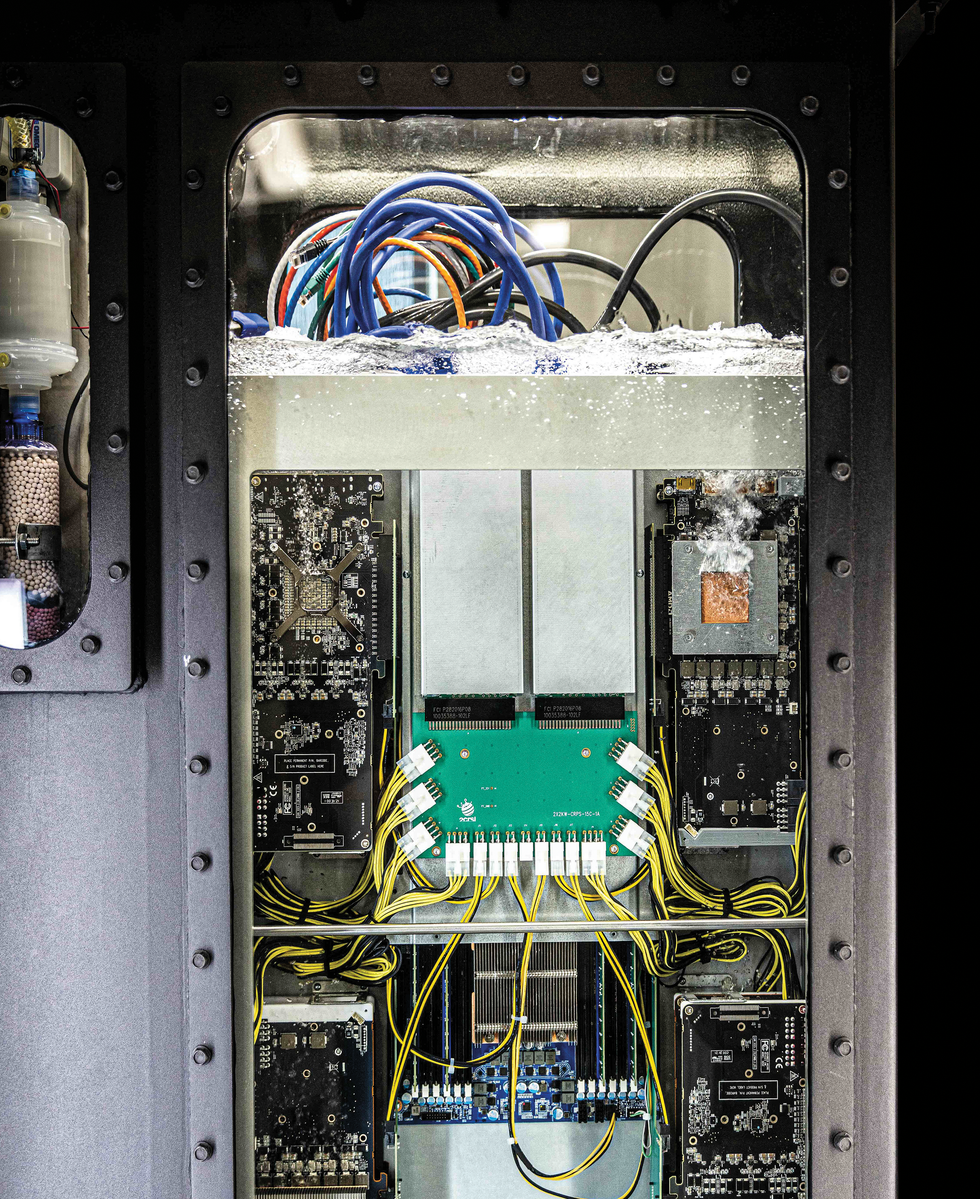
Several approaches to liquid cooling exist, each with its own advantages and complexities. Direct-to-chip (D2C) cooling involves attaching a cold plate directly to the processor, allowing liquid coolant to absorb heat directly at the source. Rack-based liquid cooling systems circulate coolant within server racks, providing localized temperature control. Immersion cooling represents a more radical approach, where entire servers are submerged in a dielectric fluid – a non-conductive liquid designed for thermal management – leading to exceptionally efficient heat removal. Furthermore, hybrid solutions combine aspects of these methods to optimize performance and flexibility.
Comparing Air Cooling vs. Liquid Cooling
| Feature | Air Cooling | Liquid Cooling |
|---|---|---|
| Efficiency | Lower | Higher |
| Power Density | Limited (8kW per rack) | High (up to 100 kW per rack for AI) |
| Complexity | Simpler | More Complex |
| Cost | Lower Initial Cost | Higher Initial Cost, potential long-term savings |
While air cooling remains a cost-effective option for less demanding applications, the escalating power densities driven by AI make liquid cooling increasingly indispensable. For example, Nvidia’s GPUs have progressed from consuming 300 watts to over 1200 watts in recent generations, highlighting the inadequacy of conventional airflow.
The Future of Data Center Cooling with Liquid Solutions

Industry Adoption and Challenges
The adoption of liquid cooling is rapidly gaining momentum within the data center industry, particularly among those supporting AI workloads. Experts predict that future data centers will increasingly rely on these advanced techniques to handle escalating power demands. However, challenges remain; these include the higher initial investment costs associated with implementing liquid cooling systems and the need for specialized infrastructure and expertise. Furthermore, ensuring dielectric fluid compatibility and safety is crucial for immersion cooling deployments.
Looking Ahead: Innovations in Liquid Cooling
Ongoing research and development efforts are focused on improving the efficiency and cost-effectiveness of liquid cooling solutions. This includes exploring new coolants with enhanced thermal properties, optimizing system designs to minimize energy consumption, and integrating liquid cooling directly into chip manufacturing processes. As AI continues its rapid evolution, the demand for sophisticated thermal management systems will only intensify, solidifying the role of advanced liquid cooling technologies in the future of data centers.
Conclusion
The increasing computational demands of AI have created a critical need for more efficient and effective data center cooling solutions. While traditional air cooling methods are reaching their limits, liquid cooling offers a powerful alternative with significant advantages. As we move toward higher power densities and increasingly complex workloads, embracing liquid cooling will be paramount to ensuring the reliability and performance of data centers worldwide.
Source: Read the original article here.
Discover more tech insights on ByteTrending.
Discover more from ByteTrending
Subscribe to get the latest posts sent to your email.