ByteTrending
  • Home
    • About ByteTrending
    • Contact us
    • Privacy Policy
    • Terms of Service
  • Tech
  • Science
  • Review
  • Popular
  • Curiosity
Donate
No Result
View All Result
ByteTrending
No Result
View All Result
Home Curiosity
Related image for interstellar dust

Interstellar Dust: Secrets of the Universe Revealed

ByteTrending by ByteTrending
October 15, 2025
in Curiosity, Science
Reading Time: 3 mins read
0
Share on FacebookShare on ThreadsShare on BlueskyShare on Twitter

The Interstellar Delivery of Life’s Building Blocks

For decades, scientists have pondered the origin of life on Earth—a question that remains one of the biggest mysteries in science. While numerous theories attempt to explain conditions on early Earth that might have fostered life’s emergence, a compelling new study suggests a significant contribution from beyond our solar system: interstellar dust grains. This research offers intriguing insight into how the fundamental components of life may have arrived here.

What are Amino Acids and Why Are They Important?

Amino acids are organic compounds containing both amine (-NH2) and carboxyl (-COOH) functional groups. Importantly, they serve as the fundamental building blocks of proteins—essential molecules performing a vast array of functions in living organisms, from catalyzing biochemical reactions to providing structural support. Therefore, without amino acids, life as we understand it simply wouldn’t exist.

The ‘chicken-and-egg’ problem arises when considering how these crucial molecules first appeared on Earth. While some could have been synthesized through chemical processes on early Earth, the efficiency and abundance needed to jumpstart biological systems remains difficult to fully explain. Furthermore, understanding the delivery mechanisms of these compounds is key.

Interstellar Dust Grains: Tiny Cosmic Carriers

The new research focuses on interstellar dust grains—microscopic particles of solid material floating between stars within galaxies. These grains are formed from the remnants of dying stars and contain complex organic molecules, including amino acids. What’s particularly compelling is that these grains can be shielded from destructive ultraviolet radiation in space by a layer of frozen water ice.
Related Post

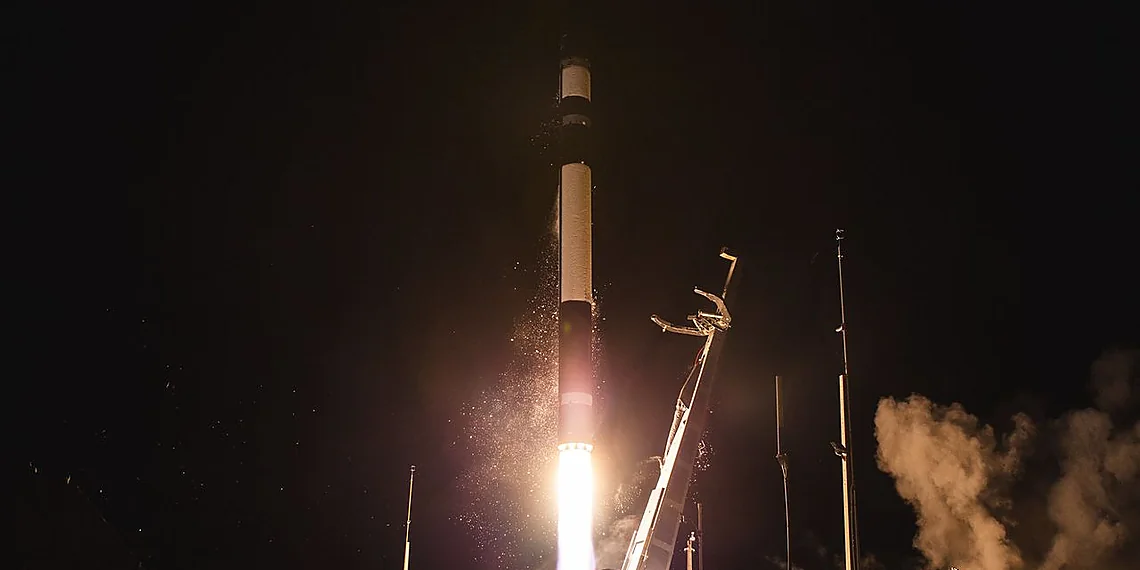
Rocket Lab launch illustration for the article Rocket Lab's 2026 Launch: Open Cosmos Expansion

Rocket Lab’s 2026 Launch: Open Cosmos Expansion

March 19, 2026
Related image for Enceladus ocean simulation

Enceladus Ocean Lab: Simulating Life’s Building Blocks

March 10, 2026

Lunar Rover Charge Buildup: Avoiding Electrical Hazards

March 10, 2026

SLS Rocket: Artemis II’s Launchpad Arrival

March 9, 2026
// Simplified model illustrating ice shielding 

The study utilized sophisticated laboratory simulations to recreate the conditions found in interstellar space. Researchers subjected dust grains containing glycine (the simplest amino acid) to simulated cosmic radiation exposure and observed that the ice layer effectively protected the molecules, allowing them to survive their journey through space. Consequently, this shielding mechanism is vital for preserving organic compounds.

Interstellar dust grains may have delivered amino acids to early Earth.
A representation of interstellar dust grains, potential carriers of life’s building blocks.

How Did These Grains Arrive on Earth?

Early Earth experienced a period of intense bombardment by asteroids and comets. During this time, interstellar dust grains would have been incorporated into these impactors—essentially raining down organic matter onto our planet’s surface. The researchers believe that this influx of amino acids could have significantly contributed to the prebiotic soup, providing the raw materials necessary for the emergence of life.

Artist's concept of early Earth bombardment.
An artist’s depiction of the intense asteroid and comet bombardment that occurred during Earth’s early history.

The Implications for Life Beyond Earth

If amino acids can be delivered to planets via interstellar dust grains, it raises profound questions about the potential for life elsewhere in the universe. It suggests that the building blocks of life may be more widespread than previously thought and that planetary habitability isn’t solely dependent on local conditions. Moreover, this discovery expands our understanding of how life might originate beyond Earth.

  • The study supports panspermia—the hypothesis that life exists throughout the Universe, distributed by space dust, meteoroids, asteroids, comets, and even spacecraft contamination.
  • It highlights the importance of analyzing interstellar dust grains collected during future missions to better understand their composition and potential role in delivering organic molecules.

Further research is now focused on identifying a wider range of amino acids within these dust grains and understanding how they might have interacted with early Earth’s environment. As a result, we may gain further insights into the origins of life.


This discovery provides an exciting new perspective on the origins of life, suggesting that we may owe a debt to the cosmos for the very existence of life on Earth.


Source: Read the original article here.

Discover more tech insights on ByteTrending.

Share this:

  • Share on Facebook (Opens in new window) Facebook
  • Share on Threads (Opens in new window) Threads
  • Share on WhatsApp (Opens in new window) WhatsApp
  • Share on X (Opens in new window) X
  • Share on Bluesky (Opens in new window) Bluesky

Like this:

Like Loading...

Discover more from ByteTrending

Subscribe to get the latest posts sent to your email.
Tags: amino acidsDustEarthLifeSpace

Related Posts

Rocket Lab launch illustration for the article Rocket Lab's 2026 Launch: Open Cosmos Expansion
Curiosity

Rocket Lab’s 2026 Launch: Open Cosmos Expansion

by ByteTrending
March 19, 2026
Related image for Enceladus ocean simulation
Popular

Enceladus Ocean Lab: Simulating Life’s Building Blocks

by ByteTrending
March 10, 2026
Related image for lunar rover charge
Popular

Lunar Rover Charge Buildup: Avoiding Electrical Hazards

by ByteTrending
March 10, 2026
Next Post
Related image for PAX

PAX Experience: My Game's Success & Key Takeaways

Leave a ReplyCancel reply

Recommended

Related image for PuzzlePlex

PuzzlePlex: Evaluating AI Reasoning with Complex Games

October 11, 2025
Related image for Ray-Ban hack

Ray-Ban Hack: Disabling the Recording Light

October 24, 2025
Related image for Ray-Ban hack

Ray-Ban Hack: Disabling the Recording Light

October 28, 2025
Kubernetes v1.35 supporting coverage of Kubernetes v1.35

How Kubernetes v1.35 Streamlines Container Management

March 26, 2026
data-centric AI supporting coverage of data-centric AI

How Data-Centric AI is Reshaping Machine Learning

April 3, 2026
SpaceX rideshare supporting coverage of SpaceX rideshare

SpaceX rideshare Why SpaceX’s Rideshare Mission Matters for

April 2, 2026
robotics supporting coverage of robotics

How CES 2026 Showcased Robotics’ Shifting Priorities

April 2, 2026
Kubernetes v1.35 supporting coverage of Kubernetes v1.35

How Kubernetes v1.35 Streamlines Container Management

March 26, 2026
ByteTrending

ByteTrending is your hub for technology, gaming, science, and digital culture, bringing readers the latest news, insights, and stories that matter. Our goal is to deliver engaging, accessible, and trustworthy content that keeps you informed and inspired. From groundbreaking innovations to everyday trends, we connect curious minds with the ideas shaping the future, ensuring you stay ahead in a fast-moving digital world.
Read more »

Pages

  • Contact us
  • Privacy Policy
  • Terms of Service
  • About ByteTrending
  • Home
  • Authors
  • AI Models and Releases
  • Consumer Tech and Devices
  • Space and Science Breakthroughs
  • Cybersecurity and Developer Tools
  • Engineering and How Things Work

Categories

  • AI
  • Curiosity
  • Popular
  • Review
  • Science
  • Tech

Follow us

Advertise

Reach a tech-savvy audience passionate about technology, gaming, science, and digital culture.
Promote your brand with us and connect directly with readers looking for the latest trends and innovations.

Get in touch today to discuss advertising opportunities: Click Here

© 2025 ByteTrending. All rights reserved.

No Result
View All Result
  • Home
    • About ByteTrending
    • Contact us
    • Privacy Policy
    • Terms of Service
  • Tech
  • Science
  • Review
  • Popular
  • Curiosity

© 2025 ByteTrending. All rights reserved.

%d