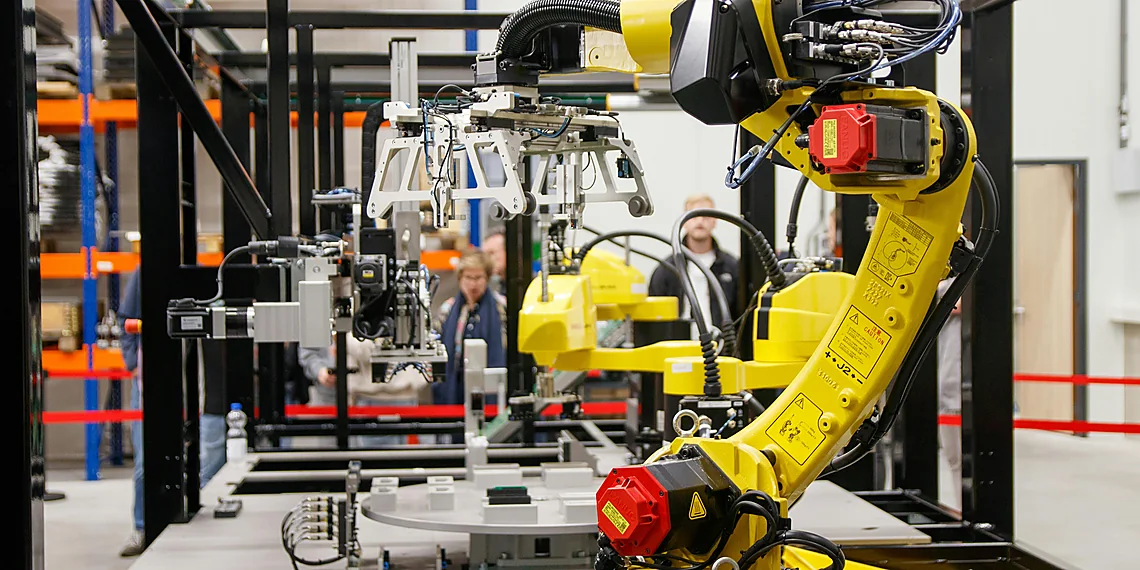


The increasing prevalence of Internet of Things (IoT) devices has revolutionized how we interact with our surroundings, impacting everything from smart homes to industrial automation. However, the sheer volume of connected devices introduces complexities in their management. Traditional device management interfaces often force users to navigate disparate applications, each presenting a unique user interface and learning curve. This fragmentation creates friction for individuals seeking to monitor and control their IoT environment effectively.
Understanding the Challenges of Modern Device Management
Managing an extensive IoT deployment presents several significant challenges that can negatively impact user experience and overall system effectiveness. A primary hurdle is interface fragmentation, where users must juggle multiple applications and tools for different device types. Furthermore, technical complexity often makes even basic configuration tasks daunting for non-specialists. Visibility limitations further exacerbate the problem by preventing comprehensive monitoring of device status. Lastly, inadequate user management capabilities hinder the ability to track device usage patterns.
The Impact of Fragmentation
The fragmented nature of traditional device management systems leads to inefficiencies and frustration for users. Constantly switching between applications not only consumes valuable time but also increases the potential for errors. For instance, a user attempting to update firmware on a smart thermostat might need to access one application while simultaneously monitoring network connectivity through another.
Addressing Technical Complexity
Many IoT devices and platforms utilize technical jargon and complex configuration settings that can be overwhelming for average users. Simplifying these processes with intuitive interfaces is crucial for widespread adoption. The goal should be to abstract away the underlying complexities, allowing users to interact with their devices in a more natural and accessible way.
Introducing Conversational IoT Device Management with Amazon Bedrock
A conversational AI solution powered by Amazon Bedrock AgentCore offers a transformative approach to addressing these challenges through a unified and intuitive interface. Users can now perform complex operations using natural language, eliminating the need to navigate technical menus. This innovative system provides comprehensive visibility across connected devices and transforms intricate configuration tasks into straightforward conversations.
Key Components of the Architecture
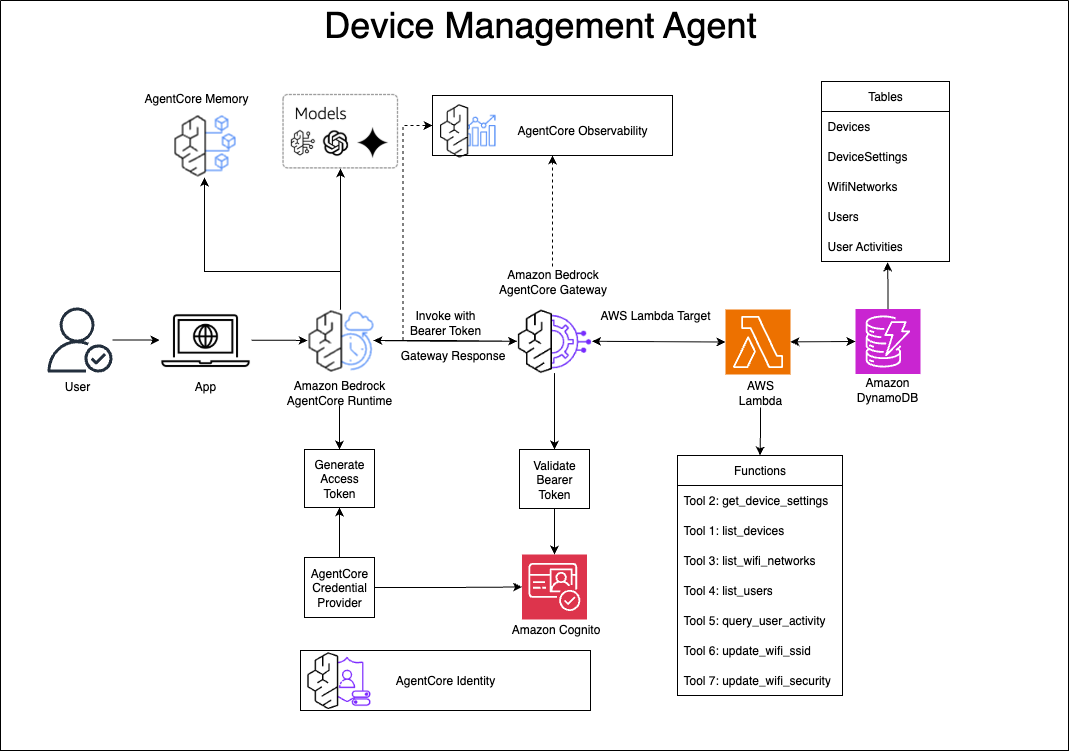
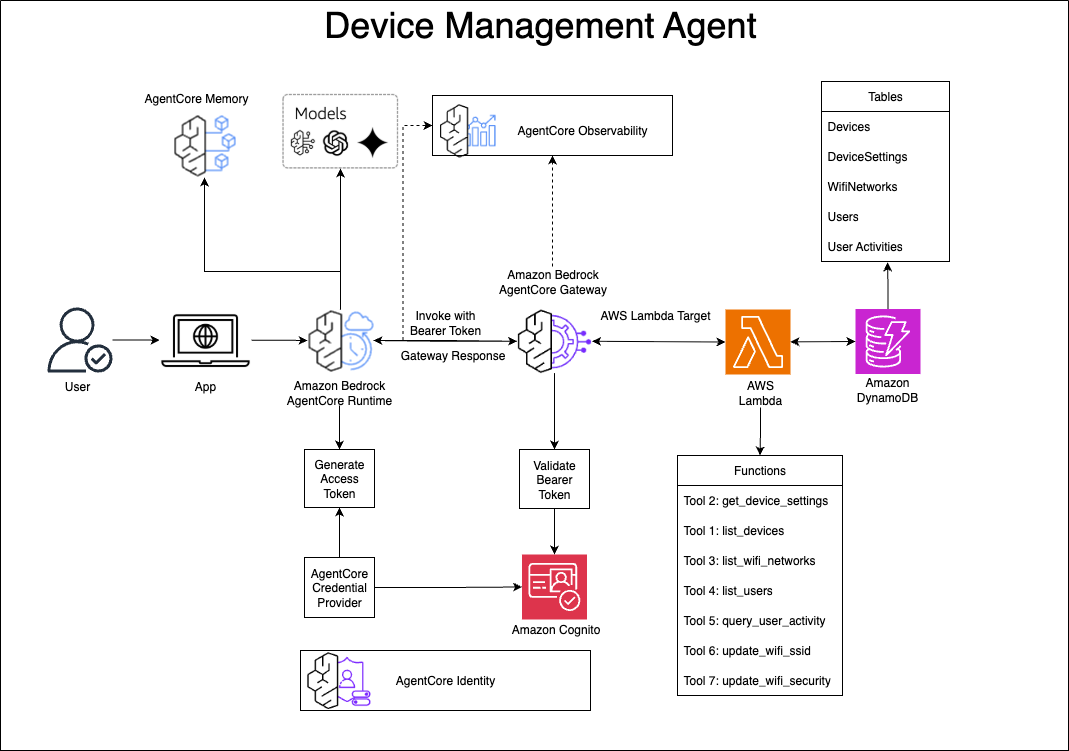
The system’s architecture is modular, leveraging several key AWS services. The user interacts through a web application frontend, while foundation models within Amazon Bedrock power natural language understanding and generation. Amazon Lex facilitates speech recognition and text-to-speech capabilities, enabling voice commands. AWS Lambda functions handle backend processing, triggered by events from other components. Finally, Amazon DynamoDB serves as the database for storing device information and user profiles.
Benefits of a Conversational Approach to Device Management
Employing Amazon Bedrock AgentCore for managing IoT devices yields substantial advantages beyond mere ease of use. Streamlined workflows significantly reduce the time required to complete common tasks such as checking device status or updating configurations. Notably, the natural language interface lowers the barrier to entry for less technically proficient users, boosting adoption rates and overall system utility. Furthermore, real-time insights into device activity contribute to enhanced security monitoring and proactive problem resolution. This combination of accessibility, efficiency gains, and improved security makes conversational AI a vital component in modern device management strategies.
In addition, utilizing this method fosters greater operational efficiency; organizations can now react faster to potential issues and allocate resources more effectively. For example, instead of manually checking the status of hundreds of sensors, a user could simply ask, “Are all temperature sensors reporting correctly?” Similarly, users can perform complex tasks such as configuring WiFi networks with simple commands.
Conclusion: The Future of IoT Management
By embracing conversational AI and utilizing Amazon Bedrock AgentCore, organizations can dramatically improve the user experience and operational efficiency of their IoT device management systems. This approach not only reduces complexity but also enhances accessibility and control over connected devices, paving the way for a more streamlined and intuitive future in IoT.
Source: Read the original article here.
Discover more tech insights on ByteTrending.
Discover more from ByteTrending
Subscribe to get the latest posts sent to your email.