ByteTrending
  • Home
    • About ByteTrending
    • Contact us
    • Privacy Policy
    • Terms of Service
  • Tech
  • Science
  • Review
  • Popular
  • Curiosity
Donate
No Result
View All Result
ByteTrending
No Result
View All Result
Home Curiosity
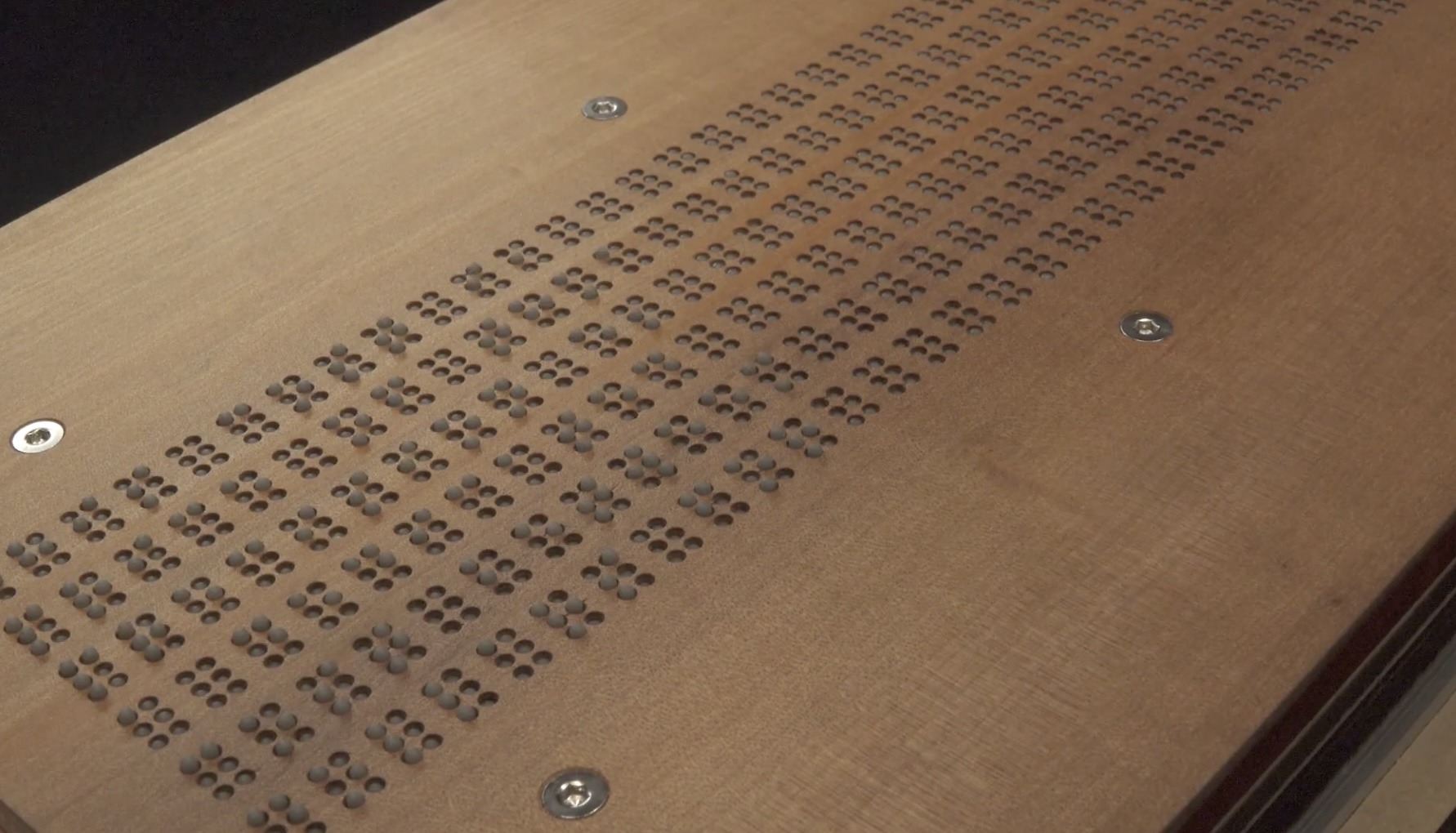
Related image for braille display

New Tech: Affordable Braille Displays with MagnePins

ByteTrending by ByteTrending
October 13, 2025
in Curiosity, Tech
Reading Time: 2 mins read
0
Share on FacebookShare on ThreadsShare on BlueskyShare on Twitter

Related Post

industrial automation supporting coverage of industrial automation

How Arduino Powers Smarter Industrial Automation

May 5, 2026

Stretchable OLEDs: A Bright Future for Wearables

March 7, 2026

3Duino: Democratizing Interactive 3D Printing

December 4, 2025

Modular Haptics: Building VR Vehicles with LEGO-Like Blocks

October 17, 2025

Tactile displays, particularly refreshable braille display devices, have historically faced significant design and fabrication challenges. These difficulties arise from the sheer number of moving parts required; each individual dot necessitates a dedicated actuated mechanism, demanding dozens or hundreds of these components within a compact space. Traditional micro-actuators often become prohibitively expensive and complex to manage at such scales. However, researchers at Monash University have developed MagnePins, a novel braille display featuring innovative mechanisms designed for affordability and accessibility.

Understanding the MagnePin Design: A New Approach to Tactile Displays

The MagnePins team created both general-purpose tactile displays and dedicated braille display prototypes, sharing similar core functionalities with hundreds of actuated pins. The primary distinction lies in their pin arrangement, which is optimized for specific applications. Furthermore, the design prioritizes ease of manufacturing and reduces reliance on specialized components.

The Core Innovation: Scanning Electromagnets

Both display types leverage electromagnets to elevate pins, forming the braille dots. Directly integrating hundreds of electromagnets would be impractical and costly; therefore, MagnePins addresses this with a ‘scanning’ mechanism that sequentially actuates the pins column by column. This ingenious system slides beneath the display, guiding the pins within specialized channels. A staggered line of pistons—driven by just 24 electromagnets—either remains retracted or protrudes upward to alter pin positions as they pass overhead. Consequently, this approach drastically reduces the number of required magnets and simplifies control circuitry.

Pin Arrangement and Customization

The arrangement of pins in a MagnePins braille display can be tailored for various applications. For example, specialized arrangements can optimize readability or accommodate specific text formats. Similarly, the design allows for customization to suit individual user preferences and needs. This flexibility distinguishes MagnePins from conventional refreshable braille displays.

Controlling and Building a MagnePins Display: Accessible Technology

An Arduino Mega 2560 board manages these electromagnets through FETs (Field Effect Transistors) and monitors the sliding mechanism’s position using a linear encoder for precise control. In addition, software developed within Unity translates images or braille text into pin positions that are then relayed to the Arduino for actuation. As a result, users can easily interface with the braille display through familiar development tools.

Performance and Cost-Effectiveness: Democratizing Access

Testing revealed impressive performance metrics: 99.97% accuracy and an average refresh time of just 12.88 seconds. Notably, readability was confirmed by a skilled braille reader, demonstrating the effectiveness of the MagnePins design. The remarkably low component cost—just $231.95 USD—makes MagnePins exceptionally accessible and affordable. Moreover, these components are readily available, and the construction process can be achieved using standard tools commonly found in makerspaces, opening doors for wider adoption and customization. Consequently, MagnePins represents a significant step towards democratizing access to refreshable braille display technology.
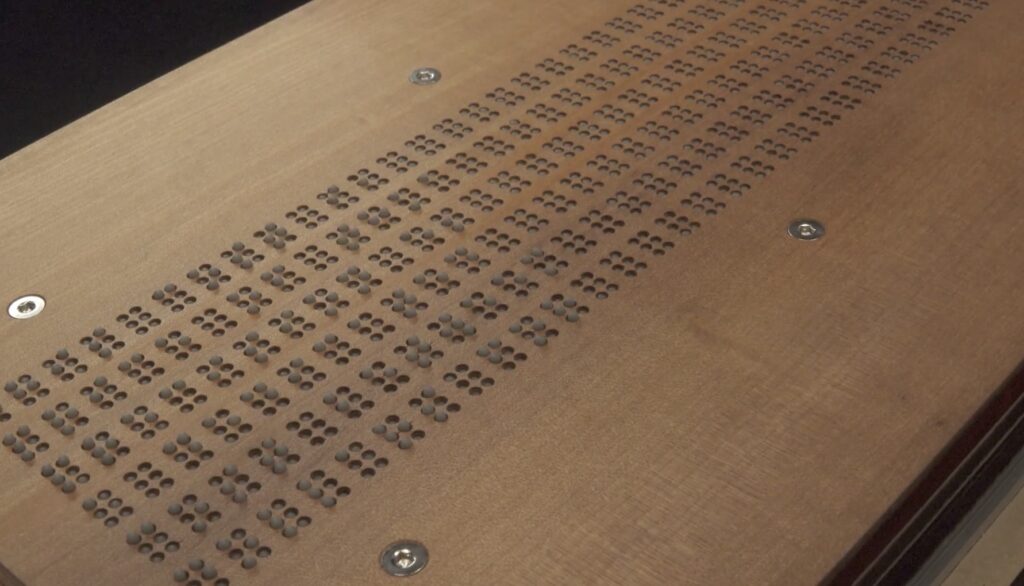
MagnePin Braille Display Mechanism
The scanning mechanism of the MagnePins display utilizes a staggered line of pistons to actuate pins efficiently.

The post Novel mechanism makes refreshable braille displays practical appeared first on Arduino Blog.


Source: Read the original article here.

Discover more tech insights on ByteTrending.

Share this:

  • Share on Facebook (Opens in new window) Facebook
  • Share on Threads (Opens in new window) Threads
  • Share on WhatsApp (Opens in new window) WhatsApp
  • Share on X (Opens in new window) X
  • Share on Bluesky (Opens in new window) Bluesky

Like this:

Like Loading…

Discover more from ByteTrending

Subscribe to get the latest posts sent to your email.
Tags: arduinoBrailleDisplayMagnePinsTactile

Related Posts

industrial automation supporting coverage of industrial automation
AI

How Arduino Powers Smarter Industrial Automation

by Maya Chen
May 5, 2026
Popular

Stretchable OLEDs: A Bright Future for Wearables

by ByteTrending
March 7, 2026
Related image for Interactive 3D Printing
Popular

3Duino: Democratizing Interactive 3D Printing

by ByteTrending
December 4, 2025
Next Post
Related image for genetic variants

Genetic Variants & Your Health: What You Need to Know

Leave a ReplyCancel reply

Recommended

Related image for Ray-Ban hack

Ray-Ban Hack: Disabling the Recording Light

October 24, 2025
Generative Video AI supporting coverage of generative video AI

Generative Video AI Sora’s Debut: Bridging Generative AI Promises

May 5, 2026
Related image for Ray-Ban hack

Ray-Ban Hack: Disabling the Recording Light

October 28, 2025
Diagram comparing Amazon Bedrock and OpenSearch for hybrid RAG search implementation.

Hybrid RAG search Amazon Bedrock vs OpenSearch: Which Search

May 5, 2026
Generative AI inference deployment supporting coverage of Generative AI inference deployment

SageMaker vs Bare Metal for Generative AI Inference Deployment

May 24, 2026
AI agent performance loop supporting coverage of AI agent performance loop

AI Agent Performance Loop: How to Keep AI Agents Reliable After

May 24, 2026
AI sparsity hardware supporting coverage of AI sparsity hardware

AI Sparsity Hardware: How Hardware Sparsity Can Make Massive AI

May 15, 2026
Cybersecurity consultant skills supporting coverage of Cybersecurity consultant skills

Cybersecurity Consultant Skills: What Changes for Enterprise AI

May 15, 2026
ByteTrending

ByteTrending is your hub for technology, gaming, science, and digital culture, bringing readers the latest news, insights, and stories that matter. Our goal is to deliver engaging, accessible, and trustworthy content that keeps you informed and inspired. From groundbreaking innovations to everyday trends, we connect curious minds with the ideas shaping the future, ensuring you stay ahead in a fast-moving digital world.
Read more »

Pages

  • Contact us
  • Privacy Policy
  • Terms of Service
  • About ByteTrending
  • Home
  • Authors
  • AI Models and Releases
  • Consumer Tech and Devices
  • Space and Science Breakthroughs
  • Cybersecurity and Developer Tools
  • Engineering and How Things Work

Categories

  • AI
  • Curiosity
  • Popular
  • Review
  • Science
  • Tech

Follow us

Advertise

Reach a tech-savvy audience passionate about technology, gaming, science, and digital culture.
Promote your brand with us and connect directly with readers looking for the latest trends and innovations.

Get in touch today to discuss advertising opportunities: Click Here

© 2025 ByteTrending. All rights reserved.

No Result
View All Result
  • Home
    • About ByteTrending
    • Contact us
    • Privacy Policy
    • Terms of Service
  • Tech
  • Science
  • Review
  • Popular
  • Curiosity

© 2025 ByteTrending. All rights reserved.

%d


