

The maker movement has always thrived on pushing boundaries, but bringing truly interactive creations to life often feels like navigating a labyrinth of technical hurdles. We’ve all seen ambitious projects promised as game-changers, and while innovation is constant, realizing those promises can be surprisingly difficult – especially when combining the digital world with physical fabrication. The idea of easily creating custom devices that respond dynamically to their environment has long been a tantalizing prospect for hobbyists and professionals alike. Many have attempted it, but the complexity frequently remains a barrier.
At its core, Arduino has empowered countless individuals to build incredible electronic projects by abstracting away much of the underlying hardware intricacies; you define the logic, and Arduino handles the execution. However, integrating that digital control with 3D printing – envisioning objects that aren’t just static forms but responsive systems – presents a significant challenge. Traditionally, this requires deep knowledge in both electronics design and 3D modeling, alongside proficiency in programming and firmware development.
Enter 3Duino, a project aiming to dramatically simplify this process and potentially revolutionize how we approach creation. It’s not hyperbole to suggest that 3Duino could be pivotal in opening up the world of Interactive 3D Printing to a far wider audience than ever before. While early iterations are still under development, the initial results are compelling, hinting at a future where creating interactive, personalized devices is accessible even to those without extensive technical backgrounds. We’ll delve into what makes 3Duino unique and explore its potential to reshape the landscape of digital fabrication.
Understanding the Challenge: Bridging Hardware & Design
Creating interactive 3D-printed devices – think custom controllers with embedded LEDs, responsive toys, or personalized assistive tools – has traditionally been a significant hurdle for anyone lacking specialized expertise. The conventional workflow involves a complex interplay of several distinct software packages and hardware considerations, making it far more involved than simply designing something in a CAD program and hitting ‘print’. Typically, you’d need proficiency in Computer-Aided Design (CAD) to model the physical object, followed by separate work within the Arduino IDE to write code that controls embedded electronics like microcontrollers and sensors. This coding often requires familiarity with circuit design principles and low-level programming concepts.
The challenge isn’t just about learning multiple software tools; it’s also about seamlessly integrating them. Designs created in CAD need to be translated into a format compatible with 3D printing, while the Arduino code needs to precisely control the physical components within that printed object. This requires careful consideration of mechanical constraints – ensuring sensors and LEDs are positioned correctly, wiring is routed properly, and the overall design can physically accommodate the electronics. Errors at any stage in this process – from a misplaced LED hole to a coding mistake – can lead to frustrating debugging sessions and wasted materials.
Furthermore, firmware development—the low-level software that runs directly on the microcontroller—often involves intricate configurations and potentially requires a deeper understanding of hardware architecture. Even experienced makers often find themselves wrestling with these complexities, making it difficult for hobbyists or those new to both 3D printing and electronics to embark on interactive projects. The sheer number of potential points of failure and the lack of easily accessible resources have historically limited who can truly realize the full potential of combining additive manufacturing and embedded systems.
Ultimately, the traditional approach creates a significant barrier to entry, transforming what should be an exciting creative endeavor into a daunting technical challenge. This fragmentation – the separation between design, code, and hardware integration – necessitates specialized skills that are simply not accessible to everyone who might want to bring their interactive 3D-printed ideas to life.
The Traditional Workflow: A Pain Point
Creating interactive 3D-printed objects—devices that combine physical form with electronic functionality—is a significantly more complex process than simply 3D printing a static model. The traditional workflow typically involves multiple distinct software packages, each requiring specialized knowledge and skills. First, a designer uses Computer-Aided Design (CAD) software to create the physical shape of the object. This design is then exported as an STL file for slicing and 3D printing.
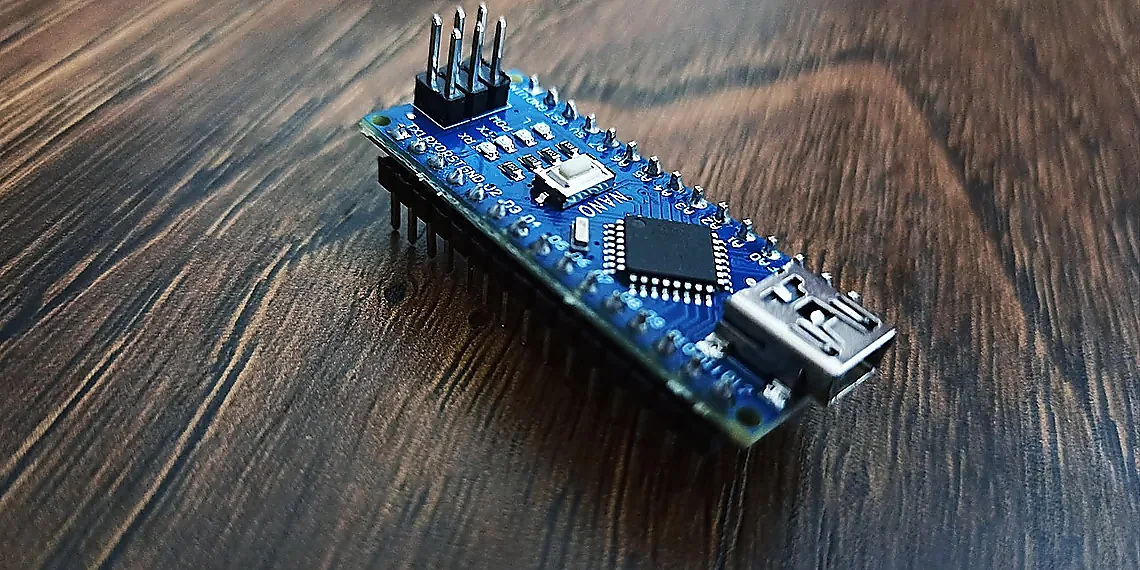
Next comes the electronics integration. An Arduino microcontroller or similar embedded system is commonly used to control lights, sensors, motors, or other interactive elements. Programming this microcontroller requires using the Arduino IDE (or a similar environment) to write code – often in C++ – that defines its behavior. This code must then be compiled and uploaded to the Arduino board. Furthermore, custom firmware development might be necessary for more sophisticated interactions.
The fragmented nature of this process presents a steep learning curve for anyone without prior experience in CAD design, electronics programming, or embedded systems. Each stage introduces potential points of error, from inaccuracies in the 3D model impacting functionality to coding mistakes causing unexpected behavior. Integrating these disparate components—design, code, and hardware—can be time-consuming, frustrating, and often necessitates significant troubleshooting.
3Duino’s Approach: Simplifying the Process
Traditional interactive 3D printing – creating objects that not only have a physical form but also respond to user input or environmental changes – has been notoriously complex. It often requires expertise in multiple disciplines: mechanical design, electronics engineering, Arduino programming, and 3D modeling. This steep learning curve has effectively limited the practice to a relatively small group of experienced makers. 3Duino aims to shatter that barrier by offering a dramatically simplified workflow.
At its core, 3Duino provides a visual design environment where users can intuitively build interactive devices without needing to write lines of code. Instead of directly coding Arduino sketches, users arrange pre-built components – buttons, LEDs, sensors, motors – within a digital workspace and connect them visually. The software then automatically generates the necessary Arduino code in the background, handling the complexities of signal processing and device control. This abstraction significantly lowers the entry point for both beginners and experienced makers looking to accelerate their prototyping process.
What truly sets 3Duino apart is its seamless integration between hardware and software design. As users place components within the visual interface, the system intelligently maps them to corresponding locations within a 3D-printed enclosure. This automatic mapping eliminates tedious manual adjustments, ensuring that all electronic elements fit perfectly inside the printed object. The platform also facilitates easy experimentation; changes made in the visual design are instantly reflected in both the generated code and the virtual model, allowing for rapid iteration and refinement of interactive device designs.
Ultimately, 3Duino’s approach isn’t about replacing existing tools or expertise entirely; it’s about democratizing access to interactive 3D printing. By streamlining the design process and handling much of the technical heavy lifting, 3Duino empowers a wider range of creators – from hobbyists to educators to product designers – to bring their innovative ideas to life.
Visual Design & Hardware Integration

At its core, 3Duino offers a highly accessible visual programming interface designed for users of all skill levels. Rather than requiring proficiency in traditional coding languages like C++, the platform utilizes drag-and-drop blocks to define device behavior and interactions. This approach allows designers and makers to focus on functionality and aesthetics rather than wrestling with complex syntax, significantly lowering the barrier to entry for creating interactive 3D-printed devices.
The visual programming environment seamlessly generates Arduino code in the background. As users arrange and connect blocks representing sensors, actuators, and logic functions, 3Duino automatically constructs the necessary C++ code to control these components. This generated code is then ready for uploading to an Arduino board, effectively abstracting away the intricacies of microcontroller programming. Users can also view and modify the generated code if desired, providing a pathway for more advanced customization.
A particularly innovative feature of 3Duino is its automated hardware mapping capability. The software intelligently maps digital components—like buttons, LEDs, and sensors—to corresponding locations within a custom-designed 3D-printed enclosure. This automation simplifies the often tedious process of physically connecting electronics to a printed case, ensuring proper placement and wiring while minimizing potential errors.
Capabilities & Potential Applications
The true power of 3Duino lies in its ability to transform abstract concepts into tangible, interactive realities. Imagine crafting a custom smart home controller with physical buttons and dials, each meticulously designed and 3D-printed to perfectly match your aesthetic – all programmed and prototyped significantly faster than traditional methods. Or consider building a dynamic educational toy that responds to user interaction, teaching children about mechanics or electronics through playful exploration. The range isn’t limited to simple gadgets; 3Duino opens the door to surprisingly complex prototypes.
For hobbyists, this means drastically reducing the barrier to entry for creating personalized devices and exploring new technological avenues. Forget painstakingly designing each component in separate software packages – 3Duino streamlines the process, allowing rapid experimentation with form and function. Want to build a miniature robotic arm with custom-printed joints and integrated sensors? Or perhaps an interactive art installation that responds to movement and light? 3Duino provides a framework for bringing these ideas to life quickly and iteratively.
Professionals can also leverage 3Duino’s capabilities, particularly in the fields of product design, engineering, and education. Rapid prototyping becomes even more valuable when iterating on designs with physical models that users can interact with directly. Imagine engineers testing ergonomic layouts for tools or designers showcasing interactive features to clients – all with custom-printed prototypes created within hours instead of weeks. This accelerated feedback loop dramatically shortens development cycles and reduces costs.
Beyond the immediate applications, 3Duino’s versatility hints at a future where personalized electronics are commonplace. From assistive devices tailored to individual needs to unique interactive displays for retail spaces, the potential is vast. As the tool matures and the community expands, we can expect to see even more innovative uses emerge, pushing the boundaries of what’s possible with interactive 3D printing.
From Simple Gadgets to Complex Prototypes
The simplicity of 3Duino allows users to move beyond static 3D prints and create genuinely interactive devices. At the most basic level, this translates into projects like LED matrices embedded within printed enclosures, creating dynamic displays for simple games or information panels. More advanced applications include tactile buttons and switches integrated directly into a product’s housing – imagine a custom-designed remote control with haptic feedback molded directly as part of its form. These relatively straightforward builds demonstrate 3Duino’s ability to bridge the gap between digital design and physical interaction.
Stepping up in complexity, 3Duino facilitates the creation of functional robotic systems. Users can rapidly prototype articulated limbs or custom grippers by combining printed mechanical components with integrated sensors and actuators controlled via Arduino code. For instance, a student could easily design and build a small automated sorting machine for recycling, or an engineer could quickly test different gripper designs for a pick-and-place robot – all within a short timeframe thanks to 3Duino’s streamlined workflow.
The true power of 3Duino lies in its potential for rapid prototyping and experimentation. The ability to iterate on designs quickly, combining physical form factors with embedded electronics, dramatically reduces the time and cost associated with traditional product development. This opens up exciting possibilities for hobbyists exploring new gadget ideas, as well as professionals seeking to rapidly test concepts and refine interactive device designs before committing to full-scale production.
The Future of Interactive 3D Printing
The emergence of tools like 3Duino represents a significant shift in the landscape of hardware creation, potentially fulfilling the long-held promise of democratizing complex engineering disciplines. While many ‘easy’ software solutions fall short of their ambitious goals, 3Duino’s focus on interactive 3D printing—combining Arduino’s accessible microcontroller platform with readily available 3D printing technology—appears to be a more grounded and achievable ambition. It lowers the barrier to entry for individuals and small teams who previously lacked the specialized skills or resources required to design and build custom, functional devices integrating electronics and mechanics.
The implications of this democratization are far-reaching. Imagine educators using 3Duino to create engaging, interactive learning tools tailored to specific curricula; makers experimenting with novel designs without wrestling with intricate CAD software and circuit schematics; or small businesses prototyping customized products rapidly and cost-effectively. Beyond simply producing existing designs, 3Duino fosters a culture of innovation by enabling users to explore new possibilities at the intersection of physical objects and digital interaction – think custom assistive devices, personalized home automation systems, or unique interactive art installations.
Of course, limitations remain. Currently, while 3Duino simplifies the design process, it’s not entirely ‘plug-and-play’. Some understanding of electronics and basic programming is still beneficial for troubleshooting and advanced customization. The complexity of integrating sensors, actuators, and power management will likely require some learning curve. However, future developments could address these challenges; imagine AI-powered design assistance that automatically optimizes designs based on user input or anticipates potential issues during the printing and assembly process.
Looking ahead, we can anticipate further integrations and refinements within the interactive 3D printing ecosystem. Seamless connections with cloud platforms for sharing designs and collaborating on projects are likely. Improved simulation capabilities could allow users to test their creations virtually before committing to physical fabrication. Ultimately, tools like 3Duino aren’t just about making interactive devices easier to build; they’re about unlocking the creative potential of a wider audience and driving innovation across diverse fields.
Democratization & Beyond
The emergence of platforms like 3Duino represents a significant step towards democratizing interactive 3D printing. Traditionally, creating custom devices with embedded electronics required specialized skills in both hardware engineering (circuit design, microcontroller programming) and mechanical design (CAD modeling, 3D printing). 3Duino aims to bridge this gap by providing a user-friendly interface that simplifies the process of designing and assembling these interactive objects. This lowers the barrier to entry for makers, hobbyists, educators, and even small businesses who previously lacked the resources or expertise to pursue such projects.
The potential impact extends beyond individual creators. Educators can leverage 3Duino to create engaging learning tools that combine physical interaction with digital functionality – think custom-designed robots demonstrating basic programming principles or interactive models illustrating complex scientific concepts. Small businesses could use it to rapidly prototype and produce specialized devices for their customers, offering personalized solutions without the overhead of a large engineering team. While not eliminating the need for technical understanding entirely, 3Duino abstracts away much of the complexity, allowing users to focus on the creative aspects of design.
Looking ahead, we can envision even more sophisticated integrations. Imagine AI-powered design assistance that suggests optimal component placement based on desired functionality and printing constraints or automatically generates code snippets for common interactions. While challenges remain – particularly in ensuring robust designs that account for material properties and mechanical stress – the trajectory points towards increasingly accessible and powerful tools for interactive hardware creation, fostering a new wave of innovation across various fields.
The journey of 3D printing has always been about pushing boundaries, but 3Duino represents a significant leap forward in accessibility and creative potential. By simplifying complex control systems and opening up avenues for real-time interaction, it’s poised to reshape how we conceive of and build with additive manufacturing technologies.
We’ve seen firsthand how 3Duino empowers makers of all skill levels – from seasoned engineers to curious hobbyists – to create truly unique experiences. Imagine a printed object that responds dynamically to its environment or user input; that’s the promise of interactive 3D printing, and 3Duino is making that vision a tangible reality.
The potential for innovation across fields like education, art, product design, and even robotics is immense. This isn’t just about enhancing existing applications; it’s about unlocking entirely new possibilities we haven’t yet imagined. The combination of accessible hardware and open-source software creates a powerful platform for exploration and experimentation.
Ultimately, 3Duino lowers the barrier to entry for anyone wanting to delve into sophisticated control and customization within their 3D printing projects. It’s more than just a tool; it’s an invitation to participate in a rapidly evolving landscape of digital fabrication. To learn more about the technical details and get started building your own interactive creations, we encourage you to dive deeper – check out the full article on the Arduino Blog: [Link to the Arduino Blog article] and give 3Duino a try!
Continue reading on ByteTrending:
Discover more tech insights on ByteTrending ByteTrending.
Discover more from ByteTrending
Subscribe to get the latest posts sent to your email.