
ByteTrending
  • Home
    • About ByteTrending
    • Contact us
    • Privacy Policy
    • Terms of Service
  • Tech
  • Science
  • Review
  • Popular
  • Curiosity
Donate
No Result
View All Result
ByteTrending
No Result
View All Result
Home Science
Related image for inversion

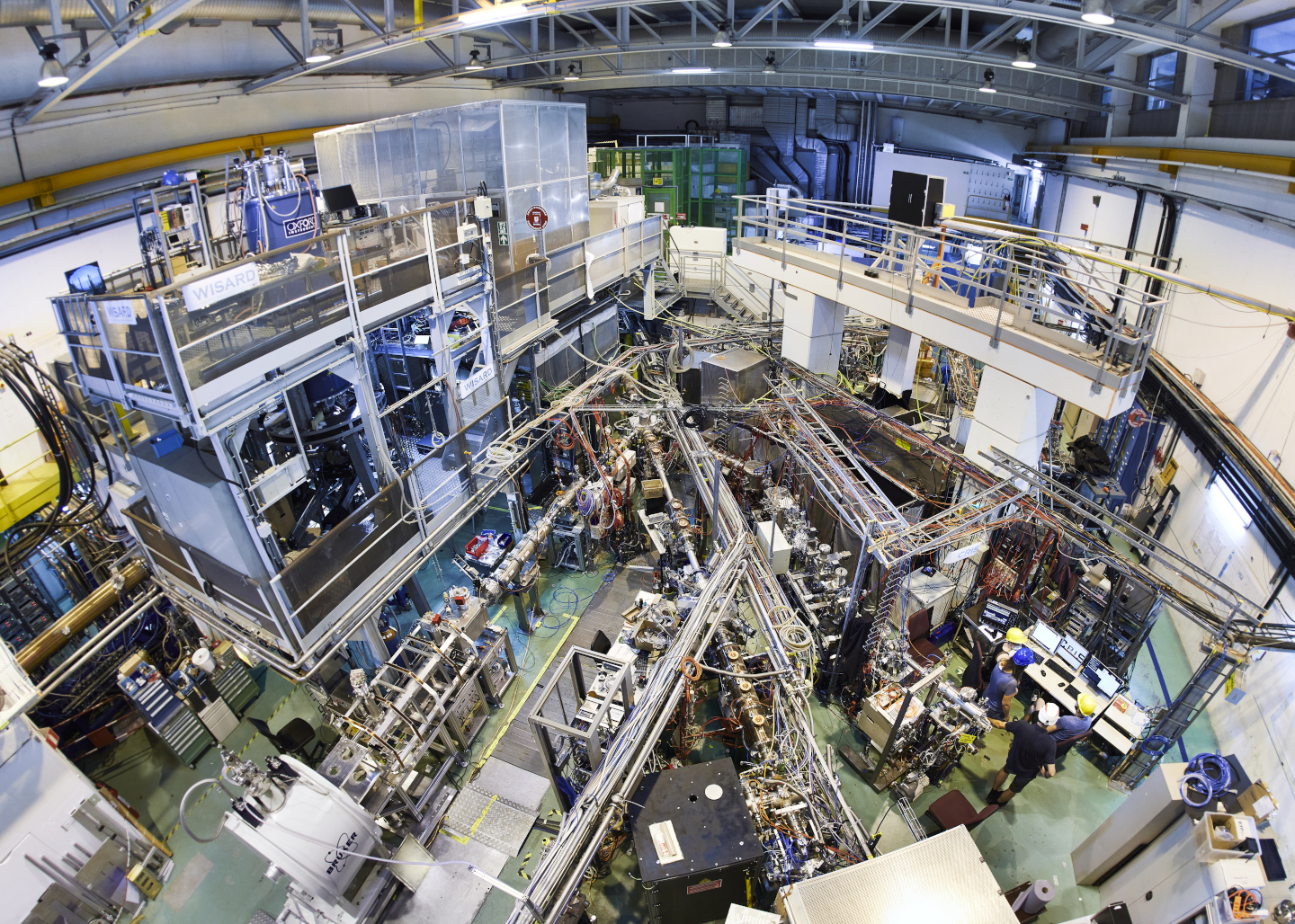
ISOLDE investigates island of inversion

ByteTrending by ByteTrending
October 5, 2025
in Science, Tech
Reading Time: 2 mins read
0
Share on FacebookShare on ThreadsShare on BlueskyShare on Twitter

Related Post

ai quantum computing supporting coverage of ai quantum computing

ai quantum computing How Artificial Intelligence is Shaping

May 5, 2026
Related image for physics-aware deep learning

Physics-Aware Deep Learning: Beyond Bigger Models

May 24, 2026

Quantum Cooling Breakthrough

March 9, 2026

Beyond Wormholes: Unveiling a Deeper Universe

March 8, 2026

Uncovering the Secrets of Nuclear Inversion at ISOLDE

Scientists are continually probing the mysteries surrounding the atomic nucleus, seeking to understand the forces that bind protons and neutrons together. A recent study from CERN’s ISOLDE facility sheds light on a fascinating phenomenon called an ‘island of inversion,’ pushing the boundaries of nuclear physics. Furthermore, this research significantly contributes to our understanding of nuclear structure.

Understanding Islands of Inversion

What is an Island of Inversion?

The nuclear shell model, a cornerstone of understanding atomic nuclei, predicts that protons and neutrons arrange themselves in distinct energy levels or ‘shells.’ When these shells are completely filled, the nucleus is particularly stable – considered ‘magic’. However, when the mix of protons and neutrons isn’t quite right, this model breaks down. These regions where the standard shell structure fails give rise to what scientists call ‘islands of inversion.’ Notably, within these islands, neutrons occupy unexpected energy levels, leading to nuclei with unique shapes and properties. For example, chromium-61 demonstrates such unusual behavior.

The Significance of Chromium-61

Chromium-61 serves as a prime example within these regions of inversion. Researchers have focused on this nucleus to understand the characteristics that define these atypical nuclei. As a result of its unique neutron composition, chromium-61 exhibits properties markedly different from those predicted by standard nuclear models. In addition, studying isotopes like chromium-61 provides valuable insights into how nuclei behave when pushed beyond conventional stability limits.

Exploring Chromium-61 and Mapping the Island’s Border

Experimental Techniques at ISOLDE

A research team led by Louis Lalanne focused on chromium-61, a nucleus with 24 protons and 37 neutrons. Using ISOLDE, researchers created and studied this relatively unexplored nucleus. The CRIS (Collinear Resonance Ionisation Spectroscopy) apparatus at ISOLDE allowed for highly precise measurements of chromium-61’s spin and magnetic dipole moment – crucial properties that reveal the internal structure of the nucleus. Therefore, by combining these experimental findings with theoretical calculations, the team pinpointed the western border of this ‘island’. The data revealed a unique shell configuration, situated between what’s expected outside and inside the island of inversion.

Refining Nuclear Models

The discoveries at ISOLDE are vital for refining existing nuclear models. These models attempt to predict the behavior of nuclei based on fundamental forces. However, these predictions often fall short when dealing with extreme neutron-to-proton ratios found within islands of inversion. Furthermore, experimental data from CRIS helps constrain theoretical calculations and improve the accuracy of these models. On the other hand, accurately mapping these regions allows scientists to develop a more comprehensive understanding of nuclear structure.

The Broader Implications for Nuclear Physics

“The ultimate goal is to understand how nuclear structure emerges and evolves across the nuclear landscape,” explains Louis Lalanne. Discovering these ‘islands’ challenges existing models and helps physicists build a more complete picture of nuclear interactions. Therefore, this recent discovery contributes valuable data to refine those models and deepen our understanding. In addition, research into inversion regions like this is crucial for advancing the field of nuclear physics.


Source: Read the original article here.

Discover more tech insights on ByteTrending.

Share this:

  • Share on Facebook (Opens in new window) Facebook
  • Share on Threads (Opens in new window) Threads
  • Share on WhatsApp (Opens in new window) WhatsApp
  • Share on X (Opens in new window) X
  • Share on Bluesky (Opens in new window) Bluesky

Like this:

Like Loading…

Discover more from ByteTrending

Subscribe to get the latest posts sent to your email.

Tags: CERNChromiumISOLDENucleusPhysics

Related Posts

ai quantum computing supporting coverage of ai quantum computing
AI

ai quantum computing How Artificial Intelligence is Shaping

by Sofia Navarro
May 5, 2026
Related image for physics-aware deep learning
Popular

Physics-Aware Deep Learning: Beyond Bigger Models

by ByteTrending
May 24, 2026
Related image for quantum cooling
Popular

Quantum Cooling Breakthrough

by ByteTrending
March 9, 2026
Next Post
Related image for borderlands4

Borderlands 4: A Guide to Campaign Bosses & How to Beat Them

Leave a ReplyCancel reply

Recommended

Related image for Ray-Ban hack

Ray-Ban Hack: Disabling the Recording Light

October 24, 2025
Generative Video AI supporting coverage of generative video AI

Generative Video AI Sora’s Debut: Bridging Generative AI Promises

May 5, 2026
Related image for Ray-Ban hack

Ray-Ban Hack: Disabling the Recording Light

October 28, 2025
Diagram comparing Amazon Bedrock and OpenSearch for hybrid RAG search implementation.

Hybrid RAG search Amazon Bedrock vs OpenSearch: Which Search

May 5, 2026
Generative AI inference deployment supporting coverage of Generative AI inference deployment

SageMaker vs Bare Metal for Generative AI Inference Deployment

May 24, 2026
AI agent performance loop supporting coverage of AI agent performance loop

AI Agent Performance Loop: How to Keep AI Agents Reliable After

May 24, 2026
AI sparsity hardware supporting coverage of AI sparsity hardware

AI Sparsity Hardware: How Hardware Sparsity Can Make Massive AI

May 15, 2026
Cybersecurity consultant skills supporting coverage of Cybersecurity consultant skills

Cybersecurity Consultant Skills: What Changes for Enterprise AI

May 15, 2026
ByteTrending

ByteTrending is your hub for technology, gaming, science, and digital culture, bringing readers the latest news, insights, and stories that matter. Our goal is to deliver engaging, accessible, and trustworthy content that keeps you informed and inspired. From groundbreaking innovations to everyday trends, we connect curious minds with the ideas shaping the future, ensuring you stay ahead in a fast-moving digital world.
Read more »

Pages

  • Contact us
  • Privacy Policy
  • Terms of Service
  • About ByteTrending
  • Home
  • Authors
  • AI Models and Releases
  • Consumer Tech and Devices
  • Space and Science Breakthroughs
  • Cybersecurity and Developer Tools
  • Engineering and How Things Work

Categories

  • AI
  • Curiosity
  • Popular
  • Review
  • Science
  • Tech

Follow us

Advertise

Reach a tech-savvy audience passionate about technology, gaming, science, and digital culture.
Promote your brand with us and connect directly with readers looking for the latest trends and innovations.

Get in touch today to discuss advertising opportunities: Click Here

© 2025 ByteTrending. All rights reserved.

No Result
View All Result
  • Home
    • About ByteTrending
    • Contact us
    • Privacy Policy
    • Terms of Service
  • Tech
  • Science
  • Review
  • Popular
  • Curiosity

© 2025 ByteTrending. All rights reserved.

%d