ByteTrending
  • Home
    • About ByteTrending
    • Contact us
    • Privacy Policy
    • Terms of Service
  • Tech
  • Science
  • Review
  • Popular
  • Curiosity
Donate
No Result
View All Result
ByteTrending
No Result
View All Result
Home Curiosity
Related image for lunar network

Lunar Network: The Future of Decentralized Finance?

ByteTrending by ByteTrending
October 3, 2025
in Curiosity, Tech
Reading Time: 3 mins read
0
Share on FacebookShare on ThreadsShare on BlueskyShare on Twitter

2 Min Read

Building a Lunar Network: Johnson Tests Wireless Technologies for the Moon
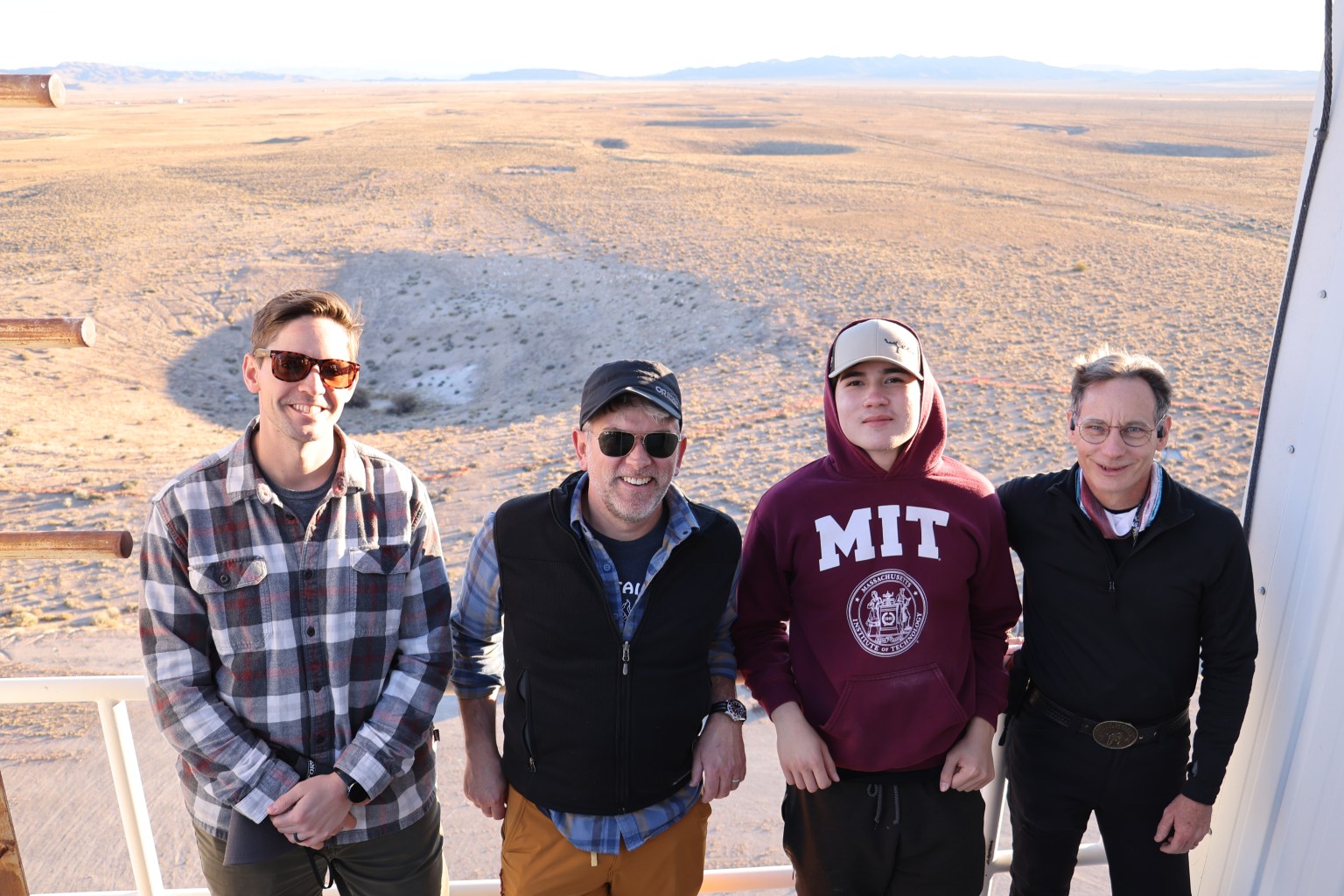
A group of people stand together at a test site in the desert, with wide open terrain and craters in the background.
From left, Johnson Exploration Wireless Laboratory (JEWL) Software Lead William Dell; Lunar 3GPP Principal Investigator Raymond Wagner; JEWL intern Harlan Phillips; and JEWL Lab Manager Chatwin Lansdowne.
Credits:
Nevada Space Proving Grounds (NSPG)

NASA engineers are strapping on backpacks loaded with radios, cameras, and antennas to test technology that might someday keep explorers connected on the lunar surface. Their mission: test how astronauts on the Moon will stay connected during Artemis spacewalks using 3GPP (LTE/4G and 5G) and Wi-Fi technologies. As NASA prepares for a renewed presence on the Moon, establishing reliable communication networks is crucial for future missions and scientific endeavors. The concept of a lunar network represents a significant advancement in enabling sustained lunar exploration.

Ensuring Lunar Connectivity for Artemis Missions

As NASA prepares to return humans to the Moon with the Artemis program, establishing reliable communication networks on the lunar surface becomes paramount. Astronauts venturing beyond a central habitat will need constant connectivity for data transmission, navigation, and even emergency situations. Traditional satellite-based communications face challenges due to delays and limited bandwidth. To address this, NASA’s Johnson Space Center is rigorously testing terrestrial wireless technologies adapted for the lunar environment. The future of space exploration hinges on robust lunar network infrastructure.


Related Post

Related image for NOMA Optimization

Optimizing NOMA with Deep Reinforcement Learning

March 11, 2026
Related image for lunar rover charge

Lunar Rover Charge Buildup: Avoiding Electrical Hazards

March 10, 2026

SLS Rocket: Artemis II’s Launchpad Arrival

March 9, 2026

Lunar Nuclear Reactor: Powering Future Missions

February 1, 2026

Testing Wireless Technologies in a Simulated Lunar Landscape

The Johnson Exploration Wireless Laboratory (JEWL) at JSC is leading these crucial tests. Engineers are utilizing a simulated lunar landscape—essentially, a desert environment that mimics the Moon’s terrain—to evaluate 3GPP-based technologies, including LTE/4G and 5G cellular networks, alongside Wi-Fi solutions. Researchers wear backpacks equipped with radios, cameras, and antennas to simulate astronaut equipment and movement. These tests assess factors like signal strength, latency (delay), and data rates under varying conditions. Furthermore, the team is exploring how to mitigate interference from lunar dust, a significant challenge for long-term operations.

Lunar Landscape with Astronauts
Simulated lunar environment used for wireless technology testing.

Notably, the challenges presented by the Moon’s unique environment require innovative solutions. For example, deploying relay stations to extend network coverage is being considered, alongside developing specialized antennas optimized for lunar conditions. Moreover, engineers are diligently working to ensure these technologies can withstand extreme temperatures and operate reliably in a vacuum.

The Future of Lunar Communications

These tests represent a vital step towards establishing a robust, reliable communication infrastructure on the Moon. Successful implementation will not only support Artemis missions but will pave the way for future long-term lunar bases and resource utilization activities. By adapting proven wireless technologies and pushing the boundaries of innovation, NASA is ensuring astronauts can stay connected and productive during their critical work on the lunar network. Ultimately, a well-designed lunar network will be essential for expanding human presence beyond Earth.


Source: Read the original article here.

Discover more tech insights on ByteTrending.

Share this:

  • Share on Facebook (Opens in new window) Facebook
  • Share on Threads (Opens in new window) Threads
  • Share on WhatsApp (Opens in new window) WhatsApp
  • Share on X (Opens in new window) X
  • Share on Bluesky (Opens in new window) Bluesky

Like this:

Like Loading...

Discover more from ByteTrending

Subscribe to get the latest posts sent to your email.
Tags: ArtemisMoonWireless

Related Posts

Related image for NOMA Optimization
Popular

Optimizing NOMA with Deep Reinforcement Learning

by ByteTrending
March 11, 2026
Related image for lunar rover charge
Popular

Lunar Rover Charge Buildup: Avoiding Electrical Hazards

by ByteTrending
March 10, 2026
Related image for SLS Rocket
Popular

SLS Rocket: Artemis II’s Launchpad Arrival

by ByteTrending
March 9, 2026
Next Post
AI-generated image for underwater vehicle

Build a Tiny Open-Source Underwater Vehicle

Leave a ReplyCancel reply

Recommended

Related image for PuzzlePlex

PuzzlePlex: Evaluating AI Reasoning with Complex Games

October 11, 2025
Related image for Ray-Ban hack

Ray-Ban Hack: Disabling the Recording Light

October 24, 2025
Related image for Ray-Ban hack

Ray-Ban Hack: Disabling the Recording Light

October 28, 2025
Kubernetes v1.35 supporting coverage of Kubernetes v1.35

How Kubernetes v1.35 Streamlines Container Management

March 26, 2026
Amazon Bedrock supporting coverage of Amazon Bedrock

How Amazon Bedrock’s New Zealand Expansion Changes Generative AI

April 10, 2026
data-centric AI supporting coverage of data-centric AI

How Data-Centric AI is Reshaping Machine Learning

April 3, 2026
SpaceX rideshare supporting coverage of SpaceX rideshare

SpaceX rideshare Why SpaceX’s Rideshare Mission Matters for

April 2, 2026
robotics supporting coverage of robotics

How CES 2026 Showcased Robotics’ Shifting Priorities

April 2, 2026
ByteTrending

ByteTrending is your hub for technology, gaming, science, and digital culture, bringing readers the latest news, insights, and stories that matter. Our goal is to deliver engaging, accessible, and trustworthy content that keeps you informed and inspired. From groundbreaking innovations to everyday trends, we connect curious minds with the ideas shaping the future, ensuring you stay ahead in a fast-moving digital world.
Read more »

Pages

  • Contact us
  • Privacy Policy
  • Terms of Service
  • About ByteTrending
  • Home
  • Authors
  • AI Models and Releases
  • Consumer Tech and Devices
  • Space and Science Breakthroughs
  • Cybersecurity and Developer Tools
  • Engineering and How Things Work

Categories

  • AI
  • Curiosity
  • Popular
  • Review
  • Science
  • Tech

Follow us

Advertise

Reach a tech-savvy audience passionate about technology, gaming, science, and digital culture.
Promote your brand with us and connect directly with readers looking for the latest trends and innovations.

Get in touch today to discuss advertising opportunities: Click Here

© 2025 ByteTrending. All rights reserved.

No Result
View All Result
  • Home
    • About ByteTrending
    • Contact us
    • Privacy Policy
    • Terms of Service
  • Tech
  • Science
  • Review
  • Popular
  • Curiosity

© 2025 ByteTrending. All rights reserved.

%d