
ByteTrending
  • Home
    • About ByteTrending
    • Contact us
    • Privacy Policy
    • Terms of Service
  • Tech
  • Science
  • Review
  • Popular
  • Curiosity
Donate
No Result
View All Result
ByteTrending
No Result
View All Result
Home Curiosity
AI-generated image for underwater vehicle

Build a Tiny Open-Source Underwater Vehicle

ByteTrending by ByteTrending
October 3, 2025
in Curiosity, Tech
Reading Time: 3 mins read
0
Share on FacebookShare on ThreadsShare on BlueskyShare on Twitter

The latest issue of Raspberry Pi Official Magazine dives into marine technology, discovering some Raspberry Pi–powered sea-based projects. We particularly liked this guide on how to build a tiny open-source underwater vehicle with Raspberry Pi Pico.

About a decade ago, we were inspired by a workshop at Liverpool Makefest where an organisation called the Dark Water Foundation made all manner of water monitoring devices.
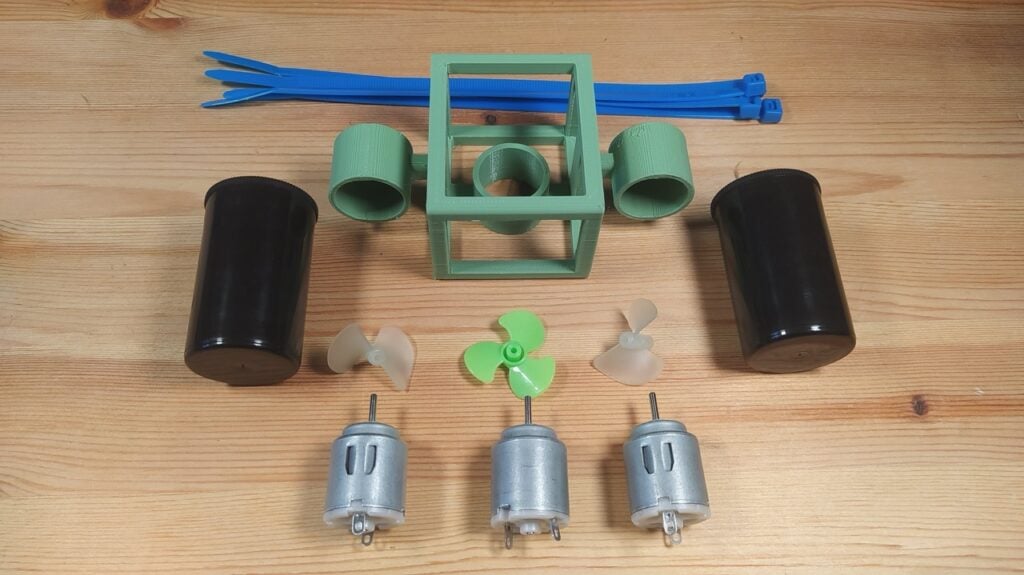
Figure 1: The main structural components for a TOUV — a chassis frame, 3 × 30mm motors, 2 × 35mm film canisters, some propellers, and some cable ties

Dark Water Foundation got attendees to make miniature palm-sized underwater rovers using Lego, 35mm film canisters, and some small brushed DC motors. “DC motors?” you might ask. Well, the revelation on seeing this workshop was that small 3–6V DC motors run really well in fresh water without any attempts to waterproof them. However, it’s worth noting that this may shorten their lifespan somewhat, and a little drying out is needed after each mission.

Many of the original links to this workshop are now missing; so, with absolute respect for the original project, we decided to make a more modern attempt influenced by that original design. There still is an Instructables page with some images and component lists, but sadly the links to components from the page aren’t currently working, so we’ve made some educated guesses and experimented to come up with a working solution.
Related Post

robotics supporting coverage of robotics

How CES 2026 Showcased Robotics’ Shifting Priorities

April 2, 2026
robot triage featured illustration

Robot Triage: Human-Machine Collaboration in Crisis

March 20, 2026

Automated Robotics: The RoboReward Revolution

March 10, 2026

Automated Robotics: The RoboReward Revolution

March 10, 2026
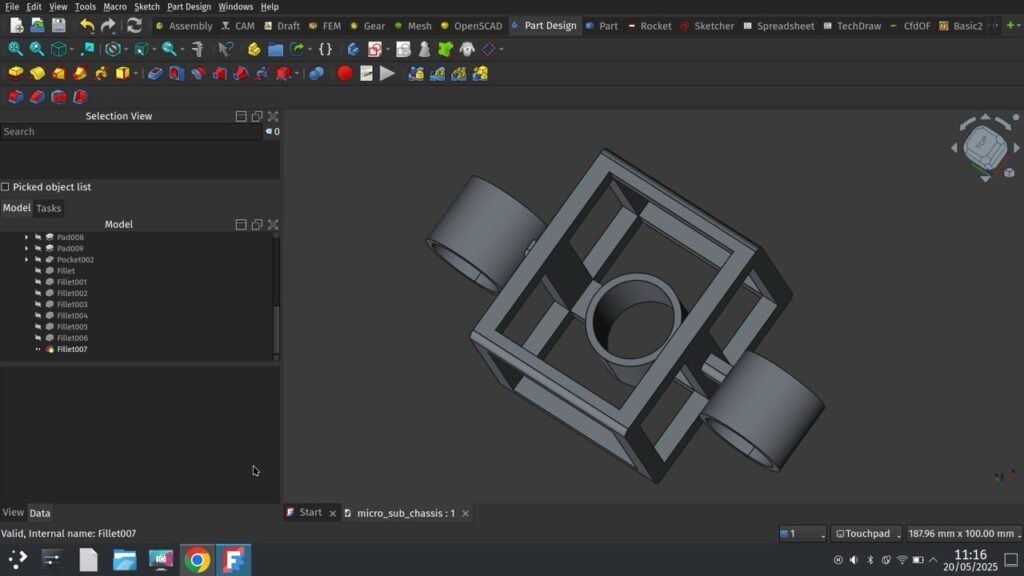
Figure 2: Designing the chassis in FreeCAD was a pretty simple task

The original design was around a 60–75mm cube for the frame made from Lego. We set out to 3D-print a similar-sized frame using the free and open-source FreeCAD package to realise our ideas. The original design used 30mm brushed DC motors and we discovered that these at one time were rated to 5400rpm. We couldn’t find that exact specification, but found some close enough listed as 3–6V and 6500rpm. These are perfect because we intend to make a moderately more advanced controller for our design — we can use motor drivers to control our speed.

Once the motors arrived (Figure 1), we could then grab a set of callipers and take some motor measurements and begin our CAD work. In FreeCAD, we used the Part Design workbench to create the chassis, building up the frame by adding sketches to faces and extruding them (Figure 2). Our main chassis area is a cuboid frame with three thrusters: two set up for forward and turning (and potentially reverse if needed) on the sides of the frame, and one inside the frame, set in the vertical axis to control vertical position. The two horizontal thruster mounts are offset slightly from the centre in an attempt to distribute the weight a little.
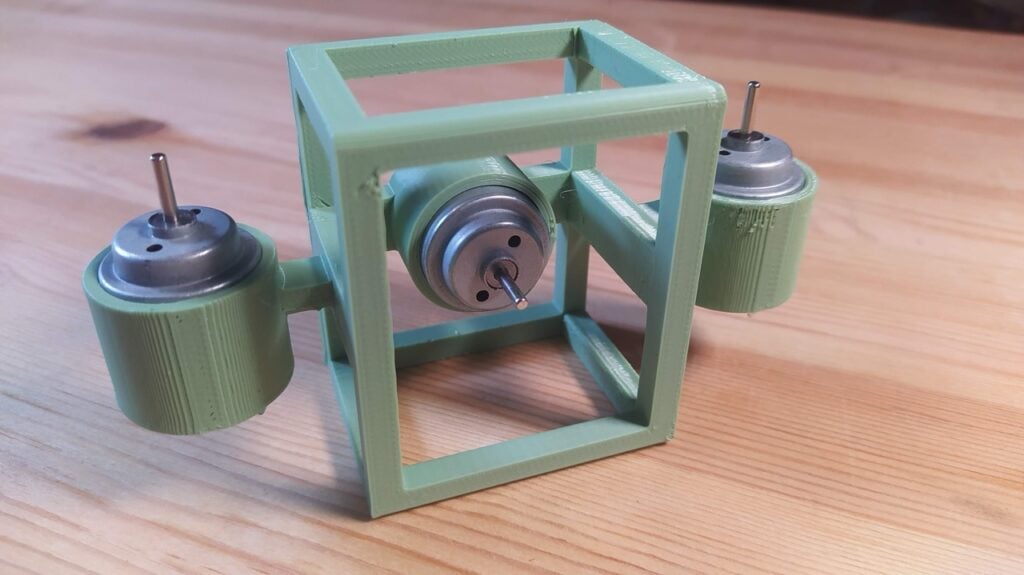
Figure 3: Ensuring a snug fit for the motors is crucial.

Getting the motor shaft diameter right was key, and we had to iterate on our design quite a few times. We found that a 5mm diameter shaft fits nicely into the film canisters, but they aren’t all created equal – some are slightly too tight!

Controlling Your TOUV

The Raspberry Pi Pico is used as the brains of this project, handling motor control and potentially providing a means of communication with other devices. The motors require an H-bridge circuit to change their polarity, which allows us to reverse them and vary their speed. A simple implementation would be using a dedicated driver IC such as the L298N. This chip can drive two DC motors independently; however, we’re planning to use more advanced drivers in future iterations of this underwater vehicle project.

Future Development

There’s still lots that could be improved and expanded on for this open-source underwater vehicle. For example, one idea is to add a depth sensor so that the TOUV can maintain a specific depth, or perhaps even follow a predefined path.


Source: Read the original article here.

Discover more tech insights on ByteTrending.

Share this:

  • Share on Facebook (Opens in new window) Facebook
  • Share on Threads (Opens in new window) Threads
  • Share on WhatsApp (Opens in new window) WhatsApp
  • Share on X (Opens in new window) X
  • Share on Bluesky (Opens in new window) Bluesky

Like this:

Like Loading...

Discover more from ByteTrending

Subscribe to get the latest posts sent to your email.
Tags: DIYPicoRaspberryPiRoboticsunderwater

Related Posts

robotics supporting coverage of robotics
AI

How CES 2026 Showcased Robotics’ Shifting Priorities

by Ricardo Nowicki
April 2, 2026
robot triage featured illustration
Science

Robot Triage: Human-Machine Collaboration in Crisis

by ByteTrending
March 20, 2026
Related image for RoboReward Robotics
Popular

Automated Robotics: The RoboReward Revolution

by ByteTrending
March 10, 2026
Next Post
Related image for AI viruses

AI Viruses: The Looming Threat You Need to Know

Leave a ReplyCancel reply

Recommended

Related image for PuzzlePlex

PuzzlePlex: Evaluating AI Reasoning with Complex Games

October 11, 2025
Related image for Ray-Ban hack

Ray-Ban Hack: Disabling the Recording Light

October 24, 2025
Related image for Ray-Ban hack

Ray-Ban Hack: Disabling the Recording Light

October 28, 2025
Kubernetes v1.35 supporting coverage of Kubernetes v1.35

How Kubernetes v1.35 Streamlines Container Management

March 26, 2026
data-centric AI supporting coverage of data-centric AI

How Data-Centric AI is Reshaping Machine Learning

April 3, 2026
SpaceX rideshare supporting coverage of SpaceX rideshare

SpaceX rideshare Why SpaceX’s Rideshare Mission Matters for

April 2, 2026
robotics supporting coverage of robotics

How CES 2026 Showcased Robotics’ Shifting Priorities

April 2, 2026
Kubernetes v1.35 supporting coverage of Kubernetes v1.35

How Kubernetes v1.35 Streamlines Container Management

March 26, 2026
ByteTrending

ByteTrending is your hub for technology, gaming, science, and digital culture, bringing readers the latest news, insights, and stories that matter. Our goal is to deliver engaging, accessible, and trustworthy content that keeps you informed and inspired. From groundbreaking innovations to everyday trends, we connect curious minds with the ideas shaping the future, ensuring you stay ahead in a fast-moving digital world.
Read more »

Pages

  • Contact us
  • Privacy Policy
  • Terms of Service
  • About ByteTrending
  • Home
  • Authors
  • AI Models and Releases
  • Consumer Tech and Devices
  • Space and Science Breakthroughs
  • Cybersecurity and Developer Tools
  • Engineering and How Things Work

Categories

  • AI
  • Curiosity
  • Popular
  • Review
  • Science
  • Tech

Follow us

Advertise

Reach a tech-savvy audience passionate about technology, gaming, science, and digital culture.
Promote your brand with us and connect directly with readers looking for the latest trends and innovations.

Get in touch today to discuss advertising opportunities: Click Here

© 2025 ByteTrending. All rights reserved.

No Result
View All Result
  • Home
    • About ByteTrending
    • Contact us
    • Privacy Policy
    • Terms of Service
  • Tech
  • Science
  • Review
  • Popular
  • Curiosity

© 2025 ByteTrending. All rights reserved.

%d