
Unlocking New Frontiers in Theoretical Computer Science with AI
Theoretical computer science, the foundation of algorithms and computational complexity, has traditionally relied on human ingenuity. Now, a groundbreaking approach is emerging: leveraging artificial intelligence as a research partner. Google Research’s AlphaEvolve demonstrates this powerfully, pushing the boundaries of what’s possible in algorithm discovery and optimization.
What is AlphaEvolve?
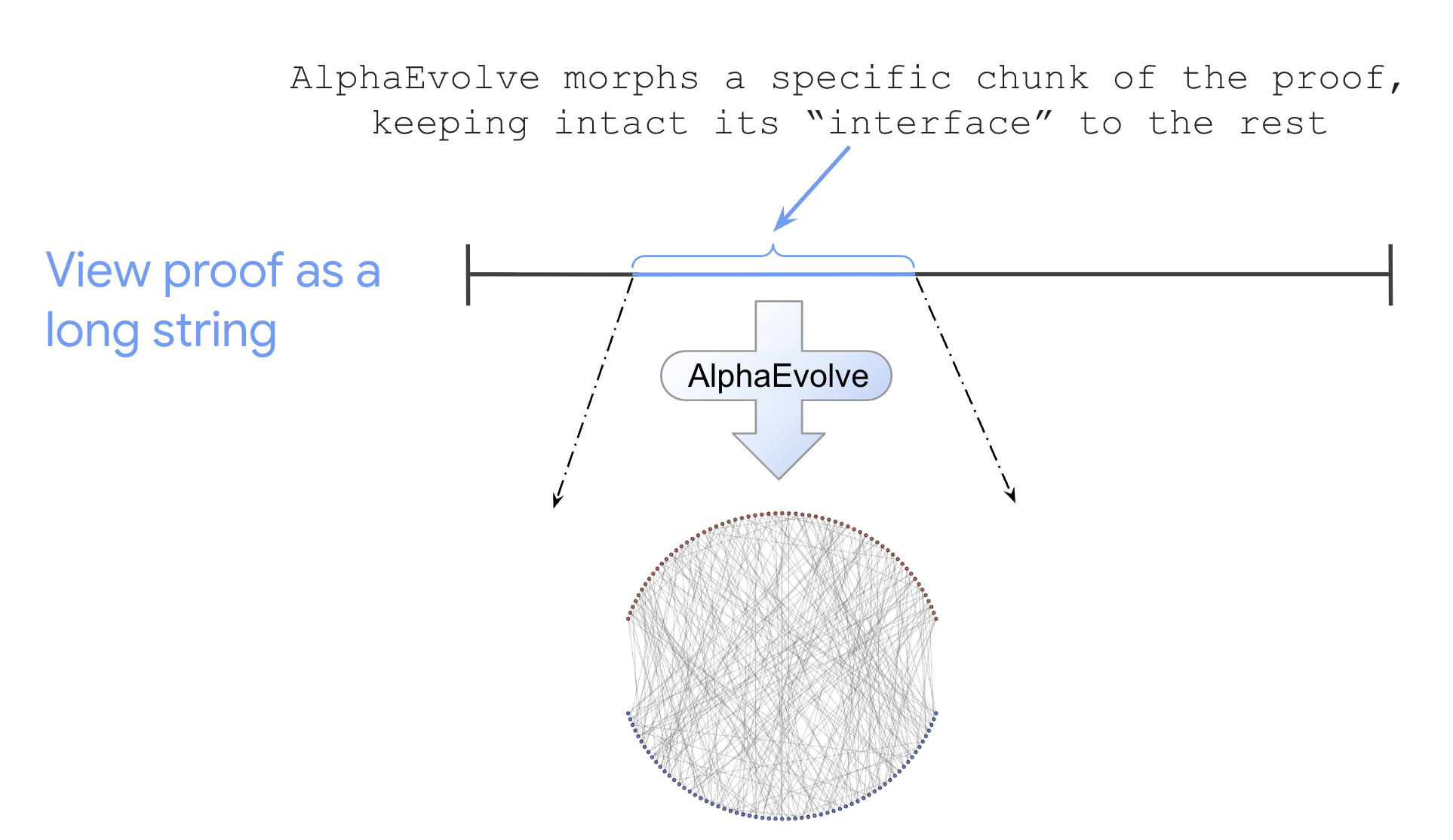
AlphaEvolve isn’t just another machine learning model; it’s a novel evolutionary algorithm designed to generate new algorithms. It operates within a defined computational space, exploring potential solutions through a process similar to natural selection. The system defines a ‘program’ as a directed acyclic graph (DAG), where nodes represent operations and edges define the flow of data. AlphaEvolve then evolves these DAGs over generations, guided by a fitness function that evaluates their performance on specific computational tasks.
Unlike traditional AI approaches that focus on optimizing existing algorithms, AlphaEvolve discovers entirely new ones. This capability opens up exciting possibilities for solving problems previously considered intractable or requiring years of human effort. Furthermore, the system’s ability to autonomously generate algorithms represents a significant advancement in computational research.
Key Features & Methodology
- Evolutionary Algorithm: AlphaEvolve mimics biological evolution to explore the space of possible algorithms.
- Directed Acyclic Graphs (DAGs): Algorithms are represented as DAGs, allowing for complex computational structures.
- Fitness Function Driven Optimization: Performance is measured and used to guide the evolutionary process.
- Automated Discovery: AlphaEvolve generates algorithms without human intervention in the design process.
AlphaEvolve’s Breakthrough: The Sorting Network Revolution
The initial success of AlphaEvolve lies in its ability to generate sorting networks – algorithms for efficiently arranging data in a specific order. Researchers tasked AlphaEvolve with creating sorting networks that outperform existing human-designed solutions, particularly concerning the number of comparisons required. Astonishingly, AlphaEvolve produced sorting networks significantly better than anything previously known for certain input sizes.


This isn’t merely an incremental improvement; it represents a paradigm shift in how we approach algorithm design. Human experts had been striving to optimize these networks for decades, and AlphaEvolve achieved breakthroughs within weeks – demonstrating the potential of AI-driven discovery. On the other hand, human researchers could not have anticipated such rapid progress.
Beyond Sorting Networks
While sorting networks provided a compelling demonstration, the implications of AlphaEvolve extend far beyond this specific problem. The underlying methodology can be applied to a wide range of computational challenges where defining a fitness function is possible. This includes areas like circuit design, compiler optimization, and even the discovery of new mathematical theorems. For example, similar techniques could be utilized to optimize database queries or machine learning models.
The Future: AI as an Integral Research Partner
AlphaEvolve represents a significant step towards a future where AI isn’t just a tool for automating tasks but a true partner in scientific research. By augmenting human creativity with computational power, we can unlock new levels of innovation and accelerate progress across numerous fields. As a result, this collaboration promises to reshape the landscape of theoretical computer science.
The success of AlphaEvolve highlights the potential of combining evolutionary algorithms with deep learning techniques to tackle complex problems. As AI continues to evolve, its role as a collaborative researcher will only become more crucial, promising a future filled with groundbreaking discoveries. Notably, this is just the beginning of what AI can achieve in research.
Source: Read the original article here.
Discover more tech insights on ByteTrending.
Discover more from ByteTrending
Subscribe to get the latest posts sent to your email.