

A Compact Solution for Critical Information
Most of us rely on the internet for news and updates, a convenience we often take for granted. However, during emergencies like severe weather events that disrupt power and network connectivity, this lifeline can be severed. How do you access vital information then? The answer lies in good old-fashioned radio – and one resourceful maker has created an ingenious solution: a portable emergency FM radio housed within a mint tin!
Inside the Tiny Radio
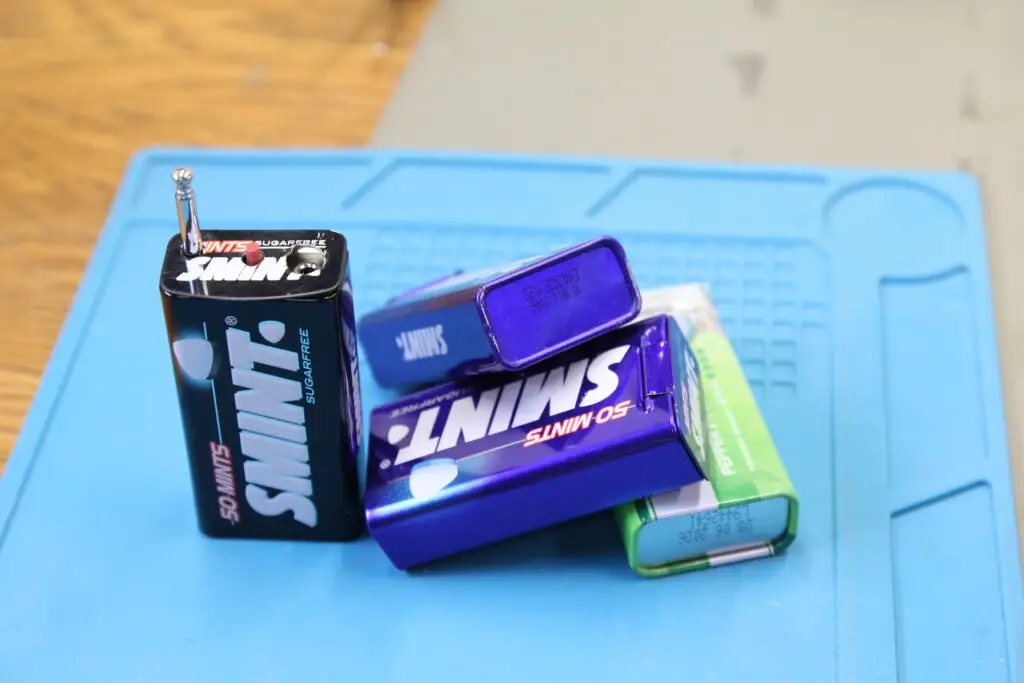
This isn’t your average radio; it’s a remarkably compact device designed to fit comfortably within a Smint tin – a popular Italian and Dutch alternative to Altoids mints. It features an extendable antenna for improved signal reception, a standard 3.5mm audio jack for headphones, and is powered by three LR42 coin cell batteries. The radio’s firmware is pre-configured with a specific FM station frequency; choosing a reliable local news channel is crucial for receiving critical updates.
Arduino at the Core
At the heart of this miniature marvel lies an Arduino Nano board, responsible for processing the radio signals. The Arduino utilizes a TEA5767 FM receiver module to pick up broadcasts. Furthermore, a custom-designed PCB (Printed Circuit Board) neatly integrates all components, ensuring smooth and reliable operation. For example, this design prioritizes simplicity and ease of use.
Components and Functionality
The project’s success hinges on the careful selection and integration of its components. Notably, the TEA5767 chip is renowned for its sensitivity and low power consumption, making it ideal for battery-powered applications like this portable radio. In addition to the Arduino Nano and TEA5767, a small amplifier boosts the signal strength to drive headphones effectively. Consequently, users can clearly hear broadcasts even in areas with weak signals.
Building Your Own Mint Tin Radio
While this project requires some technical skill, it’s surprisingly accessible for hobbyists familiar with basic electronics and Arduino programming. Therefore, beginners should consult online tutorials and forums for guidance. However, understanding the principles of FM radio reception and microcontroller programming will greatly enhance your ability to troubleshoot any issues that may arise. Similarly, carefully following the schematic and PCB layout ensures a successful build.
Simplicity and Reliability
While a tuning dial would enhance usability by allowing users to scan for alternative frequencies during emergencies, the design prioritizes simplicity and foolproof functionality. The power-saving design ensures minimal battery drain when inactive, meaning this little radio can be safely stored for years until needed – ready to provide essential information when it matters most. As a result, you can have peace of mind knowing that critical updates are always within reach, even when conventional communication methods fail.
Source: Read the original article here.
Discover more tech insights on ByteTrending.
Discover more from ByteTrending
Subscribe to get the latest posts sent to your email.