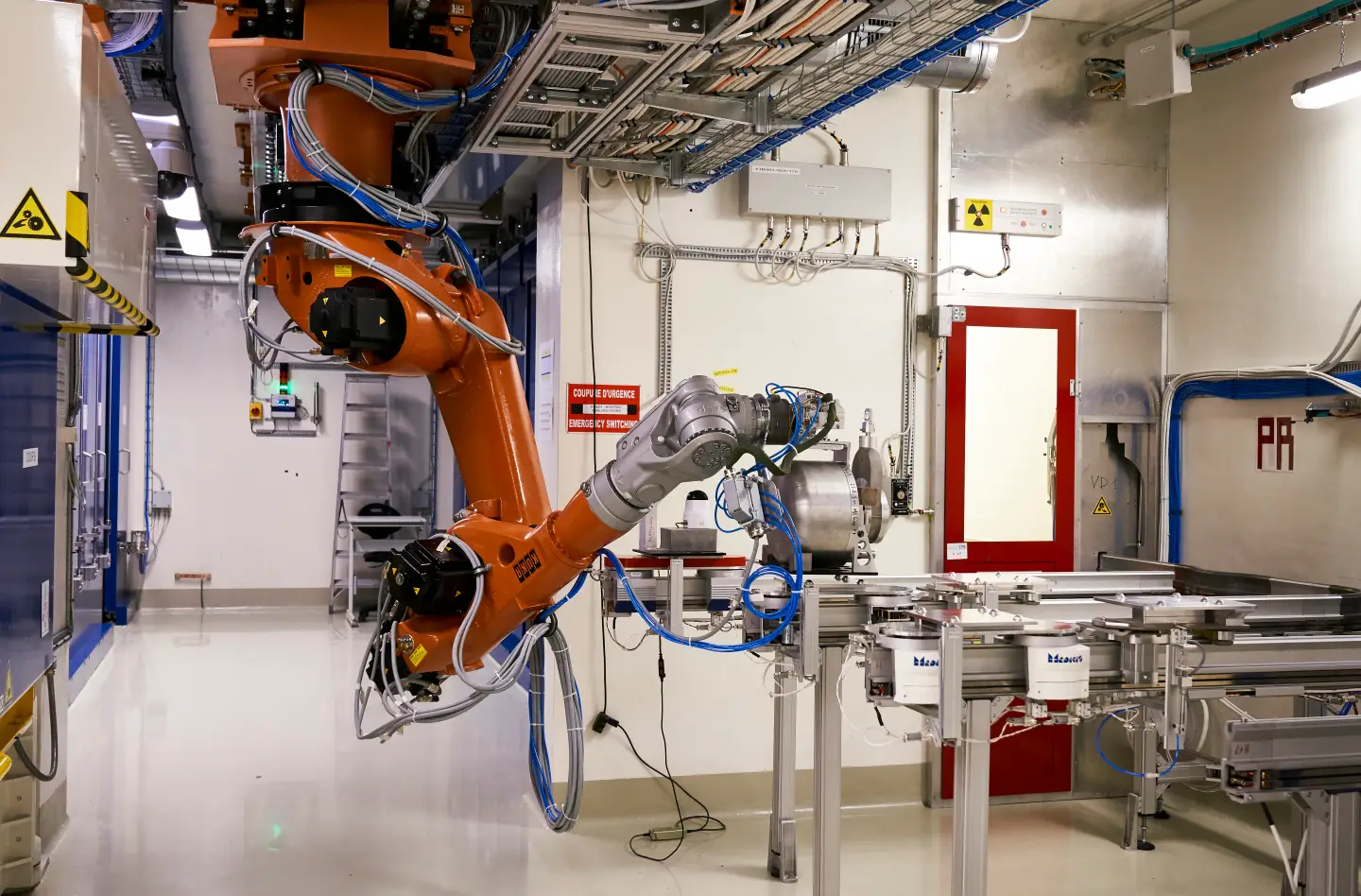



Discover how CERN’s innovative accelerator technology is revolutionizing medical treatments and diagnostics.
CERN’s Dual Focus: Advancing Medicine Through Accelerator Technology
CERN, renowned for its groundbreaking work in particle physics, is also making significant strides in the realm of medical applications. Two key facilities – CLEAR and MEDICIS – are at the forefront of this effort, and recent extensions to their mandates promise even greater societal impact.
CLEAR: Pioneering Electron Beam Research
FLASH Radiotherapy & Space Resilience
The CLEAR (CERN Linear Accelerator for Medical Applications and Radiation Environment testing) facility utilizes a 20-meter linear electron accelerator, initially designed for future particle colliders. It now serves a diverse range of experimental users worldwide. A major focus is on developing deep-tissue cancer treatment using very high-energy electrons, including pioneering research into FLASH radiotherapy – an ultra-fast delivery method minimizing damage to healthy tissue in collaboration with Geneva University Hospital. Furthermore, CLEAR also conducts irradiation campaigns for the European Space Agency, ensuring satellites and astronomy missions can withstand harsh space conditions.
Expansion & Future Research
Currently operational since 2017, CLEAR’s extended mandate runs until at least 2030. To meet growing demand, a new beamline is under construction with two additional test areas—one in vacuum and one in air—allowing for increased experimental variety and simultaneous studies. Therefore, future research will concentrate on medical applications, radiation hardness of electronics, accelerator development, and training the next generation of scientists through initiatives like the CERN Beamline for Schools competition. In addition, CLEAR’s capabilities significantly enhance opportunities for scientific advancement.
MEDICIS: A New Generation of Radioisotopes
Precision Medicine & Theragnostics
Located within CERN’s ISOLDE nuclear laboratory, MEDICIS (Medical Isotopes Produced by Innovative Separations) produces innovative medical radionuclides for biomedical research. This collaborative project involves 19 institutions across Europe and beyond, focusing on precision medicine and theragnostics – the combination of diagnostics and therapy. Notably, this accelerator program contributes to advancements in healthcare.
Clinical Trials & Future Radionuclide Production
Since its launch in 2018, MEDICIS has successfully produced crucial radioisotopes like Actinium-225 for targeted alpha therapy, Samarium-153 for cancer therapies, and Tm/Er-165 for molecular imaging. Its extended mandate until 2030 aims to scale production for clinical trials and develop next-generation theranostic radionuclides such as Ac-225, Sm-153, Ra-224, and Er-165. For example, Actinium-225 is showing significant promise in targeted cancer treatments.
A Tangible Societal Benefit
“CLEAR is well positioned to remain a flexible, high-impact facility for beam-based R&D,” stated Mike Lamont, CERN Director for Accelerators and Technology. “MEDICIS is helping address the global shortage of medical isotopes through close collaboration with the biomedical community. Together, these platforms demonstrate how CERN’s accelerator expertise delivers tangible societal benefits.”
Source: Read the original article here.
Discover more tech insights on ByteTrending.
Discover more from ByteTrending
Subscribe to get the latest posts sent to your email.