
3 min read
NASA Tests Advanced Aircraft Wing for Future Mobility
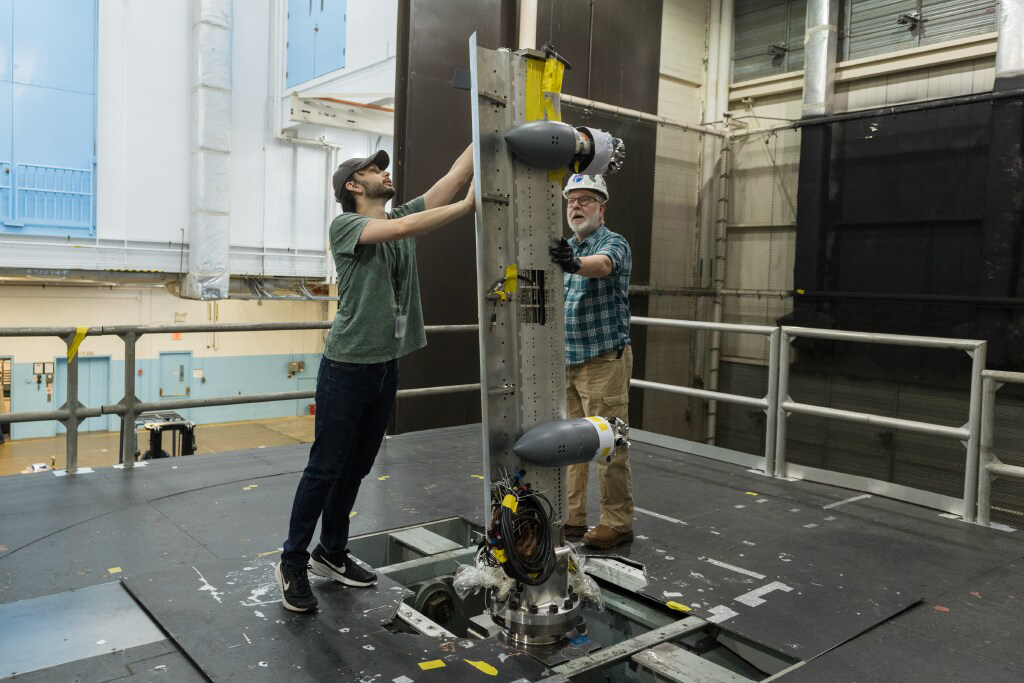
NASA employees Broderic J. Gonzalez, left, and David W. Shank install pieces of a 7-foot wing model in preparation for testing in the 14-by-22-Foot Subsonic Wind Tunnel at NASA’s Langley Research Center in Hampton, Virginia, in May 2025. The lessons learned will be shared with the public to support advanced air mobility aircraft development.
NASA/Mark Knopp
The air mobility industry is rapidly evolving, aiming to produce innovative aircraft like air taxis and autonomous cargo drones. To ensure these designs are safe and efficient, extensive testing is crucial. NASA is stepping up to support this burgeoning sector by studying a specialized model wing, providing a valuable head-start for developers.
Understanding the Tiltwing Design
The wing under scrutiny is a scaled replica of a design used in “tiltwing” aircraft. These unique vehicles can rotate their wings and rotors, allowing them to take off and hover like helicopters before transitioning to fixed-wing flight for efficient cruising. Furthermore, this versatility makes tiltwings suitable for diverse operational environments.
Tiltwing Functionality
The core innovation of a tiltwing lies in its ability to adapt its configuration. Initially, the rotors tilt vertically, enabling vertical takeoff and landing (VTOL) similar to a helicopter. Subsequently, as the aircraft gains speed, the wings rotate forward, transitioning it into a fixed-wing airplane mode for efficient long-distance travel. This dual functionality presents both exciting opportunities and unique engineering challenges.
Why NASA’s Testing Matters for Air Mobility
While several companies are actively developing tiltwing aircraft, NASA’s research extends beyond this specific design. The data gathered from testing the scale wing will benefit nearly all air mobility designs. This includes electric vertical takeoff and landing (eVTOL) vehicles, which are becoming increasingly popular for urban air mobility. Notably, NASA’s collaborative approach aims to foster innovation across the entire industry.
Data Sharing and Collaboration
NASA’s commitment extends beyond simply conducting tests; it actively shares findings publicly. This open data policy allows other researchers, developers, and companies to build upon NASA’s work, accelerating progress in the field of advanced air mobility. In addition, this collaborative spirit encourages a more unified approach to addressing common challenges.
The Wind Tunnel Advantage
NASA’s Langley Research Center utilized its 14-by-22-Foot Subsonic Wind Tunnel to conduct the tests. This facility allows engineers to simulate real-world flight conditions and gather critical data on how the wing interacts with airflow, particularly concerning propeller performance. The wind tunnel testing helps predict aircraft behavior under various conditions and identify potential safety concerns early in the design process. For example, it reveals how changes in airspeed affect lift and drag.
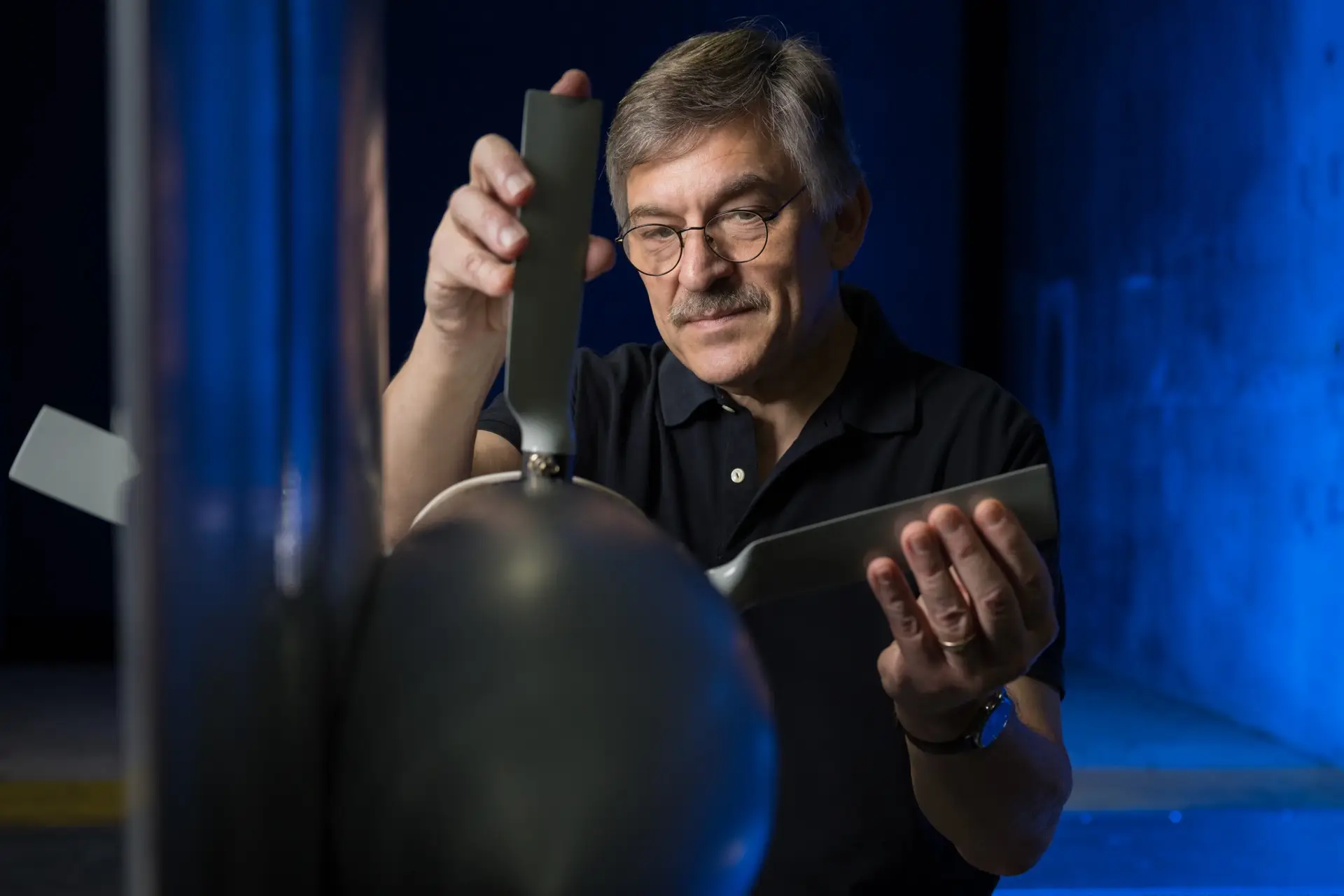
NASA researcher Norman W. Schaeffler adjusts a propellor, which is part of a 7-foot wing model that was recently tested at NASA’s Langley Research Center in Hampton, Virginia. In May and June, NASA researchers tested the wing in the 14-by-22-Foot Subsonic Wind Tunnel to collect data on critical propeller-wing interactions
Looking Ahead: Supporting Air Mobility Development
“NASA research supporting advanced air mobility demonstrates the agency’s commitment to supporting this rapidly growing industry,” stated Brandon Litherland, principal investigator for the test. The data and insights gained from these tests will be shared publicly, accelerating the development of safe and efficient air mobility aircraft. This collaborative approach aims to foster innovation and ensure a smooth transition towards a future with more diverse aerial transportation options.
Gaining confidence through testing ensures we can identify safe operating conditions for these new aircraft.”

Source: Read the original article here.
Discover more tech insights on ByteTrending.
Discover more from ByteTrending
Subscribe to get the latest posts sent to your email.