

Exploring the Hilarious World of AI-Generated Animal Sounds
Artificial intelligence (AI) continues to surprise and entertain us with its capabilities. Recently, a fascinating exploration has emerged: generating sounds for animals—often with delightfully bizarre results. This article delves into how AI is being used to create these animal noises, the underlying technology, and why it’s both amusing and a bit concerning for artists.
The Technology Behind AI Animal Sounds
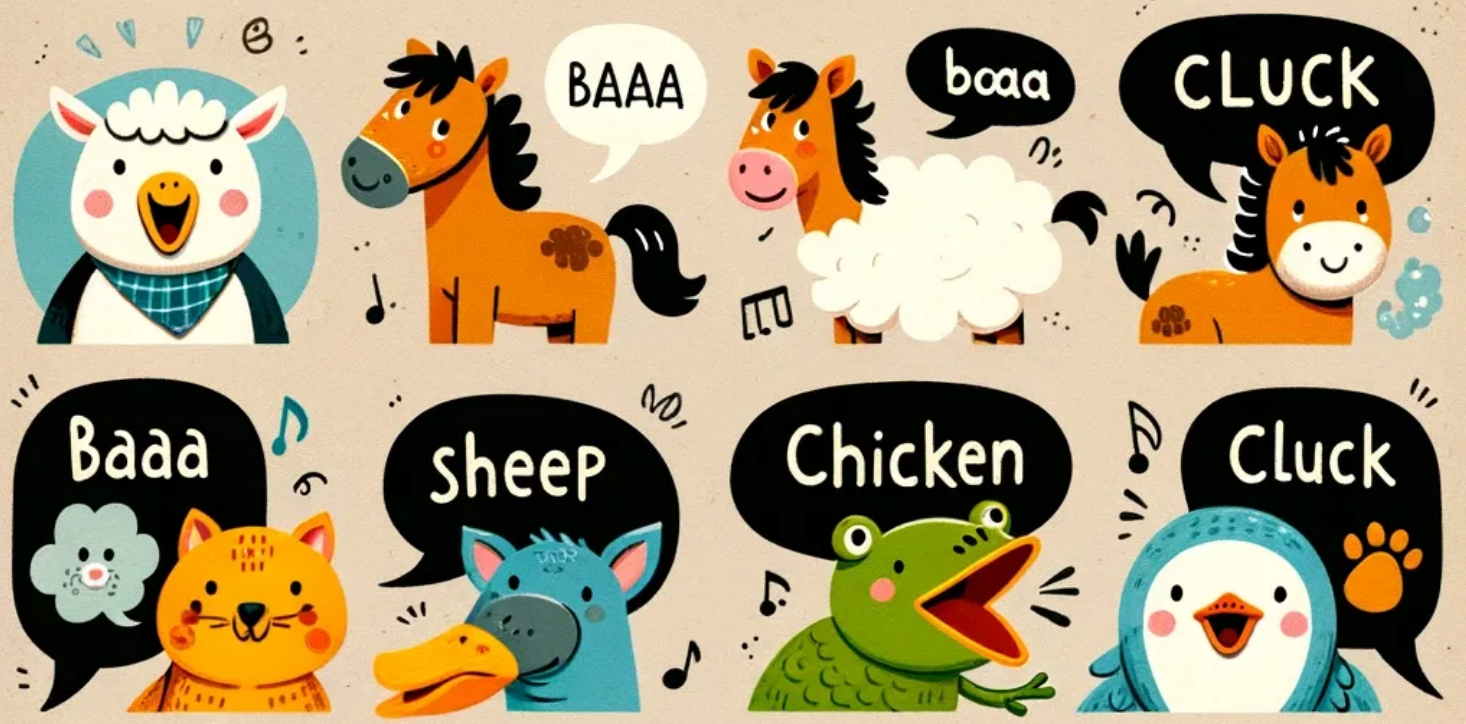
Generating realistic or even semi-realistic animal sounds using AI involves a combination of techniques, primarily centered around text-to-speech models and generative adversarial networks (GANs). Initially, prompts are fed to image generation models like DALL-E 3 through interfaces such as ChatGPT. These prompts request illustrations depicting animals with speech bubbles displaying their corresponding sounds—for example, asking for a cow making a “moo” sound visually.
How Image Generation Interacts with Sound Synthesis
The initial image generation phase provides visual cues and contextual information that guides the subsequent sound synthesis process. Furthermore, advanced models can analyze these images to infer characteristics like an animal’s size, age, and even mood, influencing the generated sound accordingly. For instance, a prompt requesting a “sad pig” might result in a lower-pitched, more mournful oink than a standard one. Notably, while visually appealing, this process often blends elements of reality with pure fantasy.
The Role of Generative Adversarial Networks (GANs)
Beyond simple text-to-speech conversions, GANs play a crucial role in crafting more nuanced and realistic animal sounds. These networks consist of two components: a generator that creates sounds and a discriminator that evaluates their authenticity. As a result, the generator continuously refines its output to fool the discriminator, leading to increasingly convincing—and sometimes utterly absurd—results. Consequently, we’re seeing “woolly horse-sheep” noises and other unexpected combinations.
The Artistic Implications of AI Image Generation
While generating silly animal sounds is entertaining, it raises serious questions about the impact of AI on artistic creation and copyright. The ability to produce images mimicking specific styles or artists poses a threat to their livelihoods. Therefore, many creators are understandably concerned about the potential for AI to devalue their work.
Copyright Concerns in the Age of AI
The legal landscape surrounding AI image generation is still evolving, with ongoing debates about copyright ownership and fair use. For example, if an AI model is trained on a dataset of copyrighted images without permission, does the resulting output infringe upon those copyrights? Consequently, this remains a complex legal challenge.
The Future of AI-Generated Content
Looking ahead, we can expect AI to become even more sophisticated in generating not just images but also audio and video content. However, it’s crucial that we address the ethical and legal implications alongside these advancements. Furthermore, finding a balance between embracing technological innovation and protecting artistic integrity will be essential.
Conclusion: Finding Humor and Caution in AI Weirdness
The ability to generate nonsensical animal sounds using AI is undoubtedly amusing, offering a glimpse into the potential—and occasional absurdity—of this technology. However, it’s equally important to recognize the challenges it presents for artists and creators. Ultimately, navigating this new landscape requires both appreciation for the novelty of AI and a thoughtful consideration of its ethical implications.
Source: Read the original article here.
Discover more from ByteTrending
Subscribe to get the latest posts sent to your email.