

Visual AI, or how machines interpret the physical world, is just as essential for building intelligent systems that can operate in real-world conditions. From powering instant replay at Wimbledon to enabling edge-based quality control in electric vehicle factories, Roboflow’s platform makes visual AI accessible and deployable. This article explores the key themes driving visual AI development and how Roboflow’s platform enables its widespread adoption.
The core of visual AI lies in the ability of computers to ‘see’ and understand images and videos – a process fundamentally linked to how humans perceive their surroundings. Traditionally, computer vision has been hampered by the complexities of dealing with variations in lighting, perspective, and object appearance. However, advancements in deep learning, particularly convolutional neural networks (CNNs), have dramatically improved our ability to train models that can accurately recognize and classify objects, even under challenging conditions. The rise of frameworks like TensorFlow and PyTorch has further democratized access to this technology, allowing developers with varying levels of expertise to build sophisticated visual AI applications.
One critical area where visual AI is making a significant impact is in edge computing – deploying models directly on devices rather than relying solely on the cloud. This approach offers several advantages, including reduced latency, improved privacy, and increased reliability, especially for applications that require real-time processing, such as autonomous vehicles or industrial robots. Roboflow’s platform facilitates this by providing tools for optimizing models specifically for deployment on resource-constrained devices – a trend that is becoming increasingly important as visual AI becomes more pervasive.
Section 1: The Rise of Visual AI and Key Applications
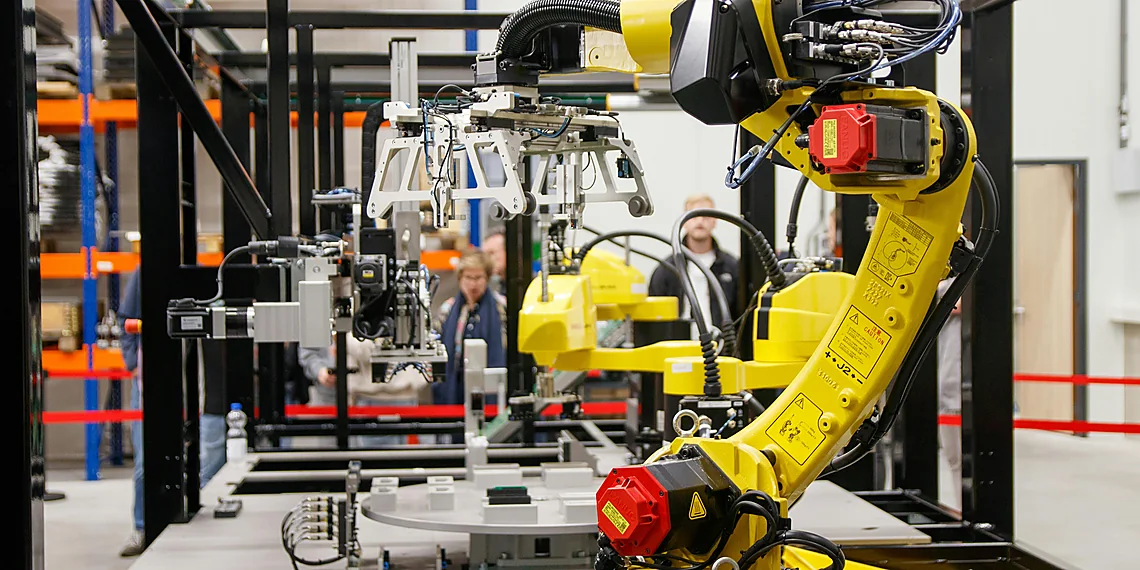
Visual AI isn’t just about recognizing faces or identifying objects; it’s transforming industries across the board. In manufacturing, for example, visual inspection systems powered by visual AI are used to detect defects in products with greater accuracy and speed than human inspectors. This leads to improved quality control, reduced waste, and increased efficiency. Similarly, in agriculture, drones equipped with visual AI can monitor crop health, identify areas that need irrigation or fertilization, and even automate harvesting operations. The potential applications seem almost limitless – from healthcare diagnostics to security surveillance and robotic automation.
Section 2: Roboflow’s Role in Democratizing Visual AI
Roboflow is at the forefront of this revolution, providing a comprehensive platform that simplifies the entire visual AI workflow, from data collection and annotation to model training and deployment. Their open-source tools empower developers to build custom solutions without requiring extensive expertise or infrastructure. The RF-DETR and RF100VL models are key examples of Roboflow’s commitment to pushing the boundaries of what’s possible with visual AI – demonstrating that high-performance models can be efficiently trained and deployed even on edge devices.
The future of visual AI hinges on platforms like this – accessible and adaptable. The ability to rapidly prototype, train, and deploy models is critical for driving innovation across numerous industries.
Source: Read the original article here.
Discover more tech insights on ByteTrending.
Discover more from ByteTrending
Subscribe to get the latest posts sent to your email.