
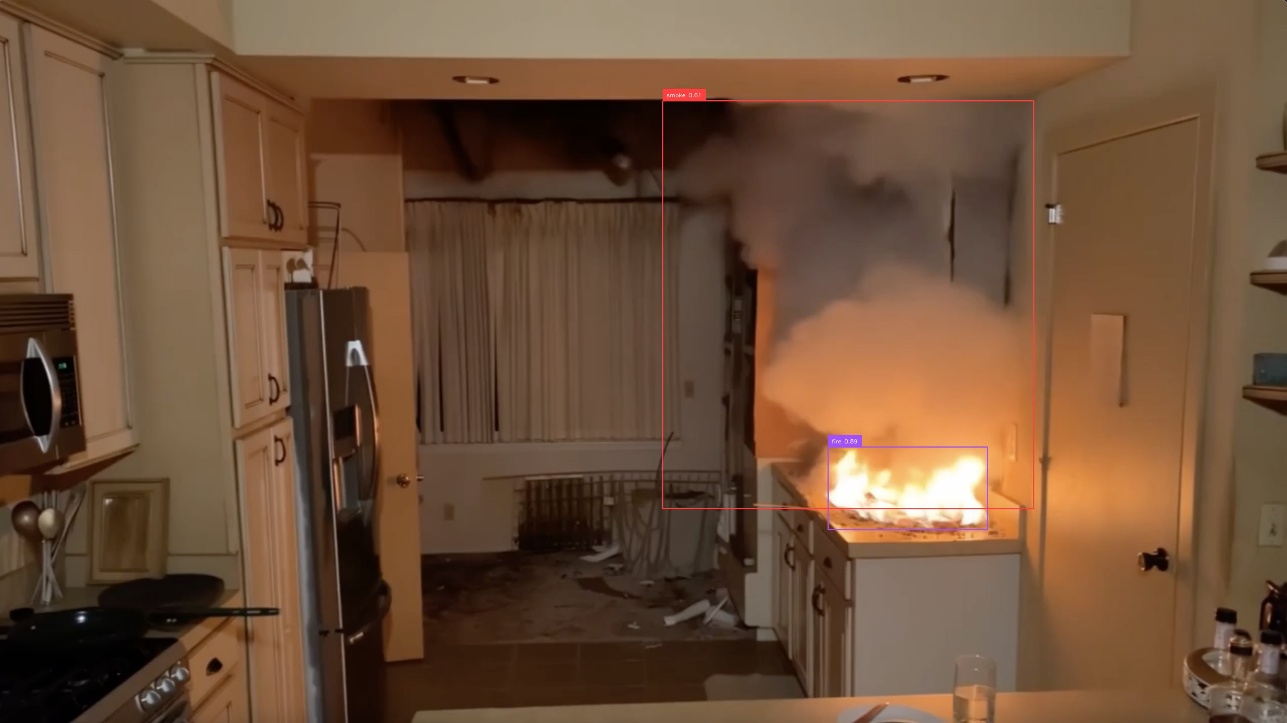


In today’s dynamic digital landscape, businesses frequently grapple with the challenge of identifying objects within videos and images that weren’t part of their model’s original training set. This is particularly complex in environments where new or user-defined objects constantly appear. For example, media publishers aim to track emerging brands in user-generated content, while advertisers need to analyze product appearances in influencer videos despite visual variations. Similarly, retail providers require flexible search capabilities, self-driving cars must identify unexpected road debris, and manufacturing systems need to detect novel defects without extensive labeling. Traditional closed-set object detection (CSOD) models—which only recognize a predefined list of categories—often fall short in these scenarios, either misclassifying unknown objects or simply ignoring them.
Fortunately, open-set object detection (OSOD) provides an innovative approach that enables models to detect both known and previously unseen objects. This advanced technique supports flexible input prompts, ranging from specific object names to more open-ended descriptions, allowing it to adapt to user-defined targets in real time without requiring retraining. Through combining visual recognition with semantic understanding—often leveraging vision-language models—OSOD empowers users to query systems broadly, even when dealing with unfamiliar or ambiguous content. This post explores how Amazon Bedrock Data Automation utilizes this powerful technology to significantly enhance video understanding.
Leveraging Amazon Bedrock Data Automation and Video Blueprints with Open-Set Object Detection
Amazon Bedrock Data Automation is a cloud-based service designed for extracting valuable insights from unstructured content, including documents, images, videos, and audio. Specifically within the realm of video analysis, it supports functionalities such as chapter segmentation, frame-level text detection, chapter-level classification using Interactive Advertising Bureau (IAB) taxonomies, and crucially, frame-level object detection leveraging OSOD. For detailed information about Amazon Bedrock Data Automation, you can refer to Automate video insights for contextual advertising using Amazon Bedrock Data Automation.
Understanding Video Blueprint Functionality
Amazon Bedrock Data Automation’s video blueprints provide support for OSOD at the frame level. Users can input a video and accompany it with a text prompt detailing the objects they wish to detect. For each individual frame, the model then generates a dictionary containing bounding box coordinates in XYWH format (representing the top-left corner’s x and y coordinates followed by the width and height of the detection), along with corresponding labels and confidence scores. Furthermore, users have the ability to customize this output based on their specific needs; for instance, filtering detections based on high confidence levels when precision is a priority.
The Power of Flexible Input Prompts
A key advantage of OSOD lies in the flexibility afforded by its input prompts. Instead of being restricted to a fixed list of objects, users can specify broader terms like “detect any type of car” or even more descriptive requests such as “detect anything that looks like a new product.” This adaptability is what allows for truly dynamic and responsive video analysis.
Illustrative Use Cases of OSOD in Action
Let’s consider some practical examples demonstrating how Amazon Bedrock Data Automation’s video blueprints harness the capabilities of object detection. The following table summarizes these functionalities:
| Functionality | Sub-functionality | Examples |
|---|---|---|
| Multi-granular visual comprehension | Object detection from fine-grained object reference | |
Source: Read the original article here.
Discover more tech insights on ByteTrending.
Discover more from ByteTrending
Subscribe to get the latest posts sent to your email.








