


Unveiling Solar Electron Mysteries with the Solar Orbiter
For decades, scientists have struggled to fully understand the origin of superfast electrons—incredibly tiny particles accelerated to astonishing velocities by the Sun. These energetic bursts can disrupt satellite operations and pose risks to astronauts; therefore, determining their source is critically important. Now, thanks to data from the European Space Agency’s (ESA) Solar Orbiter mission, we’ve achieved a significant advancement in solving this captivating cosmic puzzle. The ability to differentiate these high-energy particles signifies a true revolution and heralds a new era for solar physics.
Two Distinct Electron Streams Revealed
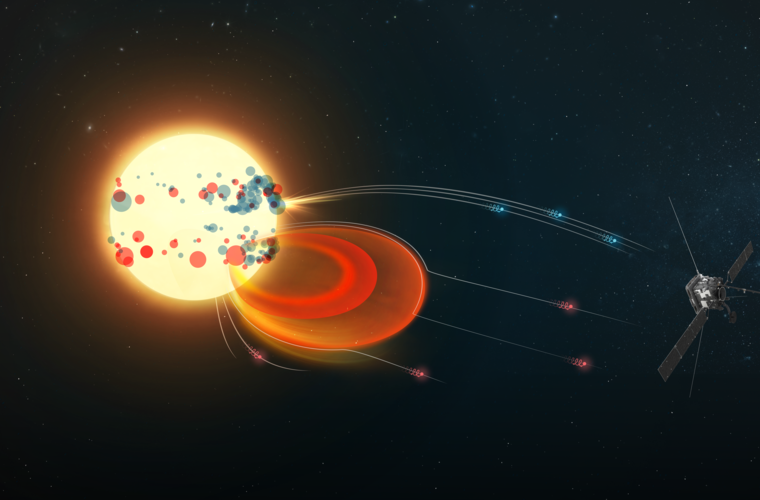
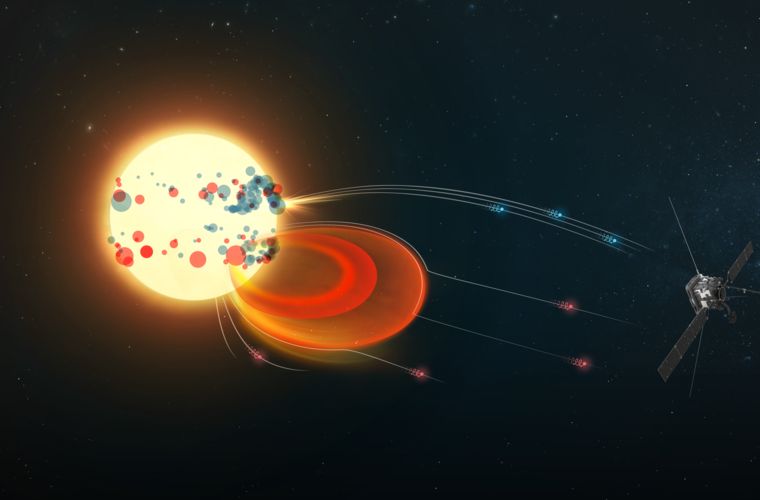
The groundbreaking nature of this discovery lies in the Solar Orbiter’s ability to differentiate between two previously indistinguishable streams of energetic electrons. Rather than a single, uniform flow, the mission revealed two distinct populations: one originating from impulsive solar flares and another linked to coronal mass ejections (CMEs). This separation is a major advancement in our understanding of how these particles are accelerated. For example, observing these separate streams helps refine models for space weather forecasting, allowing us to anticipate potential disruptions more effectively. Consequently, this improved ability to track solar orbiter data will lead to better predictions.
Impulsive Flares vs. Coronal Mass Ejections
Solar flares are sudden, intense bursts of energy released from the Sun’s surface, frequently associated with sunspots and magnetic activity. CMEs, conversely, are considerably larger expulsions of plasma and magnetic field that can travel through space at high speeds. Furthermore, understanding these distinctions is key to refining space weather prediction models. Notably, both phenomena contribute to accelerating particles to incredible speeds; however, they do so using different mechanisms. For example, flares involve smaller-scale processes near the Sun’s surface, while CMEs are linked to larger regions and coronal loops.
- Flares: The electrons linked to flares appeared to be accelerated by smaller-scale processes near the Sun’s surface, involving sudden energy releases.
- CMEs: Electrons associated with CMEs were traced back to much larger and more complex regions – the vast coronal loops that constitute the outer atmosphere of the Sun. These electrons seem to be propelled along magnetic field lines stretched out by the CME itself; as a result, their trajectories are considerably longer.
The Role of Magnetic Reconnection
Both flares and CMEs involve a process called magnetic reconnection, where tangled magnetic field lines suddenly realign, releasing substantial energy. The Solar Orbiter’s observations suggest that the mechanisms driving electron acceleration during these events are subtly different depending on whether it’s a flare or a CME. Consequently, detailed analysis is crucial for improving predictive capabilities. In addition, studying magnetic reconnection helps us understand how solar orbiter data can be used to improve space weather models and highlights the complexity of particle acceleration.
# Simplified representation of particle acceleration
def accelerate_electrons(magnetic_field_change):
 if magnetic_field_change > threshold_flare:
 electron_speed = calculate_flare_acceleration()
 elif magnetic_field_change > threshold_cme:
 electron_speed = calculate_cme_acceleration()
 else:
 electron_speed = 0
 return electron_speed
This code is a simplified illustration and does not represent the full complexity of the physics involved. For example, real-world calculations consider numerous factors beyond simple magnetic field changes.
Future Implications for Space Weather Forecasting
Understanding the distinct sources of these energetic electrons is vital for improving space weather forecasts. Consequently, accurate predictions can help protect satellites, spacecraft, and even astronauts from harmful radiation. By characterizing the conditions that lead to each type of electron burst – flare-driven or CME-driven – we can develop better models to anticipate and mitigate potential disruptions. The Solar Orbiter‘s data contributes significantly to this advancement, specifically enhancing our ability to predict events related to the solar orbiter and better prepare for space weather challenges.
Conclusion: A New Era in Solar Physics
The Solar Orbiter mission’s findings represent a significant leap forward in our understanding of the Sun’s energetic particle emissions. By separating these electron streams and tracing them back to their origins, scientists are gaining unprecedented insights into the complex processes that drive solar activity – paving the way for more accurate space weather predictions and a safer future for exploration beyond Earth. Moreover, this mission highlights the importance of continued investment in advanced technologies like Solar Orbiter to unlock further secrets of our solar system.
Source: Read the original article here.
Discover more tech insights on ByteTrending.
Discover more from ByteTrending
Subscribe to get the latest posts sent to your email.