

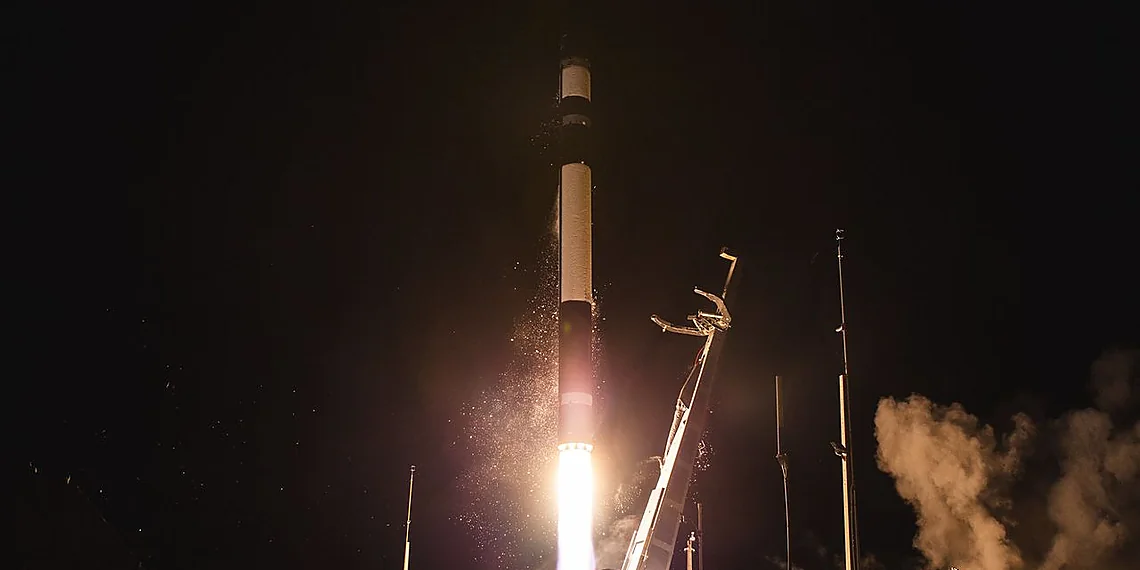

The familiar sight of a returning spacecraft graced Earth’s oceans recently, marking the end of a six-month mission aboard the International Space Station for the incredible crew of SpaceX Crew-11.
Instead of a planned Florida landing, an unexpected medical situation prompted a swift shift in plans, resulting in an overnight splashdown off the coast of Jacksonville – a truly rare occurrence for returning astronauts.
While details remain limited regarding the health concern, mission control prioritized the wellbeing of the crew, adjusting the timeline to ensure their safe and efficient return.
Despite this unforeseen hurdle, SpaceX Crew-11’s mission was undeniably successful, contributing significantly to vital research and maintaining operations on the orbiting laboratory – a testament to the dedication and resilience of both the astronauts and the ground teams involved.
The Unexpected Detour: Addressing the Medical Concern
The SpaceX Crew-11 mission’s return from the International Space Station took an unexpected turn after one of the astronauts experienced a medical issue, prompting a brief but significant adjustment to their departure timeline. While NASA has remained tight-lipped about the specifics citing crew privacy, it’s confirmed that the condition required in-flight diagnosis and treatment before the Falcon 9 rocket could be cleared for launch back to Earth. This incident underscores the inherent challenges of long-duration space missions and the critical importance of robust medical capabilities onboard orbiting platforms.
Diagnosing and treating illness in microgravity presents a unique set of complexities. The crew’s designated medical officer, aided by ground-based specialists at NASA’s Johnson Space Center, utilized onboard diagnostic equipment to assess the situation. Telemedicine played a vital role, allowing experts on Earth to provide guidance and support remotely. This highlights the sophistication of space medicine protocols – a rapidly evolving field that combines traditional medical practices with innovative technologies adapted for the space environment. The ability to accurately identify and address health concerns while hundreds of miles above Earth is paramount for mission success and crew safety.
The need to thoroughly evaluate the astronaut’s condition naturally resulted in a delay of the departure, emphasizing NASA’s commitment to prioritizing crew well-being over strict adherence to schedules. This adjustment also provides valuable insight into the agency’s contingency plans for managing medical emergencies during spaceflight. Stringent protocols were followed to ensure the safe return of the potentially ill astronaut, including careful consideration of atmospheric re-entry and potential risks associated with landing in a remote oceanic location. The incident serves as a real-world test of these procedures, contributing to continuous improvements in future mission planning.
Ultimately, the Crew-11’s experience reinforces the ongoing evolution of spaceflight safety protocols. While the details remain limited, the response demonstrates NASA’s dedication to maintaining crew health and adapting operational plans to address unforeseen challenges – a crucial element as humanity expands its presence beyond Earth.
In-Flight Diagnosis & Treatment

During the final stages of Crew-11’s departure from the International Space Station (ISS), one of the astronauts experienced a sudden onset of illness characterized by nausea and disorientation. Recognizing the potential severity of the situation, the onboard medical officer (OMO) initiated a rapid assessment utilizing the spacecraft’s available diagnostic tools, including vital signs monitoring equipment and a basic physical examination. The OMO, trained in advance for such contingencies, employed established protocols to differentiate between potential causes ranging from space motion sickness to more serious conditions.
The diagnosis process was complicated by the microgravity environment, which can affect physiological responses and make traditional diagnostic maneuvers difficult. Ground control medical teams at NASA’s Johnson Space Center provided crucial support throughout the assessment, offering expert consultation via telemetry. These specialists reviewed data transmitted in real-time, helped refine the differential diagnosis, and guided treatment decisions. The remote nature of the situation necessitated clear and concise communication to ensure accurate interpretation of observations.
Treatment involved administering medication orally, a relatively straightforward procedure even in microgravity. However, monitoring the astronaut’s response to the medication required constant observation and further data collection. While the illness ultimately subsided enough for the crew to safely proceed with undocking and return trajectory, the event necessitated adjustments to the mission timeline and highlighted the ongoing importance of robust medical capabilities within human spaceflight programs.
Impact on Mission Timeline & Safety Protocols

The departure of SpaceX Crew-11 from the International Space Station (ISS) was unexpectedly delayed due to a medical concern experienced by one of the astronauts, Frank Rubio. While in orbit, Rubio reported experiencing symptoms that required assessment by both onboard medical personnel and flight surgeons on Earth. Although the specifics of his condition haven’t been fully disclosed, NASA prioritized his well-being, leading to an expedited return plan instead of the originally scheduled extended stay. This shift meant shortening the mission duration for the entire crew, demonstrating a willingness to alter operational timelines when crew health is at risk.
The decision to accelerate the Crew-11 departure highlights NASA’s commitment to robust contingency plans for medical emergencies in space. These protocols involve comprehensive pre-flight medical evaluations, onboard diagnostic equipment and supplies, real-time consultation with ground-based specialists, and established procedures for emergency return to Earth. The rapid response and adjusted timeline underscored the importance of these systems, demonstrating NASA’s ability to adapt mission objectives while ensuring astronaut safety. While the change disrupted some planned ISS research activities, crew health remains paramount.
Returning an astronaut experiencing a medical issue presents unique challenges. SpaceX’s Dragon spacecraft is equipped with specialized medical equipment for in-flight care and stabilization. Upon splashdown, a NASA recovery team immediately provides further assessment and treatment, ensuring a smooth transition to ground-based medical facilities. The expedited return also necessitates meticulous planning regarding quarantine protocols and potential exposure risks for the returning crew, all of which were factored into the revised mission plan.
Splashdown & Return to Earth
The SpaceX Crew-11 mission concluded on Thursday morning with a successful splashdown in the Pacific Ocean, marking the end of their six-month science expedition aboard the International Space Station (ISS). After undocking from the ISS late Wednesday evening, the Dragon spacecraft, named Endeavour, embarked on its journey home. The crew – NASA astronauts Jasmin Moghbeli, Loral O’Hara, and Philip Schraub, along with JAXA astronaut Satoshi Furukawa – experienced a meticulously planned descent, utilizing advanced navigational systems to ensure pinpoint accuracy for their landing zone.
The controlled descent itself is an exercise in extreme engineering. As Endeavour plunged back into Earth’s atmosphere, it faced intense heat generated by atmospheric friction—reaching temperatures of up to 3,000 degrees Fahrenheit! The spacecraft’s robust heat shield protected the crew from this scorching environment while slowing its velocity. Following a period of controlled deceleration, parachutes deployed sequentially to further reduce speed for a gentle splashdown. Choosing an overnight landing presented unique considerations regarding visibility and weather patterns in the Pacific, requiring precise calculations by mission control.
Recovery teams aboard two SpaceX recovery vessels were immediately on hand following the splashdown. The crew was swiftly extracted from Endeavour and transported onto the ship where they underwent initial medical assessments. These preliminary checks are standard procedure after any spaceflight to evaluate overall health and identify any potential issues arising from extended exposure to microgravity. While the mission concluded with a triumphant return, the team’s post-splashdown evaluations would soon reveal an unexpected medical concern for one of the astronauts.
The Dragon spacecraft was then secured aboard one of the recovery vessels and is now en route to Cape Canaveral, Florida, where it will be prepared for refurbishment and future missions. The completion of Crew-11’s mission also signifies a key transition period for the ISS as NASA prepares for the arrival of the Crew-13 astronauts later this year, continuing the ongoing cycle of scientific discovery and human presence in low Earth orbit.
The Controlled Descent: Re-entry Challenges
The return of SpaceX Crew-11 to Earth involved a complex series of maneuvers designed to safely decelerate the Dragon spacecraft from orbital velocity (approximately 17,500 mph) to a gentle landing in the Pacific Ocean. The crucial first step is re-entry into Earth’s atmosphere. As the Dragon plunges through the upper atmosphere, it encounters increasing air resistance, generating immense friction and heat – temperatures can reach over 2,000 degrees Fahrenheit. To protect the astronauts inside, the spacecraft relies on a heat shield composed of a proprietary material that ablates (burns away) during this phase, carrying the intense heat away from the capsule.
Following the initial fiery re-entry, atmospheric drag continues to slow the Dragon significantly. This deceleration is further aided by deployment of its four parachutes – three drogue parachutes initially stabilize the spacecraft and then a main parachute provides the final braking force. The timing and sequence of these events are critical; premature or delayed parachute deployment could lead to catastrophic consequences. The entire process requires precise calculations accounting for factors like atmospheric density, wind conditions, and the Dragon’s orientation.
An overnight splashdown, as experienced by Crew-11, presents unique challenges. Reduced visibility due to darkness necessitates reliance on radar and infrared systems for tracking and recovery efforts. Additionally, sea states can be more unpredictable at night, complicating the process of safely retrieving both the crew and the Dragon spacecraft. NASA’s recovery teams are highly trained to handle these conditions, employing specialized ships and equipment designed for nighttime operations in open ocean.
Looking Ahead: Implications for Future Missions
The SpaceX Crew-11 mission’s return, marked by a last-minute medical concern for one crew member, highlights critical lessons for future long-duration spaceflight. While the situation was successfully managed, it underscores the need for enhanced onboard medical capabilities and rigorous contingency planning as we increasingly look towards missions to the Moon, Mars, and beyond. The incident served as a stark reminder that even with extensive pre-flight screening and training, unforeseen health issues can arise in the challenging environment of space, necessitating immediate response and potentially impacting mission timelines – something that will require ever more sophisticated solutions moving forward.
One crucial takeaway is the vital role of proactive crew health management. Future missions must prioritize not only advanced diagnostic tools capable of identifying subtle anomalies early on but also robust treatment protocols adaptable to limited resources and expert consultation options. This includes exploring innovative approaches like AI-powered diagnostics, telemedicine capabilities with ground specialists, and potentially even automated medical procedures – all elements that could prove invaluable in scenarios mirroring the challenges faced during Crew-11’s departure. Further research into the physiological effects of long-duration spaceflight, including countermeasures to mitigate bone density loss, muscle atrophy, and immune system suppression will be paramount.
Beyond immediate medical responses, the Crew-11 experience also emphasizes operational flexibility. The ability to swiftly adjust mission plans, communicate effectively with ground control, and coordinate resources across international partners – as demonstrated during this event – is essential for ensuring crew safety and mission success. This requires not just technological advancements but also a culture of open communication, collaborative decision-making, and the willingness to adapt to unexpected circumstances. The incident reinforces that space exploration isn’t simply about pushing boundaries technologically; it’s about developing resilient processes and fostering a mindset prepared to address any challenge.
Ultimately, the lessons learned from SpaceX Crew-11 will contribute to refining future mission architectures and operational procedures. This includes enhanced crew training simulations incorporating realistic medical scenarios, improved onboard diagnostic equipment, and strengthened communication protocols. As NASA and commercial space companies alike pursue increasingly ambitious goals for deep space exploration, a continued focus on crew health and operational resilience will be just as critical as the development of advanced propulsion systems or habitat modules.
Space Medicine & Crew Health in Deep Space
The recent return of the SpaceX Crew-11 mission highlighted a critical need for enhanced medical capabilities in space, especially as NASA prepares for increasingly ambitious deep-space endeavors like Artemis missions to the Moon and beyond. During the journey home, one crew member experienced an unexplained adverse reaction requiring immediate assessment and intervention by the onboard medical officer and ground support teams. While the situation was ultimately resolved without significant complications, it underscored the inherent risks associated with spaceflight and the potential for unexpected health issues to arise far from terrestrial medical facilities.
This incident emphasizes that current in-flight medical protocols, while robust, must continue to evolve to address a wider range of potential scenarios. Future missions will necessitate more sophisticated onboard diagnostic tools – potentially including advanced imaging capabilities and point-of-care laboratories – alongside a broader spectrum of pharmaceutical interventions. Furthermore, the ability for crew members to perform basic surgical procedures or provide advanced life support could become essential assets in deep space environments where timely assistance from Earth is impossible.
Looking ahead, advancements in preventative medicine will also play a crucial role. This includes personalized health monitoring through wearable sensors and AI-powered analysis of physiological data to identify potential risks before they manifest as acute medical events. The Crew-11 experience serves as a valuable learning opportunity for NASA and its partners, driving innovation in space medicine and ultimately contributing to safer and more successful long-duration missions.

The return of SpaceX Crew-11 marked a significant chapter in human spaceflight, showcasing both remarkable resilience and the ever-present complexities of long-duration missions., While their journey was punctuated by an unexpected medical situation for one crew member, the successful resolution underscored the vital role of robust medical protocols and the dedication of flight controllers on Earth. This incident served as a stark reminder that even with meticulous planning, space travel presents unique health challenges requiring constant innovation in preventative care and emergency response. The mission’s accomplishments extend beyond this challenge, contributing valuable data to our understanding of human adaptation to microgravity and paving the way for future extended stays aboard the International Space Station. The seamless handover of responsibilities to the incoming Crew-12 team highlighted the smooth operational transitions that are becoming increasingly routine as we advance in space exploration capabilities, a testament to years of collaborative effort between NASA and SpaceX. The expertise demonstrated throughout this mission, particularly during the medical event, reinforces why continued investment in both hardware and human resources is paramount for pushing the boundaries of what’s possible., As we look ahead, the lessons learned from SpaceX Crew-11 will undoubtedly inform future mission planning and contribute to a safer, more sustainable presence beyond Earth. To keep abreast of these exciting developments and witness firsthand the ongoing evolution of space exploration, be sure to follow updates on upcoming SpaceX missions and related advancements – the next chapter is already being written!
Stay tuned for further announcements regarding future launches and opportunities to engage with the ever-evolving world of space travel.
Continue reading on ByteTrending:
Discover more tech insights on ByteTrending ByteTrending.
Discover more from ByteTrending
Subscribe to get the latest posts sent to your email.