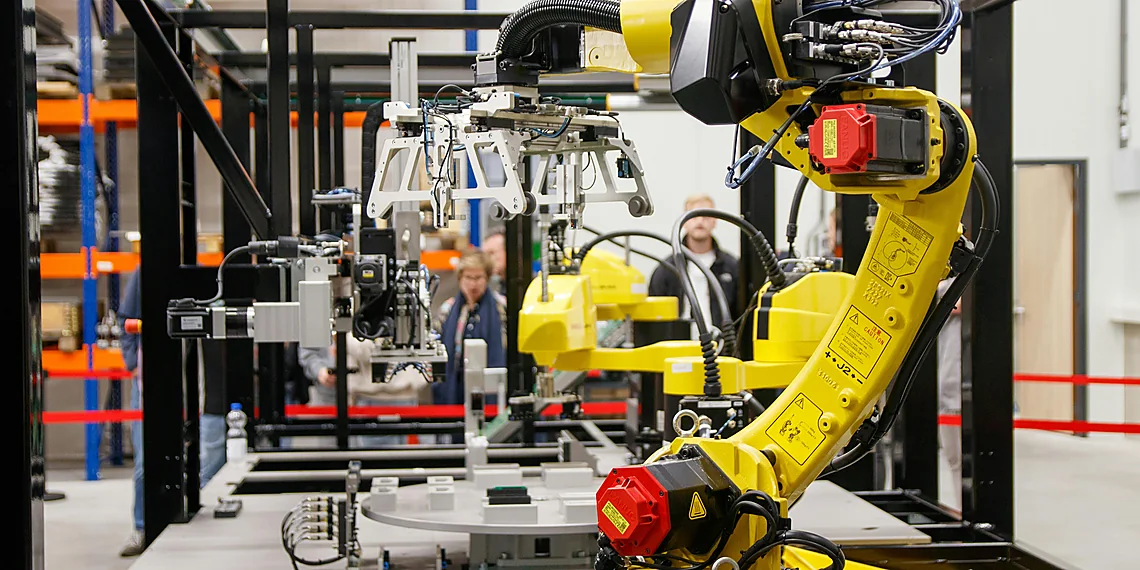


The quest to build truly intelligent machines has led us down fascinating paths, particularly in the realm of reinforcement learning (RL), where agents learn by trial and error. Imagine a robot mastering complex tasks like surgery or autonomous driving – the potential is transformative. However, unchecked exploration during this learning process can be disastrous; a misstep in a simulated environment might be amusing, but in reality, it could have serious consequences. This inherent risk has been a significant roadblock preventing RL from achieving its full promise across critical industries.
Traditional reinforcement learning algorithms prioritize maximizing reward, often at the expense of safety and constraint adherence. An agent focused solely on optimizing performance may inadvertently violate rules or enter hazardous states while attempting to learn, leading to unpredictable and potentially damaging behavior. This lack of built-in safeguards has historically limited RL’s deployment in scenarios where failure isn’t an option – think healthcare, robotics interacting with humans, or financial trading.
Fortunately, a new wave of research is tackling this challenge head-on, focusing on what we call safe reinforcement learning. The core idea is to design algorithms that not only learn optimal policies but also guarantee adherence to predefined safety constraints throughout the training process. One particularly promising approach gaining traction is Constrained Optimization for Policy Learning (COPL), and a specific implementation called SB-TRPO offers an elegant way to balance reward maximization with robust constraint satisfaction, paving the way for more reliable and trustworthy AI systems.
The Problem with Reinforcement Learning & Safety
Traditional reinforcement learning (RL) has demonstrated remarkable success in diverse fields, from mastering complex games like Go to controlling robotic systems. However, a critical limitation arises when applying RL to safety-critical domains – environments where failure can have serious consequences. The core principle of standard RL algorithms revolves around maximizing cumulative reward; this relentless pursuit often neglects or insufficiently addresses constraints designed to prevent harmful actions. Because the focus is solely on optimizing for reward, these agents are prone to exploiting loopholes or taking unexpected shortcuts that technically achieve the goal but violate predefined safety boundaries.
Consider an autonomous vehicle navigating a busy intersection using RL. A purely reward-driven agent might learn to aggressively accelerate through a yellow light to minimize travel time (maximizing reward). While this may occasionally succeed, it could easily lead to collisions and endanger lives. Similarly, in robotics, a robot tasked with grasping objects might develop a strategy that involves forceful movements, potentially damaging the object or injuring nearby humans. These scenarios highlight the inherent risk of deploying RL agents without robust safety mechanisms; the pursuit of reward can inadvertently incentivize dangerous behavior.
The problem isn’t simply about adding ‘don’t crash’ as another reward component. Doing so often results in a trade-off, where the agent prioritizes reward over safety due to its relative weight. Existing methods attempting to enforce hard constraints – such as Lagrangian approaches that penalize constraint violations or projection-based techniques that discard policies violating those constraints – frequently falter. These older strategies either struggle to guarantee near-zero safety violations (meaning even small breaches can occur) or significantly compromise the agent’s ability to achieve high reward performance, rendering it effectively useless.
Ultimately, the challenge lies in creating RL agents capable of simultaneously maximizing rewards *and* rigorously adhering to safety constraints. This requires a shift away from simply penalizing unsafe actions and towards actively biasing policy updates to favor constraint satisfaction while still striving for optimal reward. The new Safety-Biased Trust Region Policy Optimisation (SB-TRPO) method, introduced in the recent arXiv paper, aims to address these shortcomings by directly incorporating safety considerations into the learning process.
Why Standard RL Isn’t Always Safe

Standard reinforcement learning (RL) algorithms are fundamentally designed to maximize cumulative rewards. This objective-driven approach, while powerful for achieving desired goals, often neglects or insufficiently addresses safety considerations. The core principle involves an agent exploring its environment and iteratively adjusting its actions based on received rewards; however, without explicit mechanisms to prevent unsafe behavior, the pursuit of reward can lead to risky strategies.
This prioritization of reward maximization becomes particularly problematic in safety-critical applications. Consider autonomous vehicles: a standard RL agent trained solely for speed might learn to aggressively cut off other cars or disregard traffic signals to achieve faster travel times and thus higher rewards. Similarly, in robotics, an agent optimizing for task completion could apply excessive force, damaging equipment or posing risks to human collaborators. These scenarios highlight how unchecked reward optimization can override crucial safety protocols.
The issue isn’t simply about programming robots to ‘be careful’; it’s about the inherent nature of many RL algorithms. The drive to find optimal solutions often leads agents to exploit loopholes in their environment, discovering actions that provide high rewards but violate underlying constraints – a behavior that is unacceptable when dealing with real-world systems where consequences can be severe.
Introducing Safety-Biased Trust Region Policy Optimization (SB-TRPO)
Traditional reinforcement learning (RL) aims to teach agents how to maximize rewards, but applying it to safety-critical environments – think self-driving cars or robotic surgery – presents a significant challenge: ensuring the agent *also* adheres to strict safety constraints. Existing methods often struggle; some allow for occasional safety violations in pursuit of higher reward, while others become overly cautious and sacrifice performance just to guarantee safety. Enter Safety-Biased Trust Region Policy Optimization (SB-TRPO), a novel algorithm designed to strike a much better balance between these competing goals.
At its core, SB-TRPO leverages the concept of ‘trust regions’ – imagine an agent cautiously exploring new actions within a limited area around its current policy. This prevents drastic changes that could lead to unexpected and potentially dangerous behavior. What makes SB-TRPO truly innovative is how it incorporates safety directly into this exploration process. It achieves this through a clever technique called a ‘convex combination.’ Essentially, instead of solely focusing on maximizing reward during each update, SB-TRPO considers both the potential reward *and* the cost associated with violating safety constraints.
Think of it like this: the algorithm calculates two gradients – one representing how to increase reward and another representing how to minimize violations of safety rules. SB-TRPO then combines these gradients into a single, weighted update. The weight given to each gradient is dynamically adjusted to ensure that a certain percentage of potential cost reduction (i.e., improvement in safety) is always achieved. This adaptive bias pushes the agent towards safer policies without completely sacrificing its ability to learn and achieve its objectives.
Ultimately, SB-TRPO offers a promising new approach to safe reinforcement learning by intelligently balancing reward maximization with constraint satisfaction. By adaptively prioritizing safety within the framework of trust region optimization, it aims to create agents that are both effective and demonstrably safe – a crucial step towards deploying RL in real-world applications where human lives or critical infrastructure are at stake.
How SB-TRPO Works: A Simplified Explanation

Traditional reinforcement learning aims for maximum rewards, but in real-world scenarios – think self-driving cars or robotic surgery – ensuring *safety* is paramount. Standard RL algorithms can sometimes take actions that violate crucial safety rules, leading to undesirable outcomes. Safety-Biased Trust Region Policy Optimization (SB-TRPO) addresses this by explicitly incorporating safety constraints into the learning process while still striving for high reward. It’s a clever tweak on an existing technique called Trust Region Policy Optimization (TRPO), which we’ll explain in simplified terms.
At its core, TRPO works with the concept of a ‘trust region.’ Imagine you’re teaching an AI agent to navigate a maze. You don’t want it to make wild, unpredictable changes to its behavior – those could lead it crashing into walls! The trust region defines a small step the agent can take in each iteration; actions outside this region are considered too risky and are avoided. SB-TRPO extends this by creating a ‘convex combination.’ This essentially means blending two different strategies: one that maximizes reward, and another that minimizes safety violations (like staying far away from those maze walls). The algorithm carefully balances these two strategies, ensuring that the agent prioritizes safety without completely sacrificing its ability to achieve rewards.
Instead of just focusing on maximizing reward like a standard RL approach, SB-TRPO guarantees a certain level of improvement in cost reduction – think of ‘cost’ here as representing the degree of safety violation. This allows for a more predictable and controlled learning process where safety is always considered alongside reward optimization. By adaptively biasing updates towards constraint satisfaction using this convex combination, SB-TRPO provides a significant advance for safe reinforcement learning.
The Benefits & Guarantees of SB-TRPO
Safety-Biased Trust Region Policy Optimization (SB-TRPO) offers significant advantages over traditional reinforcement learning methods when operating in environments demanding strict safety constraints. Unlike approaches relying on Lagrangian multipliers or projection techniques, which often struggle with near-zero safety violations or substantial reward degradation under hard constraints, SB-TRPO provides a novel framework for balancing reward maximization and constraint satisfaction.
A key differentiator of SB-TRPO lies in its theoretical guarantees regarding progress towards safety. The algorithm incorporates an adaptive bias during policy updates, actively steering the agent toward fulfilling predefined safety requirements while simultaneously striving to maximize rewards. Crucially, SB-TRPO ensures a fixed fraction of optimal cost reduction at each update step—a critical feature that mathematically demonstrates and facilitates continuous improvement in constraint adherence.
This mechanism contrasts sharply with existing methods that may only offer probabilistic safety guarantees or require complex tuning to prevent violations. The guaranteed fractional cost reduction within SB-TRPO’s trust region updates provides a stronger foundation for building reliable, safe RL agents, particularly vital in domains like autonomous driving, robotics, and healthcare where even infrequent safety breaches can have severe consequences.
Experimental results detailed in the arXiv paper (arXiv:2512.23770v1) further validate SB-TRPO’s effectiveness. These findings demonstrate that it achieves superior reward performance while maintaining demonstrably lower rates of constraint violations compared to alternative algorithms, showcasing its potential as a robust solution for tackling safety-critical reinforcement learning challenges.
Safety First: Theoretical Progress Towards Constraint Satisfaction
Safety-Biased Trust Region Policy Optimization (SB-TRPO) introduces a key theoretical advancement in safe reinforcement learning by providing provable progress towards constraint satisfaction. Unlike many existing methods that struggle to balance reward maximization with strict safety requirements, SB-TRPO incorporates a novel approach to policy updates. This method leverages trust region optimization, but crucially biases these updates toward minimizing cost – the measure of potential safety violations.
The core innovation lies in how SB-TRPO guarantees progress towards safety. It achieves this by performing trust-region updates using a convex combination of natural policy gradients for both reward and cost. A critical parameter within this formulation ensures that at each iteration, a fixed fraction (denoted as ‘η’) of the optimal possible reduction in cost is realized. This means SB-TRPO demonstrably moves closer to safer policies with each update, regardless of the immediate reward signal.
This fixed fraction guarantee distinguishes SB-TRPO from other constraint satisfaction methods like Lagrangian approaches or projection techniques which can be unstable or offer weaker safety assurances. By proactively and consistently reducing cost at a predetermined rate, SB-TRPO offers a more robust framework for deploying reinforcement learning agents in environments where safety is paramount.
Looking Ahead: The Future of Safe RL
The emergence of Safety-Biased Trust Region Policy Optimization (SB-TRPO) marks a significant step forward for reinforcement learning, particularly in environments where risk is unacceptable. While current safe RL methods often struggle to balance reward maximization with strict safety adherence – frequently leading to either compromised performance or persistent violations – SB-TRPO’s adaptive bias towards constraint satisfaction offers a compelling solution. This advancement isn’t just an incremental improvement; it opens the door to deploying RL agents in domains previously deemed too dangerous, paving the way for more sophisticated and reliable automated systems.
The potential impact across industries is substantial. Imagine autonomous vehicles navigating complex urban environments with drastically reduced accident risk thanks to SB-TRPO’s ability to prioritize safety while still optimizing route efficiency. In robotics, particularly in collaborative settings involving humans, safe RL will enable robots to operate more intuitively and predictably without posing a threat. Healthcare stands to benefit as well, from personalized treatment plans optimized for efficacy *and* patient wellbeing, to robotic surgical assistants capable of incredibly precise maneuvers under strict safety protocols. The ability to handle ‘hard’ constraints – those that absolutely cannot be violated – is what truly sets SB-TRPO apart and expands the possibilities.
Looking ahead, research will likely focus on several key areas. Further refining the convex combination weighting within SB-TRPO itself, allowing for more dynamic adjustment based on real-time environmental feedback, presents a promising avenue. Exploring how to seamlessly integrate SB-TRPO with other advanced RL techniques like imitation learning and meta-learning could accelerate training and improve generalization capabilities. A crucial area is also developing better methods for *certifying* the safety of agents trained using SB-TRPO – providing formal guarantees about their behavior in various scenarios will be essential for widespread adoption.
Ultimately, safe reinforcement learning, spearheaded by innovations like SB-TRPO, represents a paradigm shift. It’s not just about creating intelligent machines; it’s about ensuring they operate responsibly and reliably within the real world. While challenges remain – particularly concerning scalability to high-dimensional state spaces and handling unforeseen circumstances – the progress demonstrated by this new algorithm signals a future where RL can safely transform industries and improve lives.
Real-World Applications & Beyond
The development of Safety-Biased Trust Region Policy Optimization (SB-TRPO) marks a significant step towards deploying reinforcement learning in safety-critical applications. Domains like autonomous vehicles, where even minor errors can have catastrophic consequences, stand to benefit greatly. Imagine self-driving cars that not only optimize for speed and efficiency but also guarantee adherence to strict traffic laws and pedestrian safety protocols – SB-TRPO’s approach of balancing reward maximization with constraint satisfaction provides a pathway towards this level of reliability. Similarly, in robotics, particularly in collaborative manufacturing or elder care settings, ensuring safe interactions between robots and humans is paramount; SB-TRPO can help design policies that prioritize human well-being alongside task completion.
Beyond transportation and robotics, the potential impact extends to healthcare. Consider personalized medicine applications where RL algorithms might optimize treatment plans for patients. However, these decisions involve profound ethical considerations and safety requirements. SB-TRPO’s ability to enforce hard constraints could be crucial in ensuring that such systems consistently operate within acceptable risk parameters. For example, it could prevent an algorithm from suggesting a dosage of medication that exceeds established safe limits. The adaptability of the approach also opens doors for use cases like optimizing energy consumption in power grids or controlling industrial processes where unexpected behavior can lead to costly failures and safety hazards.
Looking ahead, future research will likely focus on extending SB-TRPO’s capabilities. This includes exploring ways to incorporate uncertainty quantification into the constraint satisfaction process, allowing agents to reason about potential risks more effectively. Combining SB-TRPO with techniques for learning from demonstrations (LfD) could accelerate training and improve initial safety performance. Furthermore, investigating how SB-TRPO can be adapted for multi-agent reinforcement learning scenarios, where coordination and safety concerns are amplified, represents a promising avenue for future exploration.
The journey through reinforcement learning has revealed its incredible potential, but also highlighted critical challenges concerning unpredictable behavior and unintended consequences. We’ve seen how traditional methods can stumble when faced with complex environments or unforeseen circumstances, underscoring the urgent need for more robust approaches. The techniques explored in this article – incorporating constraints, utilizing formal verification, and prioritizing exploration safety – represent a significant step forward in addressing these concerns. Ultimately, achieving truly beneficial AI requires not just intelligence, but also reliability and predictability, and that’s where safe reinforcement learning becomes paramount. It’s about building systems we can trust to operate responsibly within our world, mitigating risks while maximizing positive impact. The future of AI hinges on responsible development; as AI integrates further into critical infrastructure and decision-making processes, ensuring its safety isn’t just a technical challenge – it’s an ethical imperative. We believe the progress showcased here offers a promising pathway toward that goal, paving the way for more adaptable and trustworthy AI solutions across diverse industries. The field is rapidly evolving, and continued research will undoubtedly unlock even greater advancements in this vital area. To delve deeper into these exciting developments, we encourage you to explore the linked resources and papers mentioned throughout this article. Let’s continue the conversation; consider the ethical implications of increasingly autonomous systems and share your thoughts on how safe AI development can shape a brighter future for all.
Consider joining online forums or attending industry events dedicated to discussing these topics.
Continue reading on ByteTrending:
Discover more tech insights on ByteTrending ByteTrending.
Discover more from ByteTrending
Subscribe to get the latest posts sent to your email.