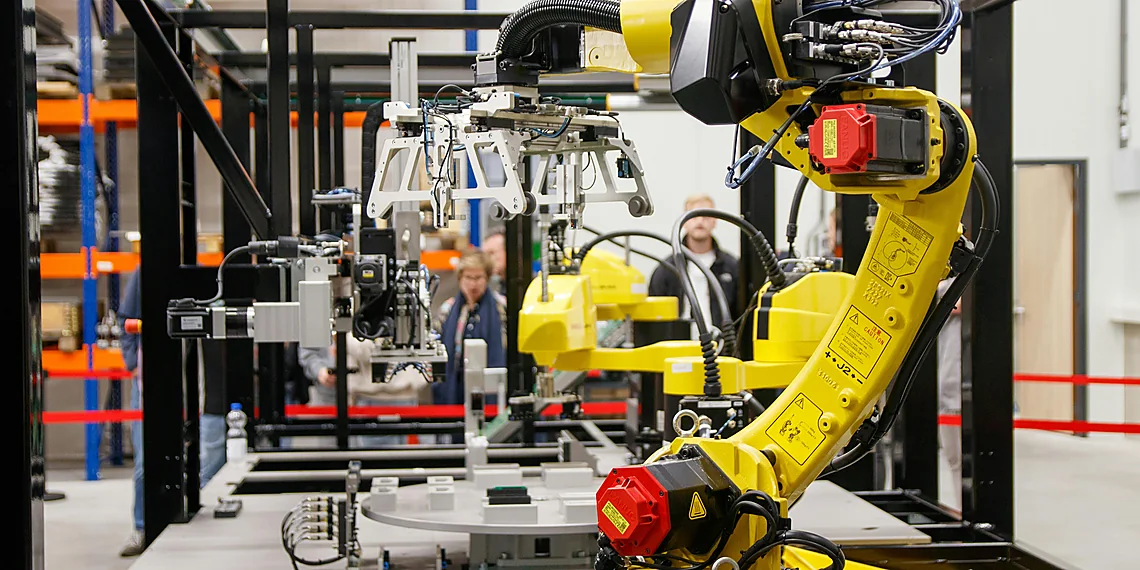


The quest for truly autonomous systems – robots navigating complex environments, self-driving vehicles reacting to unpredictable situations, and industrial machinery optimizing performance in real-time – is pushing the boundaries of artificial intelligence like never before.
Traditional AI models often rely on sending vast amounts of data to centralized cloud servers for processing, creating latency bottlenecks and raising concerns about bandwidth limitations and privacy.
A critical shift is underway towards what we’re calling Edge Physical AI, bringing computational power closer to the source of data generation – directly onto devices operating within the physical world.
One promising avenue for achieving this involves Neural Ordinary Differential Equations (Neural ODEs), which offer a powerful way to model continuous-time dynamics but are notoriously computationally demanding and difficult to deploy efficiently on resource-constrained hardware at the edge, creating a significant hurdle for practical applications of autonomous systems. This presents a real challenge when you need immediate insights from sensor data in dynamic environments like manufacturing or disaster response scenarios – waiting for cloud processing isn’t an option. The limitations of current methods are becoming increasingly apparent as we strive for more responsive and reliable autonomy across industries. However, a new approach is emerging that tackles these challenges head-on, promising to unlock the full potential of Edge Physical AI. We’ll be exploring this exciting development shortly.
The Challenge of Physical AI at the Edge
Autonomous systems are increasingly tasked with operating in complex, unpredictable real-world environments – from self-driving vehicles navigating bustling city streets to industrial robots performing intricate assembly tasks. The ability for these systems to not just react but *understand* the underlying physical dynamics of their surroundings is paramount. This ‘Physical AI’ allows them to anticipate events, optimize performance, and crucially, operate safely. Imagine a self-driving car needing to predict how a pedestrian will move based on subtle cues or an industrial robot anticipating stress fractures in a material it’s manipulating; these scenarios demand real-time understanding far beyond simple pattern recognition.
Current approaches to achieving this level of understanding often struggle when deployed at the ‘edge’ – meaning directly on the device itself, rather than relying on cloud connectivity. Traditional methods for Model Recovery (MR), a key technique for extracting governing equations from sensor data, frequently utilize Neural ODE formulations. While powerful in theory, these formulations demand computationally intensive iterative solvers that are difficult to accelerate efficiently on resource-constrained edge hardware like microcontrollers or even GPUs. This limitation restricts the responsiveness and energy efficiency of autonomous systems operating under tight latency, compute, and power budgets.
The consequences of this bottleneck extend beyond mere performance. Relying on cloud processing introduces unacceptable delays in safety-critical applications; a fraction of a second can be the difference between a near miss and an accident. Furthermore, cloud dependence creates vulnerabilities to network outages and raises privacy concerns about transmitting sensitive data. True autonomy requires systems capable of making informed decisions locally, based on their own understanding of the physical world – a capability that demands novel hardware-accelerated solutions.
The need for efficient Physical AI at the edge is driving innovation in specialized hardware architectures. The recent work introducing MERINDA (Model Recovery in Reconfigurable Dynamic Architecture) directly addresses this challenge by leveraging FPGAs to significantly accelerate MR processes, opening up new possibilities for safe, explainable, and responsive autonomous systems operating in real-world conditions.
Why Real-Time Understanding Matters
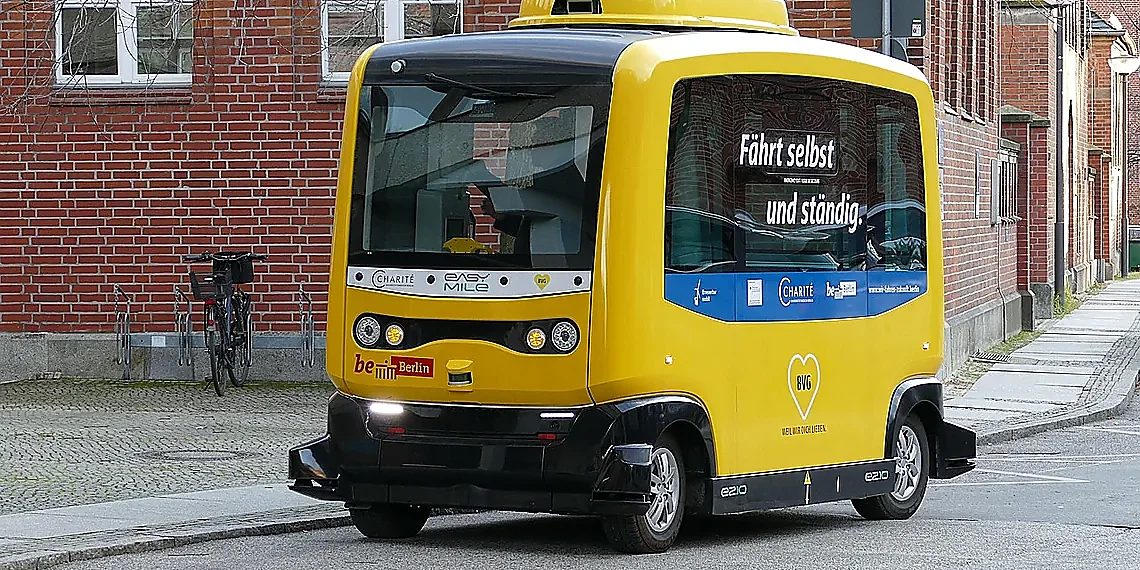
Real-time understanding of system dynamics is becoming increasingly critical across a range of applications, particularly those involving autonomous operation. Consider self-driving cars; they must instantaneously interpret sensor data to predict the behavior of pedestrians, cyclists, and other vehicles, making split-second decisions that directly impact safety. Similarly, in industrial robotics, precise control and adaptation to unexpected events – like a sudden shift in load or an obstruction on a conveyor belt – demand immediate analysis and response.
The implications of failing to achieve this real-time understanding are significant. In self-driving scenarios, delayed reaction times can lead to accidents; in industrial settings, inefficient operation or even damage to equipment can result. Safety is paramount, but efficiency also benefits greatly from systems that can proactively adapt and optimize their performance based on a continuous, evolving understanding of the physical environment they operate within.
Current approaches to ‘Model Recovery’ (MR), a technique used to identify governing equations from sensor data – vital for this real-time understanding – often rely on computationally intensive iterative solvers. These methods, while promising, struggle to meet the stringent latency, compute, and power constraints inherent in edge deployments where resources are limited and immediate responses are essential.
Neural ODEs: A Bottleneck?
Existing model recovery (MR) techniques, crucial for enabling safe and explainable monitoring in edge AI systems – particularly those utilizing ‘Edge Physical AI’ – often stumble when faced with real-world constraints. Many state-of-the-art approaches, such as EMILY and PINN+SR, leverage Neural Ordinary Differential Equations (Neural ODEs) to identify governing equations from sensor data. While powerful theoretically, this reliance on Neural ODEs introduces a significant bottleneck: the need for iterative solvers.
The core problem lies in how Neural ODEs function. They essentially approximate differential equations through repeated evaluations of a neural network, requiring multiple iterations to achieve convergence and accurate results. Each iteration demands substantial computational resources, leading to high power consumption and increased latency – both unacceptable burdens for edge devices operating under strict limitations. While GPUs offer acceleration for these iterative processes, their size, power draw, and cost often make them impractical in resource-constrained environments like embedded systems or field robotics.
Consider a scenario where an autonomous vehicle needs to rapidly understand the dynamics of its suspension system to adapt to changing road conditions. A Neural ODE-based MR method struggling with iterative solver overhead could delay this adaptation, potentially compromising safety. The very promise of ‘Edge Physical AI’ – real-time understanding and prediction – is undermined by these computational bottlenecks. Existing recovery methods simply aren’t designed for the power budgets and latency requirements typical of edge deployments.
Therefore, a fundamental shift in approach is needed to unlock the full potential of model recovery at the edge. The research detailed in arXiv:2512.23767v1 introduces MERINDA, an FPGA-accelerated framework specifically designed to address these limitations and pave the way for truly practical ‘Edge Physical AI’ solutions.
The Problem with Iterative Solvers

Many modern approaches to Model Recovery (MR), a critical component of Edge Physical AI, utilize Neural Ordinary Differential Equations (Neural ODEs). These formulations express the system’s dynamics as an infinite-dimensional differential equation solved numerically. Crucially, solving these equations requires iterative solvers – numerical methods that repeatedly refine an approximation until a desired accuracy is achieved. This iterative process inherently demands significant computational resources and introduces latency, making them challenging to implement on resource-constrained edge devices.
The problem is exacerbated by the reliance on Graphics Processing Units (GPUs) for training and inference of these Neural ODE models. While GPUs excel at parallel processing and can accelerate certain computations, their power consumption and size are often prohibitive in edge environments like autonomous vehicles, drones, or industrial sensors. Deploying a GPU-dependent MR system would likely violate the stringent latency, compute, and power constraints that define Edge Physical AI applications.
Consequently, current Neural ODE-based Model Recovery techniques present a bottleneck for realizing truly practical and efficient physical AI at the edge. The iterative nature of their solvers, combined with the typical reliance on GPUs, creates an impedance to real-time understanding and prediction of real-world dynamics, hindering the development of safe and explainable autonomous systems.
Introducing MERINDA: A Hardware-Accelerated Solution
Introducing MERINDA (Model Recovery in Reconfigurable Dynamic Architecture), a groundbreaking framework designed to dramatically accelerate the process of Physical AI at the edge. Traditional model recovery methods – crucial for autonomous systems needing to understand and predict real-world behavior – often rely on computationally intensive Neural ODE formulations that struggle with the stringent latency, power, and compute limitations inherent in edge deployments. MERINDA directly addresses this challenge by leveraging a novel FPGA-accelerated architecture, moving beyond iterative solvers towards a significantly more efficient approach for extracting governing equations from sensor data.
At its core, MERINDA combines several key innovations to achieve unparalleled performance. The system utilizes GRU (Gated Recurrent Unit)-based dynamics models to capture the temporal evolution of physical systems. These are coupled with dense inverse-ODE layers that efficiently reconstruct the underlying physics. To further enhance efficiency and robustness, a sparsity-driven dropout mechanism is integrated, reducing computational load without sacrificing accuracy. This targeted pruning allows for more streamlined operations on the FPGA.
The architectural brilliance of MERINDA extends to its lightweight ODE solvers – specifically engineered to minimize latency while maintaining precision. Unlike conventional methods that require complex iterative processes, these solvers are optimized for parallel execution on the reconfigurable hardware fabric of the FPGA. By leveraging this parallelism and the inherent efficiency gains from GRU dynamics and sparsity-driven dropout, MERINDA enables real-time model recovery capabilities previously unattainable in resource-constrained edge environments.
Ultimately, MERINDA represents a significant step towards practical Physical AI deployment. Its ability to efficiently recover governing equations directly on edge hardware opens doors for safer, more explainable, and truly autonomous systems operating within mission-critical applications where rapid understanding of physical dynamics is paramount.
GRU Dynamics, Sparse Dropout & Parallelism
MERINDA’s efficiency stems from a novel combination of techniques tailored for hardware acceleration. At its core, the system utilizes Gated Recurrent Units (GRUs) to model the temporal dynamics of physical systems. Unlike traditional Neural ODE approaches that rely on dense, iterative ODE solvers, MERINDA employs discrete GRU steps which are inherently more amenable to parallelization and efficient implementation on Field-Programmable Gate Arrays (FPGAs). This shift avoids the computational bottleneck associated with continuous-time integration.
A key innovation is the incorporation of ‘dense inverse-ODE’ layers. These layers effectively learn a mapping from system states to parameters within the governing equations, allowing for model recovery without explicitly solving ODEs. Furthermore, MERINDA integrates sparsity-driven dropout during training. This technique encourages the network to learn robust representations by selectively pruning connections, reducing computational load and improving generalization – crucial factors in resource-constrained edge environments.
To further optimize performance, MERINDA incorporates lightweight ODE solvers specifically designed for parallel execution on FPGAs. These solvers are significantly faster than those used in existing methods like EMILY and PINN+SR while maintaining accuracy. The combination of GRU dynamics, sparse dropout, and these optimized solvers allows MERINDA to achieve a substantial reduction in latency and power consumption compared to previous Model Recovery (MR) techniques, making it suitable for real-time Edge Physical AI applications.
Performance Gains & Real-World Impact
The emergence of Edge Physical AI promises transformative capabilities for autonomous systems, but achieving real-time understanding and prediction of physical dynamics demands hardware solutions optimized for efficiency. Traditional model recovery (MR) techniques, crucial for safe and explainable monitoring in mission-critical applications like robotics, self-driving vehicles, and industrial automation, have historically struggled with the resource constraints inherent to edge deployments. Existing approaches often rely on computationally intensive Neural ODE formulations that prove difficult to accelerate effectively on standard hardware. Enter MERINDA (Model Recovery in Reconfigurable Dynamic Architecture), a groundbreaking FPGA-accelerated framework poised to redefine the landscape of Edge Physical AI.
The performance gains achieved by MERINDA are truly remarkable, demonstrating a significant leap forward compared to GPU implementations of similar MR models. Numbers speak volumes: MERINDA boasts an astounding 114x reduction in energy consumption, shrinking the memory footprint by a factor of 28, and delivering training speeds that are 1.68 times faster than its GPU-based counterparts. These aren’t marginal improvements; they represent a fundamental shift in what’s possible at the edge. Imagine deploying complex physical models on resource-constrained devices without sacrificing performance or incurring prohibitive power bills – MERINDA makes this a reality.
The real-world impact of these enhancements extends far beyond mere efficiency metrics. Reduced energy consumption translates directly to longer battery life for autonomous robots and drones, while smaller memory footprints enable deployment on embedded systems with limited resources. The faster training speeds accelerate the development cycle, allowing engineers to rapidly iterate and refine models in response to changing operational conditions. This combination unlocks a wealth of new applications previously deemed impractical due to hardware limitations.
Looking ahead, MERINDA’s architecture provides a foundation for further advancements in Edge Physical AI. Its reconfigurable dynamic design allows it to adapt to diverse model recovery tasks and physical systems, paving the way for increasingly sophisticated autonomous agents capable of interacting with and understanding their environments in real-time. The team’s work signifies not just an incremental improvement but a paradigm shift towards truly practical and deployable solutions for Edge Physical AI.
Numbers Speak Volumes: Energy, Memory, Speed
The newly developed MERINDA (Model Recovery in Reconfigurable Dynamic Architecture) framework demonstrates a dramatic leap forward in Edge Physical AI capabilities, particularly when considering energy consumption. Compared to traditional GPU-based Model Recovery (MR) implementations, MERINDA achieves an astonishing 114 times lower energy usage. This reduction is critical for resource-constrained edge devices like those found in autonomous vehicles, robotics, and remote sensing applications where power budgets are severely limited.
Beyond energy efficiency, MERINDA also significantly reduces the memory footprint required for MR tasks. The framework achieves a 28 times smaller memory footprint compared to its GPU counterparts. This compact design allows MERINDA-powered systems to operate effectively on devices with limited onboard memory, expanding the range of possible deployment scenarios and enabling more complex AI models to run directly on edge hardware.
Finally, training speed benefits significantly from MERINDA’s FPGA acceleration. The framework demonstrates a 1.68 times faster training rate when compared to GPU-based methods. This accelerated training allows for quicker adaptation to changing environmental conditions and facilitates the development of more robust and responsive autonomous systems operating in dynamic real-world scenarios.

The advancements showcased by MERINDA represent a significant leap forward, demonstrating that truly intelligent systems can now operate efficiently within resource-constrained environments, unlocking unprecedented possibilities for real-time decision making. We’ve seen how hardware acceleration fundamentally alters the landscape of physical AI, moving beyond theoretical potential to tangible performance gains in complex scenarios. This breakthrough is particularly exciting because it directly addresses a core challenge: enabling sophisticated understanding and interaction with the physical world without relying on constant cloud connectivity. The ability to process sensor data locally, rapidly adapt to changing conditions, and operate autonomously opens doors for applications ranging from advanced robotics and autonomous vehicles to smart manufacturing and precision agriculture. Looking ahead, we anticipate further refinement of these hardware architectures, leading to even greater power efficiency and expanded capabilities – truly pushing the boundaries of what’s possible with Edge Physical AI. The convergence of specialized hardware and sophisticated algorithms is poised to redefine how machines perceive and interact with their surroundings. To delve deeper into the technical details and explore the full scope of this research, we invite you to examine the linked paper; consider how these innovations might reshape industries and create new opportunities for innovation within your own work.
We believe that understanding the implications of localized intelligence is crucial for anyone involved in developing future technologies. The potential impact extends far beyond immediate applications, prompting us to re-evaluate existing paradigms and consider entirely new approaches to problem solving.
Continue reading on ByteTrending:
Discover more tech insights on ByteTrending ByteTrending.
Discover more from ByteTrending
Subscribe to get the latest posts sent to your email.