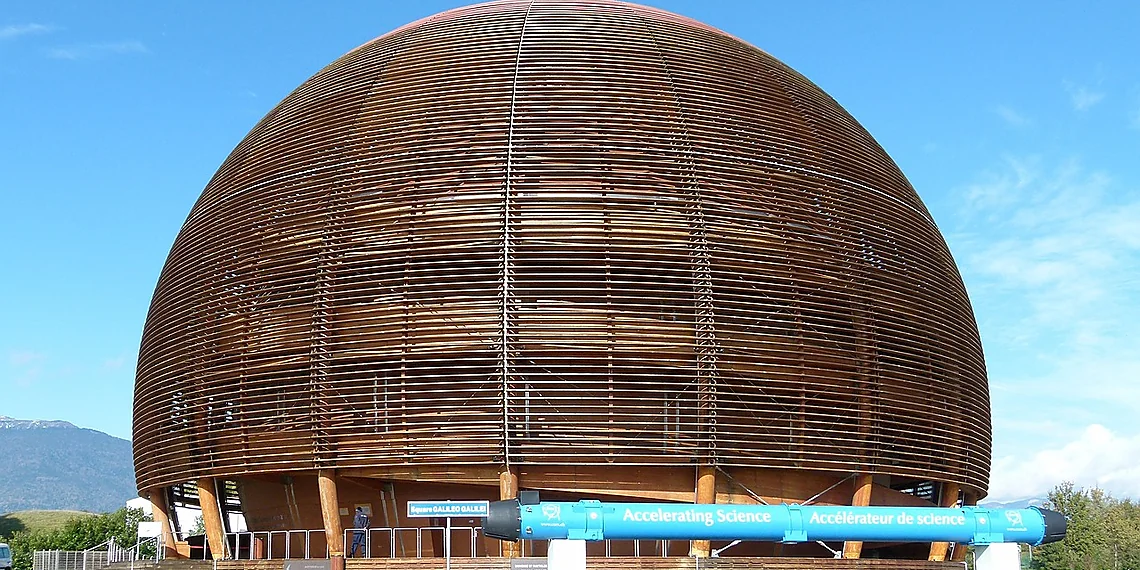



The quest to understand the universe’s most fundamental building blocks is entering a thrilling new phase, fueled by an extraordinary surge of support for CERN and its ambitious research programs.
For decades, the Large Hadron Collider has pushed the boundaries of particle physics, revealing secrets about dark matter, the Higgs boson, and the very fabric of reality. Now, scientists are looking even further, envisioning a machine capable of probing deeper into these mysteries than ever before.
That vision takes shape in the Future Circular Collider, a proposed successor to the LHC designed to be significantly larger and more powerful, promising revolutionary insights into particle physics and beyond.
What’s truly remarkable is the recent commitment from private investors – an unprecedented level of funding that signals immense confidence in CERN’s future and the potential for groundbreaking discoveries. This injection of capital represents a pivotal moment, accelerating plans and opening doors to technological advancements previously deemed unattainable within conventional timelines. The scale of this support underscores the global recognition of particle physics’ importance and its capacity to inspire innovation across multiple sectors. It’s not just about building a bigger machine; it’s about fostering collaborative exploration at an entirely new level.
A Historic Investment in Fundamental Physics
The recent pledge of 860 million euros from private donors marks a watershed moment for CERN and the scientific community as a whole. This unprecedented level of support, coming directly from individuals and philanthropic foundations like the Breakthrough Prize Foundation and The Eric and Wendy Schmidt Fund, represents the first time in CERN’s history that private funding has been secured for a flagship research project – specifically, the Future Circular Collider (FCC). It’s more than just a financial boost; it signals a potential shift in how ambitious scientific endeavors are funded, moving beyond traditional reliance on governmental budgets.
The motivations behind this groundbreaking investment are multifaceted. CERN’s mission to push the boundaries of human knowledge and explore fundamental questions about the universe resonates deeply with these philanthropists. They recognize that projects like the FCC require extraordinary resources, and the evolving geopolitical landscape presents challenges for securing consistent public funding. By stepping in, these donors demonstrate a belief in the transformative potential of the FCC – its ability to unlock new discoveries in particle physics and potentially revolutionize our understanding of reality.
The Future Circular Collider itself is an ambitious undertaking, envisioned as a successor to the Large Hadron Collider (LHC). It aims to probe even deeper into the mysteries of the universe, searching for answers to some of the most pressing questions in science. This private investment isn’t just about building a bigger machine; it’s about fostering innovation and ensuring that fundamental research remains at the forefront of scientific progress. It opens up possibilities for accelerated development and potentially allows CERN to explore novel technologies and approaches.
Looking ahead, this landmark agreement could pave the way for a new era in funding models for major scientific initiatives globally. While public funding will undoubtedly remain crucial, the willingness of private donors to invest significantly demonstrates a growing recognition of the value – both intrinsic and societal – of fundamental research. This sets a precedent that other international science collaborations may well follow, potentially unlocking further resources and accelerating discoveries across various fields.
Beyond Public Funds: A New Era for CERN?

CERN’s recent securing of 860 million euros in private funding for the Future Circular Collider (FCC) marks a significant departure from the organization’s traditional reliance on public funds. Historically, CERN has been almost entirely supported by its member states – primarily European nations – through contributions to its annual budget. While philanthropic support has existed for smaller initiatives and scholarships, this represents the first time private donors have committed such substantial resources towards a core, flagship research project of this scale, highlighting a potential shift in how large-scale scientific endeavors are financed.
The motivations behind this unprecedented investment appear multifaceted. Donors like the Breakthrough Prize Foundation, founded by Yuri Milner, and John Elkann, representing the Agnelli family’s interests, have demonstrated a strong commitment to supporting fundamental science and pushing the boundaries of human knowledge. The Eric and Wendy Schmidt Fund for Strategic Innovation focuses on transformative technologies that can accelerate scientific discovery, aligning with the FCC’s ambitious goals. This also reflects a growing recognition among philanthropists of the value of basic research in driving innovation across various sectors.
This private funding injection signals a potential evolution in CERN’s long-term financial model. While public support remains crucial and will continue to be the primary source, this initial success could pave the way for increased private involvement in future projects, offering greater flexibility and potentially enabling more ambitious scientific goals than would otherwise be possible. It also demonstrates a willingness on CERN’s part to explore alternative funding avenues as research costs escalate and competition for public resources intensifies.
Understanding the Future Circular Collider
The Future Circular Collider (FCC) represents a monumental leap forward in our quest to understand the fundamental building blocks of the universe. Currently, the Large Hadron Collider (LHC) at CERN has revolutionized particle physics, but it’s reaching its limits. The FCC is envisioned as its successor, designed to probe even deeper into the mysteries of dark matter, dark energy, and the origin of mass – questions that remain largely unanswered.
Technically, the FCC would be a behemoth compared to the LHC. While the LHC has a circumference of 27 kilometers, the FCC is planned to have a circumference of approximately 100 kilometers, potentially requiring a tunnel extending beyond CERN’s existing site. It’s also projected to operate at significantly higher energies – aiming for collision energies exceeding those achievable by the LHC. This increase in power will allow scientists to create and study particles with unprecedented precision, pushing the boundaries of our current understanding.
The need for such a massive undertaking stems from the limitations of existing experiments. The LHC has confirmed many predictions of the Standard Model of particle physics, but it hasn’t provided all the answers. For example, we still don’t know what constitutes dark matter – which makes up roughly 85% of the universe’s mass – or why neutrinos have mass. The FCC offers a unique opportunity to explore these and other open questions, potentially revealing new particles and forces beyond the Standard Model.
Ultimately, the Future Circular Collider aims to provide crucial insights into the nature of reality itself. By pushing the boundaries of particle physics, it has the potential to reshape our understanding of the cosmos and unlock secrets that have eluded scientists for decades. The recent pledge of 860 million euros from private donors is a testament to the project’s significance and demonstrates unprecedented support for fundamental scientific research.
Successor to the LHC: A Giant Leap Forward

The Future Circular Collider (FCC) represents a significant leap forward in particle physics research compared to its predecessor, the Large Hadron Collider (LHC). While the LHC boasts a circumference of 27 kilometers and operates at a peak energy of 13.6 TeV, the proposed FCC aims for a staggering 100-kilometer circumference and an operational energy range potentially reaching up to 348 TeV for proton-proton collisions or 1.5 TeV for electron-positron collisions. This substantial increase in size and power will allow scientists to probe particle interactions at unprecedented scales.
The increased energy of the FCC is crucial for addressing some of the most pressing unanswered questions in particle physics. The LHC has already made groundbreaking discoveries, including confirming the existence of the Higgs boson. However, phenomena like dark matter, neutrino masses, and the imbalance between matter and antimatter remain mysteries. Higher collision energies at the FCC would allow physicists to search for new particles beyond the Standard Model, explore the nature of dark matter candidates, and precisely measure properties of known particles with greater accuracy.
Beyond simply achieving higher energy, the FCC’s design incorporates advancements in accelerator technology. It envisions a more compact interaction region – where collisions occur – enabling higher luminosity (collision rate) without requiring an excessively large tunnel. The electron-positron component of the FCC, designated as FCC-ee, will also allow for precision measurements of known particles like the Higgs boson and Z boson, providing valuable insights into fundamental symmetries and potential new physics at lower energy scales.
The Impact Beyond Physics
The unprecedented influx of private funding – a remarkable 860 million euros pledged by individuals and foundations – signals more than just financial support for CERN’s Future Circular Collider (FCC). It represents a profound shift in how large-scale scientific endeavors are approached, demonstrating a growing recognition of the far-reaching benefits that extend well beyond pure physics research. While the FCC promises groundbreaking discoveries about the fundamental nature of the universe, its impact will ripple outwards, touching numerous aspects of society and driving innovation across diverse industries.
A key area where this broader impact is expected to be felt is in technological spin-offs. The sheer scale of the FCC project necessitates advancements in fields like materials science, high-performance computing, and advanced detector technology – innovations that are rarely confined to particle physics applications. For instance, the development of highly efficient superconducting magnets crucial for the FCC’s operation could lead to breakthroughs in energy storage and transmission. Similarly, the massive datasets generated by the collider will demand cutting-edge data processing techniques, pushing the boundaries of computing power and potentially revolutionizing fields like artificial intelligence and machine learning.
The potential benefits aren’t limited to technology; advancements driven by FCC research are poised to impact critical areas such as medicine. Sophisticated imaging technologies developed for particle detectors could lead to improved diagnostic tools and treatment methods. The intricate manufacturing processes required for the FCC’s components often spur innovation in precision engineering, benefiting industries ranging from aerospace to automotive. This cross-pollination of ideas and techniques exemplifies how fundamental research can catalyze progress across a wide spectrum of human endeavor.
Ultimately, this private investment underscores the understanding that scientific exploration isn’t solely about expanding our knowledge of the cosmos; it’s an engine for societal advancement. The Future Circular Collider project, fueled by both public and now significant private support, promises to be a catalyst for innovation, creating tangible benefits in medicine, energy, computing, and beyond – solidifying its place as a transformative endeavor with implications far exceeding the realm of particle physics.
Innovation Across Industries: From Medicine to Computing
The Future Circular Collider (FCC) isn’t just about pushing the boundaries of particle physics; it’s a catalyst for innovation across numerous industries. The sheer scale and complexity of the project necessitate advancements in materials science, particularly in developing superconducting magnets capable of handling unprecedented magnetic fields. These breakthroughs have direct applications in medical imaging technologies like MRI, potentially leading to higher resolution scans and improved diagnostic capabilities. Furthermore, research into novel materials could revolutionize energy storage solutions, contributing to more efficient batteries and renewable energy systems.
Advanced computing is another crucial area where the FCC will drive significant progress. Analyzing the vast datasets generated by the collider requires cutting-edge algorithms and high-performance computing infrastructure. This demand fuels innovation in areas like distributed computing, data analytics, and machine learning – technologies increasingly vital for fields ranging from drug discovery to financial modeling. The development of specialized hardware and software for the FCC will likely find broader applications, accelerating advancements across the digital landscape.
Beyond materials science and computing, the precision engineering required for the FCC’s detectors and accelerator components can benefit sectors like aerospace and manufacturing. The need for extremely accurate alignment and control systems pushes the limits of what’s possible in robotics and automation. These improvements translate to more efficient production processes and enhanced product quality across various industries, highlighting the far-reaching impact of fundamental research initiatives like the Future Circular Collider.
Looking Ahead: Timeline and Future Prospects
The injection of 860 million euros from private donors marks a pivotal moment for the Future Circular Collider (FCC) project, accelerating its development beyond what was previously anticipated. While CERN has historically relied heavily on funding from its Member States, this unprecedented level of philanthropic support signifies growing recognition of the FCC’s potential to revolutionize particle physics and advance fundamental scientific understanding. This initial investment will primarily fuel the FCC’s crucial preparatory phase – specifically, detailed design studies, technological development programs, and extensive site investigations required before construction can truly begin.
Looking ahead, the timeline for the FCC remains ambitious but increasingly concrete. The current expectation is for completion in the mid-2040s, a timeframe contingent on securing further funding and navigating complex regulatory approvals. A critical next step involves formal endorsement from CERN’s governing bodies and, crucially, unanimous agreement from all 23 Member States – a process that necessitates robust international collaboration and ongoing dialogue regarding resource allocation and project priorities. This approval stage is anticipated to unfold over the next few years, with preliminary design reports expected in the late 2020s.
The path toward realizing the Future Circular Collider isn’t without potential challenges. Beyond financial hurdles – securing the remaining estimated €13-25 billion needed for construction will require sustained effort and potentially innovative funding models – technical obstacles remain. These include developing advanced superconducting magnets capable of handling significantly higher magnetic fields than those used in the LHC, designing a novel tunnel excavation technique to accommodate the larger circumference, and addressing potential environmental impacts associated with such a massive infrastructure project. Successfully overcoming these engineering feats and navigating the political landscape will be paramount to the FCC’s ultimate success.
Ultimately, the private funding boost strengthens the FCC’s prospects considerably, allowing for more detailed planning and preliminary work that will pave the way for future approvals and construction. The commitment from individuals and foundations like those involved demonstrates a shared belief in the transformative power of fundamental research and offers a crucial lifeline to this ambitious scientific endeavor, setting the stage for a new era of discovery at CERN.
The Road to 2040s: Approvals and Challenges
The Future Circular Collider (FCC) project is currently on track for a projected completion date in the mid-2040s, though this timeline remains subject to ongoing assessments and approvals. The initial phase, known as FCC-ee (Future Circular Collider – electron-positron), is envisioned to begin operations around 2042, followed by the proton-proton collider, FCC-hh (Future Circular Collider – hadron hadron), potentially starting up in the late 2040s or early 2050s. This ambitious timeline necessitates securing funding and navigating complex regulatory processes over the next two decades.
Crucially, the success of the FCC hinges on continued commitment from CERN’s Member States, who will bear the majority of the project’s financial burden. While the recent pledge of 860 million euros from private donors marks a historic milestone and demonstrates broad support for fundamental research, it represents only a fraction of the estimated total cost – currently projected to be between €9 billion and €13 billion for FCC-ee alone. The European Council’s approval will also be essential to move forward with construction.
Several significant challenges remain. These include securing long-term funding commitments from Member States amidst competing national priorities, addressing potential environmental impact assessments related to the massive tunnel required (approximately 100km in circumference), and developing innovative accelerator technologies to achieve the FCC’s unprecedented performance goals. Geopolitical factors and broader economic conditions could also influence the project’s progress.

The recent influx of private funding marks a pivotal moment, not just for CERN, but for the entire landscape of particle physics research; it’s a resounding vote of confidence in the pursuit of fundamental knowledge and technological innovation.
This support underscores the global recognition of the transformative potential held within projects like the Future Circular Collider, promising to push the boundaries of our understanding of the universe’s building blocks and forces.
The ability to secure such substantial investment demonstrates that ambitious scientific endeavors can thrive through collaborative efforts between public institutions and private entities, fostering a new era of discovery.
Imagine the breakthroughs awaiting us – deeper insights into dark matter, potentially revealing entirely new particles and interactions; this funding accelerates that journey significantly, bringing those possibilities closer to reality. The implications are truly staggering and could reshape our understanding of everything from cosmology to materials science. It’s an exciting time to be involved in scientific exploration, fueled by both ingenuity and generous support. We stand on the precipice of a new age for physics, propelled forward by this remarkable partnership between CERN and its private benefactors. Ultimately, it’s about expanding our horizons and unlocking the secrets that lie just beyond our current grasp. If you’re captivated by these developments and eager to delve further into the fascinating world of particle physics, we invite you to explore more. Learn about CERN’s groundbreaking work and the ambitious plans for the Future Circular Collider through the resources linked below – your journey of discovery starts here!
Continue reading on ByteTrending:
Discover more tech insights on ByteTrending ByteTrending.
Discover more from ByteTrending
Subscribe to get the latest posts sent to your email.