The Brazilian space sector is experiencing a surge of innovation, driven by ambitious startups pushing boundaries and redefining what’s possible beyond Earth’s atmosphere. Among these rising stars is Layka Space, a company rapidly gaining recognition for its groundbreaking approach to reusable rocket technology. Their mission isn’t just about reaching orbit; it’s about democratizing access to space and fostering a new era of Brazilian leadership in the global aerospace landscape. This represents a pivotal moment for Brazil’s ambitions in space exploration and commercialization.
At the heart of Layka Space’s early development is a fascinating project known as Flight Hopper, a prototype reusable rocket designed to drastically reduce launch costs and increase mission frequency. Think of it as a crucial stepping stone towards more affordable and readily available access to orbit for Brazilian researchers, businesses, and potentially even future space tourists. The team’s focus on reusability directly addresses the significant financial barriers that have historically limited participation in space activities.
Layka Space’s work with Flight Hopper signifies much more than just a single rocket prototype; it embodies a broader vision of building a robust and competitive Brazilian space ecosystem. By prioritizing innovation, collaboration, and accessibility, Layka Space is poised to play a vital role in shaping the future of space exploration – not only for Brazil but potentially for the world.
What is Flight Hopper?
Flight Hopper represents a novel approach to space access, envisioning a future where reaching orbit is significantly more frequent and affordable. Unlike traditional rockets which are largely expendable – meaning they’re discarded after a single use – Flight Hopper is designed as a small, reusable spacecraft. Think of it like an airplane for space; capable of multiple flights before needing significant refurbishment. This prototype project, spearheaded by a Brazilian startup (Layka Space), aims to break down the barriers currently hindering wider access to space for research, commercial applications, and potentially even tourism.


The core concept behind Flight Hopper is centered around minimizing launch costs through reusability. Traditional rocket launches involve immense expenses tied to manufacturing and discarding massive amounts of material. By recovering and reusing a significant portion of the spacecraft – ideally the entire vehicle – the cost per flight can be drastically reduced. This opens up opportunities for smaller payloads, more frequent missions, and allows for experimentation that would previously have been financially prohibitive. The envisioned operational model suggests a system where Flight Hopper could potentially launch multiple times within a short timeframe.
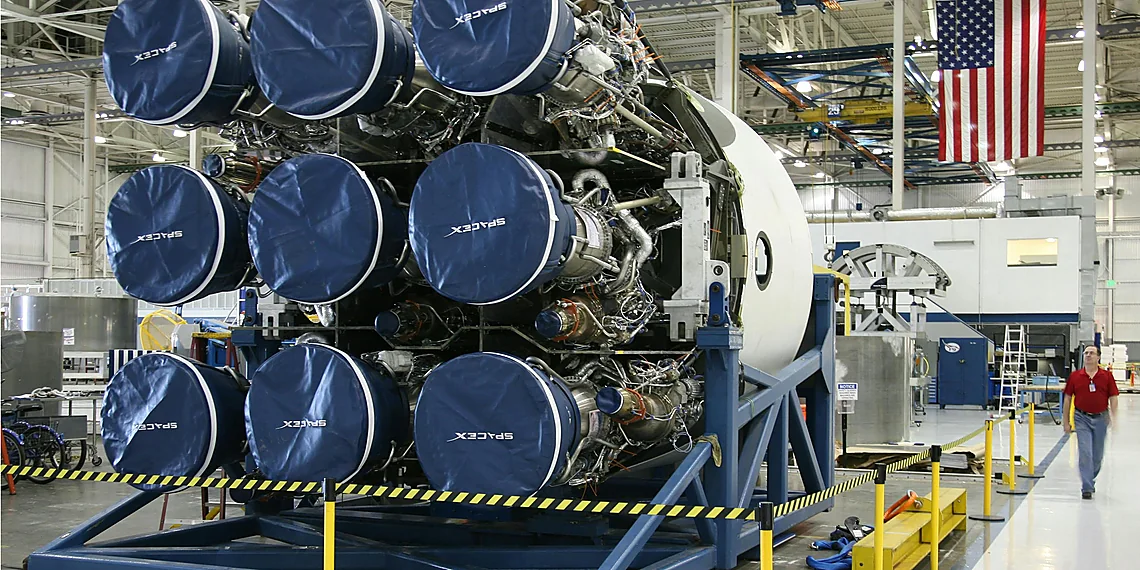
Flight Hopper’s design aligns with the growing trend toward reusable space access systems globally. Companies like SpaceX, with their Falcon 9 rockets, have already demonstrated the potential of partial reusability, landing booster stages for recovery and reuse. However, Flight Hopper takes this concept a step further by aiming for full or near-full reusability in a smaller package. This smaller scale allows for quicker turnaround times between flights and potentially simpler maintenance procedures, contributing further to cost reduction and increased operational tempo – all critical factors for establishing a sustainable space ecosystem.
Ultimately, the intended purpose of Flight Hopper extends beyond just lowering costs; it’s about democratizing access to space. By providing a more accessible platform for launch, Layka Space hopes to foster innovation across various sectors, from scientific research and satellite deployment to resource exploration and even inspiring future generations of engineers and scientists. The prototype currently under development is a crucial step towards realizing this ambitious vision.
Defining Reusable Space Access

Traditional rocket launches are incredibly expensive and wasteful. Most rockets are single-use; after delivering their payload, they’re discarded, often burning up in the atmosphere or crashing into the ocean. This ‘throwaway’ approach contributes significantly to launch costs, typically ranging from tens of millions to hundreds of millions of dollars per mission. Flight Hopper represents a shift towards a more sustainable and cost-effective model by focusing on reusability.
Flight Hopper, developed by the Brazilian startup Layka Space, aims to create a small, reusable spacecraft capable of frequent trips to low Earth orbit (LEO). Unlike traditional rockets that expend nearly all their mass for ascent and descent, Flight Hopper is designed to land back on Earth – ideally at a designated landing site – allowing it to be refurbished and flown again. This dramatically reduces the cost per launch by eliminating the need to build a new rocket each time.
The potential benefits of reusable space access are substantial. Lower costs open up opportunities for smaller payloads and more frequent missions, enabling advancements in areas like satellite servicing, space-based research, and even potentially facilitating broader commercial activities in orbit. Increased flight frequency also supports faster iteration cycles for deploying new technologies and responding to evolving needs.
Layka Space: The Startup Behind It
Flight Hopper, the innovative prototype attracting attention within Brazil’s burgeoning space sector, isn’t a solo endeavor. It’s the brainchild of Layka Space, a relatively young and ambitious startup hailing from Maranhão state. Founded in 2021, Layka Space represents a significant push to democratize access to space technology and foster local expertise – a departure from traditional reliance on international partners. The company’s name is an homage to Laika, the first animal launched into orbit, signifying their aspiration to push boundaries and contribute meaningfully to space exploration.
Based in Bacabal, Maranhão, Layka Space’s location isn’t arbitrary. Choosing this region underscores a commitment to regional development and providing opportunities for local talent. While presenting logistical challenges compared to more established tech hubs, the placement also provides access to unique resources and fosters strong ties with the local community, potentially unlocking untapped pools of skilled labor. The Maranhão Space Hub initiative, alongside Layka’s presence, aims to transform the region into a key player in Brazil’s space ecosystem.
The team behind Layka Space is comprised of engineers, physicists, and software developers, many of whom are recent graduates from local universities. This focus on nurturing young talent is central to their mission—building not just rockets but also a sustainable workforce for the Brazilian space industry. They’ve actively pursued partnerships with academic institutions and research centers in Maranhão, creating a collaborative environment that encourages innovation and knowledge sharing. The relative youth of the team fuels an energetic and agile approach to problem-solving, vital for navigating the complexities of space technology development.
Layka Space’s ambitions extend far beyond Flight Hopper. While this prototype demonstrates their capabilities in rocket design and trajectory optimization, they envision a future where Brazilian companies can independently launch satellites and conduct research missions. They are actively pursuing opportunities within the emerging New Space economy, focusing on cost-effective solutions and leveraging open-source technologies to accelerate development. Ultimately, Layka Space aims to be a catalyst for broader innovation and economic growth within Brazil’s space sector.
From Maranhão to Orbit
Layka Space’s decision to establish its headquarters in Bacabal, Maranhão, is strategically significant for both the company and the region. Located in northeastern Brazil, Maranhão faces considerable socio-economic challenges, including limited access to high-tech jobs and educational opportunities. Layka’s presence represents a tangible investment in the state, potentially stimulating local economic growth and inspiring a new generation of Brazilians to pursue careers in science, technology, engineering, and mathematics (STEM). The startup’s commitment is not merely about location; it actively seeks to recruit talent from the surrounding area, contributing directly to skills development.
The choice of Maranhão also offers unique advantages for space activities. The state’s proximity to the equator provides a launch advantage – rockets require less fuel to achieve orbit when launched closer to the equator due to Earth’s rotational velocity. While Alcântara Space Center, located further north in Maranhão, is already utilized for launches, Layka Space’s presence reinforces the state’s role as a key player in Brazil’s burgeoning space sector and could contribute to establishing a more robust regional ecosystem.
Despite these benefits, operating in Bacabal presents challenges. Infrastructure limitations – including reliable internet access and specialized equipment availability – are ongoing concerns that Layka must address. Furthermore, attracting and retaining highly skilled personnel away from larger urban centers requires focused efforts and competitive compensation packages. However, the startup’s determination to overcome these hurdles underscores its commitment to fostering innovation and creating opportunities within a historically underserved region of Brazil.
Technical Details & Future Plans
The Flight Hopper prototype, developed by Layka Space, represents a significant step towards accessible suborbital space travel for Brazil. While specific details remain somewhat limited due to the project’s early stage, available information reveals a focus on modularity and reusability. The vehicle itself is designed as a single-stage rocket, approximately 12 meters tall and boasting a diameter of roughly 3 meters. Initial projections indicate a payload capacity of around 150 kilograms, intended for scientific experiments, educational outreach programs, and potentially even small satellite deployments in the future. A key design element centers around its vertical takeoff and landing (VTOL) capabilities, aiming to reduce infrastructure requirements and operational costs compared to traditional horizontal launch systems.
Propulsion is currently slated to utilize a hybrid rocket motor system, a choice that offers a balance between performance and safety. The specifics of the fuel combination haven’t been publicly disclosed, but Layka Space has emphasized the importance of using locally sourced materials whenever possible, contributing to Brazil’s space independence. Planned operational altitude for initial test flights is around 50 kilometers, just beyond the Karman line (the internationally recognized boundary of outer space). This allows for valuable data collection on atmospheric conditions and provides a platform for microgravity research – all while remaining within relatively safe airspace parameters.
Looking ahead, Layka Space’s roadmap includes several crucial development phases. The immediate focus is on completing rigorous testing of the Flight Hopper prototype, including static fire tests and ultimately, suborbital flight attempts. Subsequent milestones involve increasing payload capacity, enhancing propulsion efficiency, and refining the vehicle’s autonomous navigation system. Longer-term aspirations include developing a family of Flight Hopper variants tailored to different mission profiles, potentially incorporating advanced technologies like electric propulsion for extended duration flights and even exploring orbital launch capabilities in the distant future.
Beyond hardware advancements, Layka Space is also actively pursuing partnerships with universities and research institutions across Brazil. This collaborative approach aims to foster innovation, train a new generation of space engineers, and ensure that Flight Hopper’s capabilities are leveraged for maximum scientific and societal benefit. The startup’s ambition extends beyond simply launching rockets; they envision creating a sustainable Brazilian space ecosystem built on accessible technology and fostering widespread participation in space exploration.
Prototype Specifications and Capabilities
The Flight Hopper prototype, developed by Brazilian startup Layka Space, is designed as a suborbital vehicle intended for research and technology demonstration purposes. Currently, the prototype measures approximately 6 meters in length and boasts a wingspan of roughly 8 meters. While precise weight figures remain confidential, it’s understood to be constructed primarily from lightweight composite materials to maximize performance. The initial design prioritizes maneuverability and reusability over maximizing payload capacity; however, the prototype is capable of carrying a modest payload of around 50 kilograms.
Propulsion for the Flight Hopper prototype relies on a hybrid rocket motor system utilizing a combination of solid fuel and liquid oxidizer. This choice aims to balance performance with cost-effectiveness and operational simplicity, crucial factors for a startup venture. Layka Space is also exploring electric propulsion systems for future iterations to potentially reduce environmental impact and enhance operational flexibility. The planned operational altitude for the initial prototype flights is targeted between 100km and 120km, placing it firmly within suborbital space.
A unique technological innovation incorporated into the Flight Hopper’s design centers around its autonomous flight control system. This system leverages advanced sensor fusion and machine learning algorithms to enable precise trajectory management and automated landing capabilities – a key element for ensuring reusability and reducing operational costs. Further development focuses on integrating miniaturized scientific instruments into future prototypes, allowing for in-situ data collection during suborbital flights.
Implications & The Future of Brazilian Space
Layka Space’s ‘Flight Hopper’ prototype represents a significant inflection point for Brazil’s burgeoning space industry, extending beyond just another launch attempt. Its focus on reusable suborbital flight technology directly addresses a critical bottleneck: the prohibitive cost of accessing space. Currently, only nations and large corporations possess the resources to regularly engage in orbital missions. Flight Hopper’s potential to dramatically reduce these costs could democratize access, opening doors for Brazilian universities, research institutions, and even smaller private companies – entities that previously lacked the financial means to participate meaningfully in space exploration and scientific advancement.
The implications of this increased accessibility are profound. Lower launch costs foster innovation by enabling more frequent experimentation and testing of new technologies. Imagine a scenario where Brazilian researchers can routinely deploy instruments into the suborbital environment to study atmospheric phenomena, test novel materials, or conduct microgravity experiments – all without requiring massive investment. This surge in activity would inevitably lead to the development of specialized expertise within Brazil, creating a virtuous cycle of innovation and attracting further investment into the sector. However, scaling this technology presents challenges; ensuring reliability and safety while maintaining cost-effectiveness will be paramount.
Beyond domestic impact, Flight Hopper also promises to enhance Brazil’s international collaboration in space. By offering a relatively affordable launch platform, Layka Space could become an attractive partner for foreign researchers and companies seeking access to Brazilian territory or unique orbital paths. This collaborative potential strengthens Brazil’s position within the global space community and fosters knowledge sharing, accelerating progress across multiple disciplines. Successful execution of this project would not only establish Brazil as a key player in suborbital flight but also pave the way for future collaborations in more ambitious space endeavors.
Looking ahead, the success of ‘Flight Hopper’ hinges on securing further funding, navigating regulatory hurdles, and demonstrating consistent reliability. While challenges undoubtedly exist, Layka Space’s initiative underscores a growing trend towards decentralized and accessible space exploration. If successful, it could redefine Brazil’s role in the global space landscape, transforming it from primarily a launch site to an active innovator and collaborator in shaping the future of space technology.
Democratizing Access to Space?
Flight Hopper, developed by Brazilian startup Layka Space, represents a potentially significant shift in how smaller entities access orbit. The prototype aims to provide ‘piggyback’ rides for small satellites – essentially utilizing existing launch vehicles’ underutilized capacity. Currently, the high cost of dedicated launches acts as a major barrier for universities, research institutions, and smaller companies wanting to deploy payloads into space. Flight Hopper’s model could drastically reduce these costs, opening up opportunities previously unavailable.
Increased accessibility to space fosters innovation across multiple sectors. Lower launch costs incentivize experimentation with novel satellite technologies, new mission concepts, and more frequent deployments. This can accelerate scientific discovery in areas like Earth observation, climate monitoring, and astrophysics. Furthermore, it empowers smaller Brazilian companies to develop specialized space-based services, contributing to the growth of a more diverse and resilient domestic space industry.
Despite its promise, Flight Hopper faces challenges. Integrating payloads safely and reliably onto existing launch vehicles requires meticulous engineering and regulatory approvals. There’s also the potential for increased competition within the rideshare market as other companies develop similar solutions. Finally, ensuring equitable access – preventing larger players from monopolizing available piggyback slots – will be crucial to realizing Flight Hopper’s vision of democratized space access.
Layka Space’s emergence as a significant player in Brazil’s burgeoning space sector is undeniably exciting, demonstrating a commitment to innovation that extends far beyond traditional aerospace approaches. The development of Flight Hopper represents more than just a technological achievement; it embodies a vision for accessible and affordable launch capabilities within the nation and potentially across Latin America. We’ve seen how Layka Space is tackling complex challenges with ingenuity and a focus on localized solutions, fostering a new generation of Brazilian space engineers and entrepreneurs in the process. The potential impact on scientific research, satellite deployment, and even future commercial ventures is considerable, positioning Brazil for greater autonomy and influence within the global space landscape. Ultimately, initiatives like Flight Hopper are crucial stepping stones toward realizing the full potential of Brazil’s space ambitions and fostering a more inclusive space economy. To stay informed about Layka Space’s groundbreaking work and contribute to conversations surrounding the democratization of space access, we encourage you to follow their progress closely and join the dialogue – the future of Brazilian space exploration is unfolding before our eyes.
The journey ahead for Layka Space will undoubtedly present new hurdles, but the foundation they’ve established with Flight Hopper provides a solid launchpad for continued success. The company’s dedication to sustainability and local talent development further strengthens its position as a leader in responsible space innovation. We believe that this is just the beginning of an incredible chapter for Brazilian space exploration and are eager to witness the impact Layka Space will have on the industry.
The democratization of space isn’t merely a buzzword; it’s a necessary evolution, and companies like Layka Space with projects like Flight Hopper are actively driving that change. We invite you to engage with Layka Space directly through their website and social media channels to learn more about their mission and contribute to the conversation about how we can make space exploration accessible to all.
Continue reading on ByteTrending:
Discover more tech insights on ByteTrending ByteTrending.
Discover more from ByteTrending
Subscribe to get the latest posts sent to your email.