
The future of robotics isn’t about rigid metal frames and predictable movements; it’s about fluidity, adaptability, and learning from nature’s most ingenious designs. For decades, scientists have looked to the animal kingdom for inspiration, but few creatures offer as compelling a blueprint as the octopus. Their unparalleled dexterity, camouflage abilities, and grace in motion represent a pinnacle of natural engineering that researchers are now striving to replicate. We’re thrilled to introduce OCTOID, a groundbreaking project pushing the boundaries of what’s possible in soft robotics.
OCTOID isn’t just another robot; it embodies the spirit of biomimicry at its finest. Drawing direct inspiration from the incredible octopus, this innovative creation showcases how understanding biological systems can unlock entirely new approaches to robotic design and functionality. The result is a remarkably agile machine capable of navigating complex environments with an almost unsettling ease.
Beyond its impressive movement capabilities, OCTOID also boasts an astonishing feature: dynamic color changing. Like its namesake, the octopus robot can alter its appearance in real-time, opening doors for applications ranging from interactive art installations to advanced underwater exploration and even subtle communication systems. This blend of sophisticated mechanics and visual adaptability truly sets OCTOID apart as a remarkable achievement in robotic innovation.
Mimicking Nature’s Genius
The field of biomimicry seeks inspiration from nature’s ingenious solutions to engineering challenges. Instead of relying solely on traditional mechanical designs, researchers look to the natural world—the flight of birds, the structure of spiderwebs, and even the way fish swim—to inform new technologies. OCTOID, a revolutionary octopus robot, exemplifies this approach perfectly. Octopuses were chosen as inspiration due to their extraordinary abilities: rapid color changes for camouflage, remarkable texture manipulation for blending into diverse environments, and incredibly flexible movements allowing them to navigate complex spaces with ease.
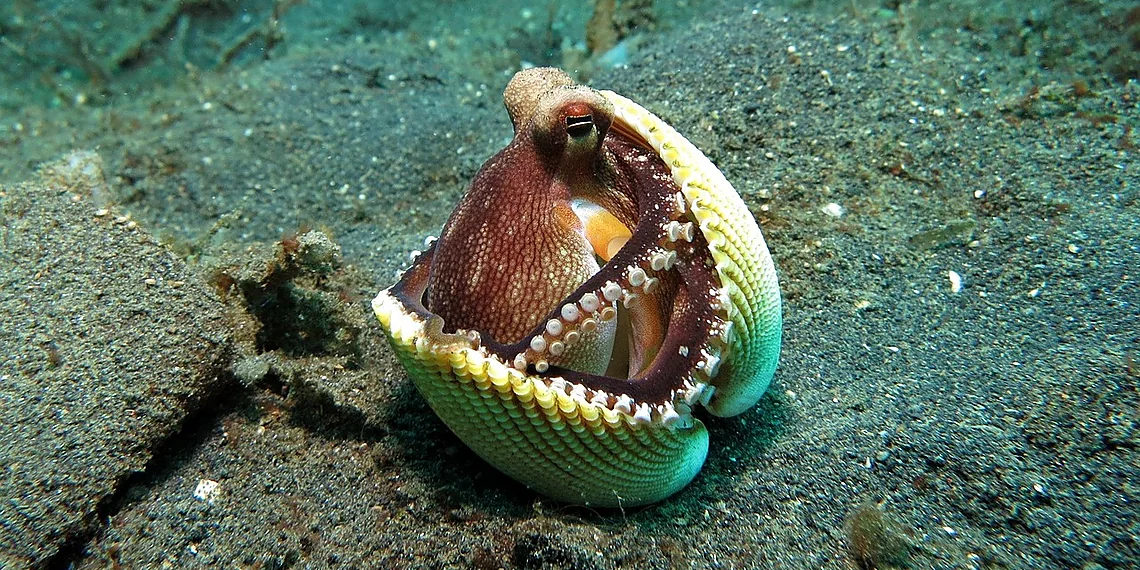
The octopus’s chameleon-like ability to alter its skin coloration isn’t merely aesthetic; it’s a vital survival mechanism. They can precisely mimic the colors and patterns of coral reefs or rocky seabeds, effectively disappearing from predators or silently approaching prey. Coupled with their fluid movements – achieved by individually controlling each arm—they present a significant challenge for roboticists attempting to replicate these capabilities. Creating a robot that can dynamically change color *and* move with similar grace and adaptability requires entirely new approaches beyond conventional rigid-body robotics.
Engineering OCTOID involved tackling several unique hurdles. Simply replicating the visual camouflage of an octopus demanded developing novel materials capable of rapidly changing color in response to electrical signals, essentially mimicking the chromatophores found within their skin. Furthermore, recreating the octopus’s flexible and coordinated arm movements proved difficult; traditional motors and actuators often lack the necessary softness and precision. The goal wasn’t just to build a robot that *looks* like an octopus, but one that moves and interacts with its environment in a manner inspired by its natural capabilities.
The combination of color-changing abilities and flexible movement opens up exciting possibilities for OCTOID’s applications. Imagine robots capable of inspecting underwater infrastructure without detection, exploring delicate environments without causing damage, or even assisting in search and rescue operations where adaptability is paramount. By studying and mimicking the octopus’s genius, engineers are pushing the boundaries of robotics and creating machines that can interact with the world in entirely new ways.
The Octopus Advantage
Octopuses possess a remarkable suite of abilities that have captivated scientists and engineers alike. Their most famous trick is rapid color change, achieved through specialized pigment-containing cells called chromatophores in their skin. These chromatophores, controlled by the nervous system, allow octopuses to blend seamlessly with their environment – shifting from vibrant blues and reds to earthy browns and greens in fractions of a second. Beyond color, they can also manipulate skin texture, creating bumps or flattening it entirely, further enhancing their camouflage capabilities.
This dynamic adaptability isn’t just for show; it’s crucial for survival. Octopuses use these abilities to evade predators like sharks and moray eels, ambush prey such as crabs and shrimp, and even communicate with each other through complex patterns of color and texture changes. Their bodies are also incredibly flexible thanks to a decentralized nervous system – each arm can act somewhat independently, allowing them to navigate tight spaces, grip objects securely, and move in ways that would be impossible for traditional rigid robots.
The octopus’s unique combination of camouflage, texture manipulation, and unparalleled flexibility makes it an ideal model for biomimicry – the practice of drawing inspiration from nature to solve engineering problems. Replicating these abilities in a robot like OCTOID holds immense potential; imagine robots capable of adapting to changing environments, performing delicate tasks with dexterity, or even blending into their surroundings for surveillance or exploration purposes. The challenge lies in creating artificial systems that can achieve similar levels of complexity and responsiveness as the natural octopus.
Engineering OCTOID: Design & Materials
OCTOID’s design represents a significant leap in soft robotics, drawing direct inspiration from the remarkable adaptability of its namesake cephalopod. The robot’s flexible body is constructed primarily from silicone and specialized polymers, carefully chosen for their durability, elasticity, and biocompatibility – crucial factors for potential underwater applications. This material selection allows OCTOID to navigate complex environments, squeezing through tight spaces and conforming to irregular surfaces much like a real octopus. Unlike rigid robots, the inherent flexibility of its construction also contributes significantly to its safety profile, minimizing harm if it were to interact with marine life or delicate ecosystems.
Movement in OCTOID is achieved through a sophisticated system of pneumatic actuators embedded within the silicone body. These actuators, essentially inflatable chambers, contract and expand based on pressure changes, mimicking the curling and extending motions of an octopus’s arms. The precise control of these actuators allows researchers to program complex gaits – from gentle gliding to rapid bursts of speed for capturing simulated prey. This layered approach to actuation enables OCTOID to perform a wide range of movements, demonstrating remarkable dexterity compared to many other soft robots.
Perhaps the most striking feature of OCTOID is its ability to dynamically change color. This isn’t achieved through simple dyes or paint; instead, researchers have integrated electrochromic pigments within the silicone matrix. These pigments respond to an applied electrical voltage, shifting between different colors – from vibrant blues and greens to deep reds and browns. The precise control over these pigments allows OCTOID to mimic camouflage patterns, potentially for underwater exploration, environmental monitoring, or even as a platform for studying cephalopod behavior.
The integration of electrochromic materials with soft robotics presents unique engineering challenges regarding durability and electrical conductivity within the flexible body. Significant effort was dedicated to encapsulating the pigments effectively to prevent leaching while maintaining electrical contact. Future iterations of OCTOID aim to improve energy efficiency in both the actuation and color-changing systems, exploring alternative power sources and further refining the material science behind this groundbreaking octopus robot.
Soft Robotics & Color Transformation
OCTOID’s design fundamentally embraces principles of soft robotics to mimic the natural flexibility and adaptability of an octopus. Unlike traditional rigid robots relying on motors and gears, OCTOID utilizes pneumatic actuation – essentially air pressure – to inflate chambers within its silicone body. This allows for a wide range of fluid movements and shapes, enabling it to navigate complex environments and grasp objects with surprising dexterity. The robot’s eight ‘arms’ are constructed from layers of flexible silicone elastomers, carefully engineered to provide both strength and compliance.
The material selection was crucial in achieving OCTOID’s unique capabilities. The primary body structure is composed of a custom-formulated silicone rubber known for its durability, flexibility, and biocompatibility – important considerations for potential underwater applications. Embedded within the silicone are microfluidic channels that distribute pressurized air to control arm movement. Further enhancing its functionality, specialized polymers containing electrochromic pigments are integrated into OCTOID’s skin. These pigments undergo reversible color changes when an electrical voltage is applied.
The color transformation technology relies on a layer of electrochromic material dispersed within the silicone matrix. Applying a specific voltage causes these pigments to shift between different colored states, allowing OCTOID to dynamically alter its appearance. This system offers precise control over color and brightness, enabling complex camouflage patterns or even simple visual communication – a significant advancement in robotic mimicry and potentially useful for underwater research and exploration.
Applications & Future Potential
OCTOID’s chameleon-like capabilities extend far beyond mere novelty; they unlock a wealth of potential applications across diverse fields. Imagine swarms of these octopus robots deployed for underwater exploration, navigating complex environments like shipwrecks or deep-sea vents with unparalleled dexterity and adaptability. Their soft bodies allow them to squeeze through tight spaces and conform to uneven surfaces, something rigid robots simply can’t achieve. Specific scenarios include inspecting pipelines for damage without the need for bulky submersibles, or even assisting in marine archaeology by gently handling fragile artifacts.
The ability to manipulate objects with such finesse also positions OCTOID-like robots as promising tools for delicate tasks closer to home. Consider their potential within the medical field – performing minimally invasive surgery, delivering targeted drug therapies, or manipulating microscopic instruments with incredible precision. Furthermore, environmental monitoring benefits significantly from these adaptable platforms; equipped with sensors, they could assess coral reef health by analyzing water quality and detecting early signs of bleaching without disturbing the delicate ecosystem.
Search-and-rescue operations represent another compelling area for future development. An octopus robot’s maneuverability allows it to navigate rubble and debris after natural disasters, searching for survivors in situations too dangerous or inaccessible for human rescuers. The color-changing ability could also be utilized as a signaling device, improving visibility and communication in challenging conditions. Future iterations might incorporate advanced AI allowing OCTOID to autonomously adapt its behavior based on sensor data and environmental cues.
Looking ahead, research will likely focus on enhancing OCTOID’s autonomy and power efficiency while further refining the color-changing material technology. Exploring bio-inspired designs that mimic the octopus’s neural control system could lead to even more sophisticated movement patterns. Integrating haptic feedback for remote operation is another key direction, allowing operators to ‘feel’ what the robot experiences in its environment. Ultimately, the goal is to create a versatile and robust platform capable of tackling complex challenges across numerous industries.
Beyond Camouflage: Real-World Uses

Beyond its impressive camouflage abilities, OCTOID’s unique combination of color change and flexible movement opens up a range of real-world applications. Underwater exploration is a prime example; the robot could navigate complex environments like shipwrecks or underwater caves with greater dexterity than traditional ROVs. Its ability to alter color could also aid in communication – signaling its presence or status to researchers, particularly useful when visibility is limited.
The octopus robot’s delicate manipulation capabilities are equally valuable. Imagine OCTOID assisting in the retrieval of fragile artifacts from submerged archaeological sites or performing intricate tasks within industrial settings where precision and gentleness are paramount. In the medical field, a miniaturized version could potentially be used for minimally invasive surgical procedures, navigating through narrow passages with unparalleled control and adaptability.
Environmental monitoring also stands to benefit significantly. OCTOID could be deployed to assess coral reef health, gathering data on water quality, algae growth, and even identifying signs of disease without disturbing the delicate ecosystem. Its adaptable form factor would allow it to access areas difficult for existing sensors, providing a more comprehensive picture of underwater environments.
Challenges & The Road Ahead
While OCTOID represents a remarkable leap forward in robotics, significant hurdles remain before soft robots like it can achieve widespread application. Currently, the complexity of replicating octopus-like flexibility and dexterity comes with inherent limitations. The robot’s movements, while impressive, are slower and less precise than those of traditional rigid robots. Furthermore, the delicate nature of the silicone material used to construct OCTOID makes it vulnerable to damage from harsh underwater environments or prolonged use – a key area that needs considerable improvement before deployment in real-world scenarios like search and rescue or environmental monitoring.
A major challenge lies in balancing OCTOID’s intricate design with practical considerations like power consumption and durability. The pneumatic system driving its color change and movement currently requires a substantial power source, limiting operational time and range. Researchers are actively exploring alternative actuation methods – such as using electroactive polymers or shape memory alloys – that could offer greater efficiency and compactness. Simultaneously, efforts are focused on developing more robust silicone compounds capable of withstanding higher pressures and potential impacts without compromising the robot’s flexibility.
Scalability presents another significant obstacle. The current manufacturing process for OCTOID is labor-intensive and expensive, making mass production impractical. Simplifying the design and exploring automated fabrication techniques – including 3D printing of soft materials – are crucial steps toward reducing costs and increasing accessibility. Furthermore, integrating advanced sensors and control systems without adding excessive weight or complexity requires ingenuity and innovative engineering solutions.
Looking ahead, overcoming these challenges will necessitate interdisciplinary collaboration between robotics engineers, material scientists, and computer scientists. Research focused on bio-inspired design principles, advanced materials development, and energy-efficient actuation methods holds the key to unlocking the full potential of octopus robots like OCTOID and paving the way for a new generation of adaptable, versatile underwater tools.
Power, Durability, and Scalability
While OCTOID’s color-changing abilities and fluid movements are captivating, significant hurdles remain before widespread application becomes feasible. A primary concern is power consumption. The electrochromic polymers responsible for the color changes require a constant electrical current to maintain their state, leading to relatively high energy demands compared to traditional robotics. Current research focuses on developing more efficient electrochromic materials and exploring alternative power sources like underwater batteries or even harvesting energy from ocean currents to mitigate this issue.
Durability is another critical factor limiting OCTOID’s longevity and operational range. The soft, flexible materials used in its construction, while enabling biomimetic movement, are inherently susceptible to tearing and abrasion when interacting with rough seafloor environments or underwater obstacles. Engineers are actively investigating reinforced polymer composites and self-healing materials to enhance the robot’s resilience without sacrificing its flexibility and dexterity. This includes exploring layered structures and incorporating microcapsules containing healing agents.
Finally, scaling up OCTOID’s production presents considerable challenges. The fabrication process is currently labor-intensive and relies on specialized techniques for creating the intricate multi-arm structure and integrating the color-changing elements. Developing automated manufacturing processes – potentially leveraging 3D printing or other advanced fabrication methods – is essential to reduce costs and increase output, paving the way for broader deployment in applications such as environmental monitoring, underwater inspection, and even search and rescue operations.
OCTOID’s demonstration of dynamic color change alongside complex manipulation truly marks a pivotal moment in robotic design, showcasing the remarkable potential when nature inspires engineering solutions.
We’ve seen firsthand how mimicking the incredible dexterity and adaptability of marine life—particularly an octopus robot—can lead to breakthroughs in areas ranging from search and rescue to delicate industrial tasks.
The ability to seamlessly blend color with movement opens up entirely new avenues for human-robot interaction, offering possibilities for improved communication and even emotional expression within robotic systems.
OCTOID isn’t just a technological marvel; it’s a powerful illustration of biomimicry in action, proving that the natural world holds countless blueprints for innovation we haven’t even begun to explore fully. The future of robotics is undoubtedly intertwined with our understanding and adoption of these biological principles, paving the way for more intuitive, adaptable, and efficient machines. It highlights how far we’ve come and how much further we can go when we look to nature for inspiration. Ultimately, projects like OCTOID fuel a vibrant field pushing boundaries and redefining what’s possible in robotics design and function. We hope you found this exploration as captivating as the engineering behind it is groundbreaking. To delve deeper into this fascinating area, we encourage you to research soft robotics – a rapidly evolving field with immense potential. Explore papers on bio-inspired robotic systems and discover the ongoing advancements that are shaping the future of technology.
Continue reading on ByteTrending:
Discover more tech insights on ByteTrending ByteTrending.
Discover more from ByteTrending
Subscribe to get the latest posts sent to your email.