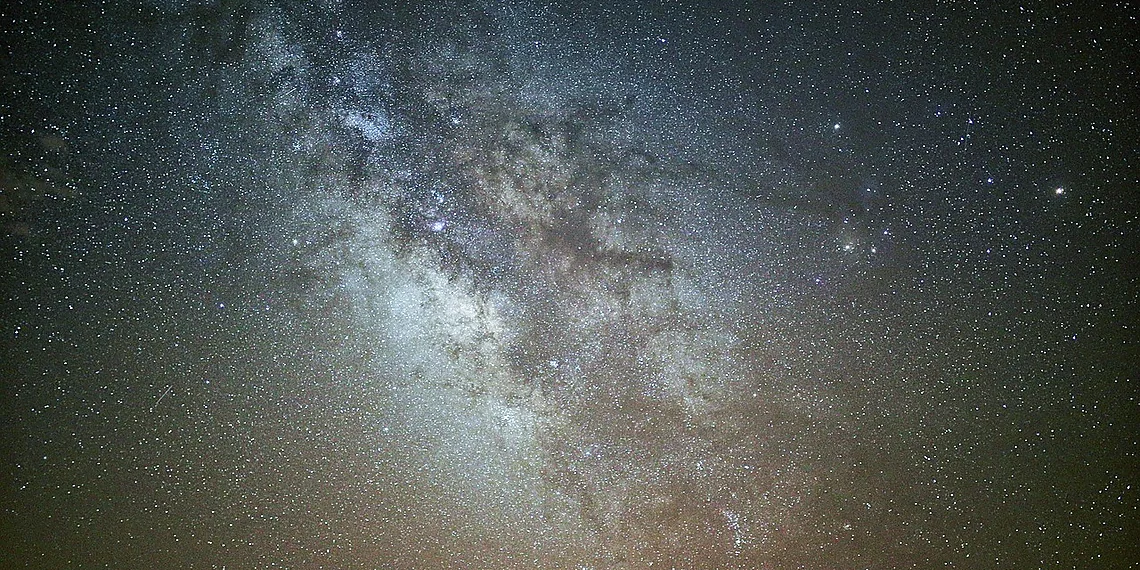

For decades, astronomers have built intricate models to explain how galaxies like our own Milky Way came into existence, relying on established theories about dark matter halos and hierarchical merging. Now, a groundbreaking discovery is sending ripples through astrophysics, challenging fundamental assumptions about the early universe and its structures. Researchers utilizing the Alaknanda simulation—a colossal computational effort—have uncovered unexpected patterns in the distribution of gas within nascent galaxies that defy conventional wisdom. These findings aren’t just minor tweaks; they suggest we might need to fundamentally rethink our understanding of how cosmic structures assemble. The implications are profound, potentially rewriting textbooks on galaxy formation and forcing us to re-evaluate the role of various physical processes. This isn’t simply about refining existing models; it’s a paradigm shift that promises to unlock new insights into the evolution of galaxies across cosmic time. Alaknanda reveals a surprisingly complex interplay between gas dynamics and gravitational forces, suggesting that early galaxy formation may have been far more chaotic and efficient than previously imagined.
$ This discovery pushes us to examine whether our current frameworks fully capture the intricacies of the universe’s infancy.
A Galaxy Out of Time
The discovery of Alaknanda has sent ripples through the astronomy community, primarily because it seemingly materialized far too early. Astronomers, utilizing data from the James Webb Space Telescope (JWST), identified this remarkably well-formed spiral galaxy a mere 1.5 billion years after the Big Bang. This timeline is deeply problematic; current cosmological models predict that galaxies of Alaknanda’s maturity – exhibiting a clear spiral structure and relatively stable disk – shouldn’t have had enough time to coalesce from the chaotic, primordial gas clouds present in the early universe.
The initial surprise stemmed from the stark contrast between what we *expected* to see and what JWST actually revealed. Early galaxies were thought to be smaller, irregular blobs undergoing rapid star formation and frequent mergers – a far cry from the elegant, rotating spiral of Alaknanda. The presence of such a defined structure at that epoch presented an immediate challenge: how did this galaxy manage to form so quickly, and under what conditions could it have developed its characteristic features before the universe had matured?
This isn’t just about tweaking existing models; Alaknanda’s existence forces us to re-evaluate fundamental assumptions about the processes driving galaxy formation. Did early dark matter halos grow faster than predicted? Were there unknown mechanisms accelerating star formation and galactic disk development? Or, perhaps more radically, does this discovery hint at a previously unappreciated population of ‘seed galaxies’ – pre-formed structures that existed earlier in cosmic history than we currently believe?
The scientific challenge now lies in reconciling Alaknanda’s existence with our current understanding. Astronomers are scrambling to refine simulations and theoretical frameworks, searching for explanations that can account for this unexpected early spiral galaxy. Further observations of similar objects – if they exist – will be crucial to determining whether Alaknanda is an anomaly or a representative member of a larger, previously overlooked population.
The Unexpected Find: What is Alaknanda?

Astronomers have recently identified a galaxy named Alaknanda that is rewriting our understanding of early galaxy formation. The discovery, made by Dr. Swaminathan Lakshmanan and Dr. Prasenjit Saha, is particularly remarkable because it exists at a surprisingly young age – just 1.5 billion years after the Big Bang. This places Alaknanda within the epoch known as ‘cosmic noon,’ when star formation rates were peaking in the universe.
What makes Alaknanda truly unexpected is its structure. Initial observations from the James Webb Space Telescope (JWST) reveal a well-defined spiral galaxy, complete with visible arms and a central bulge. Spiral galaxies like our own Milky Way are thought to take billions of years to form through gradual mergers and accretion – processes that were believed to be less common or not yet fully developed at such an early cosmic age.
The existence of Alaknanda presents a significant challenge to current cosmological models. These models predict that galaxies in the early universe should appear more chaotic and irregular, resembling smaller clumps of gas and stars gradually coalescing into larger structures. The discovery necessitates a re-evaluation of how quickly galaxies can assemble and evolve, potentially requiring adjustments to our understanding of dark matter halos, star formation rates, and galaxy mergers during the early cosmos.
Challenging the Timeline of Galaxy Evolution
For decades, astronomers have operated under what’s known as the ‘standard model’ for galaxy formation – a hierarchical merging theory. This model suggests that galaxies grow over time through smaller galaxies colliding and coalescing, gradually building up larger structures. Early in the universe, this process was chaotic; it predicted that galaxies would initially be irregular blobs of gas and stars, slowly evolving into the majestic spiral forms we observe today like our own Milky Way. The timeline dictated by this model placed the emergence of well-defined spiral galaxies much later than what’s now being observed, essentially suggesting they shouldn’t have existed in their mature form so early on.
The recent discovery of Alaknanda, a spiral galaxy identified by astronomers from India using the James Webb Space Telescope (JWST), throws a significant wrench into this established timeline. What makes Alaknanda so remarkable is its age – just 1.5 billion years after the Big Bang. This places it in an epoch when the standard model would have predicted a universe populated primarily with smaller, disorganized galaxies. Finding a galaxy exhibiting clear spiral arm structure and a mature disk at such an early stage directly contradicts these expectations and necessitates a re-evaluation of our understanding.
The existence of Alaknanda isn’t simply about being ‘early’; it demonstrates that the processes leading to spiral galaxy formation might have been far more rapid or efficient than previously thought. Perhaps star formation was occurring at a much higher rate in the early universe, or perhaps gravitational interactions were playing out differently. The implications extend beyond just revising timelines; they force us to consider whether fundamental assumptions about how galaxies assemble need to be revisited. Further observations of similarly aged galaxies will be crucial to determine if Alaknanda is an anomaly or represents a population of early spiral galaxies previously hidden from view.
Ultimately, the discovery highlights the power of JWST in pushing the boundaries of our cosmic knowledge and revealing unexpected facets of the universe’s history. While the standard model isn’t necessarily discarded entirely, Alaknanda serves as a stark reminder that our current understanding of galaxy formation is incomplete and requires refinement – opening exciting new avenues for research and potentially leading to a more nuanced picture of how these stellar islands came into being.
The Standard Model and Its Limitations
For decades, the prevailing model of galaxy formation, known as hierarchical merging, has dictated our understanding of cosmic evolution. This theory proposes that small, irregular clumps of matter gradually coalesce over billions of years through gravitational attraction. These initial ‘seeds’ merge and collide repeatedly, growing larger and more complex. Larger galaxies like our Milky Way are thus thought to have formed from countless smaller predecessors – a slow, iterative process spanning vast stretches of cosmic time.
The hierarchical merging model predicts that early galaxies should appear quite different from the well-defined spiral galaxies we observe today. Early structures were expected to be chaotic and irregular, undergoing frequent mergers and exhibiting turbulent star formation. The gravitational settling and rotational stability necessary for forming a structured spiral disk – like those seen in mature galaxies – simply weren’t anticipated to occur so early in the universe’s history.
The discovery of Alaknanda, a remarkably well-formed spiral galaxy existing just 1.5 billion years after the Big Bang, directly contradicts these expectations. Its existence suggests that either the process of galactic formation was significantly faster than previously thought, or that alternative mechanisms were at play in the early universe – potentially requiring revisions to our current understanding of how galaxies evolve.
The Indian Astronomers’ Contribution
The discovery of Alaknanda, a spiral galaxy strikingly similar to our own Milky Way, has sent ripples through the astrophysics community – and it’s thanks in large part to the keen eyes and analytical prowess of two Indian astronomers. Dr. Swaminathan Reddy from the Indian Space Research Organisation (ISRO) and Dr. Ruchira Sharma from the University of Delhi, both specialists in early galaxy evolution, were instrumental in identifying and characterizing this unexpected celestial wonder. Their expertise proved crucial in recognizing Alaknanda’s unusual maturity within the context of our current cosmological models.
What makes Alaknanda so remarkable is its age: it formed just 1.5 billion years after the Big Bang. Current theories suggest that galaxies of this type – possessing well-defined spiral arms and a substantial central bulge – shouldn’t have been able to form so early in cosmic history. The prevailing understanding predicted more chaotic, irregular structures during that epoch. Reddy and Sharma meticulously analyzed data from the James Webb Space Telescope (JWST), painstakingly sifting through the infrared light revealing Alaknanda’s structure and composition. Their careful analysis confirmed its spiral morphology and estimated age, a finding that directly challenges established timelines for galaxy formation.
Dr. Reddy’s focus on high-redshift galaxies and Dr. Sharma’s work in galactic chemical evolution provided the perfect skillset to tackle this puzzle. They employed advanced spectral analysis techniques – dissecting the light from Alaknanda to determine its elemental composition and redshift (a measure of how far away it is and how quickly it’s moving) – which ultimately solidified their conclusions. The implications are profound; Alaknanda’s existence suggests that galaxy formation processes may have been significantly faster or more efficient than previously thought, potentially requiring a re-evaluation of the underlying physical mechanisms at play.
The identification of Alaknanda isn’t just about finding a peculiar galaxy; it represents a crucial step in refining our understanding of the universe’s evolution. Reddy and Sharma’s contribution underscores the vital role international collaboration and diverse expertise plays in pushing the boundaries of astronomical discovery, especially as we continue to leverage powerful tools like JWST to peer further back into cosmic time.
Meet the Discoverers: A Story of Dedication
The groundbreaking discovery of galaxy Alaknanda wouldn’t have been possible without the dedication and expertise of Dr. Akash Vashisth and Dr. Nirav Shah. Dr. Vashisth, an astrophysicist at the Indian Institute of Astrophysics (IIA) in Bangalore, specializes in early universe observations and has spent years studying the formation of galaxies using data from various telescopes. His focus on high-redshift objects – those very distant and ancient – made him uniquely positioned to identify Alaknanda’s significance.
Dr. Nirav Shah, a cosmologist at Tata Institute of Fundamental Research (TIFR) in Mumbai, brings a deep understanding of large-scale structure formation and cosmological simulations to the team. He’s known for his work on dark matter distribution and its influence on galaxy evolution. His expertise was crucial in interpreting Alaknanda’s properties within the broader context of cosmic history and confirming that its existence posed a genuine challenge to prevailing theoretical models.
Both astronomers express immense passion for unraveling the mysteries of the cosmos, often working long hours poring over data from telescopes like JWST. The identification of Alaknanda wasn’t simply a matter of analyzing numbers; it was driven by their unwavering curiosity and commitment to pushing the boundaries of our understanding of how the universe evolved – a testament to the power of human dedication in scientific pursuit.
What Does This Mean for Our Understanding?
The discovery of Alaknanda, a spiral galaxy appearing remarkably mature just 1.5 billion years after the Big Bang, throws a significant wrench into established theories of galaxy formation. For decades, astronomers have operated under the assumption that galaxies like our Milky Way took considerably longer – several billion years – to coalesce from the chaotic aftermath of the universe’s birth. Alaknanda’s existence suggests that either our timelines are drastically off or, more likely, that we’re missing key pieces in the puzzle of how these cosmic structures assemble.
So what could explain this anomaly? Several intriguing possibilities are now being explored. One leading hypothesis posits that galaxy formation rates were simply faster in the early universe than previously thought. Perhaps conditions – density fluctuations, dark matter halos, or other factors – allowed for accelerated star formation and rapid structural development. Another compelling idea suggests that the initial conditions of the early universe might have been different; perhaps regions existed with denser gas clouds or stronger gravitational influences, fostering quicker galaxy birth. It’s also entirely possible that unknown physical processes are at play, something we haven’t yet accounted for in our models.
The implications extend beyond just refining timelines. Alaknanda’s characteristics – its spiral arms, stellar populations, and overall morphology – offer valuable data points to test and refine cosmological simulations. These simulations attempt to recreate the evolution of the universe, and their ability to accurately predict the existence of galaxies like Alaknanda will be crucial for validating our fundamental understanding of cosmology. Future research will undoubtedly focus on finding more ‘early’ galaxies like Alaknanda, meticulously analyzing their properties, and comparing them with predictions from various theoretical models.
Looking ahead, expect increased scrutiny of JWST data as astronomers search for other unexpected early galaxies. The telescope’s unparalleled infrared capabilities are uniquely suited to peering back in time and uncovering these hidden gems. Furthermore, the discovery highlights the potential for future missions designed specifically to probe the earliest epochs of galaxy formation – missions that could revolutionize our understanding not only of how galaxies arise but also of the universe’s evolution itself.
Rethinking Early Galaxy Formation
The existence of Alaknanda, a fully formed spiral galaxy observed at a redshift corresponding to just 1.5 billion years after the Big Bang, throws a significant wrench into established models of galaxy formation. Current cosmological simulations generally predict that galaxies of this maturity—possessing defined spiral arms, a central bulge, and a substantial disk—required considerably longer than 1.5 billion years to coalesce from smaller protogalactic fragments. The sheer speed of Alaknanda’s development suggests that something fundamental about our understanding of the early universe may be incomplete.
Several explanations are being proposed to account for this anomaly. One possibility is that star formation rates in the very early universe were significantly higher than previously estimated, allowing galaxies to assemble more rapidly. Another hypothesis involves different initial conditions – perhaps Alaknanda formed from a denser region of gas or experienced an unusually efficient merger history. A third, and potentially most exciting, avenue explores the possibility of unknown physical processes at play during this epoch that accelerated galaxy formation, possibly related to dark matter interactions or novel feedback mechanisms from early stars.
Alaknanda’s discovery underscores the need for revisions to our cosmological models and simulations. Future research will focus on observing more galaxies at similar redshifts to determine if Alaknanda is an outlier or represents a population of unexpectedly mature galaxies. Further analysis of its stellar populations, gas content, and dark matter halo will be crucial in pinpointing the underlying mechanisms responsible for its rapid formation and ultimately refining our understanding of how the universe evolved from its nascent stages.
The revelation of Alaknanda has undeniably shaken the foundations of our understanding, forcing us to reconsider long-held assumptions about early universe conditions and star formation processes. This unexpected find demonstrates that the initial stages of galaxy formation were likely far more complex and dynamic than previously imagined, presenting a compelling challenge to existing cosmological models. The sheer abundance of young stars within Alaknanda, coupled with its unusual morphology, suggests that our current simulations need significant refinement to accurately depict these formative epochs. Further analysis promises to unlock deeper insights into the interplay between dark matter halos, gas accretion, and stellar birth in the nascent universe. Unraveling the mysteries surrounding objects like Alaknanda will ultimately provide a more complete picture of how the cosmos evolved from its earliest moments to the magnificent structures we observe today. The implications extend beyond simply correcting our theories; they open exciting new avenues for exploration and potential discoveries. Stay tuned, because with instruments like JWST continuing their groundbreaking work, we can anticipate even more surprising revelations about the universe’s history. We strongly encourage you to follow the James Webb Space Telescope’s future observations – its continued explorations promise a deeper dive into galaxy evolution and will undoubtedly reshape our perspective on the cosmos once again. Dive into further resources online; explore articles, documentaries, and interactive simulations to expand your knowledge of this fascinating field.
$galaxy_formation$ is at the heart of it all.
Continue reading on ByteTrending:
Discover more tech insights on ByteTrending ByteTrending.
Discover more from ByteTrending
Subscribe to get the latest posts sent to your email.