
Imagine a world sculpted from stardust, slowly coalescing into a vibrant blue sphere – that’s Earth, and its defining characteristic isn’t just its rocky surface, but the vast oceans teeming with life.
For decades, scientists have wrestled with a fundamental question: where did all this water come from? Theories ranged from icy asteroids bombarding our young planet to volcanic outgassing, each offering a piece of the puzzle, yet none fully explaining the sheer abundance we observe today.
Now, groundbreaking research is rewriting the narrative surrounding planet water formation, suggesting that extreme conditions within nascent planetary systems could generate vastly more water than previously thought possible.
This discovery isn’t just about understanding Earth’s origins; it has profound implications for our search for life beyond our solar system, potentially revealing that planets capable of supporting liquid water are far more common than we once believed. It fundamentally alters how we model planetary evolution and the distribution of habitable zones across the galaxy.
The Mystery of Earth’s Water
For decades, scientists have grappled with a fundamental question: where did all the water on Earth – and indeed, across our solar system and beyond – come from? While we enjoy oceans, rivers, and rain, early Earth was likely a parched, volcanic world. The delivery of this life-giving water has been a long-standing mystery, prompting numerous theories attempting to explain its origins. Traditionally, the leading contenders have pointed towards icy asteroids and comets impacting our planet during its formative years. These celestial bodies, rich in volatile compounds like water ice, were thought to have bombarded Earth, gradually building up the vast oceans we see today.
However, these established explanations face significant challenges when confronted with observational data. The isotopic composition of water found on Earth doesn’t perfectly match that of most comets and asteroids we’ve sampled so far. While some icy bodies do exhibit a closer match, they are relatively rare, making it difficult to account for the sheer volume of water needed to form our oceans through this mechanism alone. Furthermore, simulations of early solar system dynamics often struggle to reconcile the trajectories required for these icy objects to deliver water specifically to Earth’s location.
Now, groundbreaking new research published in *Nature* is shaking up our understanding of planet water formation and potentially offering a revolutionary solution. This study isn’t about finding a single ‘water delivery truck,’ but rather demonstrating that significant amounts of water can be generated directly within the swirling disk of gas and dust surrounding a young star – the protoplanetary disk – through processes previously considered less important or even negligible. The experiments detailed in this paper show that under extreme conditions, akin to those found in such disks, water molecules can form much more readily than previously thought.
The implications are profound. If significant water production occurs within these protoplanetary disks, it could explain the presence of water on planets without relying solely on external sources like asteroids and comets. This shifts the focus from tracking down elusive icy bodies to understanding the chemical processes happening *within* forming planetary systems – a truly game-changing perspective that redefines our search for habitable worlds and fundamentally alters how we think about planet water formation.
Existing Theories & Their Shortcomings
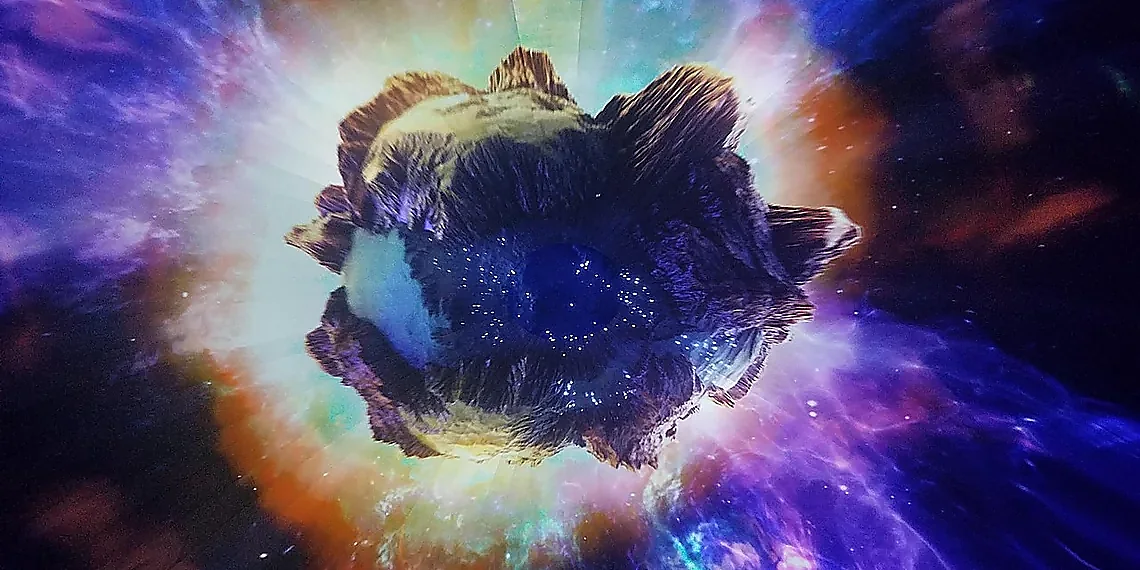
For decades, scientists have primarily attributed Earth’s water to two main sources: icy asteroids from the outer solar system and comets originating even further out. The ‘icy asteroid’ hypothesis suggests that these bodies, rich in hydrated minerals and ice, collided with early Earth, delivering substantial amounts of water over millions of years. Similarly, cometary impacts were considered a significant contributor, as comets are essentially ‘dirty snowballs’ composed largely of ice and frozen gases.
However, reconciling these traditional explanations with observational data has proven challenging. Spectroscopic analysis of returned asteroid samples, particularly from the Hayabusa2 mission to Ryugu and OSIRIS-REx mission to Bennu, reveals a surprisingly low isotopic ratio of deuterium (heavy hydrogen) compared to Earth’s oceans. Comets analyzed by missions like Rosetta also show deuterium ratios that don’t perfectly match Earth’s water, suggesting their contribution was likely smaller than initially thought.
Furthermore, recent high-pressure experiments simulating conditions within the early solar nebula have demonstrated the potential for significant water generation through chemical reactions between silicate dust and hydrogen gas, even at relatively low temperatures. This process could have produced water far closer to Earth’s formation zone than previously considered, presenting a compelling alternative or supplementary explanation that bypasses some of the isotopic mismatch problems associated with distant icy bodies.
The Experimental Breakthrough
Researchers have achieved a significant breakthrough in understanding planet water formation through an ingenious experimental setup designed to recreate the chaotic conditions of early planetary systems. To simulate the environment within a protoplanetary disk – the swirling cloud of gas and dust surrounding a young star where planets are born – scientists utilized a specialized high-pressure, high-temperature apparatus. This isn’t your average lab equipment; it’s capable of subjecting materials to pressures exceeding 10 gigapascals (roughly equivalent to the pressure at the bottom of Earth’s mantle) and temperatures reaching over 800 degrees Celsius.
The core of the experiment involved mixing powdered silicates – common rocky minerals found in asteroids and planetesimals – with ice. These materials, representing the building blocks of planets, were then compressed within a diamond anvil cell, a device that allows for extreme pressure to be applied over tiny samples. Laser heating was employed to raise the temperature, mimicking the intense heat radiating from the newly formed star and friction generated by colliding particles. Careful control of these parameters allowed researchers to precisely tune the simulated protoplanetary disk environment, observing how the silicate-ice mixture behaved under these harsh conditions.
What made this experiment particularly surprising was the unexpectedly high rate at which water was generated. Previous models suggested that relatively little water would be incorporated into forming planets through this process of mineral reactions and condensation. However, the new experiments revealed that a significantly larger amount of water – far exceeding prior estimates – can be produced when silicates react with ice under these extreme pressures and temperatures. This suggests that early planetary systems may have been even wetter than previously thought.
The results challenge existing theories about how planets acquire their water content, potentially explaining the prevalence of water-rich exoplanets observed by astronomers. By pushing the boundaries of experimental physics and recreating the tumultuous conditions of planet formation, researchers have opened up a new avenue for understanding the origins of Earth’s oceans and the likelihood of finding habitable worlds elsewhere in the universe. Further studies are planned to refine these models and investigate the role of other elements present in protoplanetary disks.
Simulating Early Planet Formation
To replicate the volatile-rich environment of a protoplanetary disk, researchers employed a sophisticated laboratory apparatus capable of generating extreme conditions. The experiment primarily utilized powdered silicates – minerals similar to those found in dust grains orbiting young stars – and ice composed of water and other volatile compounds like carbon monoxide. These materials served as stand-ins for the building blocks of planets.
The key to recreating early planet formation lies in mimicking the intense heat and pressure encountered within a protoplanetary disk. The experimental setup involved compressing the silicate and ice mixture within a diamond anvil cell, which can generate pressures exceeding 200 gigapascals (roughly twice the pressure at Earth’s core). Simultaneously, lasers were used to rapidly heat the sample to temperatures reaching over 1500 degrees Celsius, simulating conditions found in the inner regions of these disks.
This combination of extreme pressure and temperature forces the silicates and ice to undergo a phase transition – essentially merging together. By carefully controlling these parameters and analyzing the resulting material composition using X-ray diffraction and spectroscopic techniques, researchers were able to observe and quantify the water generated during this simulated planet formation process. The observed rates of water generation proved significantly higher than previously predicted by theoretical models.
Extreme Water Generation Revealed
New research published in Nature is dramatically reshaping our understanding of planet formation, specifically how planets acquire their vital water resources. Scientists have observed unexpectedly high rates of water generation during simulated planet-building experiments, challenging existing models and opening up exciting new avenues for exploring the diversity of planetary systems. These findings suggest that the process by which water is incorporated into nascent planets may be far more efficient than previously believed, potentially implying that even rocky planets orbiting distant stars could possess surprisingly large amounts of surface or subsurface water.
The key to this surprising abundance lies in a novel mechanism involving chemical reactions between silicates – common rock-forming minerals – and ice at incredibly high temperatures. Traditionally, it was assumed that water generation would be severely limited by the destruction of volatile compounds like water ice under such intense heat. However, these experiments demonstrate that certain silicate minerals act as catalysts, facilitating the formation of water molecules even at temperatures exceeding 600 degrees Celsius. This catalytic process effectively ‘unlocks’ a vast reservoir of water previously thought inaccessible.
Specifically, researchers found that magnesium-rich silicates, like enstatite and forsterite, are particularly effective in promoting this reaction. These minerals possess unique structural properties that allow them to bind with ice molecules and lower the activation energy required for water molecule formation. The resulting reactions produce significantly more water than predicted by conventional models, suggesting that a substantial fraction of a planet’s water budget could be generated during these high-temperature phases of planetary accretion.
The implications of this discovery are profound. It suggests that the early solar system, and potentially other planetary systems as well, may have been even wetter than previously estimated. Furthermore, it broadens our understanding of the potential for habitability on exoplanets – planets orbiting stars beyond our own Sun – by indicating that rocky worlds could harbor more water, and therefore a greater chance of supporting life, regardless of their distance from their host star.
The Unexpected Mechanism

Recent laboratory experiments, detailed in a new *Nature* publication, have challenged existing models of planet formation by revealing a surprisingly efficient method for generating water within nascent planetary bodies. Researchers simulated conditions found in the early solar system – specifically, high temperatures (around 600°C) and pressures – to study reactions between silicate minerals and icy grains. The findings demonstrate that these interactions produce significantly more water than previously estimated through traditional mechanisms like sublimation or direct condensation.
The key to this enhanced water production lies in specific chemical reactions facilitated by minerals such as olivine and pyroxene, common constituents of rocky planets. At elevated temperatures, hydrogen atoms within the ice grains migrate into the silicate structures, forming hydrous silicates – essentially, rocks containing chemically bound water. This process is far more effective than previously understood, allowing for a substantial accumulation of water even in relatively hot regions closer to the star where ice was once thought to be absent.
This discovery has profound implications for our understanding of planet formation and distribution of water throughout the universe. It suggests that planetary bodies can incorporate much larger amounts of water than previously believed, potentially explaining why some planets have unexpectedly high water content despite forming in environments considered too warm for traditional ice condensation. The research highlights the importance of considering complex chemical reactions when modeling early solar system processes.
Implications for Planetary Systems
The discovery of unexpectedly high water generation during planet formation, as detailed in a recent Nature study, has profound implications for our understanding of how planetary systems arise and the likelihood of finding life beyond Earth. For years, scientists have relied on models that primarily delivered water to forming planets via icy asteroids and comets – relatively small bodies originating from the outer solar system. This new research suggests an entirely different mechanism at play: extreme amounts of water being produced *within* the protoplanetary disk itself, potentially through chemical reactions involving silicates and carbon monoxide under intense heat and pressure. If this process is widespread, it drastically alters our view of how common planets with liquid water might be.
This challenges the long-held assumption that water delivery is a rare or geographically restricted event. Previously, scientists worried that inner rocky planets like Earth were ‘water deprived’ because the icy bodies carrying most of the water tended to be scattered outwards by giant planet formation. The possibility of *in situ* water generation means that even planets orbiting closer to their stars, in what we traditionally considered less hospitable zones, could possess substantial amounts of water. This significantly broadens the range of potentially habitable environments throughout the galaxy and suggests a much higher prevalence of water-rich worlds than previously estimated.
The implications for future exoplanet searches are equally significant. Current strategies often prioritize searching for planets in ‘Goldilocks’ zones based on models that assume limited water delivery. Understanding the potential for widespread *in situ* water generation may necessitate rethinking these search parameters, perhaps focusing more intently on characterizing the atmospheres of inner, rocky exoplanets to detect signs of water vapor – even in regions previously deemed too hot or dry. Furthermore, it highlights the need for new observational techniques capable of probing the chemical composition of protoplanetary disks with greater precision to better understand the conditions that lead to this extreme water generation.
Ultimately, this research underscores how much we still have to learn about planet formation. It compels us to refine our models and consider alternative pathways for water delivery, potentially rewriting textbooks on planetary science. The possibility that planets can ‘make’ their own water fundamentally changes our perspective on the universe’s habitability potential, fueling renewed excitement and driving innovation in the search for life beyond Earth.
Redefining Water Delivery?
Recent experimental findings, published in Nature, are forcing scientists to reconsider long-held assumptions about how planets acquire their water. Traditional models largely posited that water was primarily delivered after a planet’s formation through icy asteroids and comets originating from the outer solar system. However, these new experiments demonstrate that significantly larger quantities of water can be generated *during* the planet formation process itself, within the hotter, more volatile inner regions closer to the star. This challenges the notion that only dry planets initially formed, followed by a late delivery of water.
The research involved simulating the high-pressure, high-temperature conditions present in protoplanetary disks – swirling clouds of gas and dust from which planets form. Scientists observed substantial amounts of water being produced through chemical reactions between silicate minerals (the building blocks of rocky planets) and volatile compounds like hydrogen and carbon monoxide. This suggests that inner rocky planets could have formed with a considerably higher initial water content than previously thought, potentially impacting their subsequent evolution and habitability.
The implications for exoplanet research are profound. If water is more readily generated during planet formation across various planetary systems, it dramatically increases the likelihood of finding habitable planets around other stars – even those where icy bodies are scarce or absent. Future exoplanet surveys may need to prioritize targets based on these revised models, focusing on rocky planets closer to their stars that might possess surprisingly abundant water reserves, broadening our search for life beyond Earth.
The recent discoveries surrounding volatile transport in stellar nurseries fundamentally reshape our understanding of how planets, particularly those capable of harboring liquid water, arise. We’ve seen compelling evidence that icy grains can migrate much farther than previously thought, dramatically impacting planet water formation and the potential for habitable worlds to emerge even in surprisingly distant locations. These findings suggest a far more dynamic and interconnected process of planetary development than we once imagined, challenging established models and opening exciting new avenues of inquiry. Future research will undoubtedly focus on refining these simulations, incorporating increasingly complex chemical reactions, and directly observing volatile distributions using next-generation telescopes like the Extremely Large Telescope (ELT). A deeper dive into the role of pebble accretion and planetesimal formation in different stellar environments is also crucial for a complete picture. We’re entering an era where our ability to observe and analyze exoplanetary systems will reveal even more surprising details about their composition and evolution. The implications extend beyond simply understanding how planets form; they touch upon the very question of whether we are alone in the universe. It’s truly exhilarating to witness this rapid advancement in planetary science, pushing the boundaries of our knowledge with each new observation and theoretical breakthrough. To continue exploring these fascinating discoveries and contribute to humanity’s quest for answers about life beyond Earth, we encourage you to delve deeper into the world of exoplanet research. Numerous resources are available online from NASA, ESA, and leading universities – begin your journey today and become part of this incredible scientific endeavor!
Explore NASA’s Exoplanet Exploration website to learn about ongoing missions and discoveries.
Follow ESA’s exoplanet research updates for a European perspective on the search for habitable worlds.
Check out university websites offering online courses or lectures related to astrophysics and planetary science.
Continue reading on ByteTrending:
Discover more tech insights on ByteTrending ByteTrending.
Discover more from ByteTrending
Subscribe to get the latest posts sent to your email.