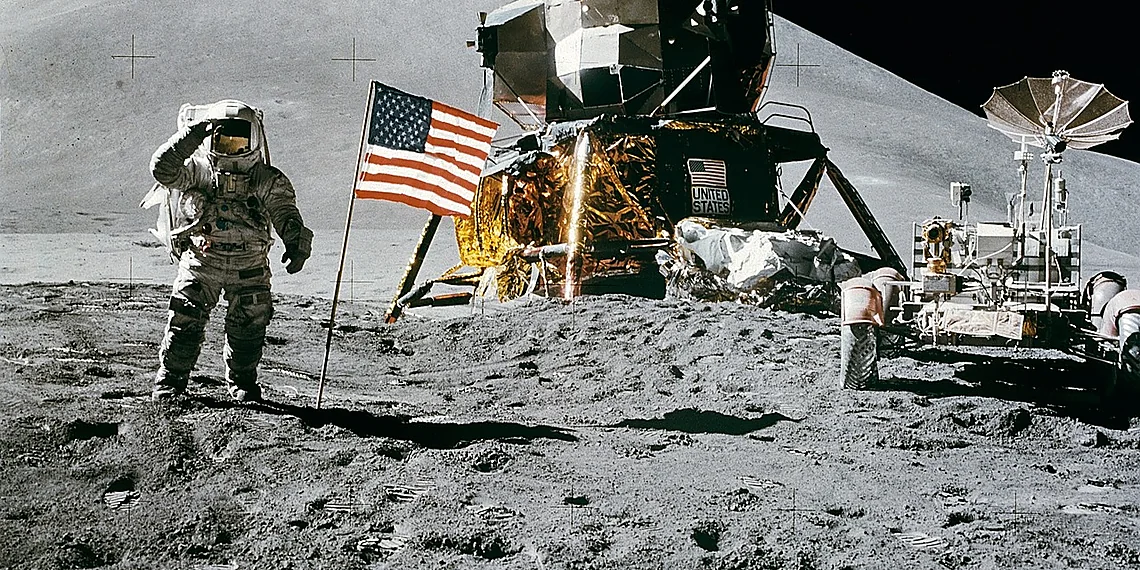

The race to the Moon is officially heating up, but this time it’s not just about flags and footprints; it’s about building a permanent presence. Recent advancements in rocketry have made lunar exploration more accessible than ever, sparking a renewed global interest in establishing infrastructure beyond Earth’s orbit. A crucial piece of that puzzle often overlooked? The complex network required to move resources and equipment – the foundation we call lunar logistics. We’re moving past short visits and into an era demanding reliable and sustainable support systems.
Two pioneering companies are taking significant strides toward realizing this vision: Japan’s ispace, a leader in lunar lander technology, and India’s OrbitAID Aerospace, specializing in advanced satellite communication solutions. Recognizing the synergistic potential of their expertise, these organizations have recently signed a Memorandum of Understanding (MoU) that promises to reshape how we approach future missions. This collaboration isn’t just about sharing information; it’s about integrating capabilities for enhanced operational efficiency and resilience.
The MoU focuses on leveraging ispace’s lander technology with OrbitAID Aerospace’s robust communication infrastructure, aiming to streamline data transmission and improve overall mission success rates. It paves the way for more frequent and complex lunar missions, ultimately supporting long-duration stays and resource utilization – a critical step towards establishing sustainable bases on the Moon. This partnership signifies a shift towards collaborative efforts in space exploration, demonstrating that tackling the challenges of lunar logistics requires combining diverse skills and perspectives.
The Partnership: Bridging East & West
The recent announcement at the International Astronautical Congress (IAC) 2025 in Sydney unveiled a significant collaboration poised to reshape lunar logistics: a Memorandum of Understanding (MoU) between Japan’s ispace inc and India’s OrbitAID Aerospace Private Limited. This partnership isn’t just about reaching the Moon; it’s about establishing sustainable infrastructure for long-term lunar operations, focusing on resource replenishment and continuous docking capabilities – crucial elements for future crewed missions and scientific endeavors. The agreement signifies a growing trend towards international cooperation in space exploration and highlights the increasing complexity of lunar mission requirements.
ispace inc, already recognized for its ambitious attempts at lunar landings with their Series 1 and 2 landers, brings to this partnership expertise in developing small, versatile spacecraft and robotic systems designed for surface operations. While previous landing attempts haven’t been fully successful, they’ve yielded invaluable data and experience, pushing the boundaries of miniaturization and autonomous navigation in the harsh lunar environment. Their focus is on providing transportation and surface mobility solutions, a critical first step towards creating a functional lunar ecosystem.
OrbitAID Aerospace, based in India, complements ispace’s capabilities with its diverse aerospace expertise. The company specializes in satellite technology, propulsion systems, and advanced manufacturing techniques – all vital for supporting the logistical needs of a sustained lunar presence. OrbitAID’s strengths lie in developing robust and reliable hardware capable of operating in the demanding conditions of space. Together, they aim to create an integrated system that addresses challenges ranging from propellant storage on the lunar surface to ensuring continuous access for orbiting assets.
The MoU represents more than just a handshake; it’s a strategic alignment of resources and expertise aimed at accelerating the development of essential technologies for lunar logistics. By combining ispace’s lander experience with OrbitAID’s broader aerospace capabilities, this partnership promises to unlock new possibilities for long-duration missions, resource utilization, and ultimately, the establishment of a permanent human presence beyond Earth.
Introducing ispace and OrbitAID

ispace Inc., a Japanese company founded in 2010, is rapidly becoming a key player in lunar exploration. Initially known for its work in satellite deployment services, ispace transitioned to robotic lunar missions. While their first two attempts at landing a lander on the Moon – Hakuto-R Mission 1 and Mission 2 – unfortunately ended with crashes, these experiences have provided invaluable data and engineering lessons that are informing subsequent mission designs. Their focus lies primarily in developing lunar rovers and landers for resource prospecting and transportation.
OrbitAID Aerospace Private Limited, based in India, brings a different but complementary skillset to the partnership. Established in 2019, OrbitAID specializes in aerospace component manufacturing, satellite integration, and launch support services. They possess significant expertise in developing robust and reliable systems crucial for long-duration space missions. OrbitAID’s capabilities extend beyond just hardware; they also offer mission operations and data processing services – essential elements for a sustainable lunar logistics network.
The collaboration between ispace and OrbitAID was formally announced via a Memorandum of Understanding (MoU) at the International Astronautical Congress (IAC) 2025 in Sydney. This partnership aims to combine ispace’s lander technology with OrbitAID’s aerospace manufacturing and operational expertise, specifically targeting the development of technologies related to lunar resource replenishment and continuous docking capabilities – vital for establishing a long-term human presence on the Moon.
The MoU: A Blueprint for Lunar Sustainability
The recently signed Memorandum of Understanding (MoU) between Japan’s ispace inc. and India’s OrbitAID Aerospace Private Limited represents a significant step towards establishing sustainable lunar operations. Unveiled at the International Astronautical Congress (IAC) 2025 in Sydney, this agreement isn’t just about exploring the Moon; it’s about building an infrastructure to support long-term presence and activity there. The core of the MoU outlines a collaborative framework focused on developing technologies essential for lunar logistics – specifically addressing challenges related to resource utilization and reliable access to lunar surfaces.
A key area of collaboration highlighted in the MoU is resource replenishment, with a strong emphasis on In-Situ Resource Utilization (ISRU). Both companies intend to work together to develop techniques for extracting and processing lunar resources like water ice and regolith. Water ice, found in permanently shadowed craters, holds immense potential as a source of propellant – hydrogen and oxygen – drastically reducing the need to transport these materials from Earth. Regolith can be utilized for construction purposes, creating habitats or landing pads using locally sourced material. This shift towards ISRU promises to significantly lower mission costs and unlock the possibility of extended lunar missions, paving the way for future settlements.
Beyond resource extraction, the MoU also addresses the critical need for continuous docking capabilities on the lunar surface. Establishing a network of refueling stations and orbital platforms will be vital for ensuring reliable access and support for various lunar missions. The partnership aims to develop technologies that facilitate seamless docking operations between spacecraft, allowing for propellant transfer, crew rotation, and cargo exchange without relying solely on Earth-based launches. This continuous docking infrastructure is envisioned as a cornerstone of future lunar economies and scientific endeavors.
Ultimately, the ispace and OrbitAID collaboration signals a move beyond sporadic lunar missions towards a more sustainable and economically viable presence. The MoU provides a concrete blueprint for leveraging lunar resources and establishing robust operational capabilities, laying the groundwork for a future where the Moon serves as a stepping stone for deeper space exploration and potentially even off-world industrial activities.
Resource Replenishment & In-Situ Resource Utilization (ISRU)

The recent Memorandum of Understanding (MoU) between Japan’s ispace inc. and India’s OrbitAID Aerospace Private Limited centers heavily on leveraging lunar resources for sustainable exploration. A key focus area is In-Situ Resource Utilization (ISRU), specifically targeting water ice deposits found in permanently shadowed craters near the lunar poles. These deposits, if successfully extracted and processed, can be converted into propellant – primarily liquid hydrogen and oxygen – drastically reducing the need to transport fuel from Earth.
Beyond propellant production, the partnership also aims to utilize lunar regolith (soil) for construction materials and other mission necessities. This could involve 3D printing habitats or shielding structures using locally sourced materials. By minimizing reliance on Earth-based supplies, missions can become significantly more cost-effective and self-sufficient. The MoU outlines collaborative research and development efforts in these areas, including identifying optimal resource extraction techniques and refining processing methods suitable for the lunar environment.
The potential impact of successful ISRU is transformative for lunar exploration. Reduced launch costs, a direct consequence of producing propellant on the Moon, would open doors to more frequent missions and larger payloads. Furthermore, locally sourced resources enable longer-duration missions and potentially even establish permanent lunar bases – a crucial step towards deeper space exploration and eventual human settlements beyond Earth.
Continuous Docking: The Key to Long-Duration Missions
The prospect of sustained human presence on the Moon hinges on more than just landing; it demands robust, reliable infrastructure capable of supporting long-duration missions. At the heart of this lies a critical capability: continuous docking. Unlike single visits or brief stays, establishing a permanent lunar base or orbital platform necessitates constant connection and exchange – crew rotations, scientific equipment deliveries, propellant refills, and component replacements all require seamless docking operations. Achieving this consistently in the challenging lunar environment presents significant technical hurdles, including dealing with communication delays, precise navigation relative to varying gravitational forces, and ensuring compatibility between different spacecraft designs.
Continuous docking isn’t simply about connecting two vehicles; it’s about creating a dynamic ‘orbital ecosystem.’ Imagine a scenario where a Japanese habitat module needs resupply from an Indian cargo lander – or where a research lab in lunar orbit needs to exchange personnel with a surface rover. Each connection requires autonomous systems capable of precise alignment and capture, robust locking mechanisms that can withstand micrometeoroid impacts and thermal cycling, and standardized interfaces to ensure compatibility across various platforms. The recent Memorandum of Understanding (MoU) between Japanese company ispace and Indian firm OrbitAID Aerospace directly addresses this challenge by focusing on developing technologies specifically geared towards these complex docking procedures.
The partnership’s focus on continuous docking unlocks a cascade of benefits for lunar exploration. For scientific research, it allows for the deployment of larger, more sophisticated instruments, enabling prolonged data collection and deeper analysis of lunar resources and geology. Moreover, it paves the way for building modular infrastructure – expanding a lunar base incrementally by adding new modules as needed, rather than undertaking massive, high-risk deployments. This incremental approach also reduces costs and increases flexibility in responding to evolving mission objectives.
Ultimately, mastering continuous docking is not just about facilitating current missions; it’s an investment in the future of lunar infrastructure. By establishing a reliable system for connecting spacecraft in lunar orbit and on the surface, Japan and India are laying the groundwork for a self-sustaining presence beyond Earth – a critical step towards resource utilization, potential commercial ventures, and even deeper space exploration.
Enabling Persistent Lunar Presence
Establishing a persistent human presence on the Moon – whether through a base on the surface or an orbital platform – fundamentally relies on continuous docking capabilities. Unlike missions with limited durations, long-term lunar operations necessitate frequent crew rotation, regular resupply of consumables like water and oxygen, and delivery of new equipment for scientific research and infrastructure expansion. Without reliable and automated docking systems, these tasks become incredibly complex, expensive, and risky, effectively preventing the creation of a sustainable lunar ecosystem.
The technical challenges associated with continuous docking in the lunar environment are significant. Lunar orbit is unstable without active station keeping, requiring constant adjustments to spacecraft trajectories. Furthermore, communication delays inherent in the distance between Earth and Moon complicate remote control operations crucial for traditional docking maneuvers. Successful continuous docking demands advanced autonomous navigation systems capable of precise positioning and orientation, along with robust robotic arms and docking mechanisms designed to withstand the harsh lunar environment – including extreme temperatures and radiation.
The collaboration between Japan’s ispace and India’s OrbitAID Aerospace directly addresses these challenges by focusing on developing technologies specifically tailored for lunar logistics. This partnership aims to create a system that not only enables continuous docking but also facilitates resource replenishment, potentially utilizing in-situ resources (ISRU) to reduce reliance on Earth-based supplies. Ultimately, such advancements are crucial steps towards building a self-sufficient and enduring human presence beyond our planet, unlocking new possibilities for scientific discovery and future space exploration.
Looking Ahead: Implications & Future Possibilities
The Japan-India partnership in lunar logistics marks a significant shift towards a more sustainable and economically viable future for lunar exploration. While previous missions have largely focused on short-term scientific investigation, this collaboration, centered around resource replenishment and continuous docking capabilities, points to the potential for long-duration lunar habitats and industrial operations. The MoU signifies a recognition that achieving ambitious goals like establishing permanent bases or utilizing lunar resources requires shared expertise, infrastructure, and risk mitigation – something no single nation or company can readily achieve alone. This moves beyond simple flag planting; it’s about building a functional lunar economy.
Beyond the immediate technological advancements in areas like robotic refueling and docking systems, this agreement has profound implications for international space collaboration. It sets a precedent for nations with varying levels of spacefaring experience to pool resources and expertise, potentially opening doors for similar partnerships between countries like Canada and Australia, or even involving emerging space players. Geopolitically, it demonstrates a move away from solely state-driven lunar programs towards a more collaborative model, which could help de-escalate potential tensions and foster a shared sense of responsibility in the utilization of extraterrestrial resources.
The commercial opportunities stemming from this partnership are also substantial. The development of reliable lunar logistics solutions creates a foundation for a burgeoning space economy. Companies specializing in resource extraction, in-situ resource utilization (ISRU), and orbital servicing will find increased demand as lunar infrastructure expands. We can anticipate seeing further innovation in areas like 3D printing using lunar regolith, robotic construction techniques, and advanced power generation systems – all of which are crucial for building a self-sustaining presence on the Moon. The potential for private investment and job creation within this sector is considerable.
Looking ahead, we might see a cascade effect of synergistic ventures. Perhaps Japan’s expertise in robotics will combine with India’s strengths in cost-effective engineering to develop specialized lunar rovers for resource prospecting. Further collaboration could extend beyond just logistics, encompassing scientific research and even tourism. The success of this partnership will likely influence the strategies of other space agencies and private companies, accelerating the pace of lunar development and bringing us closer to a future where humanity has a permanent foothold beyond Earth.
A New Era of Lunar Cooperation?
The recent Memorandum of Understanding (MoU) between Japanese company ispace and Indian firm OrbitAID Aerospace signals a potentially transformative shift toward more collaborative lunar logistics. This partnership focuses specifically on developing technologies for resource replenishment and continuous docking capabilities, crucial elements for establishing sustained lunar bases and long-duration missions. By combining ispace’s experience in lunar lander development with OrbitAID’s expertise in orbital servicing and robotic systems, the collaboration aims to reduce costs and increase efficiency – a significant step towards making lunar operations more economically viable.
This Japanese-Indian partnership could serve as a model for other nations and private companies seeking to participate in lunar exploration. Currently, many space programs operate independently, leading to duplicated efforts and increased expenses. The ispace/OrbitAID collaboration demonstrates the benefits of pooling resources, sharing expertise, and dividing responsibilities, particularly when tackling complex challenges like in-situ resource utilization (ISRU) and orbital refueling. Expect to see similar ‘niche’ partnerships emerge between countries with complementary space capabilities – perhaps involving European nations collaborating with emerging spacefaring programs from Africa or South America.
Geopolitically, the MoU highlights a move away from traditional, often competitive, approaches to space exploration. While national pride and strategic interests remain important, this collaboration underscores the growing recognition that sustainable lunar development requires international cooperation. It’s unlikely to completely eliminate competition – particularly between established space powers like the US and China – but it does suggest a willingness among some actors to prioritize shared goals and build trust through joint ventures. Further such partnerships could shape future lunar governance frameworks and influence access to resources, potentially leading to new diplomatic considerations.
The collaboration between Japan’s JAXA and India’s ISRO marks a pivotal moment in our journey back to the Moon, demonstrating a shared commitment to overcoming the considerable challenges of sustainable lunar exploration. This partnership isn’t just about sharing resources; it’s about pooling expertise and creating a more robust framework for future missions, particularly when considering the complexities of resource utilization and infrastructure development on the lunar surface. Successfully navigating these hurdles is paramount as we move towards establishing a permanent presence beyond Earth, and efficient systems for delivering equipment and supplies are absolutely critical – that’s where advancements in lunar logistics become indispensable. The combined strengths of both nations offer a compelling vision for how international collaboration can accelerate progress, reducing redundancy and fostering innovation across multiple facets of space travel. We’ve seen the initial steps laid out, but the potential impact on future robotic and crewed missions is truly significant. It’s clear that this joint effort will play a crucial role in shaping the future of lunar exploration for years to come. Stay tuned as we continue to unpack these developments and explore other exciting advancements in space technology; ByteTrending will keep you informed every step of the way.
Want to stay ahead of the curve on all things space? Follow ByteTrending’s coverage of space exploration news to receive updates on groundbreaking missions, technological innovations, and the latest discoveries shaping our future among the stars.
Continue reading on ByteTrending:
Discover more tech insights on ByteTrending ByteTrending.
Discover more from ByteTrending
Subscribe to get the latest posts sent to your email.