

Space exploration just took an unexpected turn, impacting timelines for ambitious lunar missions and sparking renewed discussion about launch logistics.
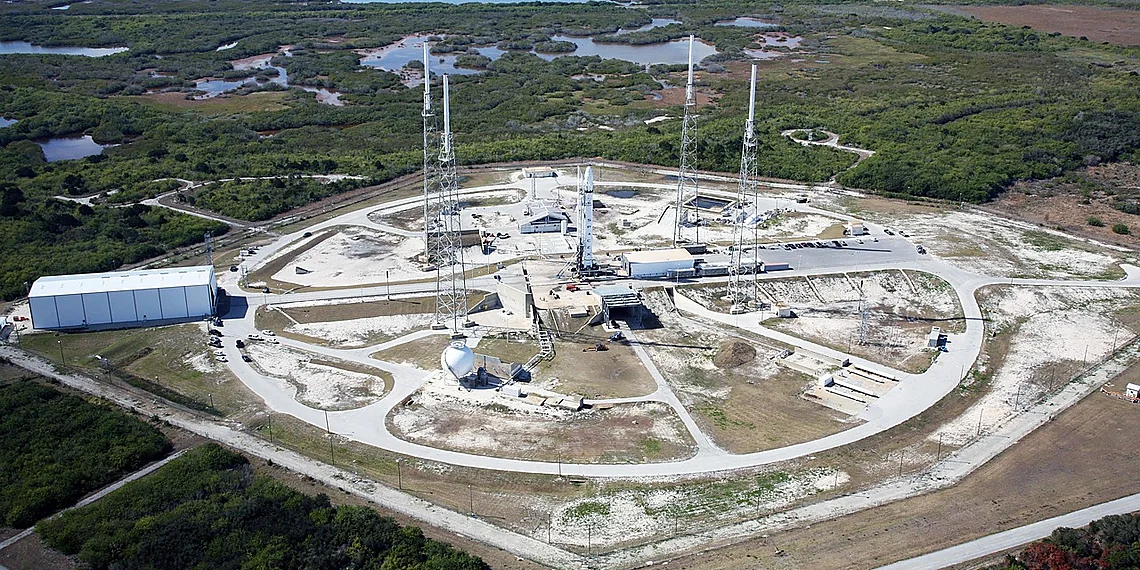
The highly anticipated launch of Astrobotic’s lunar lander, Peregrine, has been significantly affected by a recent announcement from SpaceX: the Falcon Heavy launch is now slated for 2026.
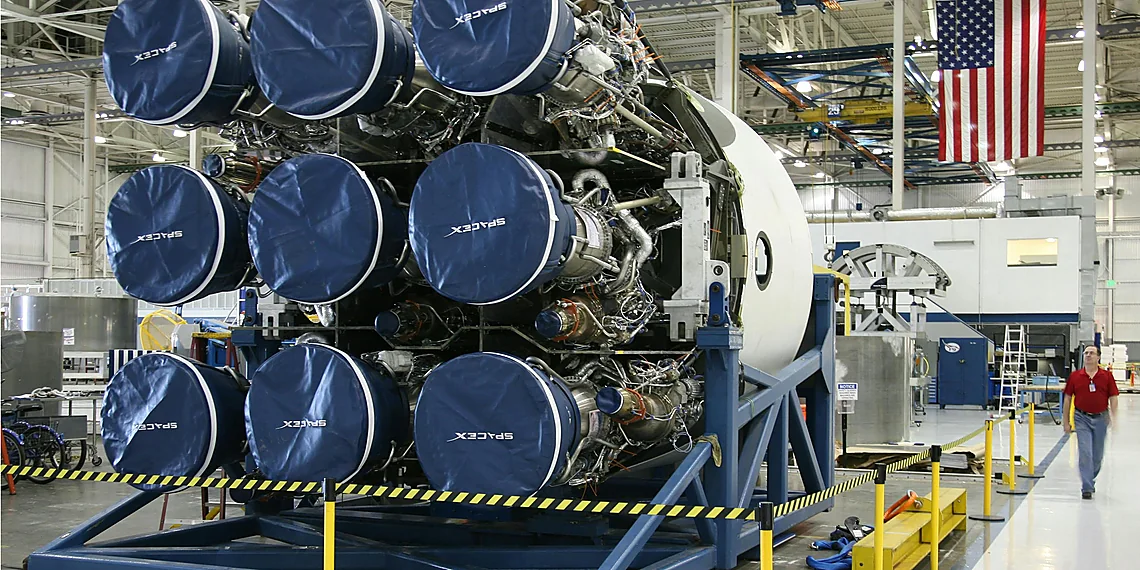
For those unfamiliar, the Falcon Heavy represents one of SpaceX’s most powerful rockets, essentially three Falcon 9 boosters strapped together to deliver immense payload capacity – crucial for sending large spacecraft beyond Earth orbit.
Astrobotic’s Peregrine mission relies on this heavy lift capability; it will carry a variety of payloads from governments and companies to the lunar surface, representing a pivotal moment in commercial lunar exploration. The Griffin module, specifically designed to support these complex missions alongside Falcon Heavy, was integral to the original plan for 2024’s launch window, now rendered impossible by this shift. This Falcon Heavy Delay introduces considerable challenges for Astrobotic and its partners, forcing a reassessment of schedules and resource allocation across the entire project lifecycle. This news underscores the inherent complexities and unpredictable nature of spaceflight endeavors, even with advanced planning and robust infrastructure.
Understanding the Falcon Heavy & Griffin Mission
The Falcon Heavy Delay signifies a shift in the timeline for a significant space exploration endeavor: the Griffin mission. To understand this postponement’s impact, it’s crucial to first appreciate what the Falcon Heavy rocket represents and its role within SpaceX’s impressive fleet. The Falcon Heavy isn’t just an upgraded version of the Falcon 9; it’s a truly heavy-lift launch vehicle – essentially three Falcon 9 rockets strapped together. This configuration provides an unparalleled combination of power and payload capacity, allowing it to carry significantly heavier and larger payloads than its predecessor. Previous missions have demonstrated its capabilities, including launching a Tesla Roadster into deep space and deploying numerous satellites.
Its suitability for lunar missions stems directly from this immense lifting capability. Reaching the Moon requires overcoming Earth’s gravity and navigating vast distances, demanding substantial thrust and fuel capacity. The Falcon Heavy’s power makes it an ideal choice for delivering payloads like Astrobotic’s Griffin lunar module to their intended orbit. The original plan called for a launch by the end of 2025, reflecting the urgency and ambition surrounding lunar exploration efforts currently underway globally.
The Griffin mission itself is equally important. Developed by Astrobotic Technology, the Griffin is a sophisticated lunar lander designed to deliver payloads – including scientific instruments and commercial cargo – to the surface of the Moon. Unlike orbiters which simply circle the moon, Griffin’s landing capabilities allow for direct access and experimentation on the lunar surface, opening up possibilities for resource prospecting, robotic exploration, and potentially even paving the way for future human missions. The delay pushes back these opportunities but doesn’t diminish the mission’s long-term significance.
Ultimately, the Falcon Heavy Delay highlights both the complexities inherent in space travel and the ambitious goals driving current lunar initiatives. While the revised 2026 launch date introduces a waiting period, it also provides valuable time for both SpaceX and Astrobotic to refine their technologies and ensure mission success when the opportunity arises. The combination of Falcon Heavy’s power and Griffin’s landing capabilities promises to be a pivotal moment in our return to the Moon.
What is Falcon Heavy?

The Falcon Heavy is a heavy-lift launch vehicle developed by SpaceX, renowned for its impressive capabilities exceeding those of most operational rockets currently in service. It’s essentially three Falcon 9 first stages strapped together, providing significantly increased thrust and payload capacity – approximately 63,800 kilograms (140,700 pounds) to Low Earth Orbit (LEO). This makes it ideal for missions requiring the delivery of large satellites, cargo to deep space destinations, or even human-rated spacecraft. Its design leverages SpaceX’s reusable rocket technology, aiming to reduce launch costs and increase mission frequency.
Falcon Heavy has undertaken several significant missions since its inaugural flight in 2018. These include deploying a communications satellite (SES 14) into geostationary orbit and launching the first demonstration of SpaceX’s Starship upper stage. Notably, during its second flight, Falcon Heavy carried Elon Musk’s Tesla Roadster as a symbolic payload towards a trajectory around Mars, capturing public imagination and highlighting the rocket’s reach. While the side boosters often return to land on landing pads or drone ships, demonstrating reusability, not all missions utilize this feature.
The Falcon Heavy’s substantial lifting power makes it particularly well-suited for lunar missions like the Griffin mission originally slated for a 2025 launch. Transporting large payloads like rovers, landers, and habitats to the Moon requires considerable thrust, and Falcon Heavy’s capabilities are crucial for delivering the Griffin module – which will provide robotic mobility on the lunar surface – and any associated equipment. The delay now pushes this exciting exploration endeavor to 2026.
The Astrobotic Griffin Lunar Module
The Falcon Heavy launch delay, now slated for 2026, significantly impacts the timeline for Astrobotic Technology’s ambitious lunar mission featuring the Griffin lunar module. While disappointing for space enthusiasts eager to witness this event, it underscores the complexities and inherent risks involved in deep-space exploration. Understanding the purpose of the Griffin itself is crucial to appreciating why this mission holds such significance – and why a delay, though frustrating, doesn’t diminish its potential.
The Astrobotic Griffin isn’t just another lunar lander; it’s designed as a dedicated commercial cargo delivery service for NASA and Intuit Robotics. Its primary objective is to transport payloads to the Moon’s surface, specifically targeting the Malapert Mountain region near the South Pole – an area of great interest due to its potential water ice deposits. This mission represents a critical step in establishing a sustainable lunar presence, supporting both scientific research and future commercial activities like resource extraction.
The Griffin’s payload capacity is substantial, capable of carrying over 160 kg (350 lbs) of cargo for various customers. For NASA, this includes Volatiles Investigating Polar Surface Instrument (VIPER)-2 rover, a critical component in the agency’s Lunar Exploration Program. Intuit Robotics will also be sending its Luna-One engineering demonstration lander to test autonomous navigation and robotic operations on the lunar surface. These payloads are not just about getting equipment to the Moon; they’re about demonstrating technologies essential for long-term lunar habitation and resource utilization.
Ultimately, the Griffin’s contribution extends beyond simple cargo delivery. By providing reliable and affordable access to the lunar surface, Astrobotic is paving the way for a new era of commercial space exploration. This mission will serve as a vital testbed for future lunar missions, enabling scientists and entrepreneurs alike to push the boundaries of what’s possible on our nearest celestial neighbor – even if that journey now takes place a little later than initially planned.
Griffin’s Mission & Capabilities

The Astrobotic Technology’s Griffin lunar module is designed as a versatile cargo delivery service for the Moon. It’s not just about transporting materials; it represents a key step in establishing a sustained human presence on the lunar surface. The module will initially focus on delivering payloads for NASA, supporting their Commercial Lunar Payload Services (CLPS) initiative, which aims to leverage private companies to provide lunar transportation capabilities.
Griffin’s primary mission is to transport scientific instruments and technology demonstration projects to the lunar south pole. These include NASA’s Molecular Water Ice Scout (MOISS), a rover designed to search for water ice deposits – a crucial resource for potential future lunar bases – and other payloads focused on studying the lunar environment, including its radiation levels and surface composition. The module is capable of landing relatively large payloads, expanding the possibilities for scientific exploration compared to some earlier CLPS missions.
A unique feature of Griffin is its ability to operate as a mobile lander, allowing it to traverse short distances across the lunar surface after landing. This mobility enhances its ability to reach areas of interest and deploy multiple instruments over a wider area. The module’s design prioritizes adaptability; future iterations are envisioned to support sample return missions and even act as a precursor for larger lunar habitats.
Reasons for the Launch Delay
The eagerly anticipated launch of SpaceX’s Falcon Heavy rocket, carrying Astrobotic Technology’s Lunar Griffin Module, has been significantly delayed, now slated for 2026 instead of its originally planned late-2025 window. This Falcon Heavy Delay isn’t a simple rescheduling; it signals deeper complexities and challenges facing the mission. Space.com recently reported on this postponement, highlighting that several intertwined factors contributed to the decision. Understanding these reasons is crucial for appreciating the intricacies of space exploration and the realities of ambitious engineering projects.
At the core of the Falcon Heavy Delay lie both technical hurdles and scheduling conflicts. While SpaceX continues its ongoing development and improvements to the Falcon Heavy itself – a rocket already renowned for its power and capabilities – integrating those upgrades with Astrobotic’s Griffin lunar module presents unique compatibility challenges. Ensuring seamless operation between the launch vehicle and payload requires extensive testing and verification, which has reportedly taken longer than initially anticipated. These technical integration issues are compounded by the demanding requirements of a lunar mission; any potential failure point needs to be rigorously addressed before launch.
Beyond the immediate technical synchronization between the Falcon Heavy and Griffin module, broader logistical considerations also played a role in this postponement. Space missions depend on a delicate chain of events – from component manufacturing and delivery to range availability and regulatory approvals. Delays at any stage can ripple outwards, impacting the overall timeline. The rescheduling allows both SpaceX and Astrobotic Technology more time to address these interconnected dependencies, minimizing potential risks and maximizing the chances of mission success. It’s also likely that adjustments were made to accommodate other SpaceX launch commitments.
Ultimately, while disappointing for space enthusiasts eager to witness this lunar delivery, the Falcon Heavy Delay underscores the complexity inherent in pushing the boundaries of space exploration. The postponement provides an opportunity to refine processes, address potential issues proactively, and ultimately ensure a safer and more successful mission when the Griffin module finally embarks on its journey to the Moon.
Technical Challenges & Scheduling Conflicts
The Falcon Heavy launch, initially slated for late 2025, has been postponed to 2026 due primarily to a combination of technical readiness concerns surrounding the Griffin lunar module and necessary upgrades to the Falcon Heavy rocket itself. Astrobotic Technology, responsible for the Griffin module, is reportedly still working through integration and testing milestones. These challenges extend beyond simple software adjustments; they involve ensuring the module’s complex systems function flawlessly in the harsh environment of space.
SpaceX’s decision to delay also appears linked to planned enhancements for the Falcon Heavy booster. While specifics haven’t been fully disclosed, it’s understood that these upgrades aim to improve reliability and performance – a critical factor given the mission’s importance and the payload’s sensitivity. Integrating these modifications requires extensive testing and validation, which inevitably pushes back the launch timeline.
The scheduling conflicts aren’t solely internal. External factors, including range availability at suitable launch sites and potential dependencies on other missions, also contribute to the delay. Coordinating these elements across multiple stakeholders is a complex process, and any unforeseen issues can ripple through the overall schedule, necessitating adjustments like this one.
Looking Ahead: What’s Next?
The announcement of a Falcon Heavy Delay, pushing the Astrobotic Technology’s Griffin lunar module mission to 2026, marks a significant shift in near-term lunar exploration plans. Originally slated for a late 2025 launch, this revised timeline provides SpaceX and Astrobotic with additional time to address potential challenges and refine their preparations. While disappointing for those eagerly anticipating the initial target date, the extension allows for more thorough testing and integration of the Griffin module with the Falcon Heavy rocket – ultimately aiming for a safer and more successful mission.
This delay has direct implications for Astrobotic’s schedule and potentially impacts other lunar payload providers who were relying on this launch window. The company will need to reassess its operational timelines, resource allocation, and potentially revisit any contractual obligations linked to the original 2025 deadline. While Astrobotic is expected to adapt, the increased lead time could also provide opportunities for further refinement of the Griffin’s capabilities or integration with emerging lunar technologies.
Looking beyond Astrobotic’s immediate plans, this Falcon Heavy Delay underscores a broader trend in space exploration: complexity demands patience and flexibility. Lunar missions are inherently challenging, requiring meticulous coordination between launch providers, payload developers, and mission operators. This adjustment serves as a reminder that unforeseen hurdles can arise, and adapting to these realities is crucial for sustained progress in lunar science and resource utilization. The delay doesn’t diminish the ambition of returning humans to the Moon or establishing a long-term presence; it simply recalibrates the path forward.
Despite the setback, the future of lunar exploration remains bright. With renewed global interest and investment, multiple missions are actively being planned by both government agencies and private companies. The Falcon Heavy Delay might subtly reshape launch schedules, but it won’t derail the overarching momentum towards a revitalized era of lunar discovery and development. We can anticipate continued innovation in propulsion systems, robotic exploration platforms, and ultimately, human habitation on the Moon.
Revised Timeline & Future Prospects
The highly anticipated launch of SpaceX’s Falcon Heavy rocket, carrying Astrobotic Technology’s Griffin Lunar Module, has been officially delayed to 2026. Initially slated for late 2025, this significant shift in timeline stems from ongoing integration and testing challenges between the lunar module and the heavy-lift rocket. While specific details regarding these challenges haven’t been fully disclosed, it underscores the complexities inherent in integrating sophisticated payloads with powerful launch vehicles.
The adjusted schedule necessitates revisions to Astrobotic’s overall mission objectives and subsequent timelines. The Griffin module is designed to deliver commercial cargo to the lunar surface, and this delay will likely impact delivery schedules for those payloads. While Astrobotic has expressed commitment to working closely with SpaceX to mitigate any further disruptions, the extended timeframe introduces uncertainty regarding partnerships and potentially affects planned revenue streams dependent on a 2025 launch window.
This Falcon Heavy Delay could have ripple effects on other lunar missions currently targeting similar timeframes. Several commercial and governmental initiatives are vying for access to lunar landing opportunities, and shifts in SpaceX’s availability might force adjustments to their own launch plans. Although the delay presents challenges, it also provides an opportunity for all stakeholders to refine integration processes, improve mission readiness, and ultimately enhance the success rate of future lunar exploration endeavors.
The shift in timelines, particularly this Falcon Heavy Delay pushing Astrobotic’s lunar mission to 2026, underscores the inherent complexities and risks involved in space exploration.
While initially disappointing for those eagerly anticipating a near-term return to the Moon, this adjustment allows both SpaceX and Astrobotic to meticulously refine their preparations, ensuring greater success when the launch finally occurs.
This postponement highlights that even with remarkable advancements in rocketry and robotics, lunar missions remain intricate undertakings requiring precise coordination and robust contingency planning.
The continued commitment from SpaceX, despite these delays, reinforces the broader ambition of expanding humanity’s presence beyond Earth, a goal vital for scientific discovery, resource utilization, and ultimately, our long-term survival as a species. Lunar exploration isn’t just about planting flags; it’s about unlocking knowledge and paving the way for deeper space journeys to come. The potential rewards—from understanding planetary formation to identifying valuable resources—justify the challenges we face along the way, even when those challenges involve schedule shifts like this Falcon Heavy Delay impacts on Astrobotic’s launch window. We remain confident in the ultimate success of these ambitious projects and their contribution to our collective future in space. To keep abreast of all developments, be sure to follow SpaceX and Astrobotic’s official channels for the latest news and updates.
Continue reading on ByteTrending:
Discover more tech insights on ByteTrending ByteTrending.
Discover more from ByteTrending
Subscribe to get the latest posts sent to your email.